For importers, distributors, and contractors, the decision to source WPC wall panels from China is a significant one. The market is vast, and the difference between a profitable partnership and a logistical nightmare often comes down to the due diligence performed before the first order is placed.
This guide moves beyond basic price comparison to provide a structured framework for evaluating potential manufacturers. It covers the critical aspects of factory verification, production capacity, quality control, and OEM capabilities, ensuring you can build a resilient and high-quality supply chain.
Manufacturer vs. Trading Company: The Strategic Choice
The first step in your sourcing journey is to identify the type of supplier you are engaging with. Each has its place, but understanding the distinction is vital for managing expectations and risk.
| Supplier Type | Key Characteristics | Best Suited For |
|---|---|---|
| Manufacturer | Direct control over production, pricing, and quality. Deep technical knowledge of materials and molds. | Importers and distributors seeking long-term partnerships, consistent quality, and OEM services. |
| Trading Company | Can source a wide variety of products from different factories. Offers flexibility for mixed-product orders. | Buyers with smaller, one-off orders who need to consolidate various goods into a single shipment. |
For WPC wall panels, where consistency in color, profile, and material integrity is paramount, establishing a direct relationship with a manufacturer is typically the more strategic and lower-risk option. It provides greater transparency and control over your product.
The Factory Verification Checklist
Before discussing pricing, you must verify that a potential supplier has the actual production capability they claim. This step is crucial for mitigating risk and ensuring they can handle your order volume.
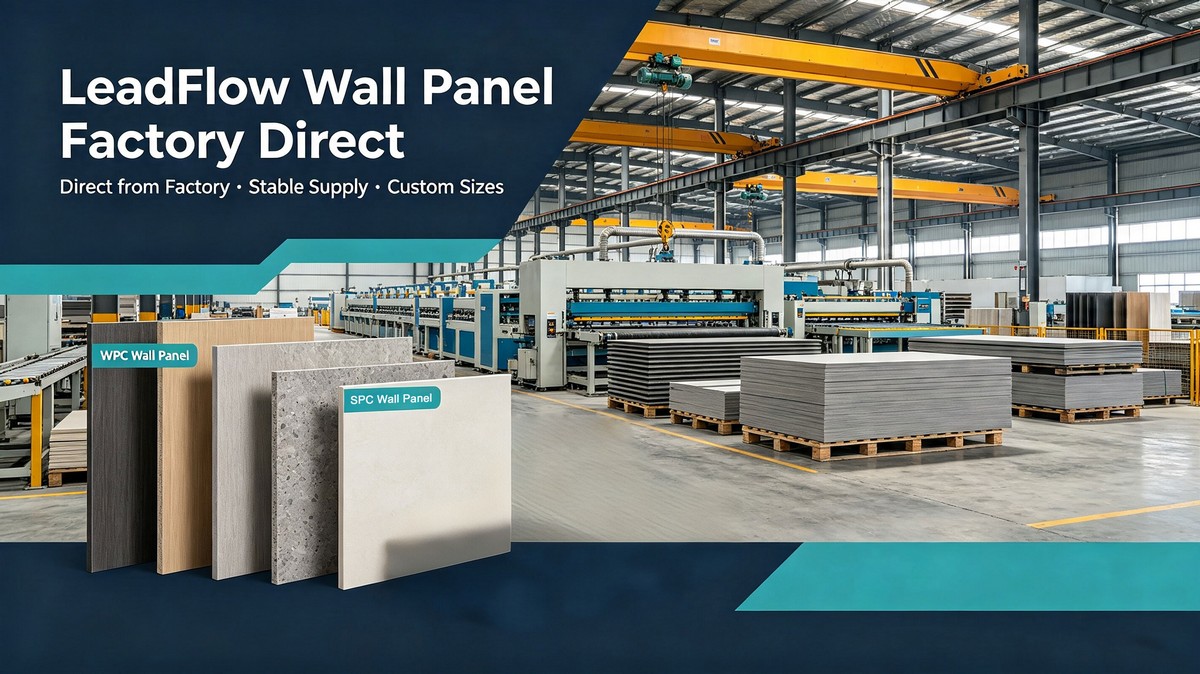
- Request a Live Virtual Tour: Ask for a real-time video call to walk through the factory floor. This confirms the existence of extrusion lines, wrapping machines, and warehouse space, separating real factories from trading companies or shell operations.
- Assess Technical Communication: Gauge their responsiveness and technical knowledge. A capable manufacturer will ask detailed questions about your project, target market, and specifications, demonstrating their expertise.
- Verify Export Experience: Inquire about their experience shipping to your country. They should be familiar with standard export documentation, packing requirements for ocean freight, and relevant Incoterms (e.g., FOB, CIF).
- Ask for Client References: A reputable supplier should be able to provide references or case studies from other international clients, particularly in your region.
Evaluating Production Capacity and Consistency
A supplier might offer a great price, but if their production capacity is unstable, you risk shipment delays and inconsistent product batches. This is especially critical for distributors and contractors with scheduled projects.
- Monthly Output: Ask about their typical monthly production volume in square meters. Does it align with your order size?
- Lead Times: Get a realistic estimate for both sample production and bulk orders. Be wary of quotes that seem unrealistically fast.
- Mold Inventory: A large inventory of molds for various profiles indicates an established manufacturer. It also means they can be more flexible with standard profile orders.
- Raw Material Sourcing: Inquire about their raw material suppliers. A manufacturer that uses consistent, high-quality materials will produce more reliable panels with better strength, color stability, and surface finish. Batch-to-batch consistency is a key indicator of a professional operation.
The Critical Role of Quality Control (QC)
Quality control is not a single event but a process. A professional WPC wall panel factory will have inspection checkpoints throughout production, not just a final check before packing.
Key QC Stages to Inquire About:
- Raw Material Inspection: Ensuring the WPC compound meets specifications before extrusion begins.
- In-Process Checks: Monitoring panel dimensions (thickness, width), profile accuracy, and surface quality during extrusion and wrapping.
- Final Random Inspection: A comprehensive check of finished goods for color consistency, surface defects (scratches, bubbles), straightness, and edge quality before they are packed.
- Pre-Shipment Verification: Requesting photos or a video of the loaded container is a simple but effective way to verify the correct quantity and packaging integrity before the goods leave the factory.
Understanding OEM and Customization Capabilities
OEM (Original Equipment Manufacturer) services are a powerful way for distributors to build a unique brand. However, customization comes with specific requirements and costs.
- Private Label Packaging: This includes custom-designed cartons with your logo, brand colors, and product information. There is usually a Minimum Order Quantity (MOQ) to make a custom print run viable.
- Custom Colors: Developing an exclusive color requires creating a new wrapping film, which involves a mold fee and a higher MOQ.
- Custom Profiles: For large-volume buyers, it's possible to create a unique panel profile by developing a new extrusion mold. This is a significant investment and is only recommended for established product lines with proven demand.
A strategic approach is to start with a manufacturer's standard profiles and colors to test the market, then invest in customization for your best-selling items.
The Non-Negotiable Sample Approval Process
Never place a bulk order based on digital photos or catalogs alone. The sample approval process is your most important quality control step.
- Request Physical Samples: Always get physical samples of the exact profile, color, and finish you intend to order.
- Conduct a Thorough Inspection: Check for dimensional accuracy, surface quality, color consistency, and the rigidity of the panel.
- Test for Fit and Finish: If possible, test how the panels lock together and how they cut with standard woodworking tools.
- Approve and Archive: Once you are satisfied, approve the sample and keep it as a physical benchmark. This "gold seal" sample will be your reference for all future production runs and quality inspections.
How to Request a Comparable Quotation
To get an accurate and comparable quote, you must provide clear and detailed specifications. A vague inquiry will only result in a vague price.
Your Quotation Checklist:
- Product Specifications: Profile type, total width, thickness, and required lengths.
- Finish Details: Surface texture (e.g., wood grain, matte) and specific color code or sample reference.
- Order Quantity: Estimated volume in square meters or number of 20ft/40ft containers.
- Packaging Requirements: Specify if you need neutral export cartons or custom OEM packaging.
- Destination Port: Provide the port of destination and your preferred Incoterm (e.g., FOB Ningbo, CIF Long Beach).
Common Sourcing Mistakes to Avoid
Being aware of common pitfalls can save you significant time, money, and frustration.
- Choosing on Price Alone: The lowest price often comes with compromises in material quality, wall thickness, or packaging strength, leading to higher costs in the long run.
- Skipping the Sample Stage: Approving a product based on pictures is a major risk. Always test a physical sample.
- Ignoring MOQs: Not understanding the Minimum Order Quantity for custom colors or packaging can lead to unexpected costs and delays.
- Underestimating Logistics: Failing to account for shipping times, customs clearance, and inland freight can disrupt your project or inventory planning.
- Vague Communication: Not providing clear specifications from the start leads to misunderstandings and incorrect orders.