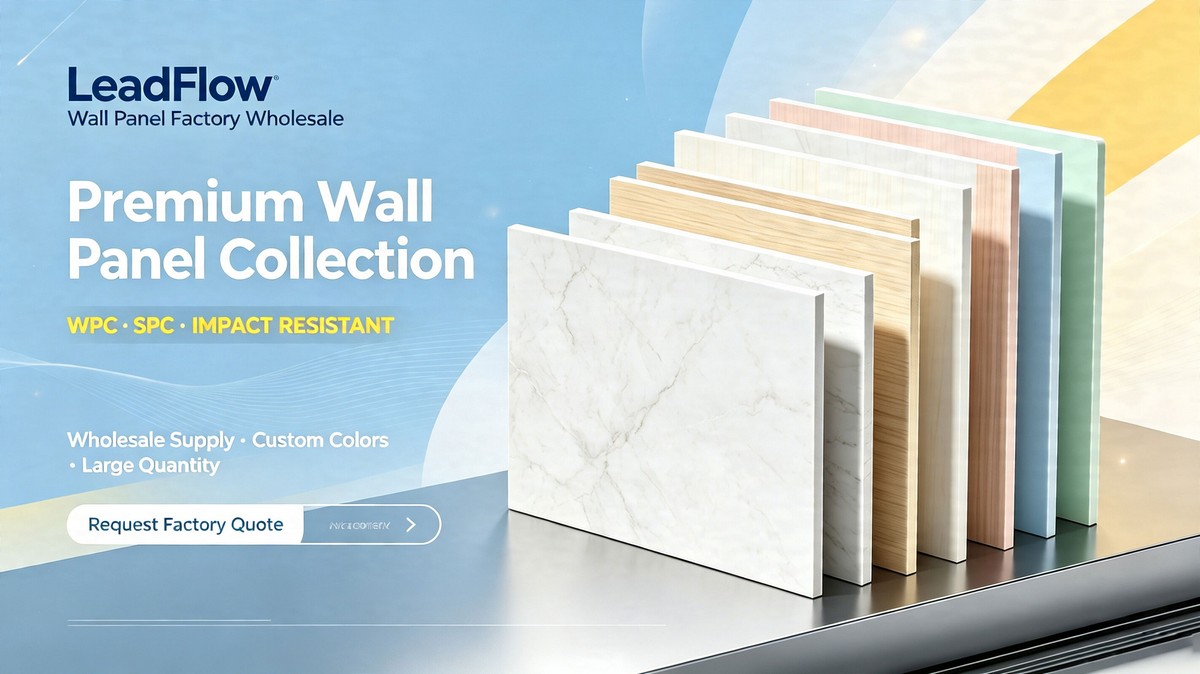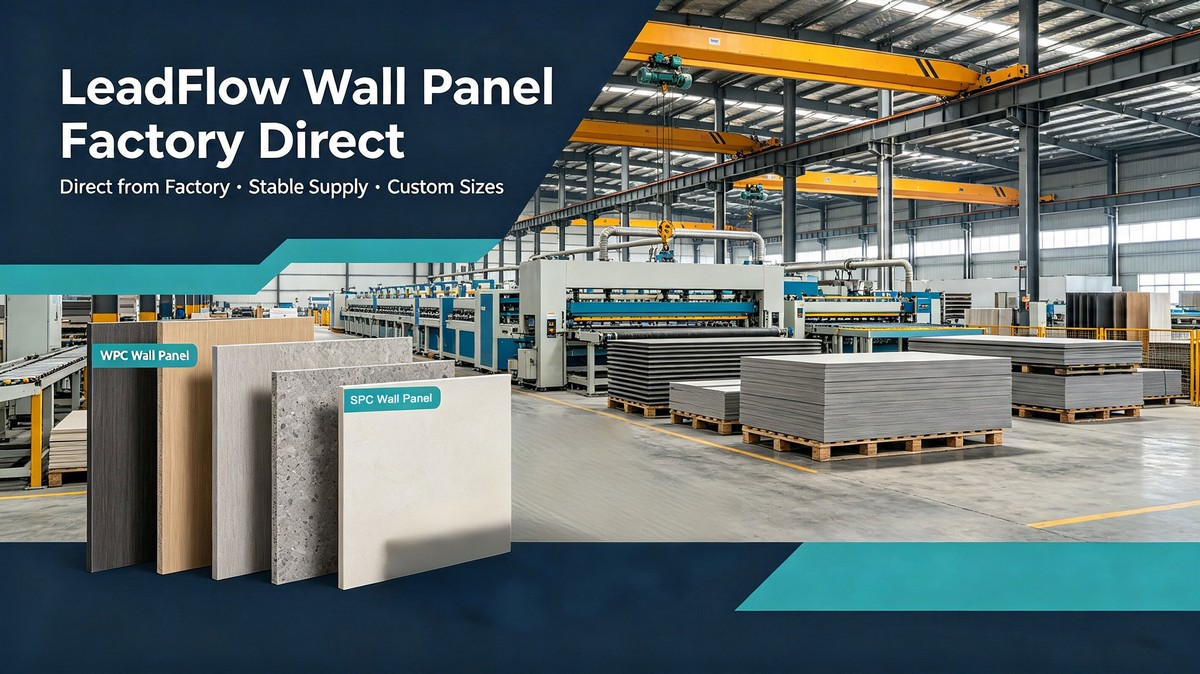
Behind every finished wall panel sits a core that decides how it performs, how long it lasts, and what it ultimately costs. In the decorative cladding market, the WPC vs SPC question has become the defining decision for specifiers, distributors, and contractors alike. Wood-Plastic Composite (WPC) and Stone-Plastic Composite (SPC) panels can look nearly identical once profiled, laminated, and installed, yet their core formulations produce measurably different behavior in weight, moisture resistance, workability, and price. As demand for fluted feature walls and seamless decorative surfaces accelerates across residential, hospitality, and commercial projects worldwide, understanding what separates these two cores is no longer optional knowledge — it is the foundation of smart sourcing and specification.
Key Takeaways
• Core composition drives performance: WPC blends wood fiber with thermoplastics for a lighter, warmer, easier-to-work panel, while SPC pairs PVC with high levels of calcium carbonate for density, rigidity, and superior moisture resistance.
• Application fit matters more than material superiority: WPC fluted profiles dominate decorative feature walls, while SPC excels in bathrooms, commercial corridors, and humid, high-traffic environments.
• Technology is converging: co-extruded WPC surfaces and carbon crystal finishes are steadily narrowing the aesthetic and durability gap between the two categories.
• Smart sourcing starts at the core: verify formulation ratios, density consistency, and certifications before committing to any supplier or wholesale channel.
Understanding the Core: What Defines WPC and SPC Wall Panel Materials
Wood-Plastic Composite is, at its essence, a hybrid material: finely ground wood flour or plant fiber blended with a thermoplastic resin — most commonly PVC or HDPE — together with stabilizers, lubricants, and foaming agents. In interior wall panel grades, wood content typically falls between roughly 30% and 60% by weight, though exact formulations vary by manufacturer and target price point. The wood fraction gives WPC its characteristic warm, tactile surface, while foaming creates a lighter, cellular internal structure; many interior WPC wall panels fall in the range of approximately 0.5 to 0.9 grams per cubic centimeter in density, depending on how aggressively the core is foamed.
Stone-Plastic Composite takes the opposite path. An SPC core is built on a PVC matrix fused with calcium carbonate — the same limestone powder used in rigid flooring — frequently exceeding 60% of total weight. The result behaves more like engineered stone than timber: dense, commonly around 1.9 to 2.1 grams per cubic centimeter, extremely rigid, dimensionally stable, and almost impervious to water.
These two philosophies — fiber-flexible versus mineral-rigid — explain nearly every practical difference that follows. They also explain why an experienced WPC Fluted Wall Panels supplier will usually ask about the substrate, ambient humidity, and fire-rating requirements of a project before recommending a formulation: the same fluted profile, extruded on different core recipes, can behave very differently once it is on the wall.
WPC vs SPC Performance Compared: Where Each Core Material Excels
SPC is heavier, and that single property cascades into nearly every logistics and installation decision. Higher density raises freight cost per container, limits how many boards a single installer can comfortably handle, and increases dead load on the wall structure. For exporters and distributors, weight is often the deciding factor in landed cost — a point that matters as much as the factory price itself.
In moisture resistance, SPC holds the structural advantage. Its mineral-heavy core absorbs virtually no water, which is why it has become the default recommendation for bathrooms, kitchens, and ground-floor commercial spaces. WPC also resists moisture far better than natural wood, but the wood fraction raises the stakes on formulation quality and edge sealing. Modern co-extrusion technology — which fuses a protective polymer skin onto the WPC core during extrusion — has significantly closed this gap, as we explain in our overview of co-extrusion technology for advanced composite profiles.
WPC wins on the jobsite for workability. The foamed core can be cut cleanly, takes screws and nails without splitting, and routers into crisp fluted geometry, which is precisely why it has become the material of choice for decorative vertical slat walls. SPC, by contrast, is more brittle: installers typically work with carbide blades, pre-drilling, and adhesive or clip fixing systems rather than mechanical fasteners.
Dimensional stability favors the mineral core. The low thermal expansion of SPC allows larger spans to stay flat and tight over time, while WPC panels generally need expansion gaps and a period of acclimatization before installation, especially in environments with wide temperature swings.
Comfort and safety considerations are more nuanced than marketing suggests. The foamed structure of WPC gives panels a warmer touch and a modest degree of acoustic damping, and the fluted geometry itself adds stiffness. On fire behavior, both WPC and SPC are PVC-based and tend to be self-extinguishing, but actual performance depends heavily on formulation and additives — buyers should always request fire test certificates, such as European Class B-s1 ratings or local equivalents, rather than assuming compliance.
Cost structures differ in ways that surprise many first-time buyers. Calcium carbonate is inexpensive, so SPC benefits from low raw material cost, but its weight erodes that advantage in freight. WPC's foaming process reduces material consumption per square meter, yet it demands tighter process control. In finished panels of either type, surface finishing — lamination films, carbon crystal overlays, UV coatings — often influences the final price more than the core itself.
Sourcing and Applications: Matching the Core to the Project
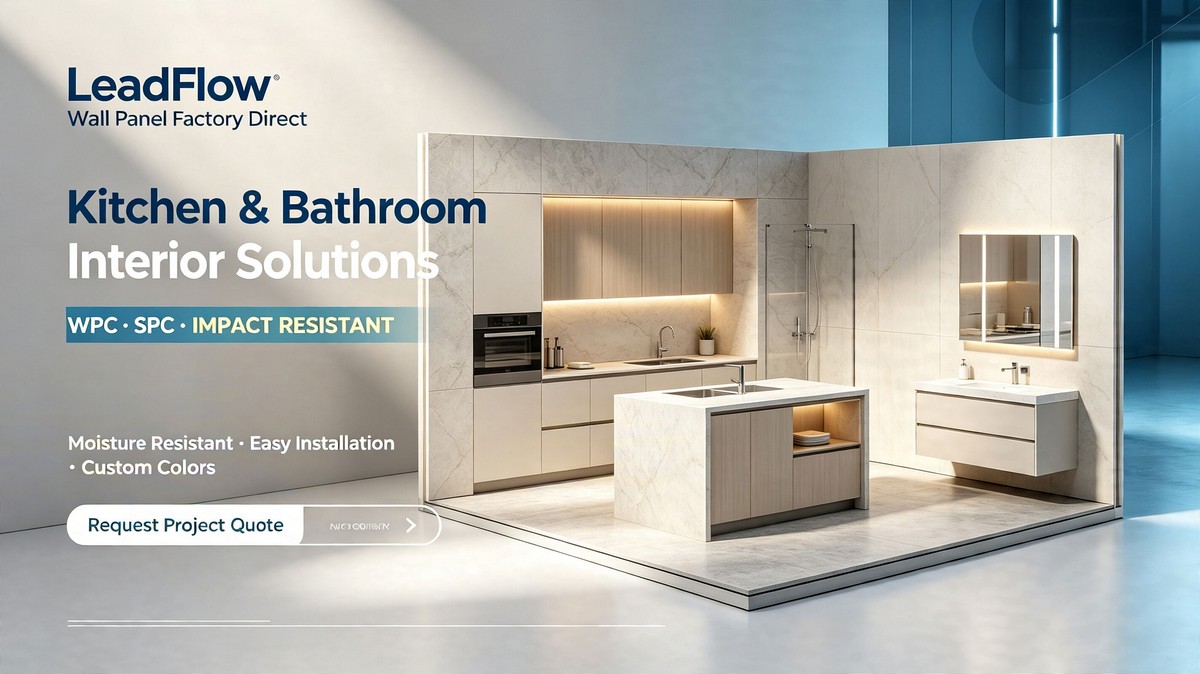
In practice, the global market has settled into clear application zones. WPC fluted panels dominate living room feature walls, hotel lobbies, restaurant interiors, and retail branding walls, where texture, warmth, and acoustic softness are the design priorities. SPC concentrates in wet areas, skirting, corridors, and demanding commercial settings such as healthcare and education, where washdown cleaning and impact resistance are non-negotiable.
Decorative technology is also reshaping sourcing decisions. The carbon crystal finish — a high-gloss, marble-effect film pressed onto a dense PVC-based core — has moved from novelty to mainstream in a remarkably short time, and output quality varies widely between production lines. Buyers evaluating a Carbon Crystal Wall Panel factory should look closely at film-to-core lamination consistency, edge finishing after profiling, and the flatness of large-format boards, because these are the points where inferior production reveals itself first.
Distribution economics increasingly favor partners who can supply both cores under one roof. In the SPC Wall Panel wholesale channel, freight weight remains a persistent cost driver, pushing distributors toward consolidated container loading and regional warehousing. Meanwhile, sustained demand for fluted and slatted profiles keeps pulling WPC volume, which is why dual-category inventory has become a practical hedge against shifting design trends.
Whatever the core, verification beats assumption. Serious buyers should request density test reports, formulation disclosures, low-VOC and formaldehyde emission certificates, and fire test documentation, then validate samples under real project conditions — including humidity, substrate, and fixing method. For teams planning their first installation, our complete guide to wall panel installation methods covers substrate preparation, gap management, and fixing choices in detail.
Conclusion: The Core Decision Is a Strategic One
The WPC vs SPC comparison has no universal winner — and that is precisely the point. WPC delivers lightness, workability, and warmth for decorative applications; SPC delivers rigidity, dimensional stability, and moisture immunity for demanding environments. Looking ahead, expect the boundary to keep blurring: co-extrusion will continue to armor WPC cores, mineral loading will creep into WPC recipes, and high-gloss overlays such as carbon crystal and UV-cured surfaces will narrow the aesthetic gap further. For buyers, the durable principle is simple — specify the core for the environment, verify the formulation behind the marketing, and treat core material as a strategic choice rather than an afterthought.
FAQ
Q: What is the main difference between WPC and SPC wall panel cores?
A: WPC (Wood-Plastic Composite) cores combine wood fiber with thermoplastic resin, producing a lighter, warmer, and more workable panel. SPC (Stone-Plastic Composite) cores combine PVC with a high proportion of calcium carbonate, producing a denser, more rigid panel with superior moisture resistance and dimensional stability.
Q: Which core material is better for bathrooms and humid environments?
A: SPC is generally the safer choice for wet zones because its mineral-heavy core absorbs almost no water. Quality WPC panels also perform well in humidity, but their performance depends heavily on formulation and edge sealing, so buyers should confirm moisture-test data before specification.
Q: Are WPC and SPC wall panels environmentally friendly?
A: Both are typically formaldehyde-free and recyclable within the PVC stream, and WPC can incorporate reclaimed wood fiber. Environmental performance varies by manufacturer, so specifiers should request low-VOC emission certificates and recycled-content documentation rather than relying on generic claims.
Q: Can WPC and SPC panels be combined in a single project?
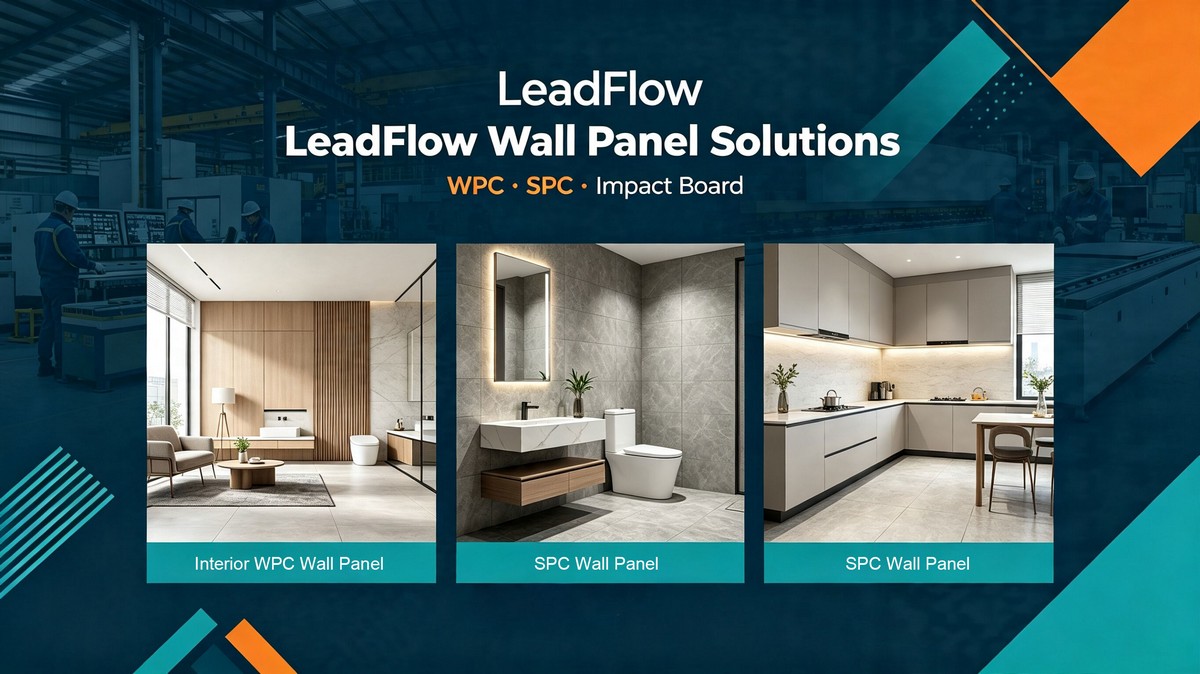
A: Yes, and many designers now do exactly that: WPC fluted panels create warm, textured feature walls in dry living spaces, while SPC panels handle bathrooms, kitchens, and high-traffic commercial areas. This hybrid approach plays to the structural strengths of each core.
Choosing between WPC and SPC is far easier when the products are side by side. Want to see more options? Download our full product catalog and find the perfect solution for your needs.