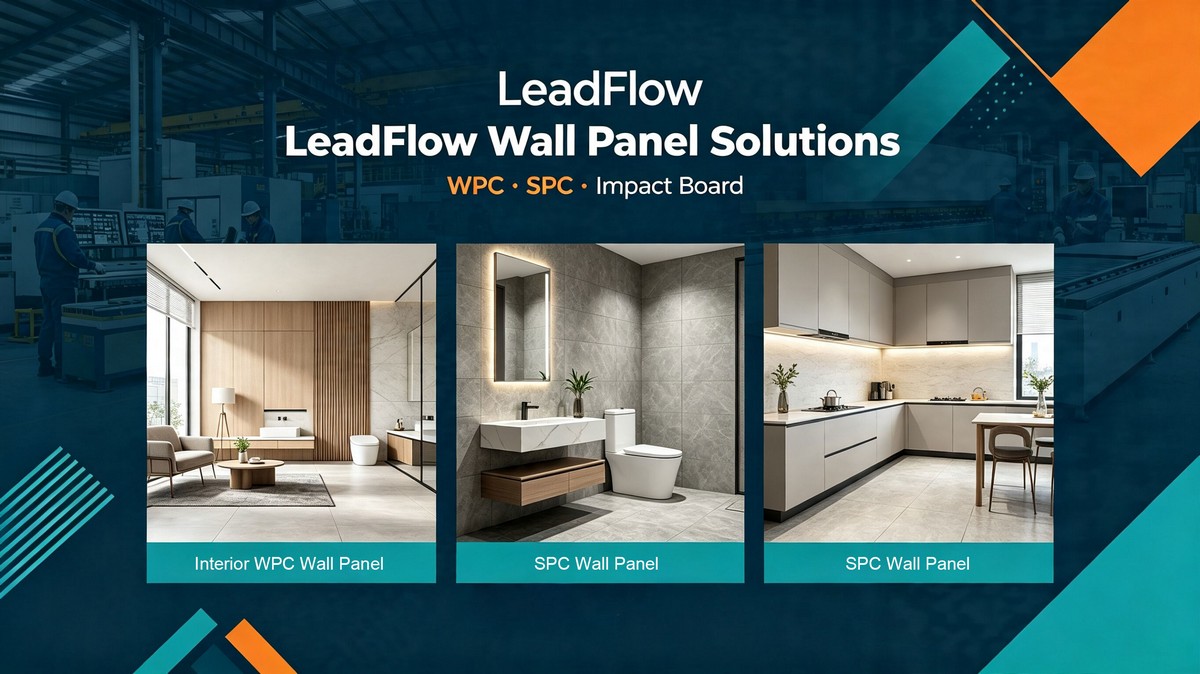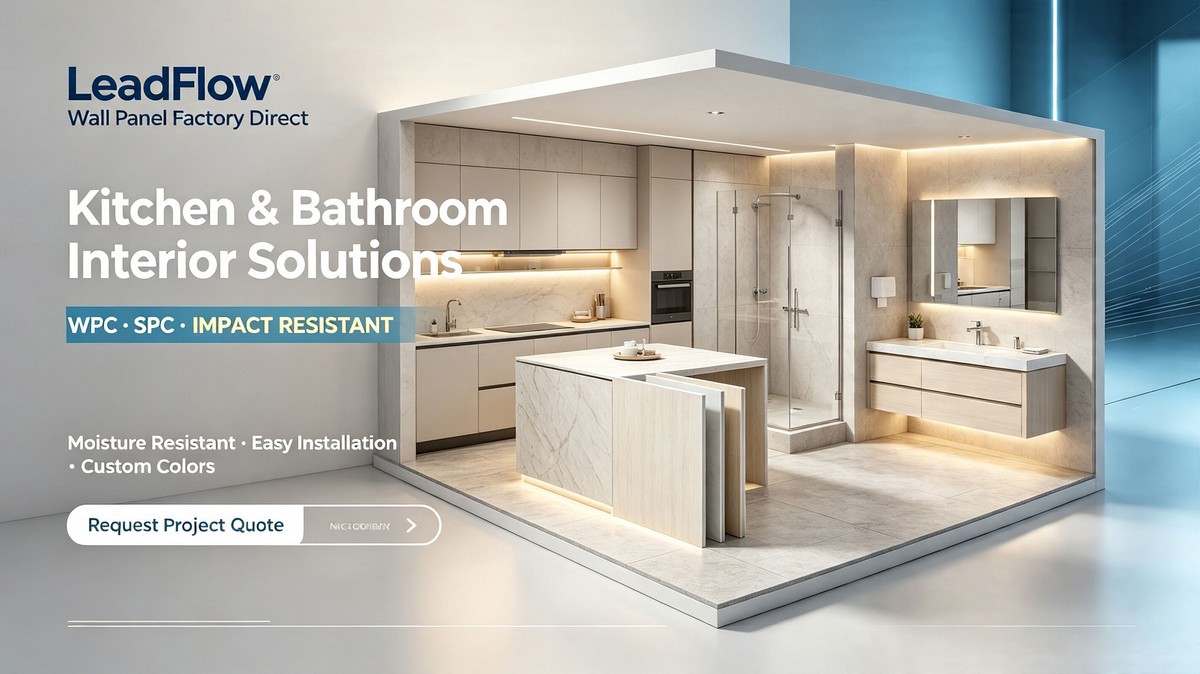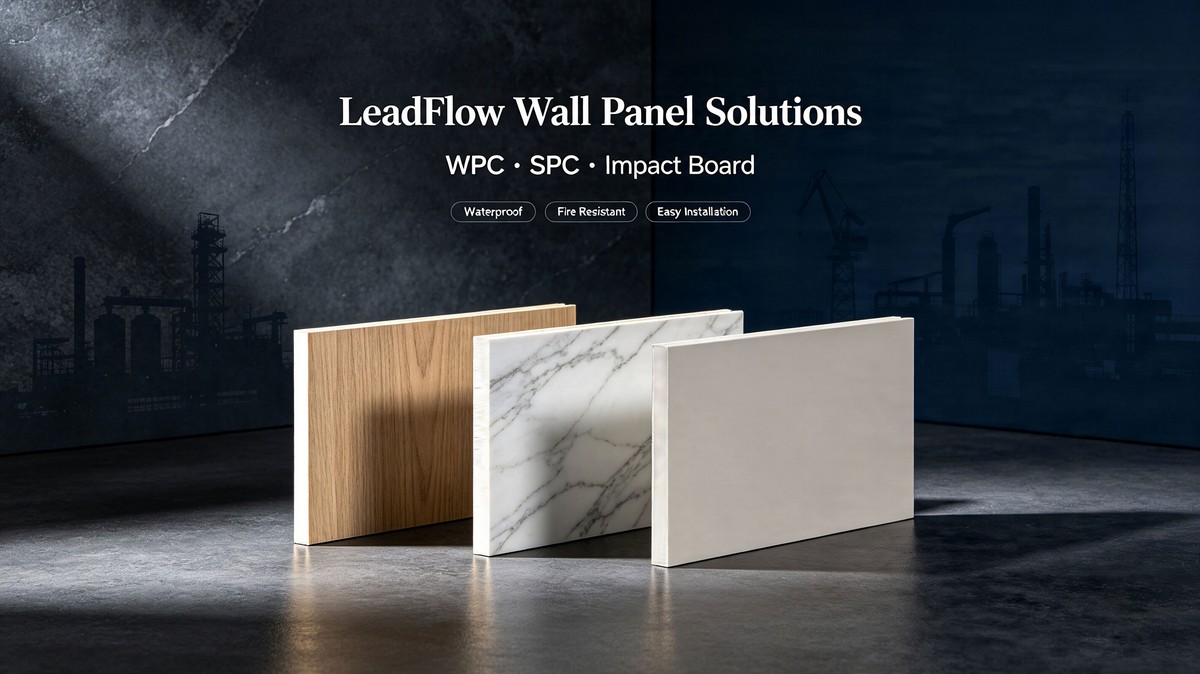
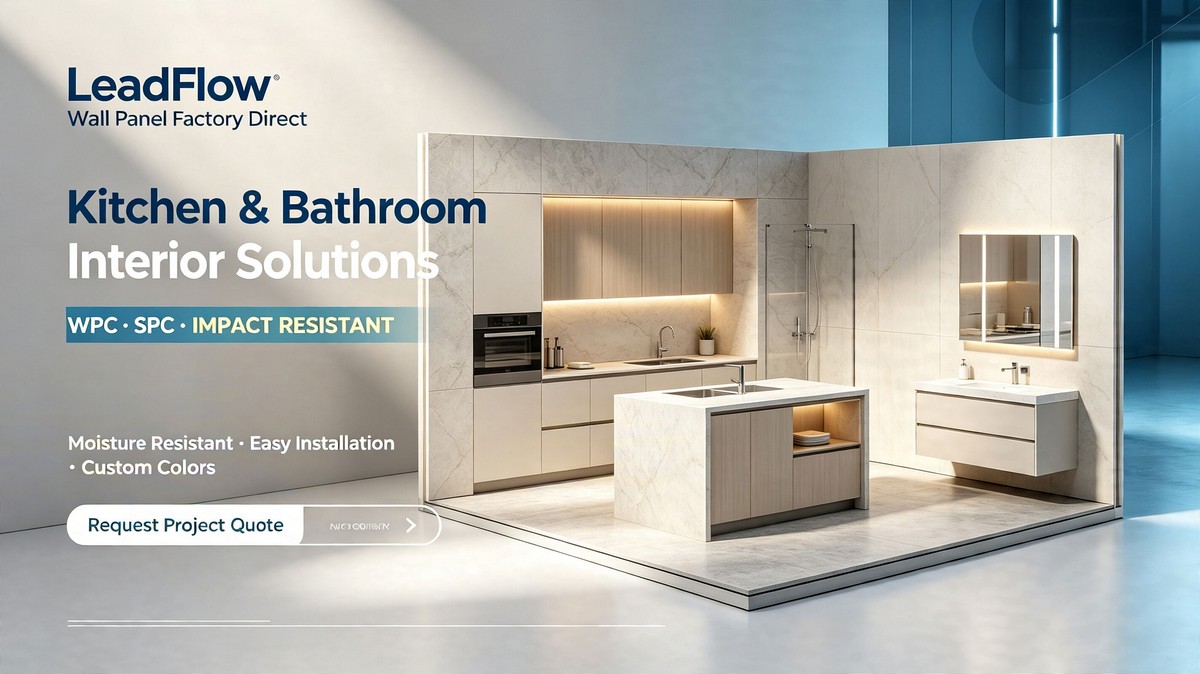
The global interior finishing market is steadily shifting away from tiles, paint, and wallpaper toward prefabricated decorative panels, and the SPC Wall Panel wholesale segment has emerged as one of its most dynamic channels. SPC, short for stone plastic composite, is a rigid-core board produced from polyvinyl chloride resin, calcium carbonate, and stabilizers, extruded into dimensionally stable sheets that resist moisture, impact, and warping. For distributors, contractors, and retail chains, sourcing through the SPC Wall Panel wholesale channel instead of fragmented retail purchasing can significantly reduce landed cost per square meter, but it also raises the stakes on supplier selection, quality consistency, and logistics planning. This report examines what is driving wholesale demand, how wholesale pricing is actually structured, and how buyers can evaluate manufacturing partners in an increasingly crowded global market.
Key Takeaways
• SPC wall panels are rigid-core boards made from PVC resin, calcium carbonate, and stabilizers, valued for waterproof performance, dimensional stability, and fast adhesive or click-lock installation.
• Wholesale prices are generally quoted per square meter on FOB or CIF terms and are driven by panel thickness, density, surface finish, order volume, and container loading efficiency.
• Buyers increasingly consolidate SPC, WPC fluted, and carbon crystal panel purchases with a single manufacturing partner to cut freight costs and simplify quality control.
• Effective supplier evaluation focuses on batch-to-batch color consistency, thickness tolerance, certifications, OEM and ODM capability, and export-grade packaging.
Why SPC Wall Panel Wholesale Demand Is Accelerating
Structural changes in construction and renovation are the primary engine behind rising wholesale procurement of SPC wall panels. Commercial fit-outs in hotels, offices, restaurants, and retail spaces increasingly favor interior wall cladding systems that install quickly, finish cleanly, and survive heavy contact. Because SPC panels can be fixed directly to walls with adhesive over imperfect substrates, or joined with click-lock edges, installation time is dramatically shorter than tiling, and rooms can return to service almost immediately. For project contractors working against tight handover schedules, that time saving translates directly into labor cost savings, which is a key reason procurement teams now buy full containers rather than pallet quantities.
Performance characteristics reinforce the trend. A rigid core wall panel is fully waterproof, does not support mold growth in humid conditions, and remains stable through temperature swings that would cause wallpaper seams to open or painted surfaces to crack. This makes SPC wall panels suitable for bathrooms, kitchens, basements, and coastal or tropical climates where traditional finishes degrade quickly. The cause-and-effect is straightforward: as developers seek finishes that reduce warranty claims and maintenance cycles, specification of SPC paneling keeps climbing.
Aesthetics have widened the addressable market as well. Modern surface laminates reproduce marble veining, wood grain, fabric textures, and matte solid colors with convincing realism, while V-groove and fluted formats let designers create feature walls that mimic premium joinery at a fraction of the cost. Notably, many distributors now consolidate orders through a single WPC Fluted Wall Panels supplier that also runs SPC production lines, allowing fluted accent profiles and large-format flat panels to ship together, harmonize visually, and share one quality standard. This portfolio approach reduces freight cost per unit and simplifies restocking for wall panel distributor networks serving both residential and commercial customers.
Channel economics complete the picture. Digital B2B sourcing platforms and video factory tours have lowered the barrier to direct-from-manufacturer purchasing, while shorter design cycles push retailers to refresh panel collections more frequently. The result is a structural shift in SPC Wall Panel wholesale relationships toward repeat container orders, private labeling, and co-developed designs rather than one-off spot purchases.
Inside SPC Wall Panel Wholesale Pricing: What Really Drives Cost
Wholesale pricing for SPC wall panels follows a transparent cost logic, and buyers who understand its components consistently negotiate better terms. Quotations are typically expressed per square meter on FOB or CIF terms, and the SPC wall panel price for a given design is shaped by several interlocking factors rather than a single headline number.
Raw material composition comes first. Panels with a higher proportion of PVC resin and premium stabilizers are more rigid, tougher at the edges, and more expensive to produce, while formulations heavy in calcium carbonate cut cost but can make panels brittle during transport and installation. Thickness is the next lever: wall panels are commonly produced in a range of gauges, and each increment adds material cost but improves rigidity, sound dampening, and the perception of quality in the finished wall. Density and core uniformity matter just as much, since inconsistent extrusion leads to warping and lamination failures.
Surface treatment is often the largest single differentiator between price tiers. Standard printed films sit at the entry level, while registered embossing that aligns texture with grain, deep matte UV coatings, and high-scratch protective layers each add processing steps and cost. Custom work carries additional charges: new colors require film sourcing or custom printing, unique textures may need new embossing plates, and non-standard sizes can require dedicated tooling. Buyers should expect a wholesale quote to explicitly separate base panel cost, surface upgrade cost, and customization or tooling amortization.
Order volume and logistics round out the equation. Manufacturers usually set a minimum order quantity per design or color, and container loading efficiency — how neatly cartons stack and how protective packaging balances safety against wasted space — directly affects the freight component of landed cost. Compliance also carries a price: fire classification reports, formaldehyde and VOC emission testing, and market-specific certifications such as CE documentation add cost upfront but unlock public-sector and export markets that uncertified product cannot enter. Experienced buyers treat certification as a pricing feature rather than an optional extra.
How to Evaluate an SPC Wall Panel Wholesale Partner
Selecting the right manufacturing partner matters more than extracting the lowest quote, because wall panels fail in the field for reasons that rarely appear on a quotation. The first checkpoint is production capability: how many extrusion and lamination lines the factory operates, whether surface films are produced in-house or outsourced, and whether an internal laboratory tests density, thickness tolerance, and lamination adhesion on every batch. A factory that controls more of its own process is generally better positioned to keep color and gloss consistent from one container to the next — the single most common complaint in panel wholesale.
Quality verification should be systematic rather than impressionistic. Request hold samples from a current production run and compare them against pre-shipment samples; check thickness at multiple points across a panel; inspect edge squareness, since gaps compound visibly across a wall; and test laminate adhesion at corners and routed edges. Packaging deserves equal scrutiny, because export-grade protection — corner guards, interlayer foam, moisture barriers, and reinforced cartons — is the difference between panels that arrive retail-ready and shipments written off as transit damage.
Service depth separates durable partnerships from transactional ones. Strong suppliers offer OEM and ODM support for custom colors, textures, sizes, and private-label packaging; provide clear sample policies with reasonable lead times; and stand behind shipments with documented procedures for handling damage claims. Communication quality — responsive documentation, proactive production updates, and honest capacity commitments — is a reliable proxy for how the relationship will behave under pressure.
The same diligence framework extends naturally to adjacent decorative categories, which many buyers now source together. When engaging a Carbon Crystal Wall Panel factory, for example, the critical checks mirror those used for SPC: PET surface lamination quality, edge-banding precision, scratch and stain resistance, and batch color consistency. Buyers in the wholesale building materials trade who audit a supplier across multiple product lines — SPC flat panels, WPC fluted profiles, carbon crystal boards, and related interior wall cladding — gain leverage on pricing, consolidate container loads, and reduce the administrative burden of managing a dozen single-product vendors.
Conclusion and Market Outlook
The SPC Wall Panel wholesale market is professionalizing rapidly. As demand shifts from speculative spot buying to planned, repeat container programs, competitive advantage is consolidating around manufacturers that combine vertically integrated production, fast design development, credible certifications, and disciplined quality control. Two trends look set to define the next phase: sustainability, with growing buyer interest in recyclable cores, low-VOC formulations, and documented emissions compliance, and digitalization, as 3D room visualizers and online sampling shorten the path from design concept to purchase order.
For distributors and project buyers, the strategic play is clear. Treat panel sourcing as a partnership discipline rather than a price hunt: qualify two or three factories deeply, verify quality with production-run samples rather than showroom pieces, and negotiate framework agreements that lock in pricing tiers, lead times, and claim procedures. In a market where product categories converge and design cycles accelerate, the buyers who win will be those whose supply chains are as engineered as the panels they sell.
FAQ
Q: What exactly is an SPC wall panel?
A: An SPC wall panel is a rigid-core decorative board made from stone plastic composite — a blend of PVC resin, calcium carbonate (limestone powder), and stabilizers. It is waterproof, dimensionally stable, and typically finished with a printed and coated decorative layer, making it popular for bathrooms, kitchens, commercial interiors, and feature walls.
Q: How is wholesale pricing usually quoted for SPC wall panels?
A: Wholesale quotes are typically given per square meter on FOB or CIF terms. The final price depends on panel thickness and density, the type of surface finish, customization requirements, minimum order quantity per design, and how efficiently panels pack into a shipping container.
Q: How do SPC wall panels compare with WPC fluted wall panels?
A: SPC panels are denser, harder, and flatter, which suits large-format wall surfaces in wet or high-traffic areas, while WPC fluted panels are lighter ribbed profiles used mainly for decorative feature walls. Many buyers source both from one supplier so accent and flat panels match in color and finish.
Q: What should I check before signing a wholesale supply agreement?
A: Verify batch-to-batch color consistency with production samples, confirm thickness tolerance and lamination adhesion testing, review fire and emissions certifications relevant to your market, clarify the minimum order quantity per design, and make sure packaging standards and damage-claim procedures are documented in the contract.
Looking for competitive pricing? Request a quote now and let us help you source the right materials.