The construction industry's steady pivot toward off-site delivery has turned modular construction from a niche method into a mainstream strategy for housing, hospitality, and commercial projects around the world. As developers work to compress schedules and lock in predictable quality, the materials specified inside factory-built modules are under sharper scrutiny than ever — and WPC wall panels have emerged as one of the clearest beneficiaries. Lightweight, moisture-resistant, and finished at the plant rather than on the job site, wood-plastic composite cladding aligns almost perfectly with the logic of the prefabricated building. This article examines the innovations pulling wall panels deeper into the off-site construction supply chain, how manufacturers and distributors are reorganizing around modular demand, and what buyers should evaluate when specifying interior wall cladding for factory-built projects.
Key Takeaways
• Modular construction rewards materials that install quickly, perform consistently, and arrive pre-finished — a profile that closely matches WPC wall panels and related composite cladding.
• Prefabricated building innovations such as volumetric pods, panelized wall systems, and prefabricated bathroom units are opening new specification channels for WPC, SPC, and carbon crystal panels.
• Procurement priorities are shifting from price per square meter toward total installed cost, dimensional tolerance, and factory compatibility.
• Manufacturers that offer custom cut lengths, matched trims, and verifiable batch consistency are best positioned to win long-term modular supply relationships.
Why Modular Construction Rewards WPC Wall Panels
Modular construction — the assembly of buildings from factory-built volumetric modules or two-dimensional panelized components — fundamentally changes the economics of interior finishing. On a conventional site, walls are framed, plastered, dried, painted, and repaired in a long sequence of wet and dry trades. Inside a module factory, those steps collapse into a continuous production line, and every material entering that line must satisfy a different set of rules than it would on an open building site.
Four requirements dominate. First, dimensional stability: panels must hold their size and flatness through transport, crane lifting, and final assembly so that joints stay aligned. Second, low weight: every kilogram affects transport costs and module handling limits. Third, pre-finished surfaces: factory lines cannot schedule painting crews the way a building site can, so interior wall cladding that needs no paint, plaster, or sealing removes an entire workflow stage. Fourth, installation speed: click-lock edges, hidden clips, and shiplap profiles allow a module to reach finished-interior status in hours rather than days.
WPC — wood-plastic composite — was engineered for precisely this arithmetic. By blending wood fiber with thermoplastic polymers, the material resists moisture, warping, and insect damage while remaining easy to cut, route, and fix. Compared with a conventional gypsum-and-paint build-up, a WPC wall panel installation is a single dry operation with minimal waste — a decisive advantage where production takt time is measured in hours.
Aesthetics have evolved in parallel. Fluted and slatted textures have become a signature look for hospitality and residential interiors, and the supply side has professionalized accordingly. A capable WPC Fluted Wall Panels supplier can now deliver boards pre-cut to each module's dimensions, complete with color-matched trims, starter clips, and corner profiles, so that modules arrive on site genuinely finish-ready. Translating a design finish schedule directly into factory cut lists is exactly the coordination off-site builders need to keep production moving without rework.
The knock-on effects are consistent in kind: fewer wet trades inside a module mean fewer defects, less moisture introduced into the assembly, and a shorter list of rectification items after handover. In an industry where defect correction is a major cost driver, that simplicity carries real commercial weight.
Prefabricated Building Innovations Expanding Panel Applications
Recent prefabricated building innovations have pushed wall panels well beyond their traditional role as decorative feature walls, extending them into three distinct application frontiers.
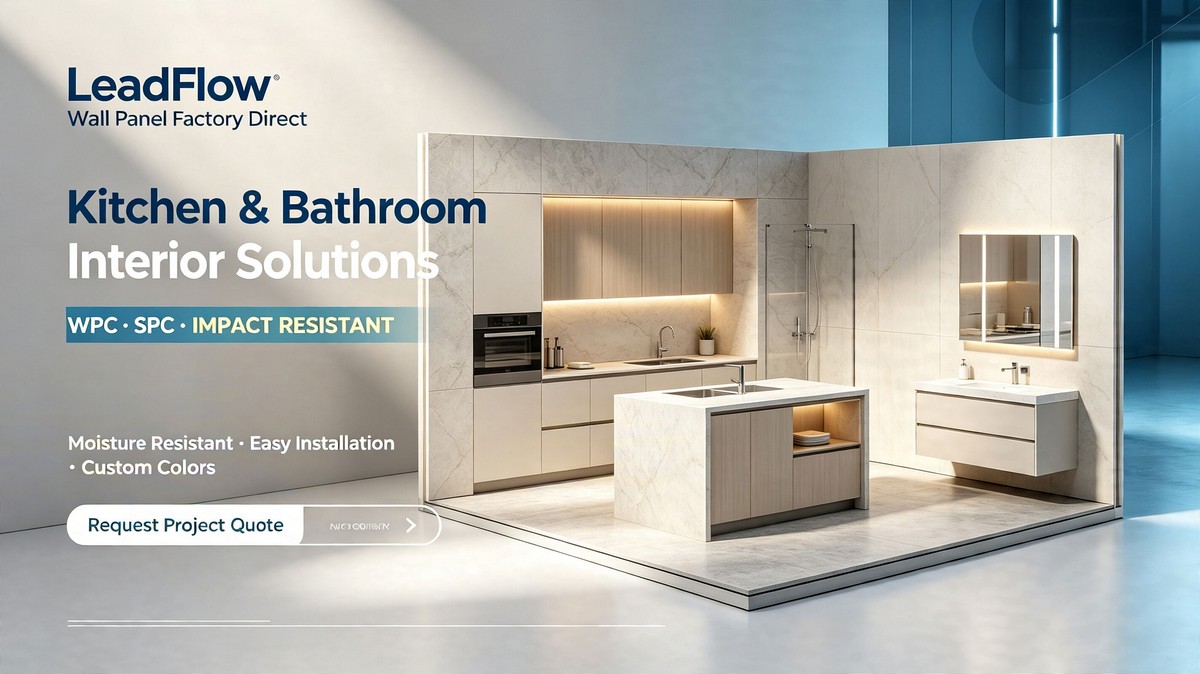
The first is the volumetric pod — complete bathrooms and kitchens manufactured as finished boxes and installed into a building frame. Pods concentrate the most demanding wet-area conditions inside a controlled factory environment, which is why waterproof rigid panels have become their default wall finish. SPC (stone-plastic composite) panels, with their dense mineral core, are widely specified for shower surrounds and full wet walls because they will not swell or delaminate, while carbon crystal panels — high-density decorative sheets with hard, marble-like surfaces — are increasingly chosen for pod interiors and compact living modules where impact resistance and a premium appearance must coexist.
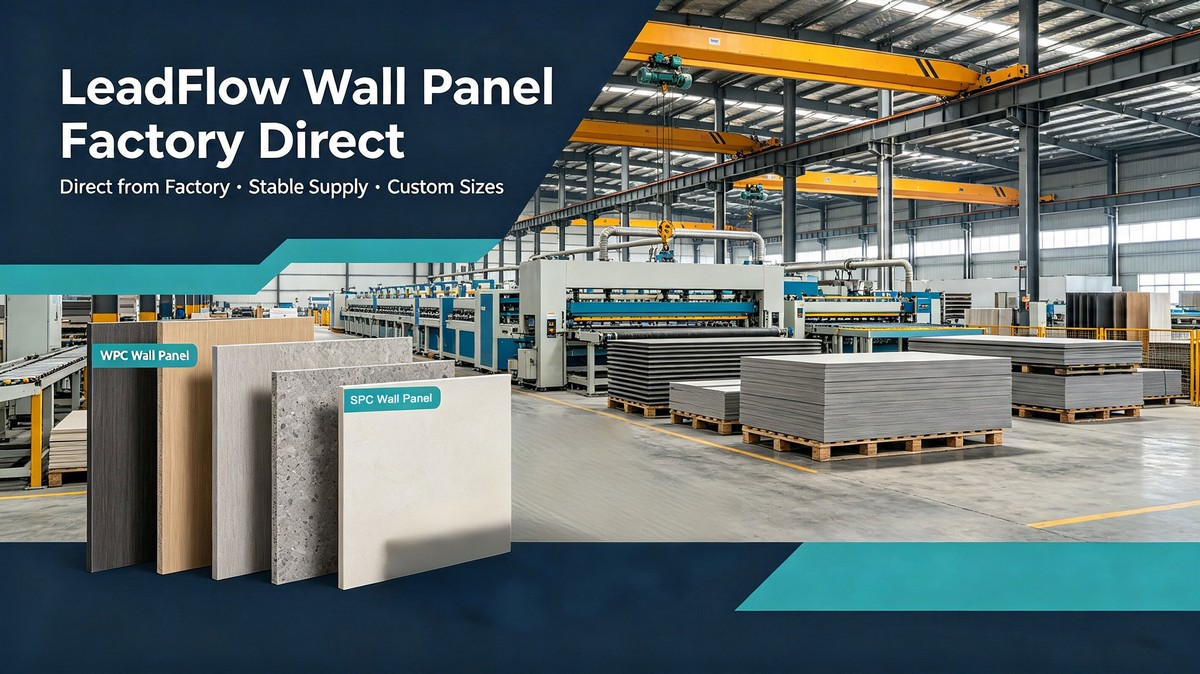
The second frontier is repeatability. Because every module in a production run must look identical, surface consistency becomes the decisive purchasing criterion. A Carbon Crystal Wall Panel factory operating calibrated lamination and UV-coating lines can hold color, gloss, and pattern alignment within tight tolerances across thousands of sheets — a degree of uniformity that manual on-site finishing cannot guarantee at scale. Digital tools reinforce this advantage: panels are increasingly specified as BIM objects and CNC-cut from the same model that drives the module structure, keeping geometry, openings, and finishes in a single source of truth.
The third frontier is sustainability, now a formal requirement in many public and institutional tenders. Well-formulated WPC profiles commonly incorporate recycled wood flour and polymer content, and factory production itself generates less waste than site construction because offcuts can be reground and reused within the plant. For developers pursuing green building credentials, panelized interior finishes with documented recycled content and low emissions offer a clearer compliance path than conventional multi-layer build-ups. For readers weighing material trade-offs by application zone, a side-by-side comparison of WPC, SPC, and PVC wall panels provides a practical starting point.
The Supply Chain Rewired: What Buyers and Distributors Should Watch
As off-site construction scales, wall panel procurement is shifting from transactional purchasing to engineered supply partnership — and both buyers and distributors are adjusting their playbooks.
Engagement now starts earlier. Module manufacturers increasingly want suppliers involved at the design stage, providing BIM objects, physical samples, and technical documentation before drawings are frozen. Volume patterns change as well: instead of many small, unpredictable site orders, panel demand arrives as scheduled production batches, rewarding suppliers and wholesalers with disciplined planning. Distribution channels reflect the same shift — SPC Wall Panel wholesale demand from pod manufacturers and fit-out contractors continues to strengthen, drawn by waterproof performance and click-lock installation speed, and distributors that stock complementary categories such as WPC fluted profiles, SPC wet-area panels, and carbon crystal sheets can now quote an entire module's wall package from a single catalog.
For buyers evaluating potential partners, a practical checklist has emerged. Confirm dimensional tolerance across production batches, because small deviations become visible across a full module run. Verify fire-performance test reports and indoor-air documentation appropriate to the destination market, since requirements vary significantly between regions. Inspect packaging engineering: panels bound for module factories travel multiple stages and need protection designed for that journey rather than a single delivery. Finally, ask about long-term matching — modular buildings are refurbished unit by unit, and the ability to supply matching panels years later is a genuine differentiator. Buyers preparing tenders can refer to a structured wall panel sourcing guide to benchmark suppliers against these criteria.
Conclusion: Interior Finishing Moves Into the Factory
Modular construction's growth trajectory looks durable across housing, hospitality, healthcare, and education, driven by persistent skilled-labor shortages and relentless pressure on project timelines. Within that shift, wall panels are being redefined — no longer a late-stage decoration but an engineered component specified alongside the module structure itself. WPC wall panels, with their dry installation, dimensional stability, and factory-applied finishes, sit at the center of that redefinition, while SPC and carbon crystal products extend the portfolio into wet areas and premium interiors.
The innovation agenda ahead is equally clear: fire-retardant composite formulations, deeper embossed textures that mimic natural materials, acoustic-backed panels for multi-family housing, and closed-loop recycling of production offcuts. For manufacturers, distributors, and buyers alike, the strategic message is consistent — the future of interior finishing is being decided in the factory, not on the site, and supply partners who understand module production will hold the advantage.
FAQ
Q: Why are WPC wall panels well suited to modular construction?
A: WPC wall panels are lightweight, dimensionally stable, and supplied pre-finished, so they can be installed inside factory-built modules without wet trades such as plastering or painting. This shortens production time, reduces moisture within the assembly, and minimizes on-site rework.
Q: What is the difference between WPC, SPC, and carbon crystal wall panels?
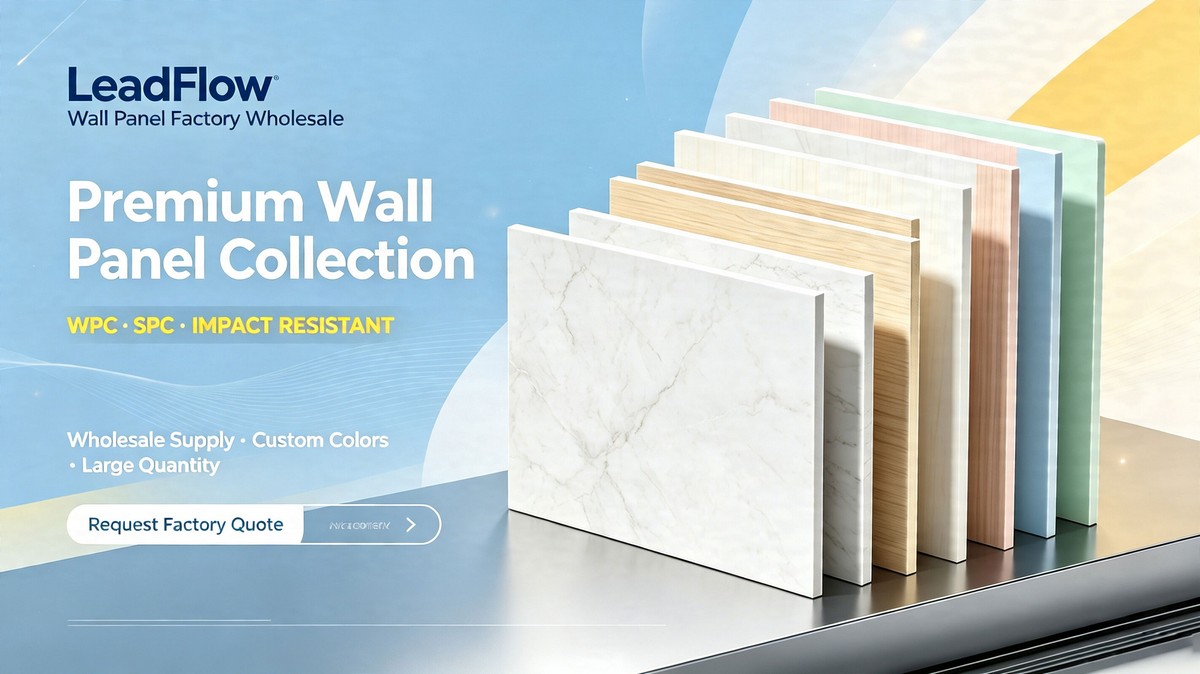
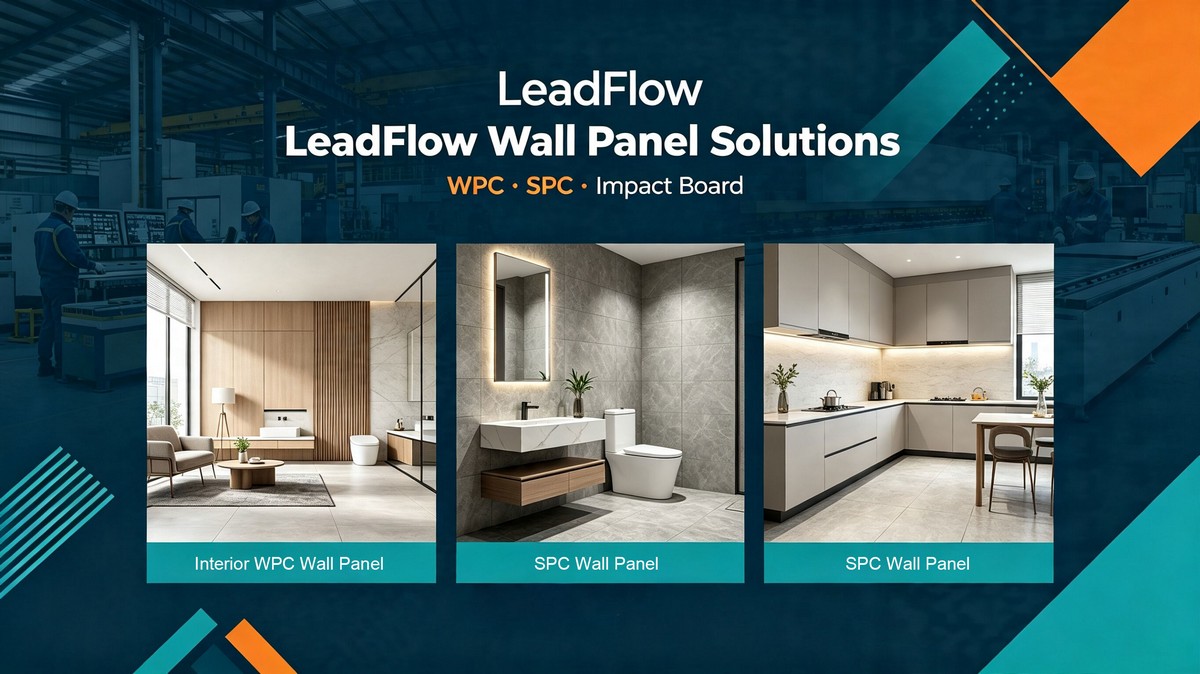
A: WPC combines wood fiber with polymer to create a warm, easy-to-work panel suited to general interior walls; SPC uses a rigid stone-plastic core for maximum water and impact resistance, making it ideal for bathrooms and kitchens; carbon crystal panels are high-density decorative sheets with a hard, marble-like finish for premium feature walls. The right choice depends on the zone, budget, and desired aesthetics.
Q: How does prefabrication change the way wall panels are sourced?
A: Off-site builders purchase earlier, in larger and more predictable scheduled volumes, and they expect custom cut lengths, matched trims, and consistent quality across every batch. This favors manufacturers with strong factory quality control and the ability to coordinate directly with module production lines.
Q: Can wall panels be used in the wet areas of prefabricated modules?
A: Yes. WPC and especially SPC panels are water-resistant and are commonly specified for prefabricated bathroom and kitchen pods, provided that joints, edges, and service penetrations are sealed according to the manufacturer's installation guidance.