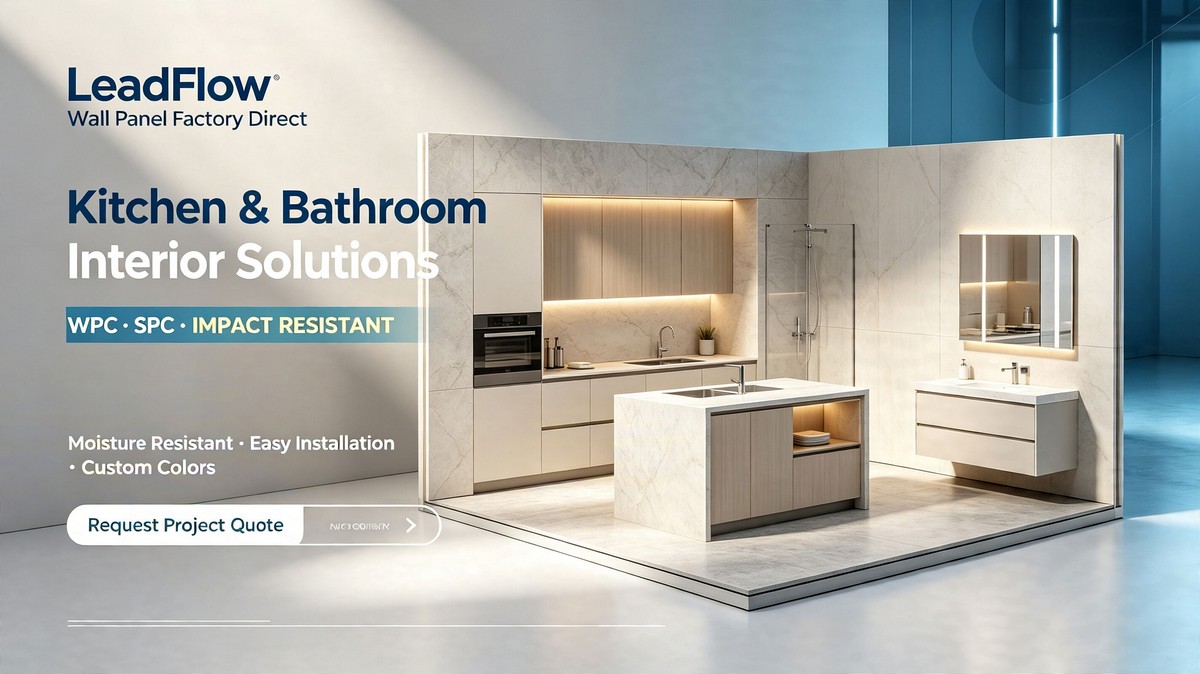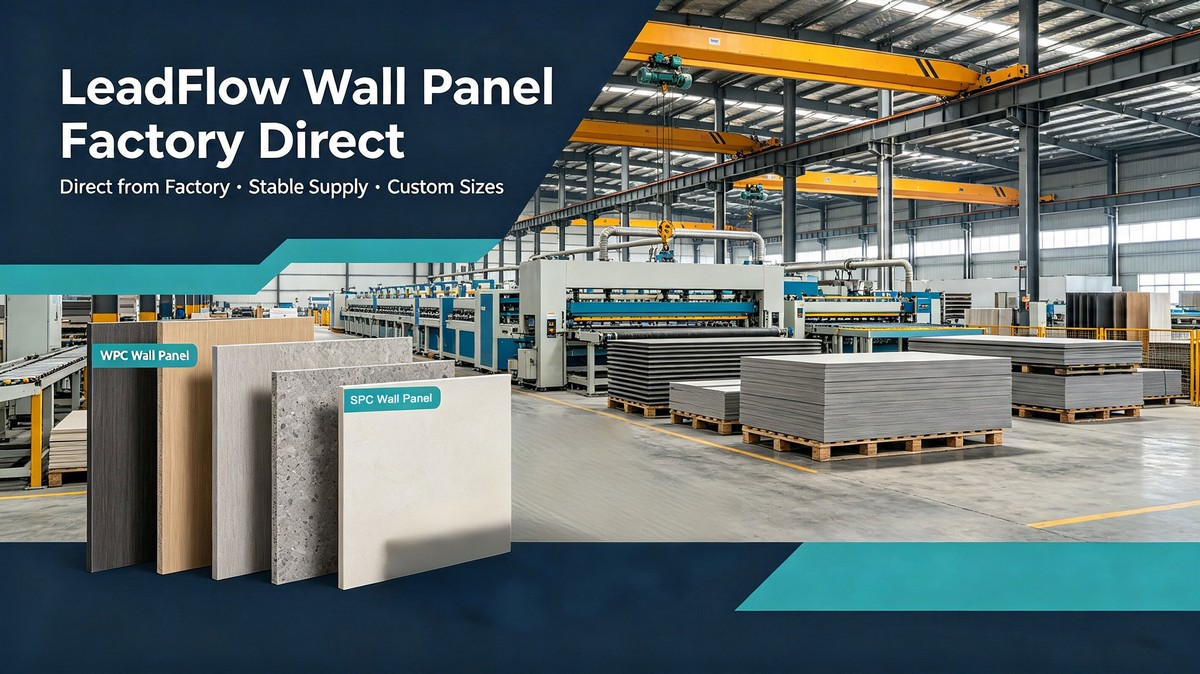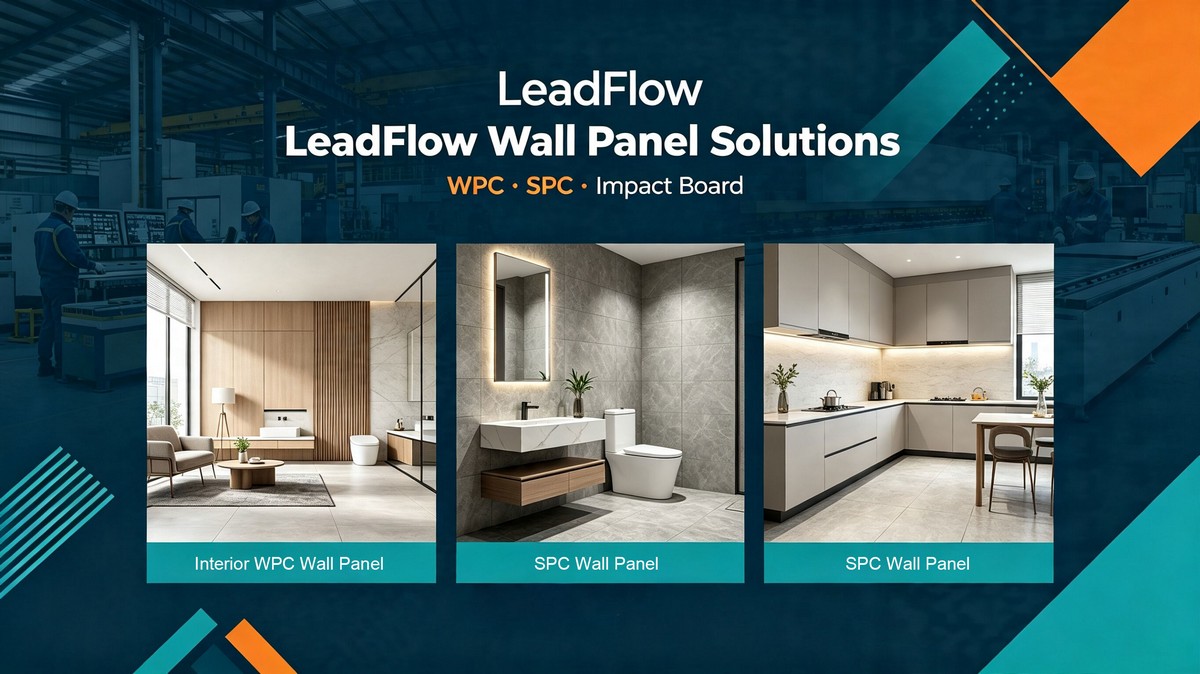
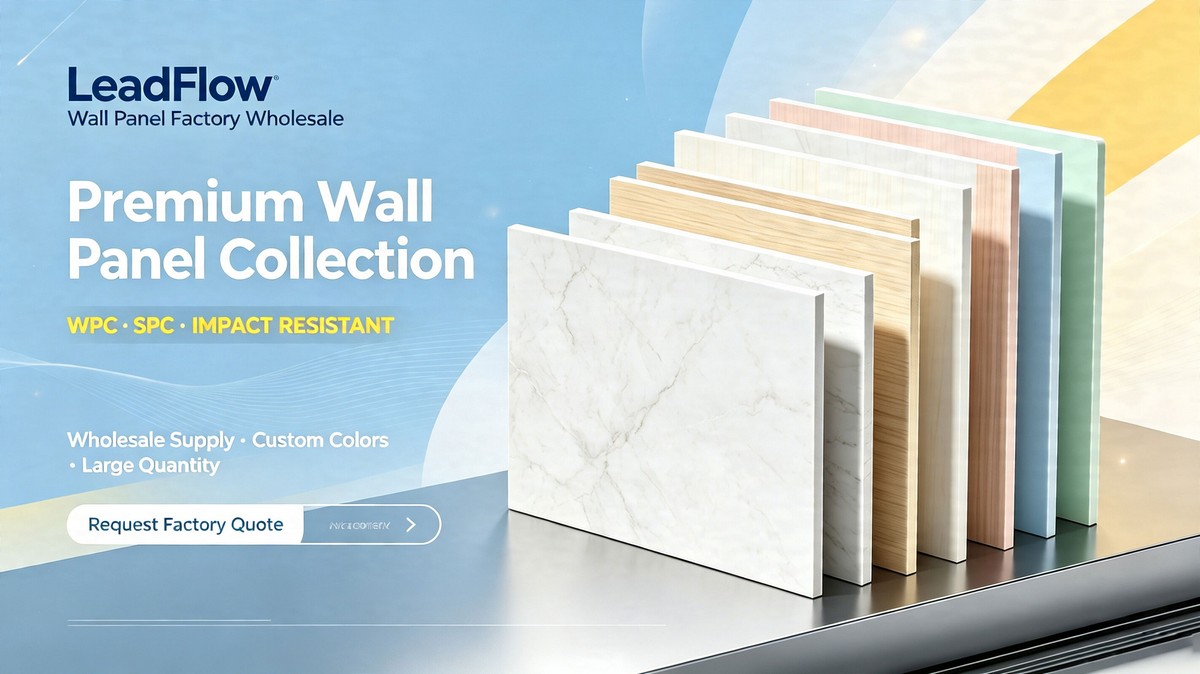
Walls have quietly become the most influential element in contemporary interiors. As designers and homeowners move beyond flat paint and printed wallpaper, the WPC wall panel has emerged as a defining medium of modern space aesthetics, uniting texture, durability, and design flexibility in a single surface system. Across residential, hospitality, and commercial projects worldwide, the conversation has shifted from choosing a wall color to choosing a material system that expresses the character of a space. This article examines the interior design trends driving that shift, the surface technologies behind them, and what they mean for designers, contractors, and material buyers.
Key Takeaways
• Space aesthetics now prioritizes texture, depth, and material expression over flat color, elevating wall panels from background surfaces to design centerpieces.
• WPC wall panels deliver wood-like aesthetics with moisture resistance and low maintenance, making them suitable for bathrooms, kitchens, and high-traffic commercial areas.
• Sculptural formats such as fluted profiles and high-density carbon crystal panels are converging with UV marble sheets to create layered, hybrid surface palettes.
• Sustainability, fast installation, and customization have become the decisive commercial factors in global specification decisions.
Space Aesthetics: The Philosophy Reshaping Interior Design Trends
Space aesthetics describes the intentional orchestration of light, texture, proportion, and material within an interior, and it has become the guiding framework behind today's interior design trends. Rather than treating walls as neutral backdrops, designers now use them to establish atmosphere: a fluted surface can calm a bedroom with soft shadow play, while a high-gloss panel can energize a retail entry with reflected light. The result is a design language in which the wall itself becomes functional art.
Several converging movements explain this shift. Warm minimalism favors restrained palettes enriched by tactile materials; biophilic design brings wood grain and organic rhythm indoors; and the quiet-luxury aesthetic rewards surfaces that look refined without appearing decorated. At the same time, open-plan living has reduced the number of interior walls, which means the remaining vertical surfaces carry far more expressive weight than they did a decade ago. The cause-and-effect relationship is clear: fewer walls, greater responsibility per wall.
This has direct commercial consequences. Vertical ribbed surfaces, in particular, have moved from niche to mainstream, and sourcing has become a design decision in its own right. A WPC Fluted Wall Panels supplier capable of holding tight profile tolerances and consistent color batches from lot to lot is now a strategic partner for hotel groups and retail chains that must reproduce an identical aesthetic across dozens of locations. For specifiers evaluating options, a dedicated WPC fluted wall panel application guide is a useful reference for matching groove depth, spacing, and finish to room scale and lighting conditions.
From Flat to Sculptural: Texture-Driven WPC Wall Panel Trends
The clearest expression of current interior design trends is the industry-wide move from two-dimensional decoration to sculptural, three-dimensional wall surfaces. Fluted and slatted WPC profiles lead this movement because they interact with light: vertical grooves create gradients of highlight and shadow that change throughout the day, visually heightening rooms and adding rhythm to long corridors and reception areas. Because the profiles are extruded rather than carved, they achieve this depth at a fraction of the weight and cost of solid timber, and they install as full-height cladding without the dust and downtime of wet trades.
Alongside fluted formats, high-density carbon crystal panels have carved out a distinct role. These engineered boards use a rigid core that accepts crisp edge profiles and highly realistic marble or wood-grain decorative layers, offering superior scratch and impact resistance for feature walls, TV backdrops, wardrobes, and built-in joinery. Buyers auditing a Carbon Crystal Wall Panel factory typically focus on three quality markers: core density and screw-holding strength, formaldehyde emission certification, and the fidelity of the surface film. Those criteria separate premium panels from commodity product, and they matter most in commercial settings where surfaces endure daily contact.
Compared with traditional materials, the advantages are structural as well as aesthetic. Natural timber warps in humid climates; gypsum board demands jointing, sanding, and painting; natural stone imposes heavy structural loads and long lead times. A well-manufactured WPC wall panel resists moisture, installs with click-lock or tongue-and-groove systems, and can be refitted room by room. In markets facing skilled-labor shortages, that installation speed has become as influential as appearance. Readers weighing options can review our comparison of WPC wall panel systems versus traditional cladding materials for a detailed breakdown.
Material Convergence: Pairing WPC with UV Marble and Layered Surfaces
Contemporary interiors rarely rely on a single surface material. Instead, designers layer contrasting finishes to build depth, and engineered panels make that layering affordable and consistent. The most common pairing today places matte or fluted WPC surfaces against high-gloss UV marble sheets: the textured panel provides a soft, light-absorbing background, while the UV-cured marble-look sheet delivers the sharp reflectivity and veining detail of polished stone at a fraction of the weight and cost. Because neither material requires grout, sealant, or heavy substrates, the combination is practical for walls, ceilings, columns, and even built-in furniture.
Execution quality determines how convincing these hybrid palettes look. An experienced UV Marble Sheet manufacturer supports designers with large-format sheets, color-matched trims and edge banding, and stable printing so that the same veining can flow from a feature wall onto adjacent cabinetry. That continuity, in which one visual language spans multiple elements, is a hallmark of high-end space aesthetics and a practical differentiator when buyers compare suppliers.
The convergence trend is most visible in commercial renovation. Hotels, restaurants, clinics, and retail stores increasingly refresh interiors on short shutdown windows, and dry-installed panel systems make overnight refits realistic. This relationship between compressed project timelines and engineered panels has reshaped procurement: buyers now evaluate a WPC wall panel or UV marble sheet not only on appearance but on installation method, waste rate, and the availability of matching profiles and trims.
Conclusion and Outlook
Space aesthetics and interior design trends point toward walls conceived as integrated, expressive systems rather than decorative afterthoughts. Three developments are likely to define the next phase. First, digital surface printing and co-extrusion will widen the gap between premium and commodity panels, rewarding manufacturers that invest in fidelity and consistency. Second, sustainability pressure will push the industry toward recycled-core formulations, longer service lives, and transparent certification. Third, fire-retardant and hygienic grades will expand WPC and carbon crystal panels deeper into commercial, code-regulated applications.
Challenges remain, including quality variance across a crowded supplier base and uneven recycling infrastructure in some markets. For architects, developers, and distributors, the practical conclusion is that choosing a manufacturing partner is now a design decision, not merely a procurement task. The projects that capture current space aesthetics most convincingly will be those where surface technology, sourcing reliability, and design intent are aligned from the first rendering to final installation.
FAQ
Q: What is a WPC wall panel and where is it typically used?
A: A WPC (wood-plastic composite) wall panel is an engineered cladding product made from wood fiber and thermoplastic resin. It is used for interior feature walls, ceilings, bathrooms, kitchens, offices, hotels, and retail spaces, offering wood-like aesthetics with moisture resistance and low maintenance.
Q: Why are fluted wall panels trending in modern interior design?
A: Fluted panels add vertical rhythm, depth, and light-shadow contrast that flat painted walls cannot achieve. They visually heighten rooms, complement minimalist and Japandi styles, and install quickly as full-height cladding without wet trades.
Q: How do carbon crystal wall panels differ from standard WPC panels?
A: Carbon crystal panels use a denser, harder core with improved impact and scratch resistance and highly realistic marble or wood-grain finishes. Standard WPC fluted panels are favored for textured three-dimensional walls, while carbon crystal panels suit flat feature surfaces in high-contact areas.
Q: Can WPC wall panels be combined with UV marble sheets in the same space?
A: Yes. Designers frequently pair matte or fluted WPC panels with high-gloss UV marble sheets to create texture contrast. Because both are lightweight engineered products, the combination suits walls, ceilings, and built-in furniture without the structural load of natural stone.