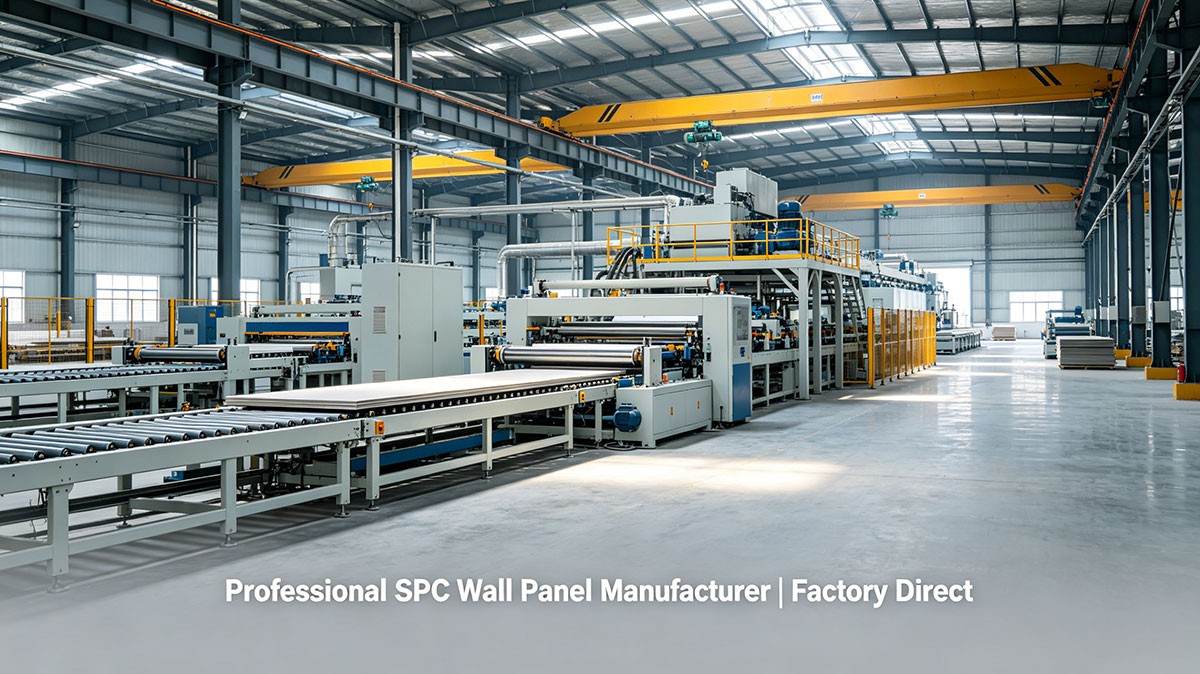
Introduction: Meeting the Demand for Modern Interior Cladding
In the evolving landscape of commercial and residential interiors, the demand for materials that combine aesthetic appeal with functional durability is at an all-time high. For distributors, contractors, and wholesalers, sourcing a product that satisfies both the designer's eye and the accountant's spreadsheet is the key to success.
Enter WPC (Wood Plastic Composite) Wall Panels. At LeadFlow, we have refined the art of WPC manufacturing to produce cladding solutions that are not only visually stunning but also engineered for performance. This guide breaks down everything you need to know about WPC wall panels to make an informed purchasing decision.
1. What Are WPC Wall Panels? (The LeadFlow Standard)
WPC stands for Wood Plastic Composite. It is an innovative green building material produced by blending finely ground wood fibers (such as bamboo or pine) with high-density polyethylene (HDPE) or PVC resin, along with specific additives for stability and color.
Unlike traditional lumber, which is cut from trees, WPC is created through a sophisticated extrusion process. This results in a homogenous, non-porous core.
LeadFlow’s Manufacturing Edge: Our WPC panels feature a multi-layer structure:
The Core: A dense, waterproof composite core providing structural integrity.
The Decor Film: High-definition PVC films that replicate the textures of oak, walnut, marble, or fabric.
The Wear Layer: A UV-cured coating that protects against scratches, stains, and fading.
2. Technical Advantages: Why B2B Buyers Choose LeadFlow WPC
When you stock LeadFlow WPC, you are offering your clients a suite of practical benefits that translate into fewer complaints and higher satisfaction:
100% Waterproof & Mold-Resistant: Unlike MDF or solid wood, WPC does not absorb moisture. It will not swell, rot, or foster mold growth, making it ideal for bathrooms, kitchens, and humid climates (e.g., Southeast Asia, Florida).
Superior Dimensional Stability: WPC exhibits minimal thermal expansion and contraction compared to pure PVC panels. This ensures that walls remain flat and seamless throughout the seasons.
Acoustic & Thermal Insulation: The wood fibers within the composite act as natural insulators, reducing heat transfer and dampening sound—a premium feature for hotels and office partitions.
Effortless Maintenance: The surface is stain-resistant and easy to clean. No waxing, painting, or sealing is required—just a simple wipe with a damp cloth.
Termite & Pest Proof: The inorganic components of the composite make it unappetizing to termites and carpenter ants, protecting the investment in pest-prone regions.
3. Addressing the Limitations (Transparency for Professionals)
To maintain a trusted partnership, we believe in transparency regarding material properties:
Direct Sunlight Exposure: While highly durable indoors, standard WPC contains organic wood fibers that can fade or degrade under constant, intense UV radiation. For outdoor or sun-exposed areas, we recommend our specialized WET (Weather-Resistant) Series.
Weight Consideration: WPC is denser and heavier than hollow PVC panels. While this provides a more premium, substantial feel, it requires careful handling during loading and unloading.
Fixing Methods: Due to its density, WPC requires specific cutting tools (carbide-tipped blades) and appropriate fasteners for installation.
4. Product Comparison: WPC vs. SPC vs. Traditional Wood
Understanding the differences between cladding types allows you to position each product correctly in your portfolio.
Feature | LeadFlow WPC Wall Panels | LeadFlow SPC Wall Panels | Traditional Wood / MDF |
|---|---|---|---|
Core Composition | Wood fiber + PVC/PE | Limestone powder + PVC | Natural Timber / Fiberboard |
Surface Texture | Warm, authentic wood grain | Rigid, crisp stone/texture | Natural variations |
Water Resistance | Excellent (Waterproof) | Superior (Waterproof) | Poor (Absorbs moisture) |
Impact Resistance | High | Very High (Extremely hard) | Medium (Dents/scratches) |
Thermal Insulation | Good | Fair | Good |
Primary Use Case | Living rooms, bedrooms, hotels, ceilings | Hospitals, labs, high-traffic corridors | High-end luxury (dry areas) |
Installation Ease | Click-lock system (DIY friendly) | Click-lock system (Professional recommended) | Complex (Glue/nails/sanding) |
Strategic Insight: Use WPC for areas requiring warmth and noise reduction. Use SPC where extreme impact resistance and rigidity are required. Use Wood only where budget is unlimited and maintenance is guaranteed.
5. Expanding Your Catalog with LeadFlow
As a full-spectrum manufacturer, LeadFlow supports your diverse project needs. Beyond standard WPC, consider adding these high-margin items to your inventory:
SPC Wall Panels: For ultra-durable, fire-retardant applications.
Grille Wall Panels: Combining WPC backing with PET or wood veneer slats for modern acoustic accent walls.
Anti-Collision Wall Panels: Essential for healthcare facilities, schools, and senior living centers.
WET Series: Specifically engineered for exterior facades and outdoor patios, featuring enhanced UV inhibitors.
6. Why Partner with LeadFlow?
Choosing a factory is about more than price; it’s about reliability.
Rigorous QC: Our German-engineered extrusion lines ensure color consistency across batches—critical for large-scale renovations.
Customization: We offer OEM/ODM services, including custom widths, thicknesses (e.g., 8mm, 9mm, 12mm), and embossing patterns.
Logistics Mastery: With years of experience exporting to 30+ countries, we optimize container loading (Mixed Loading available!) and manage documentation to ensure smooth customs clearance.
Conclusion: Elevate Your Product Line
WPC wall panels represent the future of interior cladding—offering the perfect synergy of nature and technology. By partnering with LeadFlow, you gain access to factory-direct pricing, certified quality, and a product that practically sells itself.
Ready to inspect the quality yourself?
Contact LeadFlow today to request a complimentary sample pack and our latest wholesale catalog.