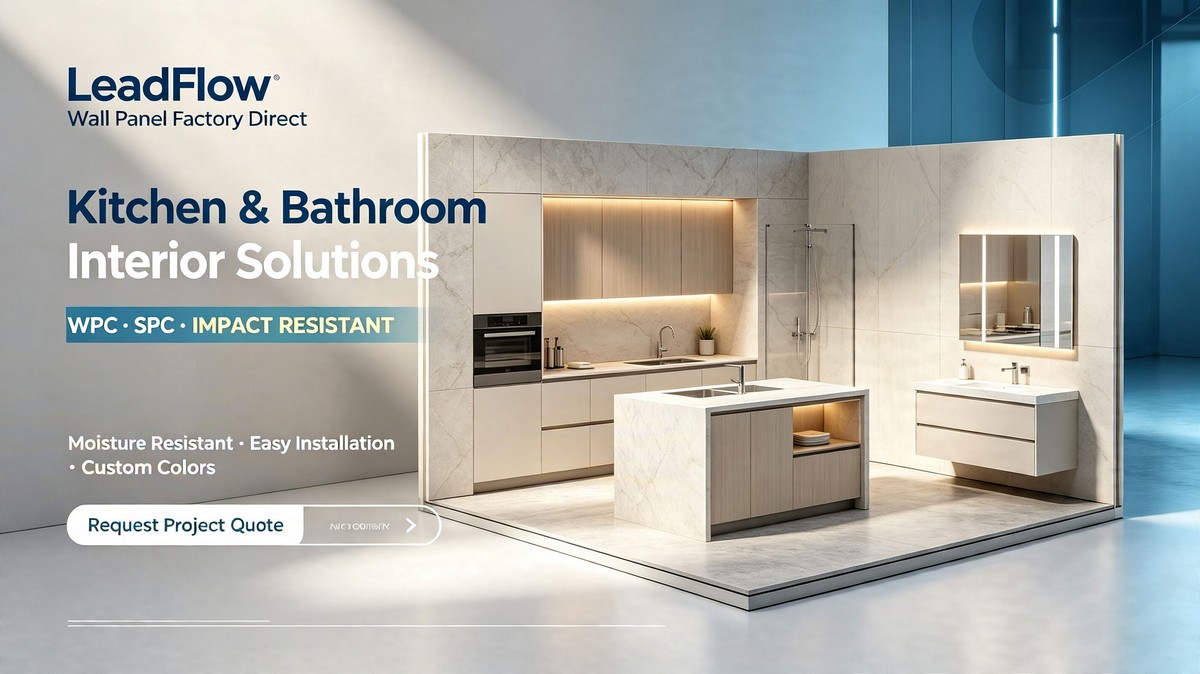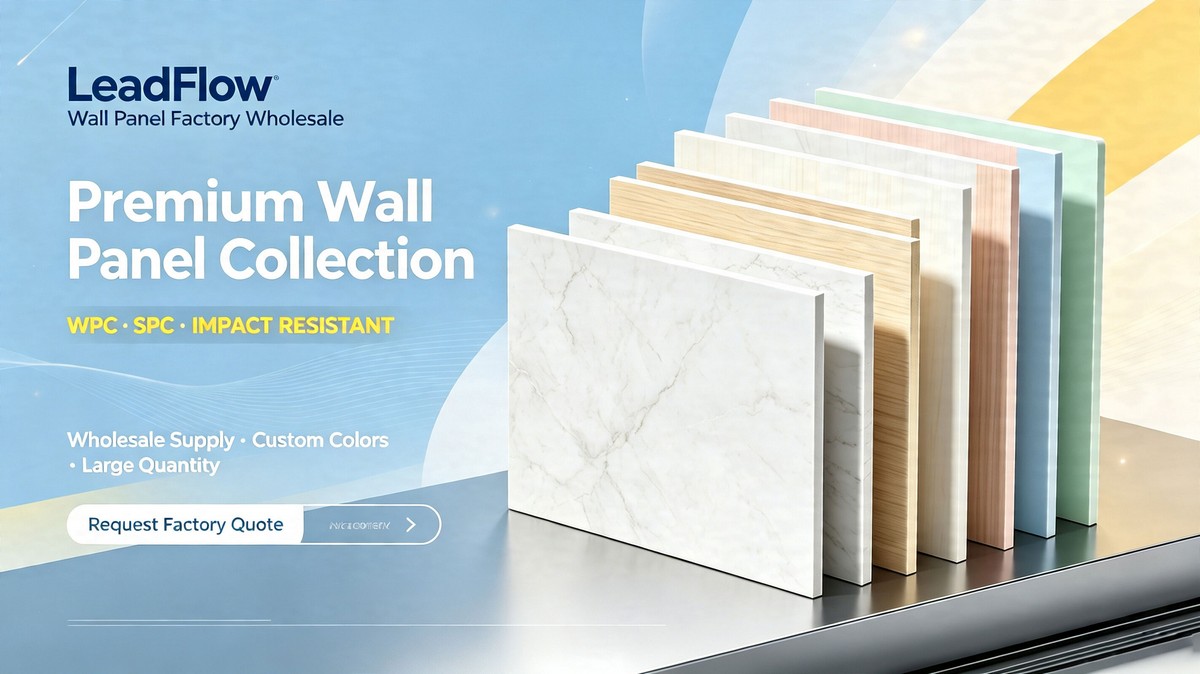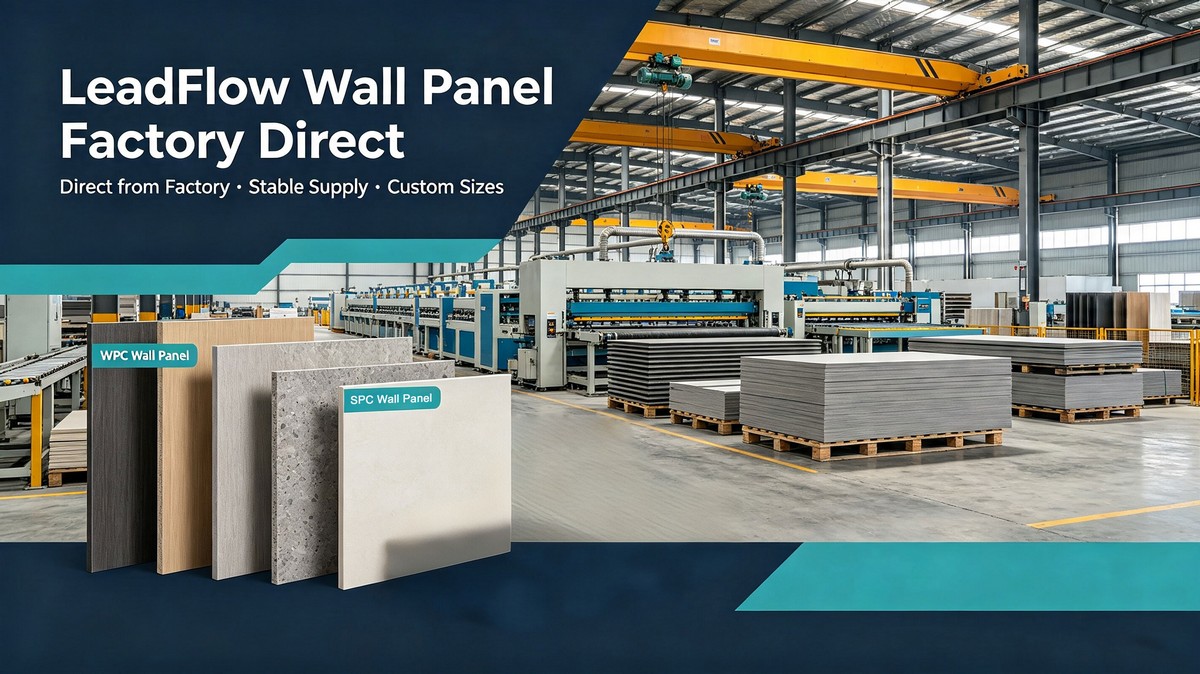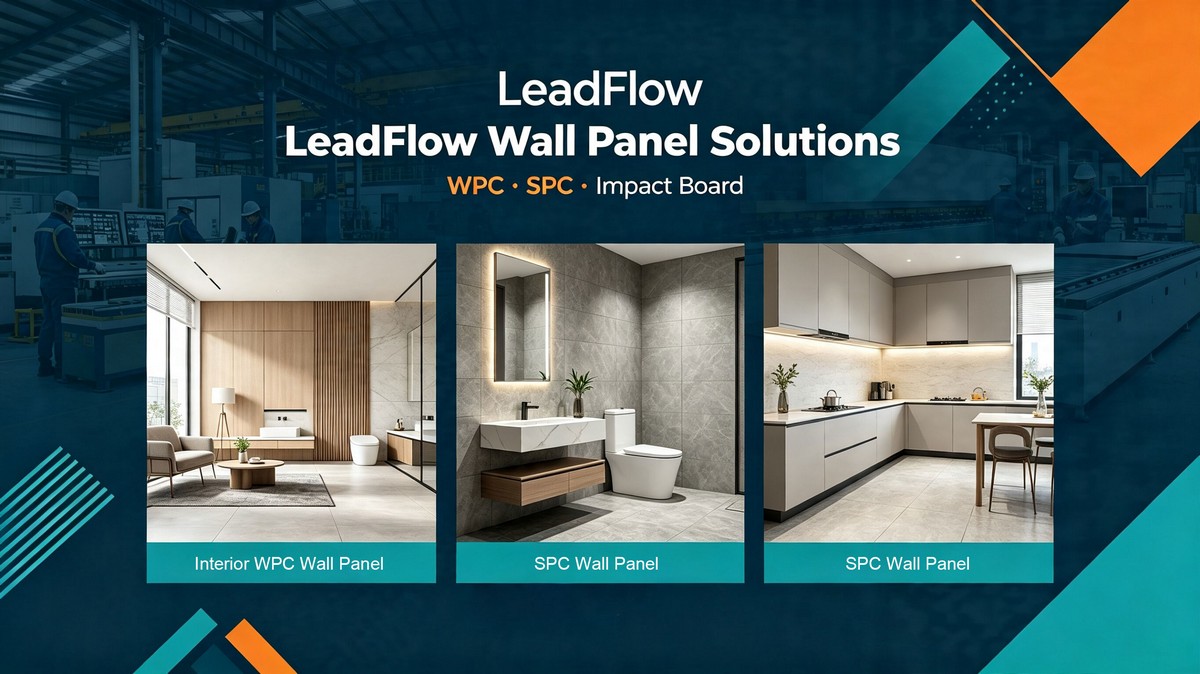
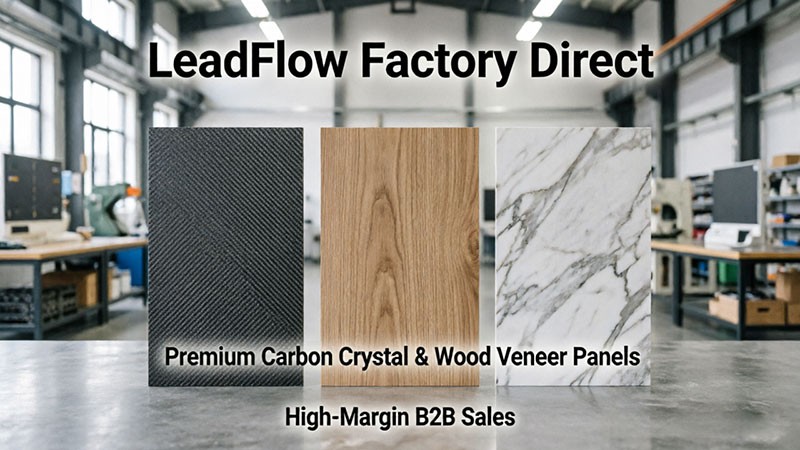
In the global building materials market, WPC (Wood-Plastic Composite) wall panels are increasingly favored by B2B distributors, contractors, and builders due to their outstanding eco-friendly performance and exceptional durability. As a professional wall panel manufacturer, LeadFlow is dedicated to providing high-quality WPC panels, SPC (Stone Plastic Composite) panels, and various functional wall solutions to our global partners. This article will provide an in-depth, professional analysis of the core characteristics, objective pros and cons, and material comparisons of WPC wall panels, helping you accurately grasp market trends and optimize your procurement decisions.
1. What Are WPC Wall Panels?
WPC wall panels are a high-polymer composite material formed through high-temperature and high-pressure extrusion using natural wood fibers (such as wood powder, bamboo powder, or straw), thermoplastics (such as PVC or PE), and functional additives (like flame retardants and UV stabilizers). They brilliantly combine the natural texture of wood with the weather resistance of plastic. WPC panels not only retain the warm visual appeal of solid wood but also overcome the physical defects of traditional wood, such as susceptibility to moisture and deformation, making them a new, eco-friendly building material that perfectly balances aesthetics and practicality.
2. Core Advantages of WPC Wall Panels
For B2B buyers, WPC wall panels offer highly competitive selling points in the end-user market:
Ultimate Waterproof & Moisture-Proof, Termite-Proof Performance: WPC has an extremely low water absorption rate. Even in high-humidity environments like bathrooms and basements, it will not mold, rot, or swell. Its closed-cell structure also effectively resists pests like termites.
Eco-Friendly & Highly Safe: The manufacturing process requires no harmful glues like formaldehyde or benzene, resulting in near-zero formaldehyde emissions that meet strict international environmental standards. Additionally, WPC exhibits excellent flame-retardant properties (typically reaching Class B1), self-extinguishing when exposed to fire, significantly enhancing spatial safety.
Ultra-Low Maintenance Costs: Unlike solid wood, WPC panels do not require regular painting or waxing. They can be kept clean with a simple wipe using water, and their high scratch resistance drastically reduces long-term maintenance costs for both commercial and residential spaces.
Easy Installation & Shortened Construction Time: Utilizing modular interlocking or tongue-and-groove systems, WPC panels can be installed without professional carpenters. They can be applied directly over existing walls, substantially saving labor and time costs.
Design Versatility: Through surface lamination or 3D printing technologies, WPC panels can realistically replicate various textures, including wood grain, stone, and fabric, meeting the customized demands of diverse commercial and residential projects.
3. Objective Perspective: Limitations of WPC Wall Panels
To help buyers set realistic expectations for their clients, it is also necessary to understand the objective limitations of WPC:
Temperature Sensitivity: In extreme high or low temperatures, the material may experience slight thermal expansion and contraction. Therefore, standard expansion gaps must be left during installation.
Limited Load-Bearing Capacity: While highly impact-resistant, WPC panels cannot directly support heavy equipment (such as large TVs or heavy cabinetry) like a structural wall. Heavy items must be secured using keels or specialized mounting hardware.
Higher Initial Cost: Compared to standard PVC panels, WPC panels have a slightly higher unit price due to the inclusion of wood fibers and more complex manufacturing processes. However, their extended lifespan and low maintenance requirements offer a superior long-term return on investment.
4. WPC Wall Panels vs. Traditional Materials
In end-user sales, WPC wall panels are frequently compared with other materials:
WPC vs. Solid Wood: While solid wood offers natural texture, it is highly susceptible to moisture-induced cracking and deformation, requires regular maintenance, and is prone to termite damage. WPC maintains a natural appearance while achieving zero maintenance, waterproofing, and termite resistance at a more competitive price point.
WPC vs. PVC Panels: PVC panels are affordable and waterproof but often have a plastic feel, lacking the warmth of wood. Their fire resistance and impact strength are also weaker. WPC provides a more premium visual effect and superior physical performance.
WPC vs. SPC Panels: SPC panels, made primarily of stone powder and resin, have extremely high density and excellent fire resistance, but they are relatively brittle and difficult to mold into complex shapes. WPC offers better toughness and plasticity, making it ideal for interior decoration scenarios requiring bending or intricate designs.
Conclusion
Whether for residential projects pursuing ultimate eco-friendliness or commercial spaces requiring durability and low maintenance, WPC wall panels demonstrate irreplaceable comprehensive value. LeadFlow boasts mature production lines and extensive export experience. Our series of WPC panels, SPC panels, WET panels, anti-collision panels, and grilles are all subjected to rigorous quality control. We provide global B2B clients with OEM/ODM customization, stable production capacity, and professional technical support. We look forward to partnering with you to explore broader opportunities in the building materials market.