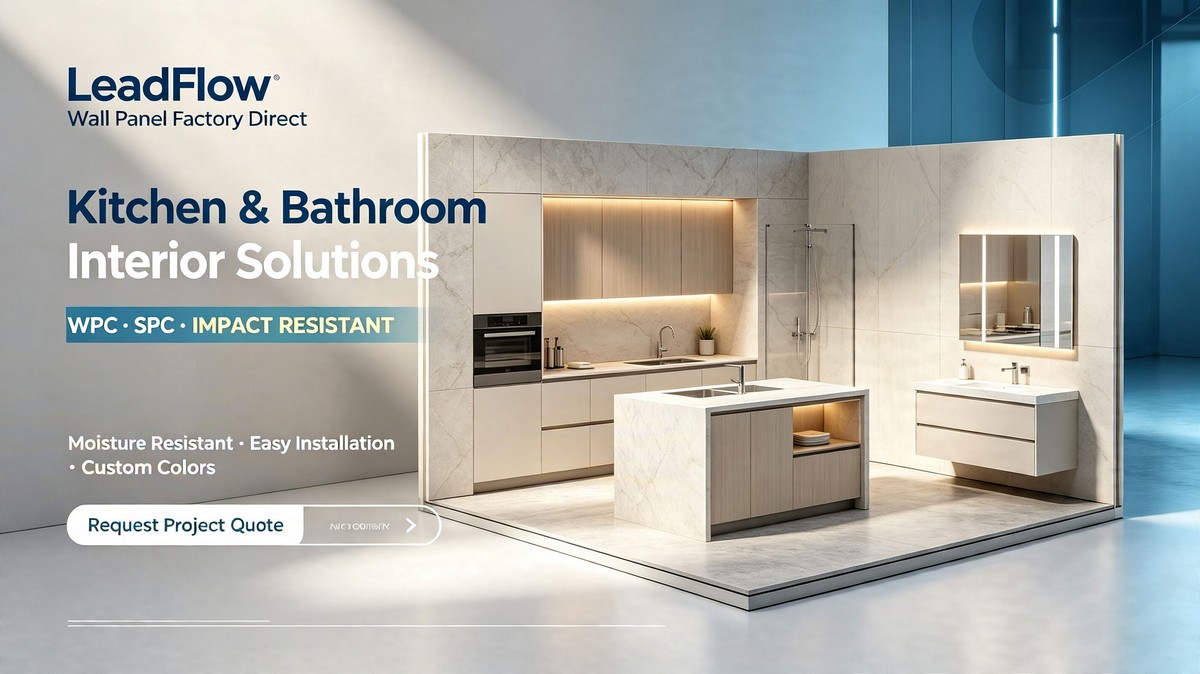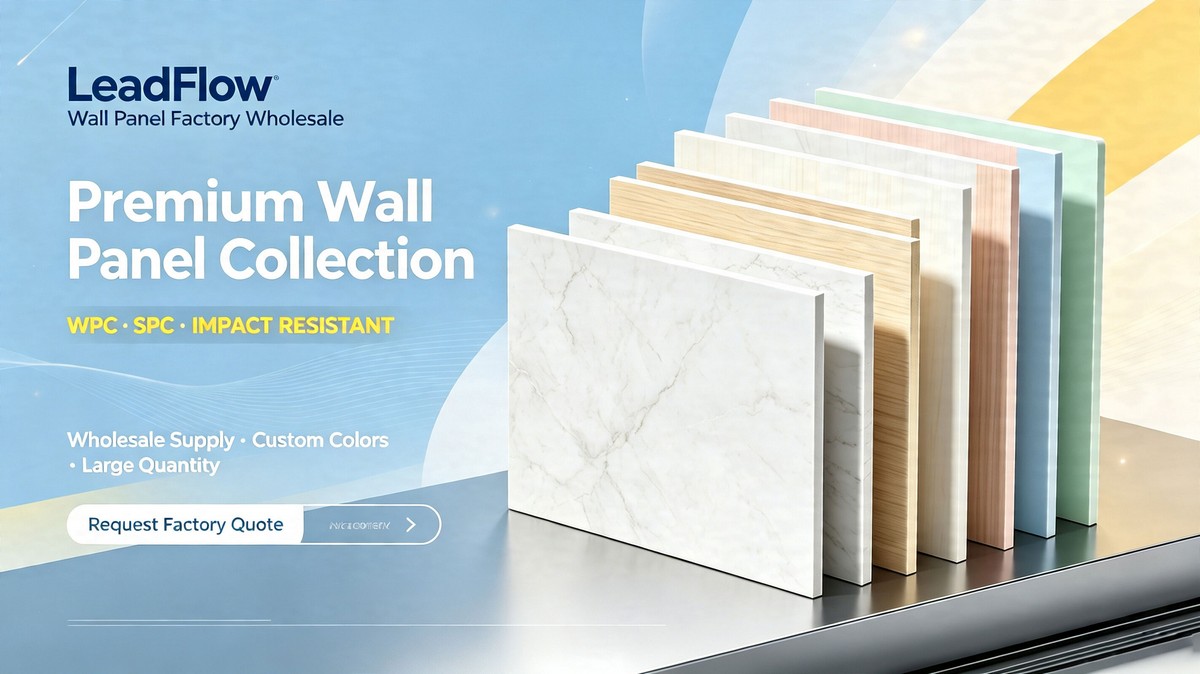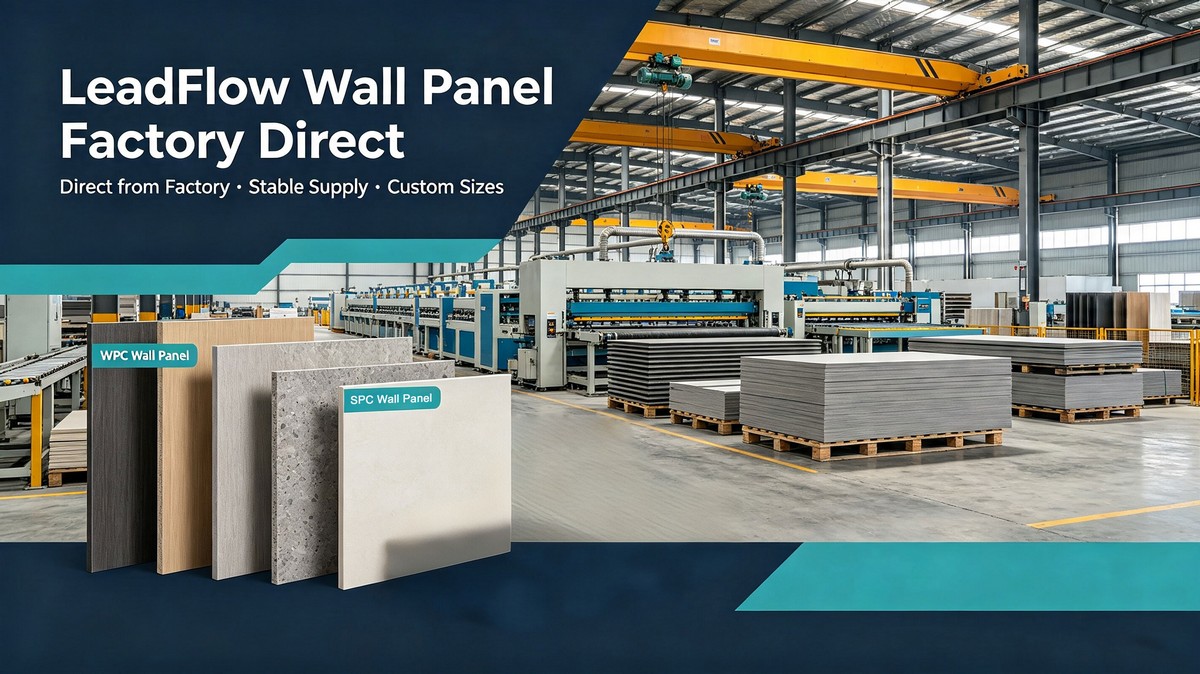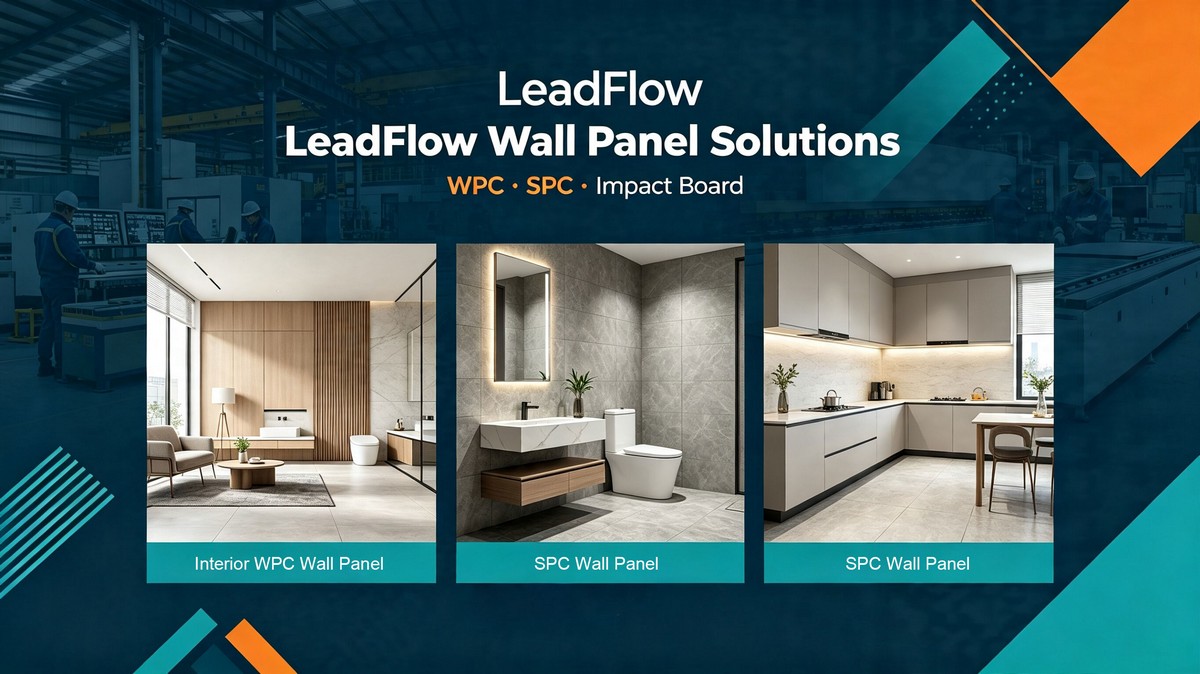
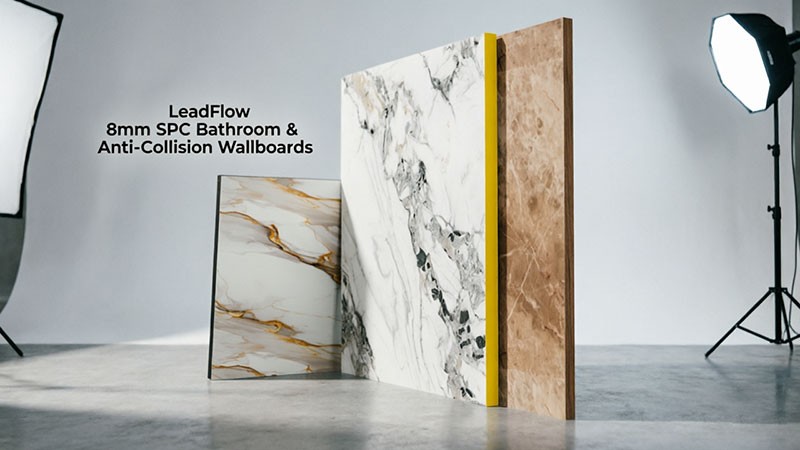
The global demand for sustainable, low-maintenance building materials is accelerating, and WPC (Wood-Plastic Composite) wall panels are at the forefront of this shift. As a factory specializing in WPC, SPC, WET, anti-collision, and grille wall panels, LeadFlow delivers engineered solutions designed for distributors who prioritize quality, consistency, and margin.
What Exactly Is a LeadFlow WPC Panel?
LeadFlow WPC panels are extruded composites combining 30–70% natural plant fibers—such as wood powder, bamboo, or rice husks—with thermoplastic resins (PVC for indoor applications, PE for outdoor). Coupling agents and stabilizers ensure molecular-level bonding between organic and synthetic components. The result is a material that looks and feels like wood but resists moisture, rot, and insects.
Our standard indoor lineup includes solid flat boards (5–10 mm thickness) and hollow grille profiles, available in customizable dimensions. Surface treatments range from thermal-transfer wood grain to PVC film lamination, with optional UV-resistant topcoats for high-traffic commercial spaces.
The Advantages Your Clients Will Pay For
Moisture Defense: With water absorption between 0.5% and 1.5%, LeadFlow WPC panels outperform natural wood in humid interiors such as kitchens, bathrooms (dry zones), and basements.
Fire Safety: Indoor PVC-based WPC achieves B1-grade flame retardancy, satisfying commercial building codes for hotels, offices, and healthcare facilities.
Acoustic & Thermal Comfort: The hollow-chamber and micro-foam structures provide superior sound dampening and thermal insulation compared to rigid stone-based panels.
Installation Speed: Click-lock, screw-fix, or adhesive-mount systems allow dry construction without dust, cutting project timelines by up to 60%.
Sustainability Story: No formaldehyde-based adhesives, E0/ENF-level emissions, and 100% recyclable production scrap appeal to eco-conscious developers.
Limitations to Manage Expectations
Transparency builds long-term reseller relationships. WPC is not ideal for every environment:
Hardness: At Mohs 3–4, it is softer than SPC and can scratch under sharp, heavy impact.
Water Immersion: While highly water-resistant, prolonged submersion (inside shower enclosures or pools) can eventually compromise the substrate. For these zones, LeadFlow SPC is the better specification.
Thermal Movement: Linear expansion of 0.8–1.2 mm/m·℃ requires expansion joints every 6–8 meters and flexible fastening to prevent buckling.
WPC vs. SPC: Your Sales Cheat Sheet
Distributors often need to educate end-users. Here is how LeadFlow WPC positions against our SPC line:
| Attribute | LeadFlow WPC | LeadFlow SPC |
|---|---|---|
| Core | Wood fiber + PVC/PE | Stone powder + PVC |
| Density | 0.9–1.2 g/cm³ | 1.5–2.1 g/cm³ |
| Water Absorption | 0.5–1.5% | <0.1% |
| Feel | Warm, wood-like, slight give | Hard, cold, stone-like |
| Flexibility | Can bend for curved walls | Rigid, flat applications only |
| Best For | Bedrooms, offices, feature walls | Wet rooms, commercial high-traffic |
Target Markets & Applications
LeadFlow WPC is optimized for residential interiors (living rooms, bedrooms, studies), commercial fit-outs (cafés, retail stores, co-working spaces), and outdoor landscaping (PE-grade with ASA co-extrusion for villas and park structures). It is the premium choice when the design brief calls for natural warmth without the maintenance burden of real timber.
The LeadFlow Factory Commitment
We do not just manufacture; we partner. LeadFlow provides full technical datasheets, third-party test reports (fire, environmental, wear), and OEM color-matching services. Our twin-screw extrusion lines and strict moisture-control protocols (wood fiber dried to <1% before processing) ensure every container delivers identical quality.
Ready to add a high-conversion product to your catalog? Request a LeadFlow sample kit and wholesale price list today.