WPC fluted wall panels are decorative wall cladding solutions made from Wood-Plastic Composite (WPC) material, characterized by their distinct vertical grooves or ribbed profiles. While retail customers often see them simply as modern interior design elements, for importers, distributors, and project contractors, the evaluation goes much deeper. The critical questions are not just about aesthetics, but about suitability for stable sourcing, repeat orders, private labeling, and commercial application.
This guide explores WPC fluted wall panels from a professional procurement perspective, focusing on specification selection, factory sourcing, waterproof performance, OEM capabilities, and the key decisions buyers must make before placing a bulk order.
? Understanding WPC Fluted Panels in B2B Procurement
- Core Material: Determines panel strength, weight, moisture resistance, and production stability.
- Profile Design: Affects the visual appearance, installation method, packing volume, and market positioning.
- Surface Finish: Influences color consistency, scratch resistance, customer acceptance, and the potential for repeat sales.
- Factory Control: Decides whether specifications, packaging, labeling, and delivery schedules can remain consistent across multiple orders.
Buyer's Note: Importers should not evaluate WPC fluted panels based on photos alone. Panels that look similar may differ significantly in thickness, groove depth, wall structure, surface film quality, and packing methods. These details directly impact landed costs, installation feedback, claim risks, and distributor reputation.
? Buyer Education: What Importers Should Confirm First
Importers typically need a balanced product range suitable for multiple customer types. The priority is not finding the absolute cheapest panel, but building a specification mix that is easy to explain, easy to stock, and suitable for repeated container orders.
- Select a few popular colors rather than many slow-moving finishes.
- Confirm panel size and profile compatibility before printing catalogs.
- Check packing quantities, carton strength, and container loading plans.
- Request samples produced to the same standard as bulk orders.
Distributors should focus on marketable appearance, reliable installation feedback, and after-sales risk control. An attractive panel may be difficult to sell if the size is unfamiliar, accessories are incomplete, or the installation method is unclear for local workers.
? Manufacturer Intent: Why Factory Sourcing Matters
- Whether the supplier controls extrusion production or merely resells finished panels.
- If regular profiles and colors are available for repeat orders.
- If sample colors accurately match mass production batches.
- If the factory can provide custom carton marks, labels, and OEM packaging.
- If the supplier understands export packing standards and container loading optimization.
? Supplier Intent: What a Reliable Partner Provides
- New Buyers: May need fewer colors, standard carton packing, and proven profiles.
- Mature Distributors: May require OEM labels, exclusive color development, sample boards, and a complete accessory system.
- Contractors: May need project color approval, installation guidance, and stable delivery timing.
? Specification Selection Logic
| Specification Factor | Buyer Decision Logic | Why It Matters |
|---|---|---|
| Panel Width | Select based on local installation habits and desired display effect. | Affects coverage area, packing quantity, and installer acceptance. |
| Panel Thickness | Match to budget level, rigidity requirements, and target customer segment. | Influences perceived quality, durability, and price positioning. |
| Panel Length | Confirm wall height, shipping limits, and local cutting practices. | Impacts installation waste, carton design, and container loading. |
| Groove Profile | Choose according to visual style and market preference. | Defines the decorative effect and product differentiation. |
| Surface Finish | Build a controlled color range for repeat sales. | Supports catalog consistency, showroom display, and reorder stability. |
| Accessories | Confirm availability of trims, corners, and installation matching. | Reduces project complaints and improves installation completion rates. |
? Waterproof Performance: What Buyers Should Understand
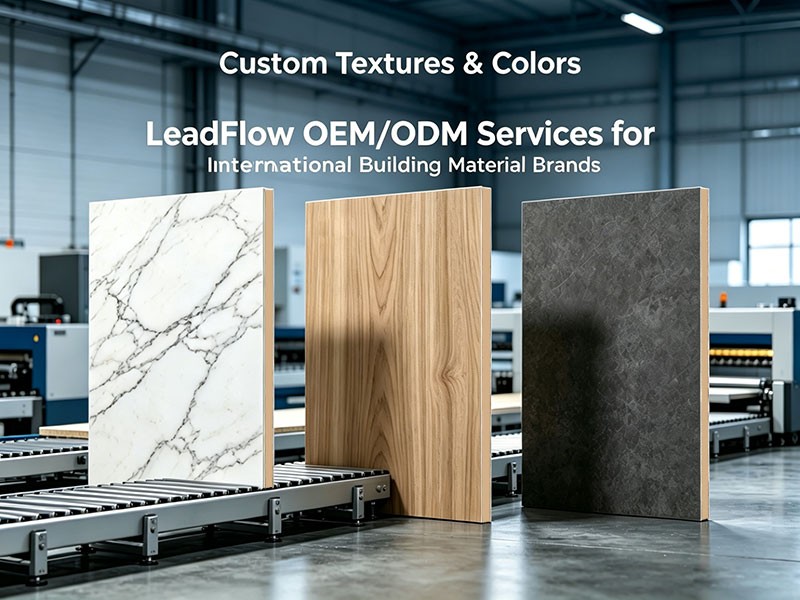
?️ OEM Discussion for Private Label Brands
- Private label carton design and shipping marks.
- Color names adapted to the local market.
- Sample boards or chains for showrooms.
- Product stickers, barcode labels, and distributor information.
- Consistent profile and color supply for future reorders.
? Quotation Preparation: What to Send Before Asking for Price
- Target Market & Buyer Type: Importer, distributor, contractor, wholesaler, or project buyer.
- Panel Specs: Required size, thickness, length, and profile style.
- Colors: Preferred colors or reference photos.
- Quantity: Estimated order quantity or container plan.
- Packaging: Neutral packing, OEM carton, labels, or barcodes.
- Logistics: Destination port or delivery term request.
- Application: Residential, hotel, office, retail, or commercial project.
? Factory Sourcing Logic for Importers
- Confirm target market demand and main customer groups.
- Select 2-4 profiles and a controlled color range for initial testing.
- Request physical samples to compare color, weight, rigidity, and surface quality.
- Confirm packing method, carton size, loading quantity, and accessory options.
- Ask for a quotation based on real order quantity, not just sample price.
- Evaluate communication speed, technical clarity, and export experience.
- Place a trial order or first container with clear specifications and approval samples.
?️ Project Applications and Procurement Priorities
| Application | Recommended Buyer Focus |
|---|---|
| Hotel Lobbies/Corridors | Color consistency, premium finish, installation guidance, delivery schedule. |
| Retail Stores/Showrooms | Modern appearance, easy cleaning, fast installation, repeatable colors. |
| Apartment Interiors | Cost control, moisture resistance, simple installation, stable supply. |
| Office Decoration | Professional appearance, neutral colors, low maintenance. |
| Distributor Warehouse | Popular profiles, strong cartons, clear labels, balanced price levels. |
⚠️ Common Procurement Mistakes to Avoid
- Comparing only price: Different thickness, surface film, packing, and formulas create different performance and landed costs.
- Ordering too many colors initially: A focused color range is easier to promote and reorder.
- Ignoring packing details: Weak cartons or inefficient loading increase breakage and logistics costs.
- Skipping sample confirmation: Photos cannot fully show surface texture, rigidity, or profile depth.
- Choosing without application logic: Residential retail, wholesale distribution, and hotel projects require different specifications.
❓ FAQ
Yes. They are decorative, relatively easy to install, and available in many profiles and colors. Buyers should choose stable specifications, reliable packing, and suppliers who support repeat orders.
What is the difference between buying from a manufacturer and a general supplier?
A manufacturer usually has stronger control over extrusion, profile consistency, color planning, packing, OEM options, and production scheduling. A general supplier may offer convenience, but buyers must confirm if specifications and repeat supply can remain stable.Can WPC fluted wall panels be customized for OEM brands?
Yes. OEM options may include carton design, private labels, color naming, sample boards, and barcode labels. Customization depends on order quantity and factory planning.They are generally moisture-resistant and suitable for many indoor humid environments, but direct water exposure and special wet-area use should be confirmed with the supplier.