
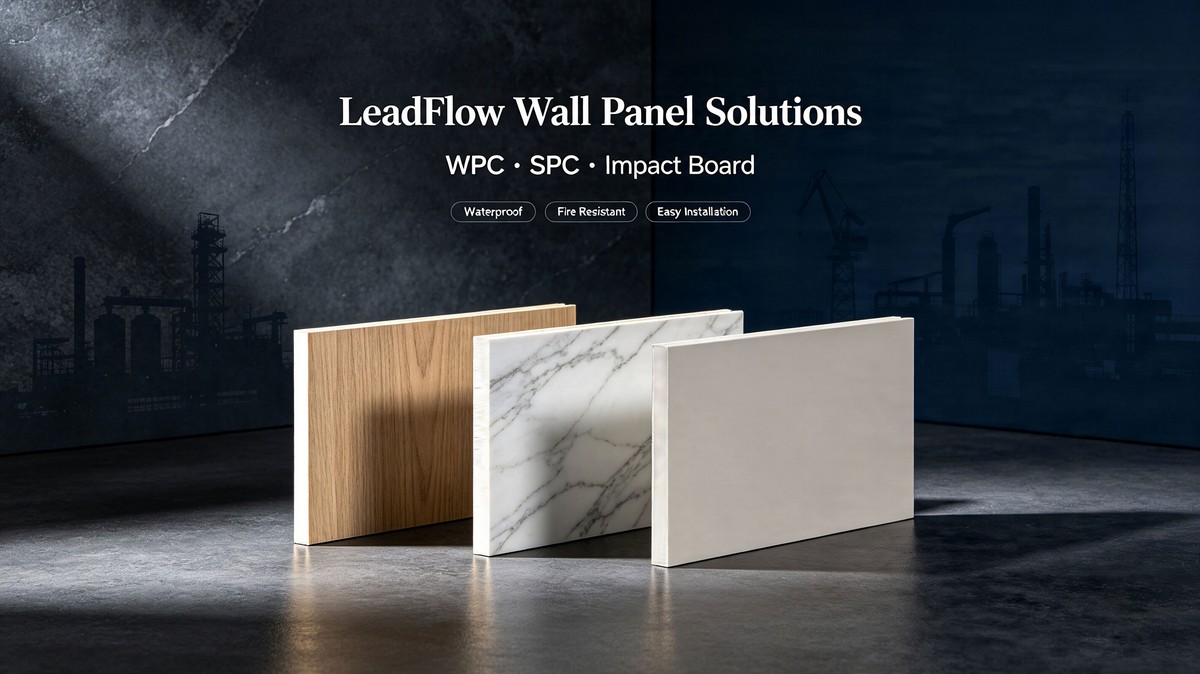
The interior finishing industry runs on reliable inputs, and few products illustrate this better than wood-plastic composite cladding. WPC wall panels — engineered boards that combine wood fiber with thermoplastic resins — have moved from niche decorative material to mainstream choice for commercial and residential interiors, prized for moisture resistance, dimensional stability, and fast installation. For importers, distributors, and construction firms, selecting the right WPC Wall Panels supplier has therefore become a strategic decision that shapes product quality, delivery performance, and long-term margins. Yet the sourcing landscape is full of hidden traps: quotations that look identical on paper but differ sharply in formulation, certificates that never match the shipped batch, and lead times that quietly stretch from weeks into months. This guide examines how the wall panel supply chain actually operates and maps the most common B2B procurement pitfalls — along with a practical framework for avoiding them.
Key Takeaways
• The global WPC wall panel supply chain remains concentrated in Asia, so resin price volatility, factory capacity, and freight costs are the three variables that most directly affect landed cost.
• Most procurement losses stem from specification ambiguity and skipped verification steps rather than from simply choosing the wrong supplier.
• Certifications, batch consistency, and packaging quality must be verified for every order, not accepted from a catalog or a single courier sample.
• A structured vetting process — factory audit, golden-sample retention, staged payments, and pre-shipment inspection — dramatically reduces sourcing risk across WPC, SPC, and carbon crystal panel categories.
Supply Chain Insights: How the Global WPC Wall Panel Market Is Reshaping Sourcing
The WPC wall panel industry is defined by a highly consolidated manufacturing base. The majority of global production capacity is clustered in Asia — China in particular — with emerging capacity in Vietnam, India, and other parts of Southeast Asia. For buyers in Europe, North America, the Middle East, and Africa, this concentration means a single skilled WPC Wall Panels supplier can serve multiple markets efficiently, but it also means regional disruptions such as resin shortages, port congestion, and holiday shutdowns propagate quickly through global project schedules.
Raw material economics sit at the center of the picture. WPC and SPC formulations rely on PVC resin, calcium carbonate, wood fiber or stone powder, and stabilizers, all of which track crude oil and industrial chemical markets. When input prices move, panel quotations move with them; a price valid for only a short window is often a symptom of market volatility rather than a dishonest seller. Sophisticated buyers respond by locking formulations and pricing for defined periods and by agreeing in advance on transparent cost pass-through mechanisms.
Product portfolios are migrating as well. Traditional flat and fluted WPC profiles are increasingly complemented by rigid-core SPC lines and by newer carbon crystal panels, which use a calcium–PVC base pressed with decorative films to deliver a harder, denser surface. This expansion changes procurement logic: a partner that operates its own extrusion, lamination, and hot-pressing lines can often supply multiple categories under one quality system, while a reseller with no production assets cannot guarantee cross-category consistency.
Compliance pressure is rising in parallel. Buyers in regulated markets increasingly treat formaldehyde emission documentation, fire classification reports, and chemical compliance declarations as conditions of purchase rather than marketing extras. In practice, the gap between suppliers is widening: vertically integrated manufacturers with in-house laboratories adapt quickly, while small workshops struggle to document what they already produce. Production lead times commonly range from roughly two to six weeks, with ocean freight and customs clearance adding further weeks — a reality that rewards buyers who plan orders on a rolling calendar instead of reacting to last-minute urgency.
The Five Most Costly B2B Procurement Pitfalls in Wall Panel Sourcing
Most losses in wall panel procurement are process failures, not bad luck. Five pitfalls account for the majority of disputes between buyers and suppliers.
1. Comparing quotes without normalizing specifications. Two quotations for the same nominal fluted profile can differ by double digits simply because density, wall thickness, co-extrusion layers, or recycled-content ratios differ. This is especially true in SPC Wall Panel wholesale channels, where limestone-to-PVC ratios and wear-layer thickness vary widely between factories. The fix is a standardized RFQ template that specifies dimensions, density ranges, material composition, surface treatment, and packaging, so that every bid describes the same product.
2. Treating samples as a guarantee of bulk quality. A courier sample is produced under ideal conditions; a full container is not. Without a retained golden sample, agreed tolerance bands, and pre-shipment inspection to a recognized AQL standard, buyers discover color drift, warping, or film delamination only after the goods land. Professional buyers tie payment release to inspection results, which aligns incentives on both sides.
3. Accepting certificates without batch-level verification. Fire ratings, emission classes, and chemical compliance reports should reference a testable production batch, not just a product family. Requesting documentation from recognized third-party laboratories — along with the right to re-test delivered goods — is now standard practice among experienced importers.
4. Weak payment and contract structures. Paying the full amount before production removes nearly all buyer leverage. Staged structures, such as a deposit with the balance due after inspection, protect both parties, and clear contract language covering tolerances, delivery windows, tooling ownership, and remedies for non-conformance prevents small disagreements from becoming expensive disputes.
5. Underestimating logistics and packaging. Panel products are volume-heavy and edge-sensitive. Thin cartons, loose palletizing, and poor corner protection translate directly into damage claims, while incorrect HS-code classification can stall customs clearance. Buyers should specify carton strength, pallet configuration, and container-loading plans in writing, and confirm insurance coverage and Incoterms before production begins.
A Practical Framework for Vetting a WPC Wall Panels Supplier
Supplier selection should rest on verifiable evidence rather than sales presentations. A disciplined vetting sequence looks like this.
Step one: verify that a manufacturer actually exists. Business licenses, third-party or video factory audits, and a live walkthrough of extrusion and lamination lines distinguish real producers from trading intermediaries. Neither model is inherently wrong, but buyers deserve to know which one they are contracting with, because accountability flows differently in each case.
Step two: assess technical depth across product categories. A capable modern partner may operate WPC fluted profile lines, SPC rigid-core lines, and hot-pressing equipment for premium surfaces. When evaluating a Carbon Crystal Wall Panel factory, for example, ask which pressing lines, film suppliers, and surface-hardness tests are used, because this newer category rewards manufacturers with genuine process control. Our related product guide on carbon crystal wall panel technology and applications explains the construction details worth confirming during such an evaluation.
Step three: validate quality systems and documentation. In-house laboratories, documented QC checkpoints, batch traceability, and a willingness to share test reports are stronger indicators than any brochure. Ask how color consistency is managed across production runs and what happens when a batch fails internal standards — the answer reveals more about a factory than its showroom.
Step four: test communication under pressure. Response time, engineering answers, and clear written communication during the quotation stage predict how the relationship will behave when a problem appears mid-order. A detailed comparison of WPC and SPC wall panel construction, available in our materials knowledge base, is a useful conversation starter that quickly exposes a salesperson who cannot back up technical claims.
Step five: scale through pilot orders. A trial container with tightly defined specifications allows both sides to build trust before volume commitments. Retain sealed golden samples from every production run and review performance jointly after each shipment; suppliers that welcome this discipline are usually the ones worth keeping for the long term.
Conclusion and Outlook: Building Resilient Wall Panel Supply Chains
Wall panel procurement is shifting from transactional buying toward partnership management. Volatile input costs, tighter compliance regimes, and compressed project timelines are squeezing out buyers who source on price alone, while disciplined organizations — those that normalize specifications, verify certificates at batch level, structure payments around inspection, and audit factories before committing — are building supply chains that survive disruption. The next few years will likely deepen this divide as digital factory audits, live production tracking, and recycled-content traceability move from novelties to expectations. For B2B buyers, the message is clear: treat supplier selection as an investment in infrastructure. A well-vetted WPC Wall Panels supplier is not merely a vendor but a risk-management asset that protects every downstream project, margin point, and brand promise.
FAQ
Q: What is a realistic lead time when ordering WPC wall panels from an overseas manufacturer?
A: Production commonly takes two to six weeks depending on order size, customization, and factory workload, with ocean freight and customs clearance adding further time. Buyers should confirm the production window and Incoterms in writing and plan orders on a rolling schedule rather than at the last minute.
Q: How can I verify that a WPC Wall Panels supplier is a genuine manufacturer?
A: Request business licenses, commission a third-party or video factory audit, and ask for a live walkthrough of extrusion and lamination lines. Genuine manufacturers can usually describe their equipment, capacity, and quality-control process in specific, verifiable detail.
Q: Which certifications and test reports should I request before placing a bulk order?
A: At minimum, formaldehyde emission documentation, fire classification reports, and applicable chemical-compliance declarations issued by recognized third-party laboratories. Ask that reports reference the production batch and retain the contractual right to re-test delivered goods.
Q: Are carbon crystal wall panels better than standard WPC panels?
A: Carbon crystal panels generally offer a denser, harder surface with better scratch and moisture resistance, making them suitable for high-traffic commercial interiors, while standard WPC remains a cost-effective choice for many residential and decorative applications. The right answer depends on the use case, budget, and verified test data — not on category labels alone.
Ready to elevate your next project? Get free samples today and experience the quality firsthand.