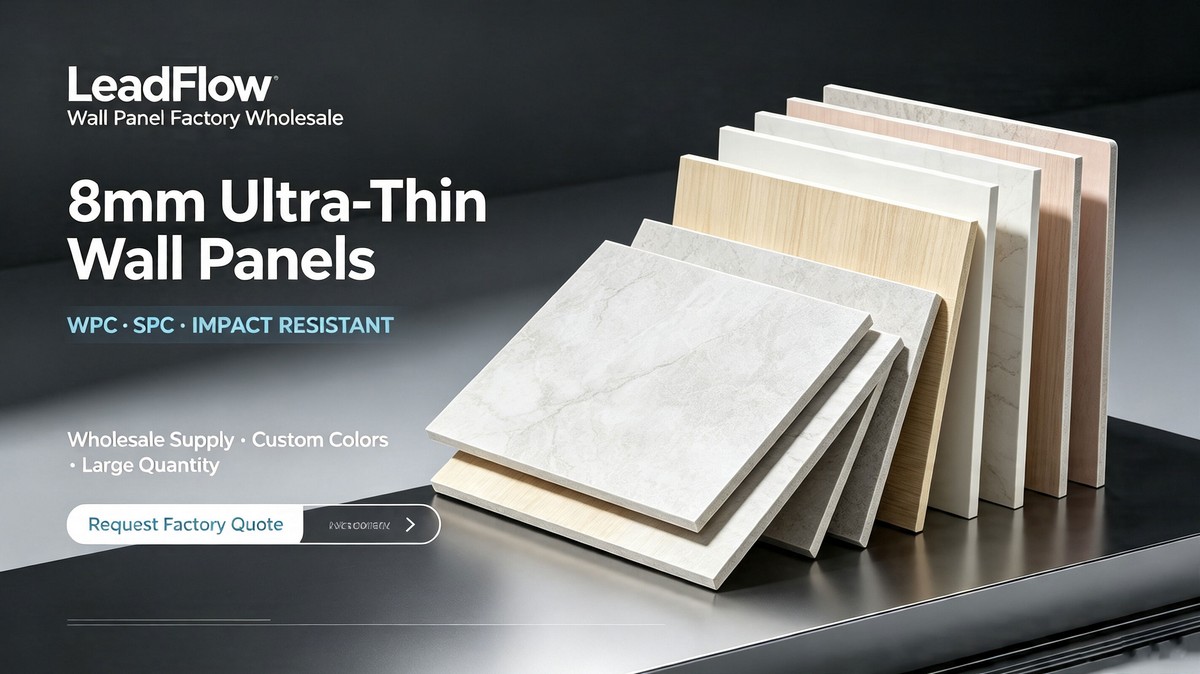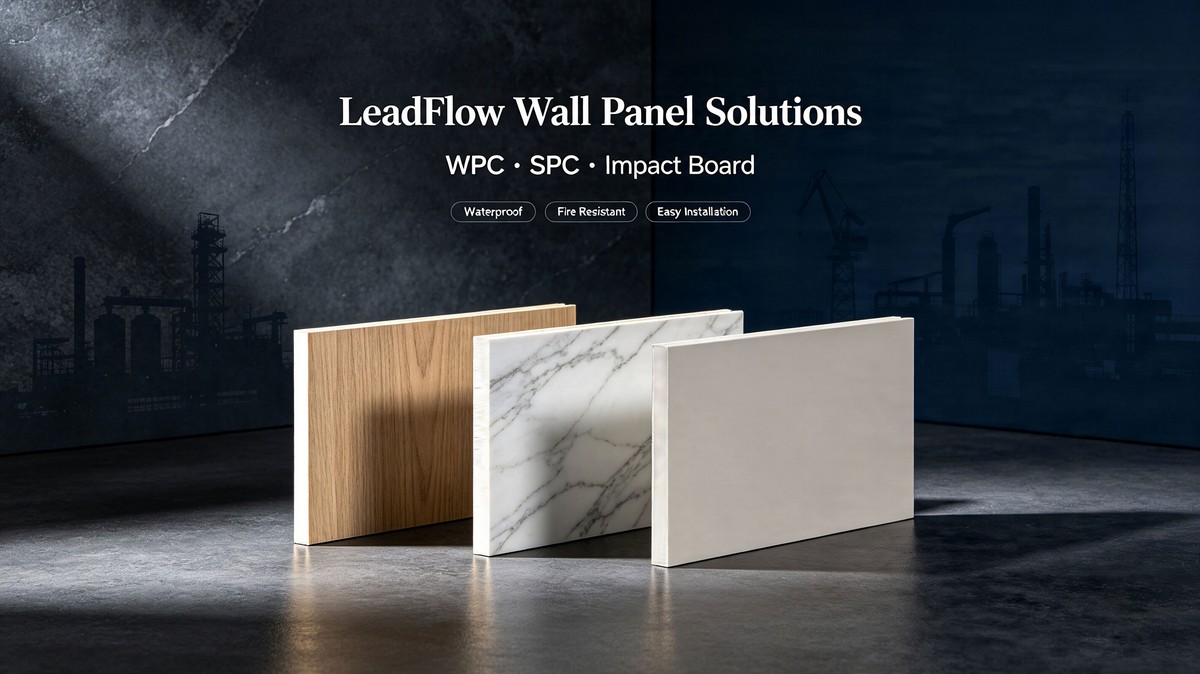
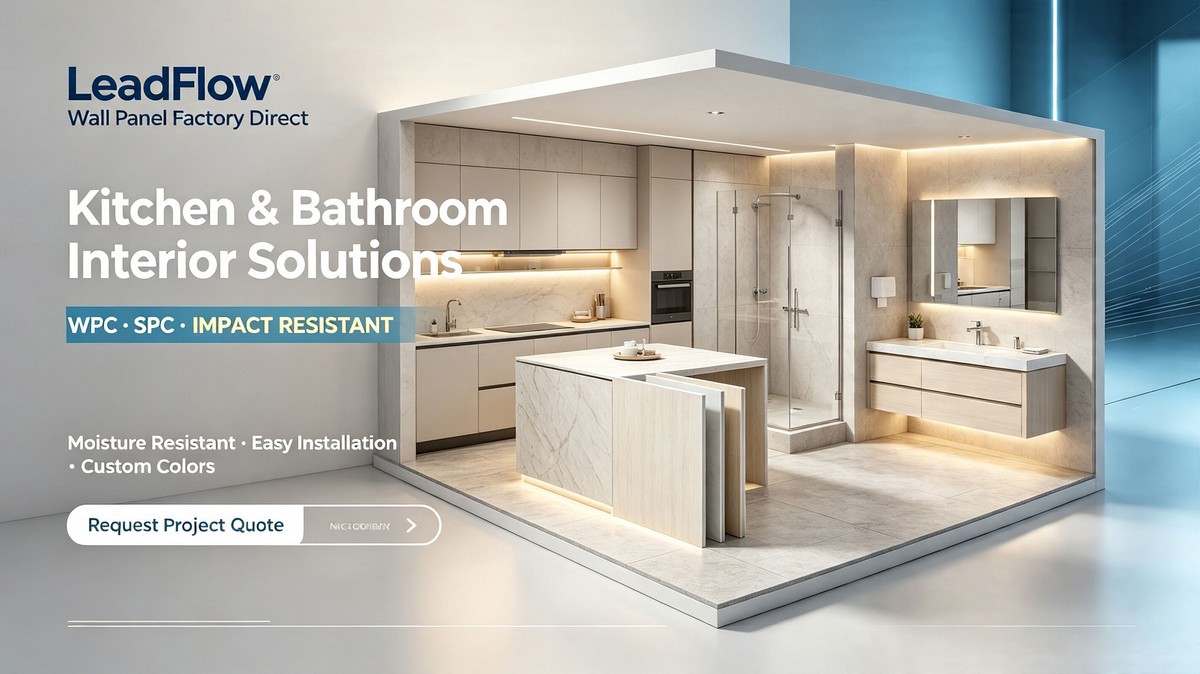
In today's decorative building materials market, the surface is the product. The extruded core of a panel may determine its structural stability, but it is the finish that decides how a wall looks, how it ages, and how quickly a browsing buyer becomes a signed contract. Over the past several years, WPC wall panel surface treatment has evolved from a simple finishing step into the defining competitive frontier of the industry. Manufacturers across Asia, Europe, and the Americas are investing in lamination lines, UV coating systems, and co-extrusion technology, while distributors, contractors, and design-build firms increasingly shortlist partners based on customization capabilities rather than base price alone. This article examines the principal treatment processes in commercial use today and explains what genuine customization capability looks like for global buyers of interior wall cladding.
Key Takeaways
• Surface treatment, not base extrusion, now defines the commercial value of a WPC wall panel, with lamination, UV coating, co-extrusion, and embossing leading the market.
• Customization capabilities—bespoke flute profiles, color matching, and fire-retardant or low-VOC formulations—have become the decisive criterion for project buyers.
• Co-extruded finishes deliver the strongest weathering and delamination resistance, while melamine and carbon crystal lamination dominate high-gloss interior segments.
• Verifying adhesion, lightfastness, fire classification, and batch consistency before bulk ordering remains the most reliable safeguard for importers and wholesalers.
Core Surface Treatment Processes in the WPC Wall Panel Industry
Surface treatment technology has become the single most reliable indicator of a manufacturer's technical level, separating commodity extruders from finish-focused producers. Four process families dominate current production, each with distinct cost and performance profiles.
Decorative film lamination remains the workhorse of the industry. A PVC wood-grain, marble, or fabric-effect film is bonded to the panel surface with PUR adhesive under controlled heat and pressure, offering an enormous design library at moderate cost. Its structural weakness lies in the adhesive interface: insufficient glue weight or uneven pressing leads to delamination, particularly in humid climates. For this reason, adhesive systems and press controls are closely guarded process variables among leading factories.
UV coating takes a chemistry-driven approach. Liquid coatings are cured instantly under ultraviolet lamps, producing a hard, dense surface with strong scratch, stain, and chemical resistance. This process underpins the high-gloss UV marble looks popular in commercial interiors, and because the coating is applied after profiling, it also protects the grooves of fluted designs—one of the first areas where untreated panels show wear.
Co-extrusion follows a different philosophy: instead of adding a surface, the surface is formed in the same pass as the core. A weatherable polymer cap, typically ASA or a modified PVC compound, is co-extruded over the WPC substrate so that the two layers fuse into a single homogeneous body. With no adhesive line, the delamination risk is structurally eliminated, and outdoor-grade lightfastness becomes achievable. The trade-offs are higher tooling investment and slower changeovers, which is why co-extrusion capacity is widely regarded as a marker of a factory's technical depth.
Embossing and CNC engraving convert flat panels into three-dimensional architectural elements. Synchronized embossing aligns physical texture with printed grain, while deep engraving creates the sharp shadow lines that define modern fluted and slat walls. Tooling precision here determines how refined the finished wall appears under raking or cove lighting.
Alongside these families, short-cycle melamine lamination—pressing impregnated décor paper onto rigid substrates—has powered the rapid rise of carbon crystal panels. A modern Carbon Crystal Wall Panel factory relies on this process to deliver super-matte, skin-feel, and high-gloss finishes with consistent color across large wall areas, positioning the product between film-laminated WPC and acrylic alternatives on both price and performance.
Customization Capabilities: The New Battleground Among Panel Suppliers
Customization capability, rather than unit price alone, has become the primary criterion by which global buyers now select panel manufacturing partners. Distributors want exclusive decors, contractors want profiles that match architectural drawings, and design-build firms want a single source that can deliver panels, trims, and accessories within one color lot.
Customization begins with the profile itself. Fluted panels illustrate the point clearly: groove width, depth, and spacing can be tuned to a project's lighting conditions, and each variation requires dedicated tooling. A professional WPC Fluted Wall Panels supplier therefore maintains an in-house mould workshop and a dedicated sampling line, allowing a drawing to become a physical prototype in days rather than weeks.
Color and texture flexibility follows closely. Traditional gravure-printed films demand large minimum orders per design, which historically locked smaller buyers into stock decors. Digital printing and flexible UV coating lines have changed the economics, enabling short production runs, Pantone-matched colors, and project-specific imagery without prohibitive setup costs.
The deepest level of customization sits in the formulation itself. Fire-retardant packages targeting European Class B-s1,d0 or North American Class A ratings, UV-stabilized compounds for semi-exterior installations, and low-VOC recipes for schools and healthcare projects all require laboratory capability that only established manufacturers can sustain.
Mature suppliers extend customization to the surrounding system: matched edge trims, corner profiles, starter strips, and private-label packaging. For buyers, this system-level capability often separates a smooth project from a fragmented one, because color continuity across panels and accessories is guaranteed from a single production source rather than stitched together from multiple vendors.
How Buyers Should Evaluate Surface Quality Before Committing
Surface defects rarely appear in catalog samples; they appear inside shipping containers. Structured verification before any bulk order is therefore essential, and it should go far beyond reviewing photographs.
Practical physical tests remain the most informative. Cross-hatch adhesion testing reveals whether the film bond will survive handling and climate stress; scratch and stain resistance checks using common household contaminants predict real-world maintenance; xenon-arc lightfastness testing indicates how the surface will age near windows; and water absorption tests on cut edges expose core quality that no photograph can show.
Batch consistency deserves equal attention. Buyers should request samples drawn from different production dates and compare them under daylight, confirming that the supplier works to a defined color tolerance rather than treating each run as a new product. Certificates also require scrutiny: fire classification and VOC reports should be checked for scope, standard, and validity date rather than accepted as logos.
Channel choice adds another layer. Procurement teams that source through SPC Wall Panel wholesale channels or consolidated container programs should apply the same scrutiny to surface treatment as they do to pricing. Wholesale pressure can tempt cost-cutting on two invisible levers—decorative film gauge and adhesive application weight—and both directly shorten the service life of the finished wall. A brief factory audit focused on the lamination or coating line is a modest cost against the risk of delamination claims after installation. For broader context, see our comparison of WPC and SPC wall panel performance, and consult our WPC fluted wall panel installation guide before specifying deep-groove profiles in high-traffic areas.
Conclusion and Outlook: Smarter, Greener, More Responsive Surfaces
Surface treatment has redefined competition in the WPC wall panel sector. The factories that will lead the next cycle are those pairing process depth—co-extrusion, precision lamination, and advanced UV chemistry—with genuinely responsive customization. Several directions are already visible: water-based, low-VOC coating systems responding to tightening indoor-air regulations; recyclable cap compounds; anti-fingerprint and anti-bacterial functional finishes for hospitality and healthcare; and digital color management that shortens the path from concept to approved sample. For buyers, the practical conclusion is straightforward: treat surface treatment and customization capability as primary selection criteria, verify them with physical tests and factory audits, and weigh total lifecycle value rather than the lowest quoted price. The panel that performs for a decade on the wall will always cost less than the one replaced after two seasons.
FAQ
Q: What surface treatment processes are used on WPC wall panels?
A: The main processes are decorative film lamination, UV coating, co-extrusion of a polymer cap layer such as ASA, embossing and CNC engraving, and short-cycle melamine lamination used for carbon crystal style panels. Each offers a different balance of cost, durability, and design freedom.
Q: Can WPC wall panels be customized for a specific project?
A: Yes. Established manufacturers can customize flute profiles, panel dimensions, colors, and surface textures, and can adjust the core formulation for fire performance, UV resistance, or low VOC emissions. Minimum order quantities vary by process—digital printing supports short runs, while custom gravure films and new moulds require larger volumes.
Q: Which surface finish is the most durable for WPC wall panels?
A: Co-extruded finishes are generally the most durable because the polymer cap fuses to the core without an adhesive line, eliminating delamination risk and providing strong UV and moisture resistance. For interior high-gloss applications, well-executed UV coatings deliver excellent scratch and stain resistance.
Q: How can I verify surface quality before placing a bulk order?
A: Request samples from current production rather than showroom pieces, then test cross-hatch adhesion, scratch resistance, stain resistance, and lightfastness. Review fire classification and VOC reports for scope and validity, confirm color tolerance between batches, and commission a factory audit focused on the lamination or coating line for large programs.
Want to see more options? Download our full product catalog and find the perfect solution for your needs.