
WPC wall panels have evolved from a budget-friendly substitute for ceramic tile and painted drywall into one of the most widely specified interior and semi-exterior cladding materials in global construction. Yet the material's credibility is not earned in showrooms — it is earned in extreme environments: tropical resorts where humidity never drops, desert hotels facing relentless ultraviolet exposure, coastal buildings bombarded by salt-laden air, and industrial facilities that swing between freezing nights and scorching afternoons. For architects, contractors, and distributors, the practical question is no longer whether WPC wall panels look good, but whether they survive. That shift has changed procurement behavior: buyers now scrutinize what a WPC Wall Panels supplier can prove through formulation and testing rather than what a catalog image suggests. This article examines the environmental stressors that degrade composite wall panels, the special application scenarios that demand more than standard products, and the engineering responses now defining quality across the sector.
Key Takeaways
• Ultraviolet radiation, moisture, and thermal cycling are the three dominant failure drivers for composite wall panels in harsh climates.
• Special application scenarios — wet rooms, coastal hospitality, cold storage, healthcare and food-service interiors — demand formulation-level solutions, not generic interior-grade product.
• Surface engineering (co-extrusion, protective films) and rigid mineral-rich cores such as carbon crystal panels have materially improved resilience.
• Verifiable test data, fire certification, and transparent supplier documentation now outweigh price as the decisive sourcing criterion.
Environmental Stressors: How WPC Wall Panels Degrade in Extreme Conditions
Ultraviolet radiation, moisture, and thermal cycling determine how WPC wall panels age in extreme environments — and each attacks a different part of the composite structure. A wood-plastic composite blends wood flour or plant fiber with a thermoplastic matrix, typically PVC, polyethylene, or polypropylene, together with additives such as stabilizers and coupling agents. The fiber delivers warmth, texture, and stiffness; the polymer delivers moisture resistance. Indoors, this hybrid is a clear strength. Under sustained environmental stress, each component becomes a separate vulnerability.
Ultraviolet exposure is the most visible failure driver. Photo-oxidation breaks down polymer chains at the surface, while degraded wood fibers near the face produce fading, chalking, and the roughening often called 'fiber bloom'. Severity depends heavily on the stabilizer package — hindered amine light stabilizers, UV absorbers, UV-blocking films, or co-extruded cap layers — and on pigment chemistry, since inorganic pigments hold color far longer than organic ones. In high-altitude and equatorial markets, surface protection is arguably the single most important quality differentiator.
Moisture is subtler but equally destructive. A well-formulated board absorbs far less water than solid wood, yet cut edges, drilled fixings, and open grooves remain entry points. In fluted profiles, exposed grooves can trap and wick water, producing edge swelling, surface distortion, and — in persistently humid climates — microbial growth on fiber-rich surfaces. Coupling agents that bond fiber to matrix, fungicidal additives, and factory edge sealing all raise the moisture threshold considerably.
Thermal cycling completes the triad. Composites move with temperature at rates higher than wood or ceramic, so long runs installed without adequate expansion gaps buckle in hot climates and open unsightly joints in cold ones. In freezing regions, absorbed water expands as ice inside the board, converting small moisture problems into cracking and delamination. Coastal salt spray adds a further mechanism by corroding fasteners and attacking uncapped surfaces, while aggressive cleaning chemicals can dull or embrittle unprotected decorative films.
Because geometry amplifies every one of these mechanisms, profile design matters as much as formulation. A knowledgeable WPC Fluted Wall Panels supplier will address geometry-specific risks directly: orienting grooves to shed rather than collect water, sealing cut edges on site, specifying clip-based or ventilated fixing that accommodates movement, and advising candidly where a fluted profile should not be used at all. Buyers seeking deeper technical background can consult a detailed comparison of WPC and mineral-core panel construction.
Special Application Scenarios: Where Standard Interior-Grade Panels Fall Short
Beyond climate alone, specific application scenarios create performance demands that standard interior-grade panels were never engineered to meet — and most premature failures trace back to a mismatch between product grade and installation environment.
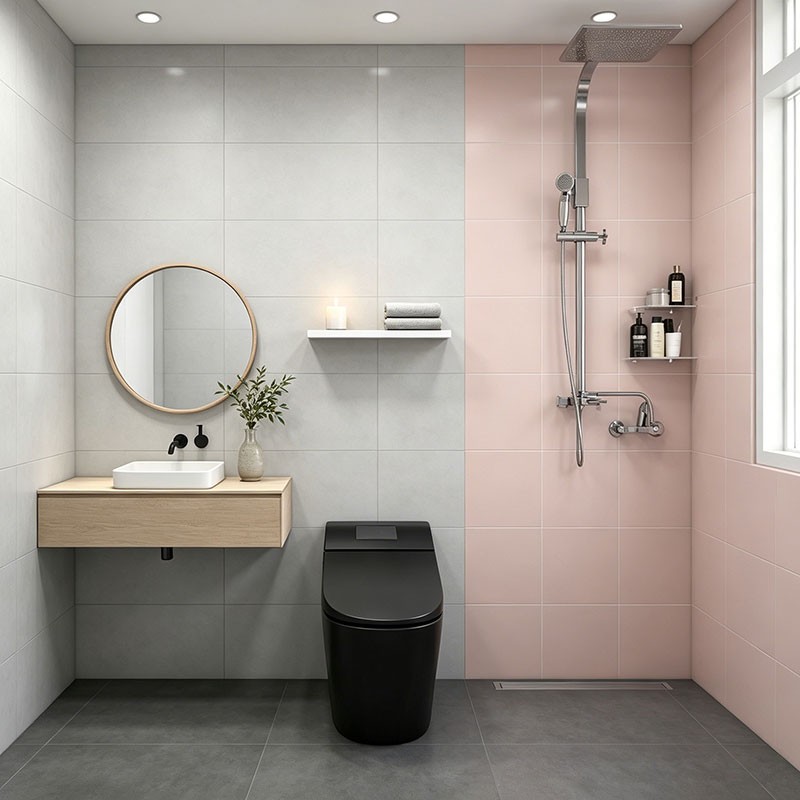
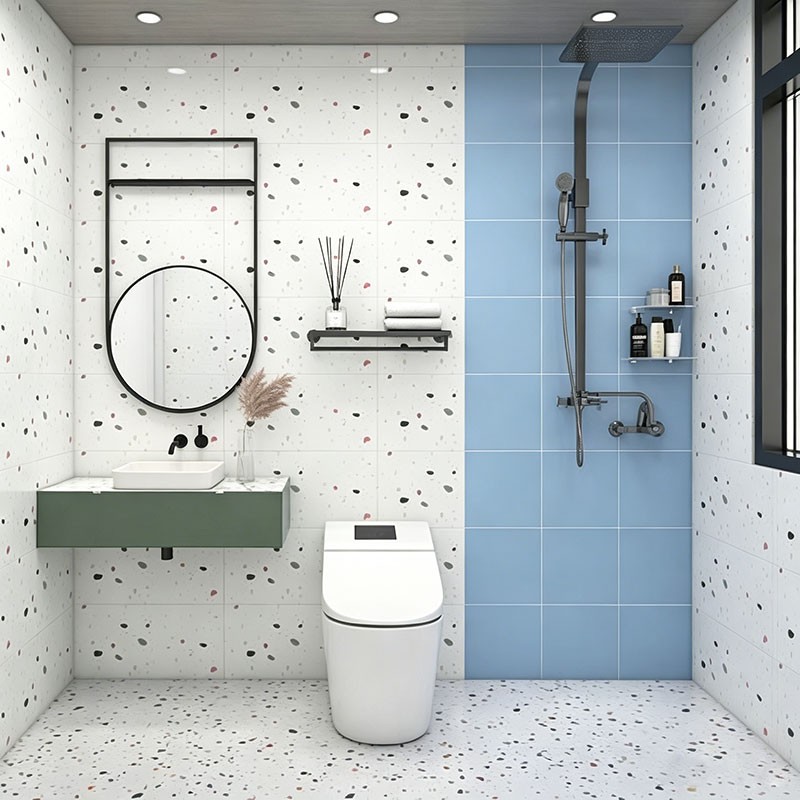
Wet and high-humidity interiors — bathrooms, spa zones, indoor pool surrounds, and laundry areas — expose panels to constant vapor, condensation, and rapid temperature spikes. The critical requirements are low water absorption, sealed joints, moisture-tolerant substrates, and ventilation on both sides of the cladding. Fluted designs require particular care here, because an open groove beside a shower behaves very differently from the same profile in a dry living room.
Coastal and tropical hospitality projects combine the harshest variables simultaneously: year-round humidity, intense UV, and salt-laden air that corrodes standard fixings. Marine-grade stainless fasteners, capped surfaces, and realistic maintenance schedules form the practical minimum for these installations.
At the opposite end of the spectrum, cold storage facilities, unheated warehouses, and high-altitude buildings test low-temperature behavior. Some thermoplastics and adhesive-bonded films embrittle as temperatures fall, so low-temperature impact resistance and lamination quality become decisive selection criteria rather than afterthoughts.
Healthcare facilities, food processing areas, and commercial kitchens introduce chemical and regulatory stress: aggressive disinfectants, frequent washdowns, hygiene requirements, and mandatory fire classifications. Smooth or heavily capped surfaces, chemical-resistant laminations, and documented compliance with regional fire standards — such as Euroclass ratings in Europe or flame-spread requirements in North America — are non-negotiable in these settings.
Semi-exterior zones — covered balconies, verandas, sunrooms, and poolside walkways — represent the most common specification error in the industry. These spaces receive UV exposure, wide temperature swings, and occasional driving rain, yet they are frequently fitted with interior-grade product because they are 'not quite outdoors'. The result is predictable: fading, edge swelling, and warranty disputes. High-traffic commercial interiors add impact and abrasion demands that favor denser, harder-surfaced boards.
Engineering Responses: Surface Technology, Core Innovation, and Verifiable Quality
The industry's response to extreme-environment challenges has developed along three parallel tracks — surface engineering, core reformulation, and verifiable quality assurance — and each track gives buyers concrete criteria for evaluating products.
Surface engineering is led by co-extrusion, in which a protective polymer cap, commonly ASA, PVC, or acrylic-based, is fused to the core during extrusion. Co-extruded panels deliver substantially better UV stability, stain resistance, and water repellency than uncapped boards, which is why the technology has become standard for exterior-grade cladding. For laminated decorative panels, outdoor-rated films and adhesives serve the same protective function, and installation guidance such as fluted wall panel installation best practices should be followed wherever grooved profiles meet moisture.
Core reformulation is where carbon crystal wall panels have changed the conversation. These boards use a rigid, highly mineral-filled core that provides dimensional stability across temperature swings, near-zero water absorption, and a harder surface than conventional wood-flour composites. A capable Carbon Crystal Wall Panel factory controls density, calendering, and film lamination within tight tolerances, producing panels suited to wet rooms, healthcare interiors, and thermally stressed commercial spaces. Conventional WPC formulations continue to improve in parallel through higher mineral loading, advanced coupling agents, and integrated fungicidal packages for humid climates.
Quality assurance converts material claims into verifiable facts. Accelerated weathering tests under ISO 4892 or ASTM G154 protocols, water absorption testing, freeze-thaw cycling, and fire classification under EN 13501-1 or ASTM E84 give specifiers objective, comparable data. The practical rule for buyers is simple: in extreme environments, insist on third-party test reports, batch consistency documentation, and warranty terms that name specific environmental conditions. A professional WPC Wall Panels supplier should provide technical datasheets covering water absorption, thermal expansion, and fire ratings as standard practice — and should be willing to discuss reference projects in climates comparable to the target application.
Conclusion and Outlook
Extreme environments are no longer niche territory for composite wall cladding. Climate volatility, construction growth across tropical and coastal regions, and tightening durability and fire codes are pushing resilience from a differentiator to a baseline requirement. The technology trajectory is equally clear: surfaces are becoming tougher through co-extrusion and advanced films, cores are becoming more stable through mineral-rich and rigid formulations, and buyers are demanding verified performance rather than visual samples alone. For manufacturers and distributors, the competitive boundary is shifting from price toward formulation capability and transparency. For specifiers, the message is simpler still: match the panel — its surface, its core, and its documentation — to the environment it will actually face, and most classic failure modes in extreme environments become entirely avoidable.
FAQ
Q: Can WPC wall panels be used outdoors or in extreme climates?
A: Only when the product is specifically rated for it. Interior-grade panels will fade, swell, or crack under sustained weather exposure, while exterior-rated co-extruded panels with UV-stabilized cap layers are engineered for it. Always match the panel grade to the environment and follow the supplier's fixing and expansion-gap specifications.
Q: How do WPC wall panels perform in high-humidity environments such as bathrooms or coastal regions?
A: Quality WPC absorbs far less water than solid wood, but cut edges, open grooves, and unsealed joints remain vulnerable points. Sealing edges, ensuring ventilation, and choosing low-absorption or mineral-core carbon crystal panels significantly extend service life in humid or salt-laden conditions.
Q: What is the difference between WPC fluted panels and carbon crystal wall panels for demanding applications?
A: WPC fluted panels combine wood fiber with a thermoplastic matrix and are valued for their grooved, linear aesthetic. Carbon crystal wall panels use a rigid, mineral-rich core that provides superior dimensional stability, near-zero water absorption, and generally better fire performance, making them the preferred choice for wet rooms, high-traffic areas, and thermally stressed spaces.
Q: What documentation should buyers request when sourcing wall panels for extreme environments?
A: Request third-party weathering and water absorption test reports, fire classification certificates, thermal expansion data, warranty terms that specify environmental conditions, and reference projects from climates similar to the target application. Reputable manufacturers treat these documents as standard deliverables, not special requests.
Sourcing panels that can genuinely withstand extreme conditions is ultimately a materials decision, and the right sourcing partner makes all the difference.
Looking for competitive pricing? Request a quote now and let us help you source the right materials.