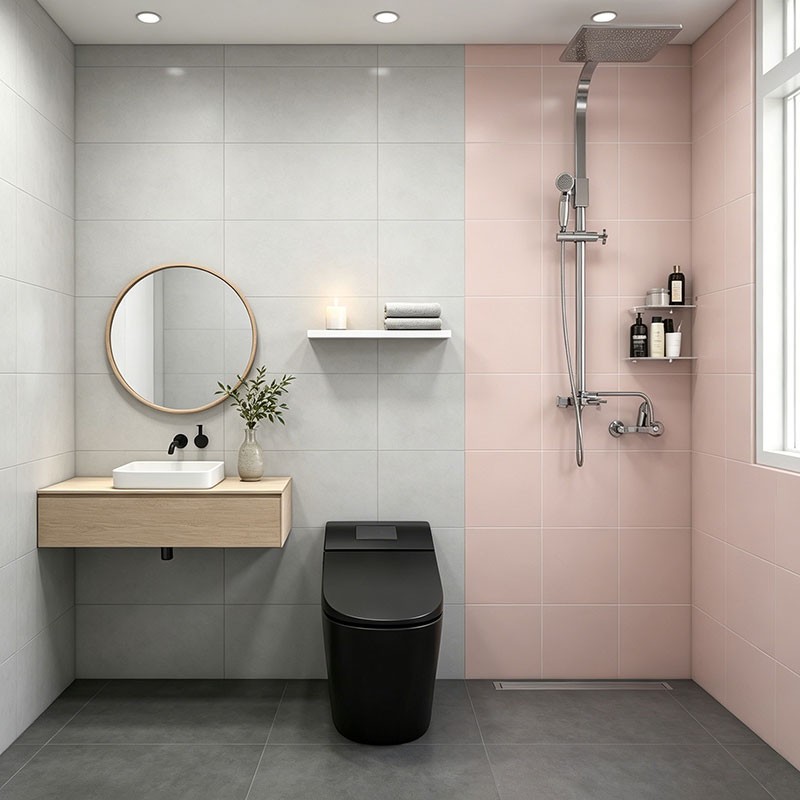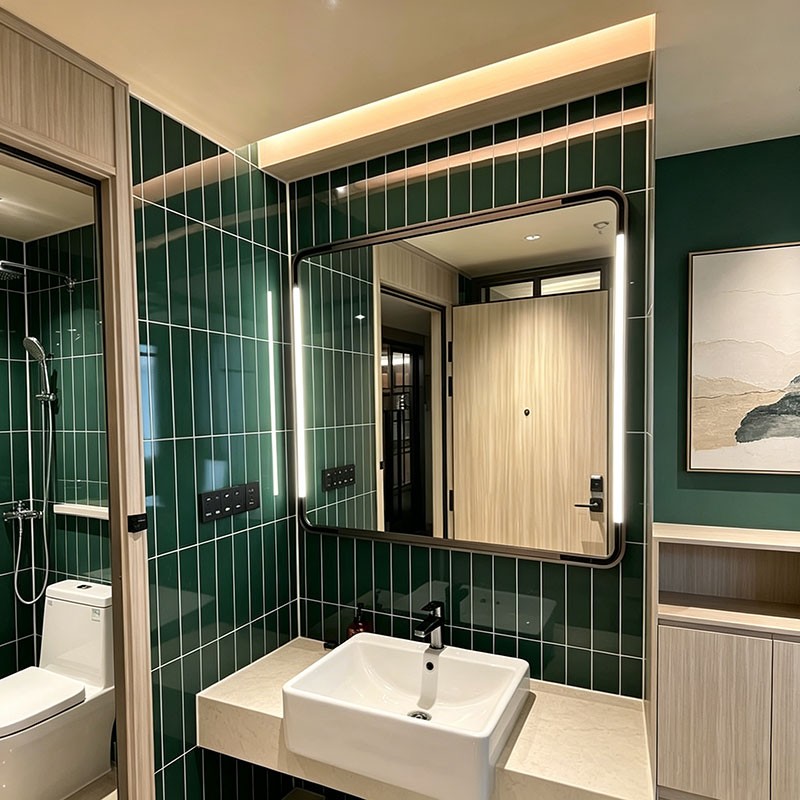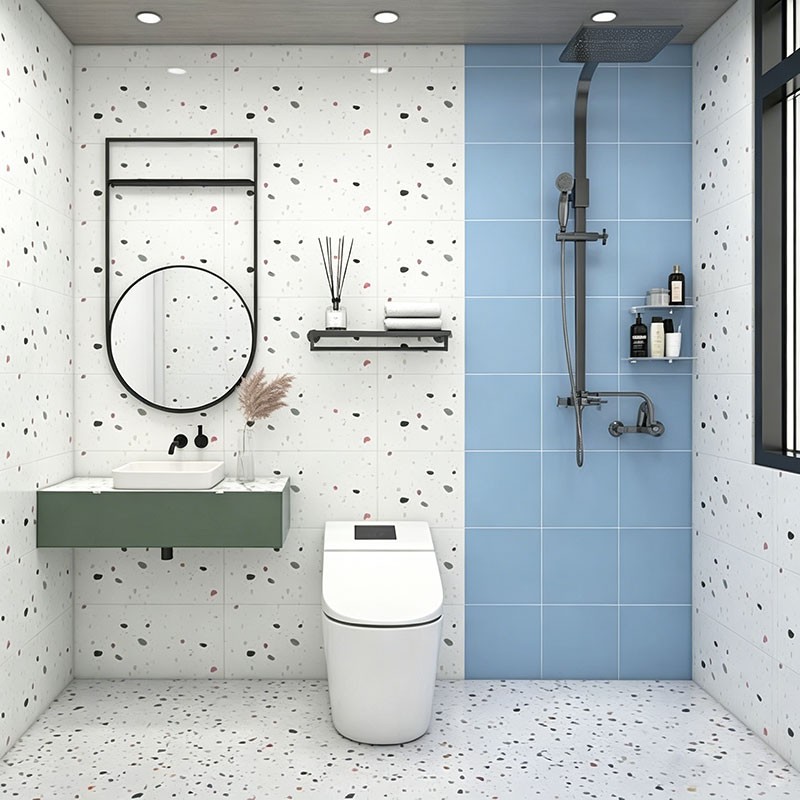
The global interior finishing market is undergoing a quiet substitution effect: designers and contractors who once specified natural marble are increasingly choosing engineered alternatives that deliver the same visual impact with less weight, lower cost, and faster installation. At the center of this shift sits the UV Marble Sheet manufacturer — the specialized producer whose extrusion lines, printing technology, and ultraviolet coating systems determine whether a finished wall convincingly recreates fine stone veining or falls visibly short. As demand spreads from established markets across Asia and the Middle East to North America, Europe, Africa, and Latin America, understanding how these sheets are produced — and how manufacturers differ — has become essential knowledge for importers, distributors, and project buyers. This article examines the production process, the quality benchmarks that separate premium output from commodity product, and the growing trend toward integrated panel sourcing.
Key Takeaways
• A UV marble sheet combines a rigid PVC base, a printed marble-pattern film, and a UV-cured protective coating, delivering stone aesthetics at a fraction of the weight and cost of natural marble.
• Production quality is determined mainly by base material purity, film adhesion, coating hardness, color consistency, and dimensional stability — the areas where manufacturers truly separate themselves.
• Integrated sourcing is reshaping procurement: many factories now supply UV marble sheets alongside WPC fluted wall panels and carbon crystal wall panels, letting buyers consolidate shipments and unify interior aesthetics.
• Competition is shifting from price alone toward consistency, customization, certifications, and service speed, rewarding manufacturers with mature quality-control systems.
What Is a UV Marble Sheet and How Is It Produced?
A UV marble sheet is a decorative interior wall panel typically built in three layers. The core is a rigid PVC sheet, often compounded with calcium carbonate to achieve dimensional stability and a stone-like density. Above it sits a decorative layer — usually a printed or hot-stamped film — that reproduces marble veining, travertine textures, or abstract stone patterns. The defining element, however, is the surface: a liquid UV-curable resin, applied as a primer and a topcoat, that hardens almost instantly when passed under ultraviolet lamps. This curing step transforms the coating into a dense, glass-like finish with high gloss, scratch resistance, and strong stain repellency.
The production flow generally follows five stages. First, raw materials are compounded and extruded or calendered into a flat base sheet, commonly between 2.5 and 3.5 millimeters thick. Second, the decorative film is laminated onto the base under controlled heat and pressure — a step that demands precise tension control to avoid bubbles or pattern distortion. Third, the UV primer is roll-coated and cured. Fourth, the topcoat is applied and cured, building the final gloss level, from mirror-gloss to matte, skin-feel surfaces. Finally, sheets are cooled, cut into standard formats such as 1220 × 2440 mm or 1220 × 2800 mm, edge-finished, inspected, and packed for export.
The resulting product offers practical advantages that explain its rapid adoption. The PVC core is waterproof and termite-resistant, contains no wood fiber that absorbs moisture, and weighs only a fraction of equivalent natural stone. Installation is adhesive-based and grout-free, which shortens fit-out schedules in hotels, retail spaces, offices, and residential renovations. Increasingly, digital printing technology allows a capable UV Marble Sheet manufacturer to produce customized veining, book-matched patterns, and oversized continuous designs that natural stone could rarely deliver at a comparable cost.
How to Evaluate a UV Marble Sheet Manufacturer: Quality Benchmarks That Matter
Not all production lines deliver equal results, and the difference between a reliable UV Marble Sheet manufacturer and an average one shows up in a handful of measurable areas. Buyers who understand these benchmarks can significantly de-risk procurement before committing to a container order.
Base material formulation. The ratio of virgin PVC resin to calcium carbonate filler directly affects impact strength. Sheets with excessive filler are more brittle, cracking more easily during transport, cutting, or fastening. Professional manufacturers disclose their formulation philosophy and maintain consistent raw material sourcing.
Decorative film quality. Film thickness, print resolution, and fade resistance determine how realistic and durable the marble effect appears over time. Premium factories invest in high-definition films and precise hot-stamping or lamination equipment, ensuring veining stays sharp rather than blurred or obviously repeated.
UV coating performance. The coating system is the heart of the product. Key indicators include the number of coating passes, coating weight, pencil hardness, cross-hatch adhesion, yellowing resistance under UV exposure, and gloss consistency across the sheet. Dust-free coating environments matter as well, because airborne particles cause pinholes and surface defects.
Batch consistency. For phased projects or multi-container orders, color and pattern consistency across production runs is critical. Established manufacturers retain color codes and production parameters so repeat orders match earlier batches.
Certification and testing. Serious suppliers provide verifiable third-party test reports — such as SGS or Intertek documentation — covering fire performance classification, VOC emissions, and, where relevant, market-specific compliance like CE marking.
Service and customization. OEM and ODM capability, custom sizes, gloss options, matched accessories, sample turnaround speed, and export-grade packaging — palletizing, corner protection, moisture barriers — collectively reveal how well a factory supports international buyers. For teams building a shortlist, pairing this checklist with a detailed WPC wall panel product guide helps match surface styles to specific project zones.
One-Stop Sourcing: The Rise of Multi-Category Panel Manufacturers
Interior projects rarely rely on a single surface material. A hotel lobby may pair a marble-look media wall with fluted wood-texture side panels; a residential living room may combine a stone-effect TV backdrop with slatted, rhythmic cladding. This reality has driven one of the most significant commercial trends in the decorative panel sector: manufacturers expanding from a single product line into multi-category ecosystems.
A professional WPC Fluted Wall Panels supplier produces wood-plastic composite panels — a blend of wood fiber, PVC or polyolefin, and additives — shaped into fluted or slatted profiles that add three-dimensional rhythm to feature walls. Because the material is moisture-resistant and dimensionally stable, fluted WPC panels pair naturally with UV marble sheets in the same space, and a supplier with a wide color library and consistent groove geometry ensures panels from different production batches still align visually.
In parallel, the Carbon Crystal Wall Panel factory segment has emerged to serve buyers seeking higher rigidity and a more solid feel. Carbon crystal wall panels use a high-density base with a carbon crystal layer and film lamination, delivering improved impact resistance and a quieter, more substantial acoustic character than thinner boards. Factories with in-house lamination and edge banding can produce matched trims and transition profiles, which simplifies installation on site.
For buyers, the advantages of sourcing these categories together are concrete: unified color coordination across materials, one quality-control standard, consolidated containers that reduce freight cost per square meter, and a single point of accountability for after-sales support. The caution is equally practical — not every company claiming multi-category capability manufactures everything in-house. Requesting production videos, factory audits, or third-party inspection reports helps confirm whether a partner is a genuine manufacturer or an assembling trader. For a broader view of how these surfaces compare, a comprehensive wall cladding material comparison can clarify which product belongs in which zone of a project.
Conclusion and Market Outlook
The UV marble sheet has moved from a niche substitute to a mainstream wall-finishing solution, and the modern UV Marble Sheet manufacturer competes less on price alone and more on consistency, technology, and service. Several directions will define the next phase: higher-hardness and anti-yellowing UV coatings; matte and skin-feel textures that mimic honed stone; digital printing that makes custom veining a realistic option for boutique projects; and lower-emission, more recyclable formulations in response to tightening environmental expectations.
Equally important is structural consolidation. Manufacturers that operate UV marble, WPC fluted, and carbon crystal lines under one roof — with unified quality systems and proven export experience — are positioned to become preferred partners for global distributors and contracting companies. For buyers, the practical takeaway is straightforward: evaluate a supplier the way an engineer would, through samples, test reports, batch consistency checks, and a pilot order before scaling. In a market where visual quality is the product, the factories that master the details of formulation, coating, and color control will continue to win the orders that matter.
FAQ
Q: What is a UV marble sheet made of?
A: A UV marble sheet is typically composed of a rigid PVC base layer, a printed or hot-stamped decorative film that reproduces marble veining, and a UV-cured resin coating that hardens into a glossy, scratch-resistant protective surface.
Q: How do UV marble sheets compare with natural marble?
A: UV marble sheets are far lighter, install with adhesive without grout, resist water and termites, and cost significantly less, while natural marble offers unique veining and prestige but carries higher material, handling, and installation expenses.
Q: What sizes and thicknesses do UV marble sheets come in?
A: Common specifications range from roughly 2.5 to 3.5 millimeters in thickness, with standard sheet formats such as 1220 × 2440 mm and 1220 × 2800 mm; many manufacturers also offer customized dimensions, gloss levels, and patterns to meet project requirements.
Q: Can I source UV marble sheets together with WPC fluted wall panels and carbon crystal wall panels?
A: Yes. Many manufacturers now operate integrated production lines covering UV marble sheets, fluted WPC panels, and carbon crystal wall panels, which allows buyers to consolidate shipments, coordinate colors across materials, and apply a single quality-control standard.
Ready to elevate your next project? Get free samples today and experience the quality firsthand.