Hotel lobbies and chain restaurants are among the most unforgiving environments in commercial interior design: lobbies absorb constant foot traffic, luggage impact and fluctuating humidity, while restaurants must withstand grease, stains and overnight renovation schedules. This commercial space case study examines how designers, contractors and procurement teams are solving those challenges with the modern WPC Wall Panel — alongside complementary materials such as carbon crystal and SPC panels — to achieve a balance of aesthetics, durability and cost control that traditional finishes struggle to match.
Key Takeaways
• WPC fluted wall panels combine warm wood-grain aesthetics, moisture resistance and rapid dry installation, making them a leading choice for high-traffic hotel lobby feature walls.
• Carbon crystal wall panels provide hard, high-gloss marble-effect surfaces with flame-retardant formulations, suited to premium reception backdrops and lift lobbies.
• SPC wall panels deliver a rigid, waterproof core with hygienic cleanability — a decisive advantage for chain restaurant rollouts and back-of-house areas.
• Smart material selection balances fire compliance, acoustics, batch color consistency and total cost of ownership rather than unit price alone.
Why the WPC Wall Panel Now Leads Commercial Material Selection
Material selection in commercial interiors is governed by four non-negotiable criteria: durability under traffic, fire safety compliance, installation speed and lifetime maintenance cost. Wood-plastic composite — a homogeneous blend of wood fiber and thermoplastic polymer — has moved from a residential novelty to a boardroom-level specification because it answers all four at once. Unlike natural wood veneer, which swells in humid lobby climates, or painted gypsum, which scuffs and demands frequent repainting, a WPC Wall Panel holds its surface through years of contact wear and wipes clean with neutral detergents.
The comparison with conventional finishes is instructive. Natural stone delivers prestige but carries heavy dead load, slow installation and ongoing grout maintenance; ceramic tile is hygienic yet cold in appearance and labor-intensive to apply; laminate warps at the joints in humidity. WPC fluted panels, by contrast, are lightweight, install dry over furring or adhesive, and their vertical fluting creates a tactile play of light and shadow that elevates reception walls, corridor columns and ceiling rafts alike. The fluted geometry also serves a hidden function: it diffuses sound reflections, improving acoustic comfort in large, hard-surfaced lobbies — a detail architects increasingly cite in hospitality specifications.
Fire performance remains the first question every hotelier asks. Reputable formulations achieve recognized classifications — for example, ratings under EN 13501-1 in Europe or ASTM E84 in North America — depending on the polymer matrix and mineral additives used, so buyers should always request current, batch-specific test reports rather than generic claims. Sourcing discipline matters just as much: an experienced WPC Fluted Wall Panels supplier with in-house extrusion lines and color-matching capability can guarantee flute-profile precision and batch-to-batch color stability across phased deliveries — critical when a hotel is renovated wing by wing. For a deeper technical breakdown, see our comparison of WPC fluted panels versus traditional wall cladding materials.
Hotel Lobby Case Study: Premium Aesthetics That Survive Daily Contact
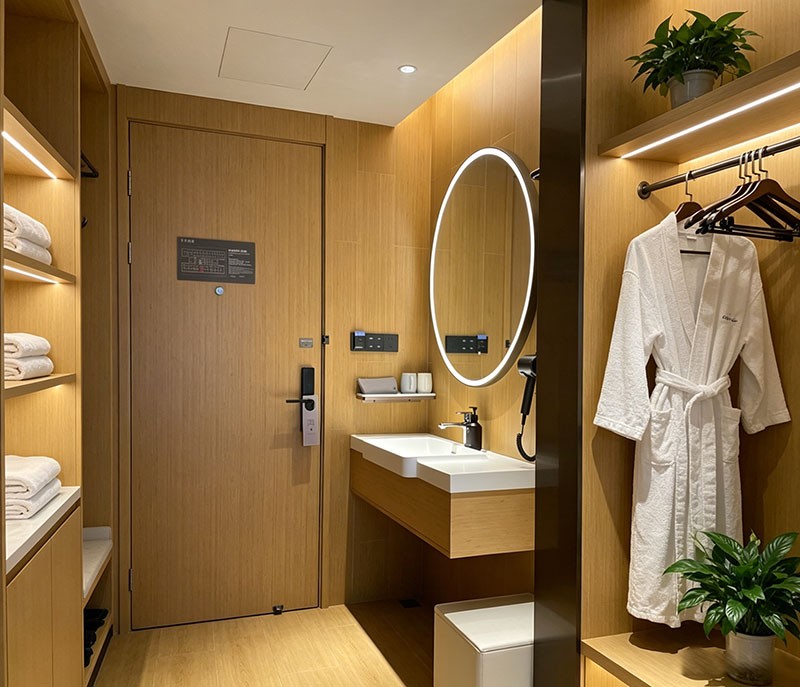
Hotel lobbies demand materials that read as luxurious at first sight yet survive luggage trolleys, cleaning chemicals and ambient moisture near entrances. Consider a representative mid-scale boutique hotel retrofit: the brief called for a marble-look reception backdrop, warm vertical textures in the lounge zone and impact-resistant cladding along the lift-core corridor — three very different performance profiles within one open space.
For the lounge feature walls, the specification paired WPC fluted panels with integrated linear lighting, allowing the vertical grooves to cast controlled shadows and visually heighten the room. At the reception desk itself, the design turned to carbon crystal wall panels — rigid polymer-calcium boards finished with a high-definition decorative film. Procured directly from a capable Carbon Crystal Wall Panel factory, these panels offer a harder, glossier surface than standard laminates, faithful marble reproduction and flame-retardant chemistry suited to public assembly areas. Because the factory can develop custom marble prints with matched trims and edge profiles, the hotel achieved a book-matched stone appearance without the weight, cost and lead time of quarried slab.
In circulation zones, the priority shifted from appearance to abuse resistance. Denser WPC profiles with a robust wear layer absorb knocks from luggage and cleaning equipment, while non-porous surfaces shrug off the coffee spills and handprints that define lobby life. Maintenance teams gain a decisive operational benefit: individual panels can be spot-replaced, so a damaged section no longer forces full-wall repainting or re-tiling. The cause-and-effect is simple — modular, dry-installed cladding converts wall maintenance from a disruption into a routine task.
Chain Restaurant Rollouts: Standardization, Hygiene and Scale
For chain restaurants, the wall material decision is less about a single flagship space and more about repeatability across dozens or hundreds of sites, and three factors dominate: brand consistency, hygienic cleanability and fit-out speed.
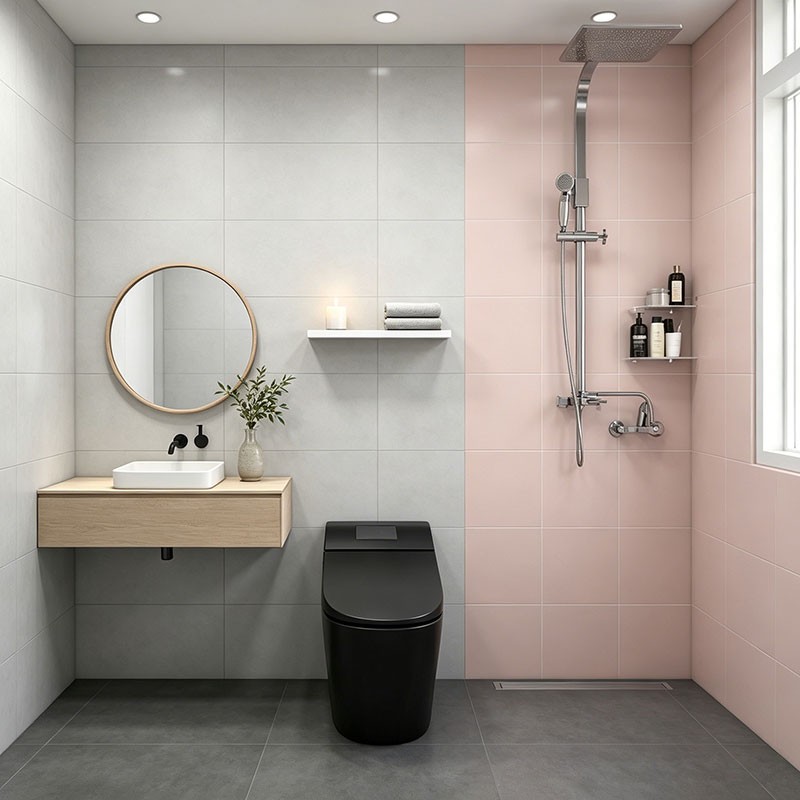
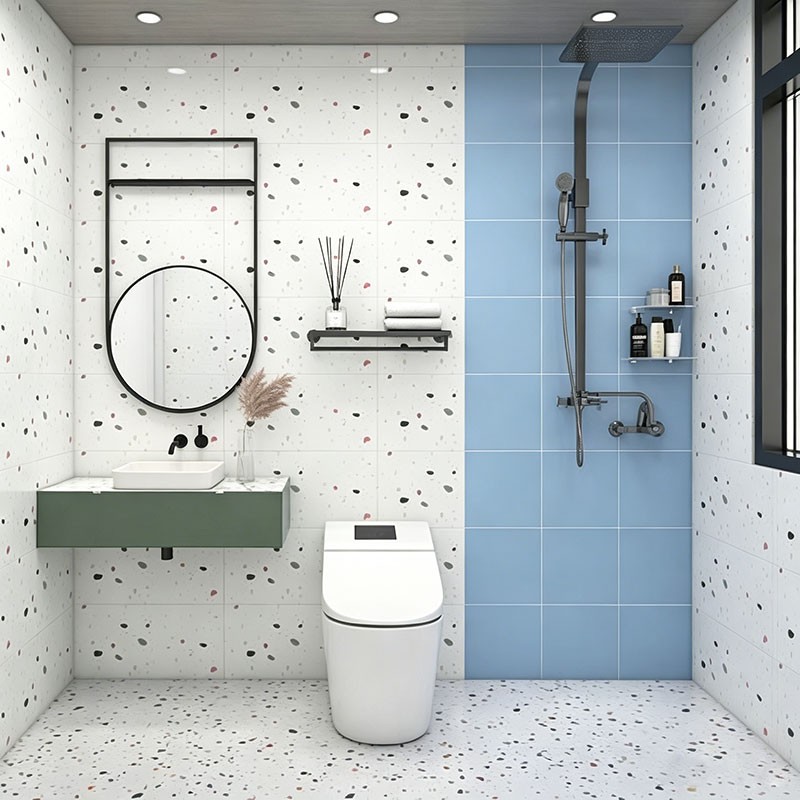
Brand consistency begins at the production line. Leading chains standardize specific profiles, colors and finishes, then rely on their supplier's quality control to keep the hundredth location looking identical to the first. In a typical quick-service refresh program, designers specify WPC fluted panels in the dining area for warmth and acoustic softening, while corridors, restrooms and service zones — where grease, humidity and washdown cleaning dominate — move to SPC panels. Stone-plastic composite boards carry a fully rigid, waterproof mineral core with exceptional dimensional stability, so joints stay tight even next to busy kitchens.
Scale changes the procurement mathematics. Multi-site programs increasingly source SPC Wall Panel wholesale to compress unit costs, optimize container loading with matching trims and adhesives, and hold spare inventory for future repairs; guidance on core thickness, wear layers and wet-area detailing is available in our SPC wall panel specification guide. Speed matters just as much: because panels install dry over existing substrates with no grout, plaster or curing time, a restaurant can often be reclad between closing and the next morning's service — an operational advantage tile and wet trades simply cannot offer, and one that compounds into significant avoided revenue loss across a full program.
Conclusion: Toward Hybrid, Evidence-Based Wall Specifications
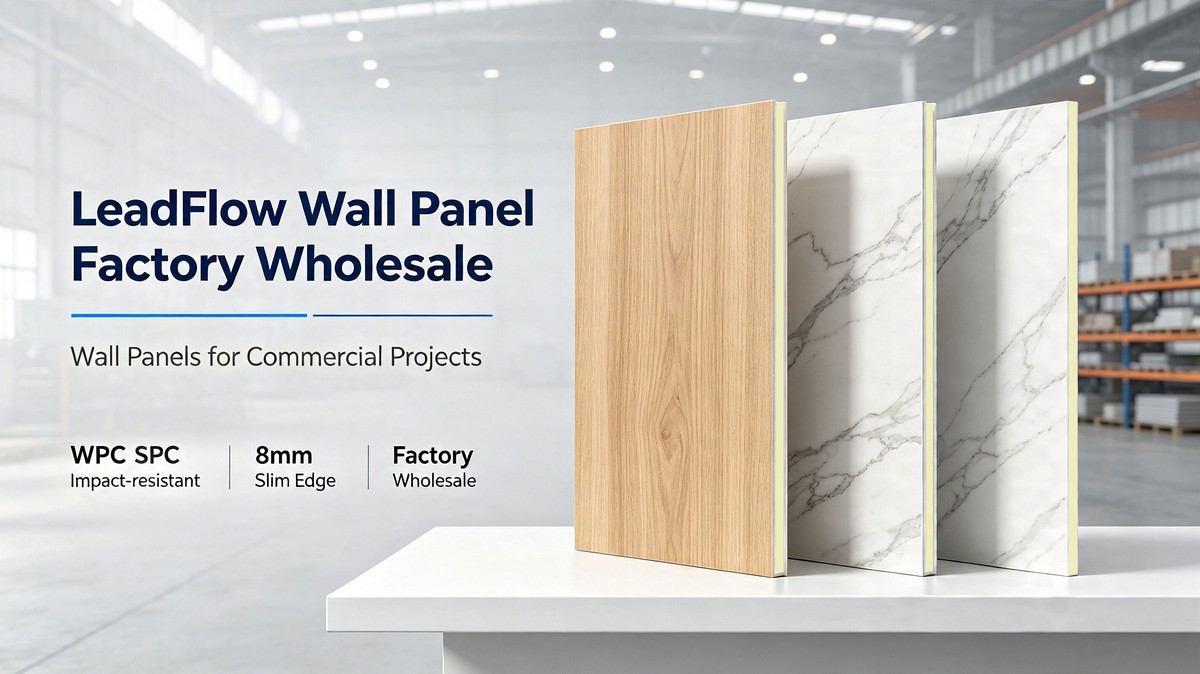
The lesson from these commercial space scenarios is that no single material wins everywhere; the winning strategy is a hybrid specification. WPC fluted panels own the warm, tactile feature walls, carbon crystal panels deliver the glossy marble-effect premium moments, and SPC panels secure the wet, high-abuse service zones. Together they cover the full performance envelope of hospitality and food-service interiors while simplifying logistics into one coordinated supply chain built around a proven WPC Wall Panel platform.
The outlook points toward further professionalization of the category. Fire regulations for public buildings continue to tighten, pushing certified formulations to the front of tender documents; low-VOC and recyclable-content documentation is becoming a standard procurement requirement; and digital printing now allows brands to translate signature graphics directly onto panel surfaces. For architects, contractors and franchise operators, the practical takeaway is clear: specify by test data and total cost of ownership, and partner with manufacturers who can document consistency from the first container to the last.
FAQ
Q: Are WPC wall panels suitable for high-traffic hotel lobbies?
A: Yes. Quality WPC panels use dense, impact-resistant cores and durable surface layers that withstand luggage contact, scuffing and frequent cleaning, while fluted profiles help disguise minor marks and improve acoustic comfort. Always verify fire test certificates for public-area applications.
Q: What is the difference between WPC, carbon crystal and SPC wall panels?
A: WPC panels blend wood fiber with polymer for a warm, workable board ideal for fluted feature walls. Carbon crystal panels are rigid polymer-calcium boards with a hard, high-gloss decorative film that reproduces marble effects. SPC panels use a stone-plastic composite core that is fully waterproof and dimensionally stable, making them the best fit for wet or high-abuse zones.
Q: How do wall panels reduce renovation downtime for restaurants?
A: Panels install dry — cut to size and fixed over furring or existing walls with clips or adhesive — so there is no grouting, plastering or curing time. Many quick-service restaurants complete a full reclad overnight and reopen the next morning, avoiding lost trading days.
Q: Which certifications should commercial buyers request from suppliers?
A: Ask for fire classification reports such as EN 13501-1 or ASTM E84, formaldehyde and VOC emission documentation, surface abrasion and stain-resistance data, and written batch color-consistency guarantees — particularly for multi-site rollouts where visual uniformity defines the brand.
Have a custom requirement? Contact our engineering team for tailored renderings and professional advice on WPC, carbon crystal and SPC wall panel solutions.