The global interior finishing market has turned WPC wall panels from a niche alternative into a mainstream specification choice, and with that shift comes a hard truth: compliance now decides who can sell, and where. For any WPC Wall Panels supplier targeting Europe, North America, the Middle East, or Australia, certifications such as CE marking, fire classification, and chemical-emission reports are no longer marketing extras — they are entry tickets to regulated markets. This article interprets the certification frameworks, export standards, and documentation practices that govern the international WPC wall panel trade, offering importers, distributors, and project buyers a practical compliance roadmap for the years ahead.
Key Takeaways
• Market access is compliance-driven: CE marking, fire ratings, and chemical-safety rules are mandatory gates in the EU, GCC, and an expanding list of jurisdictions.
• Fire performance and VOC emissions are the two panel attributes most closely scrutinized by regulators and procurement teams.
• Documentation — third-party test reports, declarations of performance, and chain-of-custody certificates — carries as much commercial weight as the product itself.
• Effective supplier vetting verifies report authenticity, batch consistency, and correct customs classification before contracts are signed.
The Global Certification Landscape for WPC Wall Panels
Certification requirements for WPC wall panels fall into four core categories: quality management, fire safety, chemical emissions, and environmental sourcing — and professional buyers evaluate all four together, not in isolation.
Quality management. ISO 9001 and ISO 14001 remain the baseline credentials for any factory serving export markets. They do not certify the product itself, but they signal process discipline: controlled raw-material intake, calibrated production lines, and traceable quality records. Increasingly, mature manufacturers complement these with environmental product documentation that supports green-building assessments on the buyer's side.
Fire safety. This is the most decisive category. In Europe, EN 13501-1 classifies building products from A1 down through B, C, D, E, and F, with supplemental ratings for smoke production (s) and flaming droplets (d); commercial and hospitality projects commonly specify B-s1,d0 for interior wall linings. North America relies on the ASTM E84 tunnel test, with Class A and Class B as the standard reference points, while BS 476 persists in UK-influenced markets. Because interior wall linings are among the first surfaces to contribute to flame spread, regulators across jurisdictions have progressively tightened their requirements, and panels that once satisfied Class C or D expectations are increasingly specified at Class B or better.
Chemical emissions. Although the polymer-based core of a WPC panel is generally formaldehyde-free, surface laminates, adhesives, and bonded wood components can still carry emission obligations. Buyers therefore encounter formaldehyde classes E1 and E0, CARB Phase 2 and TSCA Title VI documentation for US-bound goods with composite wood elements, French VOC labeling for European residential work, and REACH obligations in the EU governing substances of very high concern.
Environmental sourcing. FSC or PEFC chain-of-custody certificates for wood fiber, verified recycled-content claims, and lifecycle disclosures are moving from differentiators to expectations. The same scrutiny extends to adjacent decorative categories: a professional UV Marble Sheet manufacturer faces parallel demands for REACH compliance, fire test data, and low-VOC certification, because interior specifiers now treat polymer-based wall finishes under one compliance umbrella.
Accredited laboratories such as SGS, Intertek, TÜV Rheinland, and Bureau Veritas issue the reports on which international buyers rely, which is why the credibility of the issuing body matters as much as the numbers inside the report.
Export Standards by Region: What Importers Must Verify
Export standards differ sharply by destination market, and misreading them is one of the most common — and most expensive — causes of customs delays and rejected shipments.
European Union. CE marking under the Construction Products Regulation, supported by a Declaration of Performance, is the cornerstone of EU market access. For interior wall cladding, the practical core of the documentation is the declared fire class under EN 13501-1 and the declaration covering release of dangerous substances. REACH compliance is checked by importers and authorities alike, and missing DoP documents can block products at the border.
North America. The United States and Canada center on ASTM E84 surface-burning characteristics, California Proposition 65 warnings for applicable substances, and TSCA Title VI formaldehyde rules where bonded wood components are present. Code officials on larger projects may also request evaluation documentation before approving a non-traditional wall finish.
Middle East and GCC. Civil defense authorities across the Gulf scrutinize interior finishes for fire behavior, and Saudi Arabia channels conformity through the SABER platform with SASO-linked certificates. Buyers shipping into the region should treat fire test reports and conformity certificates as inseparable from the commercial invoice.
Australia and New Zealand. The National Construction Code classifies wall linings by fire hazard group number, with the most onerous classification reserved for materials showing the lowest heat release. Panels marketed into this region without group-number test data face predictable resistance from specifiers.
Southeast Asia and other markets. Regulatory regimes vary widely — Indonesia's SNI certification is one of the more established national schemes — yet even where local rules are lighter, developers and consultants increasingly reference international test data as a de facto quality bar.
Logistics and customs. Compliance does not end at the product. Wood packaging must meet ISPM 15 heat-treatment or fumigation requirements, and HS-code classification matters: polymer-dominant WPC profiles are commonly classified under Chapter 39 of the Harmonized System, while compositions with higher wood content may fall under Chapter 44, and misclassification regularly triggers duty disputes. Correct labeling and destination-language documentation complete the export package. For broader market context, see our analysis of global WPC wall panel demand trends.
Supplier Due Diligence: Turning Paperwork Into Proof
A certificate is only as reliable as the process behind it, which is why supplier due diligence has become as important as the test reports themselves.
Verify report authenticity. Buyers should check the issuing laboratory's name, report number, and test date, then confirm directly with the laboratory that the document is genuine. The tested sample — its thickness, density, and surface structure — must match the product actually being quoted, because a certificate for one profile says nothing about another.
Audit batch consistency. Certified samples are worthless if production drifts. A dependable WPC Fluted Wall Panels supplier aligns production batches with certified reference samples, maintains retention samples for every batch, and can trace any shipment back to a production record. When comparing profiles and finishes, review the full WPC fluted wall panel profile range alongside the corresponding test data rather than selecting on appearance alone.
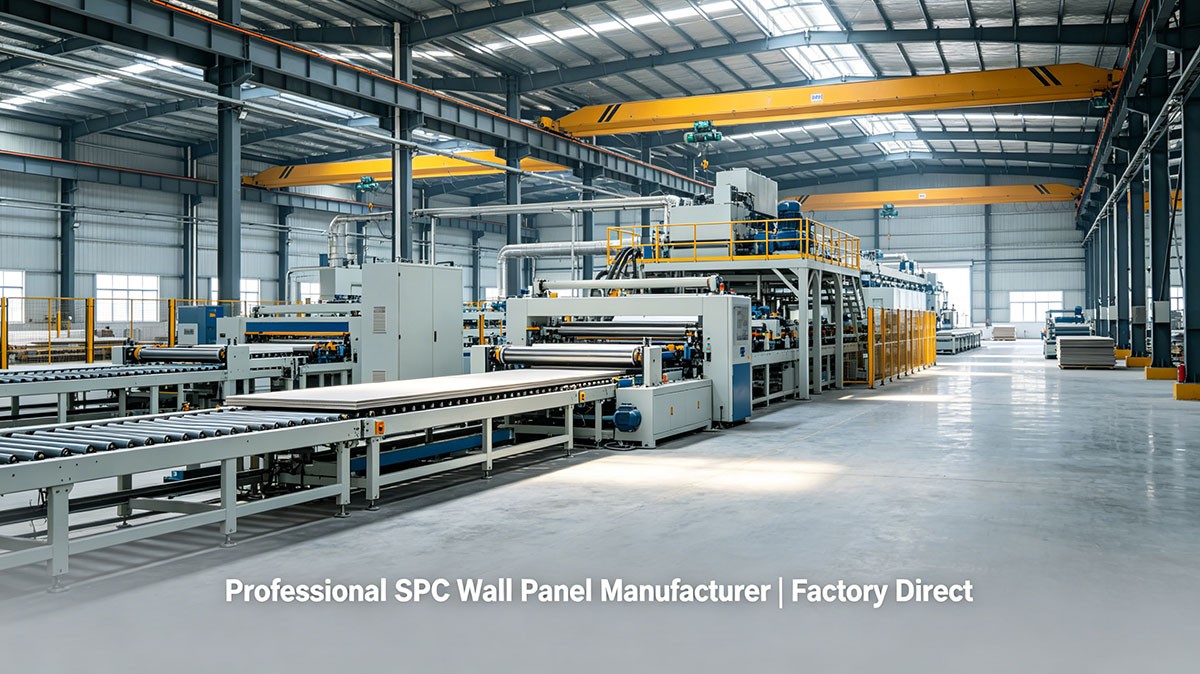
Inspect the factory. An on-site or third-party audit covering raw-material intake (including recycled versus virgin polymer ratios), extrusion lines, and the in-house quality laboratory reveals whether compliance is systematic or occasional.
Control the shipment. Pre-shipment inspection should check dimensional tolerance, color difference between panels, surface finish quality, and packaging integrity; for decorative surfaces exposed to daylight, UV aging and color-fastness test data deserve particular attention.
Assemble the documentation package. A complete export file — Declaration of Performance, fire and emissions reports, chain-of-custody certificates, packing lists consistent with declared specifications, and origin documents — should be confirmed before the purchase order, not negotiated after the container sails.
Conclusion and Outlook
Compliance in the WPC wall panel industry is shifting from document-level box-ticking toward lifecycle-level transparency. The direction of travel in the European Union — expanded environmental disclosure for construction products and the emerging digital product passport concept — signals what global buyers will soon expect everywhere: verified data on fire behavior, emissions, recycled content, and origin, accessible product by product. Suppliers that treat certification as a product feature rather than paperwork will win the specification battles of the next decade; those that do not will find their markets narrowing one regulation at a time. For buyers, the message is equally clear: build compliance verification into procurement from day one, and the category becomes not a risk, but a durable competitive advantage.
FAQ
Q: What certifications are required to export WPC wall panels to the European Union?
A: At minimum, buyers should expect CE marking supported by a Declaration of Performance, an EN 13501-1 fire classification report, and REACH compliance for chemical substances. Additional VOC documentation, such as French A+ labeling, is frequently requested for residential and hospitality projects.
Q: Which fire rating should interior WPC wall panels meet?
A: For most commercial interiors in Europe, a B-s1,d0 classification under EN 13501-1 is the de facto specification. In North America, Class A or Class B under ASTM E84 is the standard reference. Requirements vary by building type and local code, so always confirm with the project specifier.
Q: How can I verify that a supplier's test reports are genuine?
A: Check the issuing laboratory's name and report number, contact the laboratory directly to confirm authenticity, and verify that the sample described in the report — thickness, density, surface — matches the product being quoted. A third-party pre-shipment inspection adds a further layer of assurance.
Q: Do WPC wall panels contain formaldehyde?
A: The polymer-based core of WPC wall panels is generally formaldehyde-free, but surface laminates, adhesives, and some decorative layers may involve bonded wood components. Buyers should request E1/E0, CARB Phase 2, or TSCA Title VI documentation where these components are present.
Ready to elevate your next project? Get free samples today and experience the quality firsthand.