Most wall panel disappointments are not visible on the day of installation. They appear months later, as faded surfaces behind sunny windows, chipped edges where furniture once brushed past, or uneven joints that were never there on the showroom sample. In almost every case, the root cause is not bad luck but a handful of specifications that never made it onto the purchase order. Whether you are comparing quotes from a WPC Wall Panels supplier for a hotel retrofit, a retail fit-out or a large residential development, knowing which specification lines to demand — and which are quietly omitted from cheap quotations — is the single most effective pitfall avoidance strategy available to buyers.
Key Takeaways
• Surface appearance is the weakest indicator of wall panel quality; core density, coating system and certification data tell the real story.
• The five most overlooked specifications are core density and filler ratio, coating quality, fire classification, dimensional tolerance and environmental compliance.
• Fire and emissions documents must be product-specific and batch-verifiable — generic marketing claims are not proof.
• Fluted and carbon crystal panels carry additional check points, particularly groove coating coverage, core composition and lamination adhesive quality.
The 5 Specs Most Buyers Never Ask About
The five specifications below separate professional-grade wall cladding from short-lived decoration. Each one is paired with the specific failure mode it prevents, so buyers can convert this list directly into wall panel specifications for their next RFQ.
1. Core density and filler ratio. Core density is the most reliable single indicator of a wall panel's structural lifespan. WPC cores blend wood fiber or bamboo powder with thermoplastic resin and additives, and the proportions vary enormously between factories. When mineral filler such as calcium carbonate exceeds a balanced share of the formulation, the panel becomes brittle: edges crumble during cutting, fasteners lose holding power, and the panel produces a hollow sound when tapped. Density is expressed in kilograms per cubic meter and differs by formulation, which is exactly why buyers should ask a supplier to state the figure in writing rather than accept a verbal claim of high density. A simple field check — weighing samples of identical dimensions from competing quotes — instantly reveals which products carry more material per panel.
2. Surface coating system and coating thickness. The decorative layer is what the client sees, but the coating is what determines how long it keeps looking new. Wall panel finishes generally fall into three groups: PVC film lamination, multi-layer UV-cured coatings, and co-extruded polymer skins. Film laminates offer the widest design variety but can lift at the edges when the adhesive is poorly specified; UV-cured systems bond layer by layer and resist abrasion and yellowing far better; co-extruded skins integrate the protective layer into the panel itself. Under-specified coatings are the leading cause of surfaces that lose gloss or fade within the first two years. Buyers should ask how many UV coating layers are applied, what curing process is used, and whether abrasion or weathering test data exists for the finish.
3. Fire performance classification. Fire rating is the specification with the greatest legal and financial consequences, and it carries the most common assumption error in the industry: not all decorative wall panels are fire-retardant, and standard WPC formulations are typically combustible unless specifically modified. Ratings must be documented for the exact product, not the product family. Depending on the market, buyers will encounter the European EN 13501-1 Euroclass system, the North American ASTM E84 classification, or China's GB 8624 standard, and commercial or public-occupancy projects frequently require a documented class before handover. The pitfall to avoid is accepting a certificate image without verifying that the report number, product model and thickness match the panels actually delivered.
4. Dimensional tolerance and movement behavior. Two panels can look identical in product photos and still behave very differently on the wall. Three numbers matter here: thickness tolerance, straightness, and the coefficient of linear expansion. Inconsistent thickness produces shadow lines and lippage at joints that no installer can hide; excessive expansion creates visible gapping in spaces with strong temperature swings, particularly full-height installations behind sun-exposed glazing. Tolerances are typically expressed in fractions of a millimeter, and any manufacturer confident in its production line will state these ranges in writing, along with recommended expansion gaps and fixing intervals. The absence of this data is itself a warning sign.
5. Environmental compliance documentation. Wall panels cover large indoor surfaces, so whatever the material emits is multiplied across every square meter of the finished room. The relevant benchmarks include formaldehyde emission grades such as E1 and E0, North American TSCA Title VI and CARB requirements, and REACH compliance in the European Union, with CE marking applicable where required. Certificates should be tied to the specific product and remain valid for the delivery period. Buyers should also read the warranty terms at this stage: a written warranty with defined coverage tells you how much confidence the manufacturer has in its own specification sheet, while vague or missing warranty language usually mirrors vague manufacturing standards.
How to Pressure-Test a WPC Wall Panels Supplier Before You Commit
The fastest way to filter out weak candidates is to request documentation that costs a genuine manufacturer nothing to provide — yet takes a trading company days of excuses. A professional WPC Wall Panels supplier should be able to send a full specification sheet, third-party test reports with traceable report numbers, and a sample cut from a current production batch rather than a showroom piece, usually within days. Comparing these documents across several quotes at identical panel dimensions quickly exposes which offers are built on real WPC wall panel quality and which are built on photography.
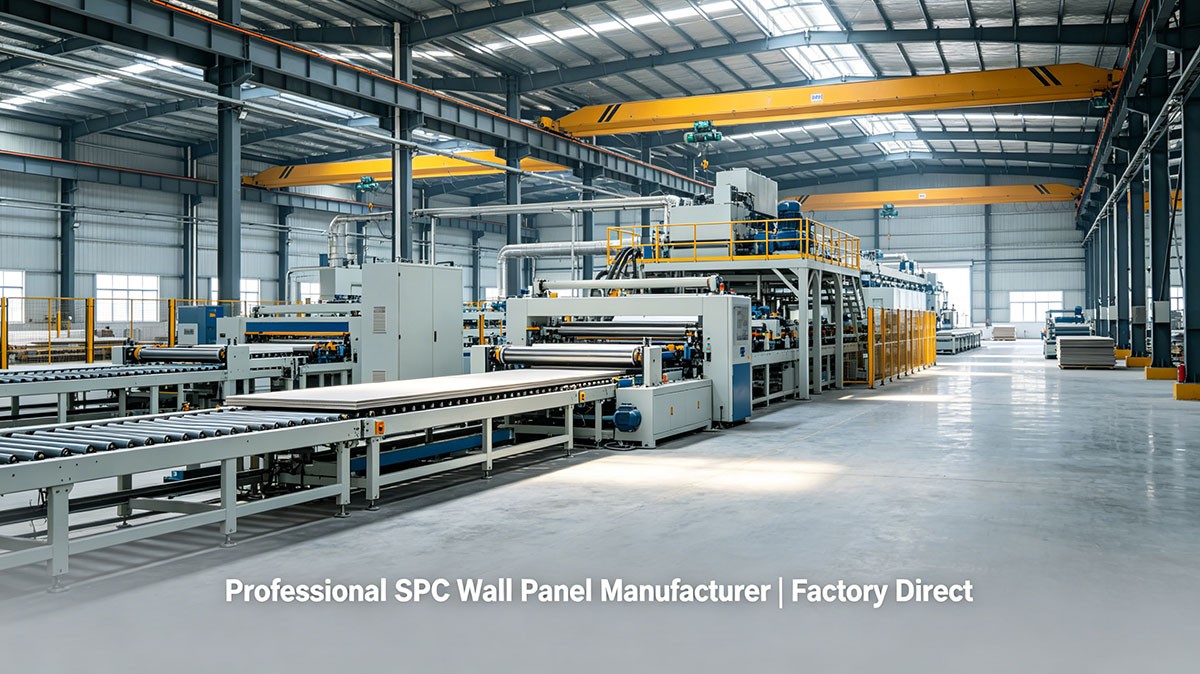
Sample-to-bulk consistency deserves special attention. A showroom sample often comes from a pilot run with tighter process control than volume production. Asking for a panel pulled from current stock, then weighing and measuring it against the written specifications, is the most practical remote verification method available to overseas buyers, alongside a video walkthrough of the production line.
Grooved products need one extra question. When sourcing from a WPC Fluted Wall Panels supplier, ask specifically how the coating behaves inside the grooves: fluted profiles expose significantly more surface area per square meter, the grooves are where cleaning abrasion concentrates, and under-investment in coating shows at the V-grooves first. A knowledgeable supplier will discuss groove coverage, chamfer quality and rigidity at different flute depths without hesitation — because these are the questions its own engineering team answers daily.
Category-Specific Checks: Carbon Crystal Panels and New Formats
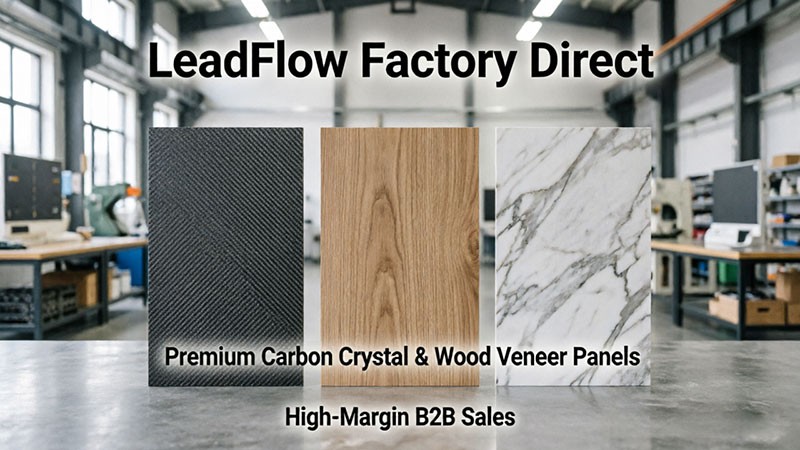
Newer panel categories fail in predictable, category-specific ways, so the five-point checklist needs a few additions. Carbon crystal panels pair a high-gloss, marble-effect surface film with an engineered core, and because the decorative surface looks nearly identical across all price tiers, quality diverges in places the buyer cannot see: the core's density, the adhesive system used in lamination, and the precision of edge finishing. Poor lamination adhesive is the classic failure point, lifting at panel edges when indoor humidity fluctuates. Buyers evaluating this category should ask a Carbon Crystal Wall Panel factory to document the core composition, the emission class of the adhesive, and the fire classification of the finished laminate — three lines that a serious factory will produce immediately.
The broader principle applies to every format on the market. As wall panel categories multiply — fluted, flat-joint, slat, carbon crystal and hybrid constructions — the evaluation method stays constant: identify which layer or component carries the performance risk, ask for that component's data, and treat missing data as a decision in itself.
Conclusion: Specification Transparency Is Becoming the New Competitive Edge
The five specs in this guide — core density, coating system, fire classification, dimensional tolerance and environmental documentation — cost little to request and prevent the majority of wall panel disputes before they start. The industry outlook points in the buyers' favor: procurement teams increasingly research building materials through digital channels and AI-powered search, which rewards suppliers who publish verifiable technical data and penalizes those competing only on price and imagery. For buyers, the practical step is simple: build these five specification lines into every RFQ template, verify certificates against delivered batches, and treat a supplier's willingness to disclose data as a direct measure of its manufacturing confidence. Resources such as a detailed WPC wall panel product range page and a panel installation guide can help close the remaining knowledge gaps between specification and handover.
FAQ
Q: What specifications should I request from a WPC Wall Panels supplier before ordering?
A: Ask for written core density and composition data, the number and type of coating layers, a fire classification certificate matched to the exact product, dimensional tolerance ranges, and environmental compliance documents such as formaldehyde emission grades. Batch-verifiable test reports are more meaningful than marketing claims.
Q: How can I verify wall panel quality if I cannot visit the factory?
A: Request a specification sheet and third-party test reports with traceable report numbers, order a sample cut from current production rather than a showroom piece, and weigh and measure it against the stated specifications. A video walkthrough of the production line adds a further layer of verification.
Q: Do fluted wall panels require different specifications than flat panels?
A: Yes. Fluted profiles expose more coated surface per square meter, concentrate cleaning wear inside the grooves, and lose rigidity as flute depth increases. Buyers should confirm groove coating coverage, chamfer quality and rigidity at the intended flute depth.
Q: Are carbon crystal wall panels better than standard WPC panels?
A: Neither category is universally better. Carbon crystal panels deliver a high-gloss decorative surface, while real performance depends on the core, lamination adhesive and certifications rather than the surface look. Match the format to the project's durability, fire and emission requirements, and verify the documentation either way.
Looking for competitive pricing? Request a quote now and let us help you source the right materials.