Renovation timelines are tightening across the globe. Property owners want spaces delivered in weeks rather than months, while labor shortages and rising wages make every extra day on site more expensive. Against this backdrop, quick-install carbon crystal panels have moved from a niche decorative product to a mainstream scheduling solution: contractors worldwide report that switching from traditional wet wall finishing to carbon crystal panel systems can shorten the wall-finishing phase by as much as 70%. This article explains where that time saving comes from, how the technology works, and what buyers and distributors should verify before specifying these panels on their next project.
Key Takeaways
• Carbon crystal panels are rigid, factory-finished decorative wall panels installed with adhesive, keel framing, or click-style joints — eliminating plastering, putty, sanding, painting, and all associated drying time.
• The reported 70% reduction in construction time comes primarily from compressing a multi-week wet-trade sequence into a matter of days, because dry installation is weather-independent and walls are usable immediately.
• Time savings depend on quality: dimensional tolerances, edge precision, and surface bonding — all controlled at the Carbon Crystal Wall Panel factory level — determine whether installation is fast or slow.
• Sourcing strategy matters: pairing panels with matching trims and fluted accents from one coordinated supplier consolidates logistics and shortens project timelines further.
Why Installation Speed Has Become the Renovation Industry's Biggest Bottleneck
Wall finishing remains the slowest and least predictable stage of most interior fit-outs. In a conventional renovation, walls pass through a long sequence: leveling, plastering or skim-coating, putty application, sanding, priming, and painting. Each coat needs time to dry, and each stage depends on ambient temperature and humidity. In humid seasons or poorly ventilated spaces, curing windows stretch from days into weeks, and a single moisture problem can force rework across the entire surface.
The labor market compounds the problem. Skilled plasterers and painters are aging out of the workforce in many markets — from Europe and North America to East Asia — while construction wages continue to climb. Multiple trade visits also mean multiple scheduling handoffs, site cleaning cycles, and supervision hours. For commercial operators such as hotels, retail chains, and rental landlords, the cost is direct: every week of delay postpones rental income or opening day. This is why the industry has been steadily shifting toward dry construction methods, and wall panels are the clearest example of that shift at work.
How Quick-Install Carbon Crystal Panels Cut Wall Finishing Time by Up to 70%
A carbon crystal wall panel is a rigid decorative panel built on a dense composite core — typically a high-hardness blend of polymer and mineral filler — finished with a wear-resistant PET film or UV-cured coating that replicates wood grain, marble, fabric, or solid-color aesthetics. The result is a large-format panel that arrives on site fully finished: no coating, no curing, and no painting crews required.
The time savings come from five distinct mechanisms, each removing a stage that traditional wall finishing requires:
1. Dry installation with no curing time. Panels are fixed with adhesive, metal or wooden keel framing, or integrated click-style edges. Because there is no mortar, plaster, or paint, there is nothing to dry. Work proceeds in cold, humid, or poorly ventilated conditions where wet trades would stall.
2. One-pass, large-format coverage. Standard panels cover significantly more wall area per unit than tiles or small boards, so crews install fewer pieces per square meter and complete rooms in a single visit rather than across multiple trade handoffs.
3. Tolerance for imperfect substrates. Because panels are mounted on a level keel or bonded over sound existing walls, minor bumps and hairline cracks do not require full skim-coating. Renovation projects can skip the most labor-intensive preparation stage altogether.
4. Clean, low-dust workmanship. Panels cut with standard site tools generate far less dust than sanding and plastering, allowing electrical, flooring, and joinery trades to work in parallel instead of waiting for the finishing crew.
5. Immediate handover. Factory-applied surfaces are scratch- and wipe-resistant from day one, so furniture, fixtures, and equipment can be moved in as soon as the last panel is clipped into place.
Contractors comparing methods typically find that the wet-finishing sequence for an apartment — leveling through final paint — consumes several weeks of elapsed time, much of it spent waiting. A panel system compresses that same scope into a few working days, which is where the widely cited figure of up to 70% time reduction originates. The saving is not one dramatic shortcut; it is the accumulated elimination of drying windows, trade handoffs, and rework risk.
Sourcing and Quality: What Buyers Should Verify Before Ordering
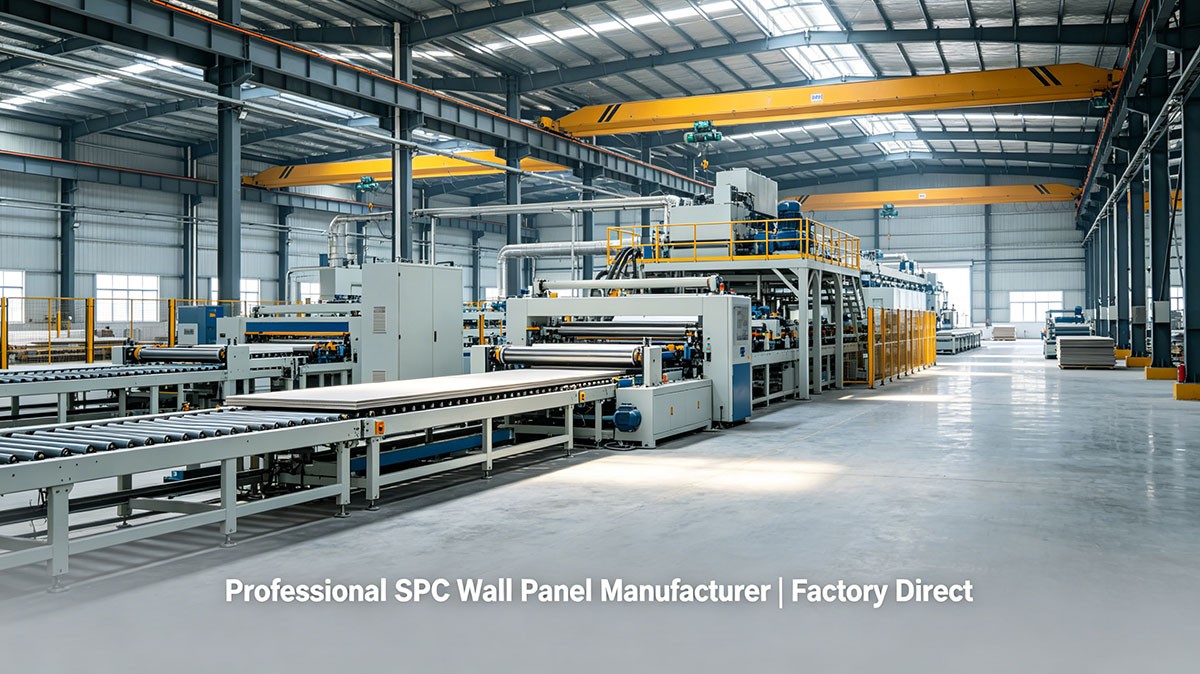
Quick installation is only achievable when panels are dimensionally consistent. Edge straightness, thickness uniformity, and precise groove machining determine whether joints close cleanly or crews spend hours sanding and shimming — quietly eroding the promised time savings. For this reason, experienced buyers evaluate the upstream Carbon Crystal Wall Panel factory as carefully as the product itself: consistent production lines, in-line thickness control, batch-to-batch color matching, and a complete accessory system of trims, keels, and adhesives that keeps installers from improvising on site.
Surface performance deserves equal scrutiny. A well-bonded PET or UV-cured surface resists scratching, staining, and moisture, while the core should carry recognized fire-performance and low-emission certifications appropriate to the target market. Requesting physical samples and independent test reports before committing to volume orders remains standard due diligence. For buyers comparing substrates, our overview of carbon crystal panel versus WPC wall panel construction explains the material differences in greater detail.
Design trends are also pulling carbon crystal panels and other wall systems closer together. Large-format flat panels now frequently share walls with ribbed or fluted accents, and sourcing both through a single WPC Fluted Wall Panels supplier ensures matched colors, compatible trims, and one coordinated delivery. Distributors that consolidate orders with a diversified WPC Wall Panels supplier gain further advantages: fewer shipments, aligned lead times, and technical support that covers the entire wall system rather than isolated products.
Three practical checks are worth adding to any procurement checklist: verify that joint accessories are available in the same batch color, confirm panel thickness and keel recommendations for the intended wall type, and confirm packaging standards for long-distance freight, since edge damage in transit is one of the few issues that can genuinely slow an otherwise fast installation.
Conclusion and Outlook
Quick-install carbon crystal panels are best understood not merely as a decorative product but as a scheduling tool. By converting wall finishing from a multi-stage wet process into a single dry assembly task, they address the two forces squeezing renovation projects hardest: labor scarcity and time pressure. The up-to-70% reduction in construction time reported across the industry reflects structural advantages — no drying time, fewer trades, immediate handover — that wet methods cannot replicate, and the trend mirrors the wider movement toward dry construction and prefabricated interior systems.
The outlook points toward broader adoption. Expect continued improvements in click-joint systems, higher fire ratings, deeper embossed textures, and wider accessory ecosystems as manufacturers compete on installation speed as well as appearance. For contractors, developers, and distributors, the message is straightforward: wall panels have become a planning decision made at the start of a project, not a finishing choice made at the end.
FAQ
Q: How do carbon crystal panels save up to 70% of construction time?
A: They replace the entire wet-finishing sequence — leveling, plastering, putty, sanding, and painting — with dry, mechanical installation of factory-finished panels. This removes all drying and curing windows, reduces the number of trade visits to one, and allows walls to be used immediately, which is where the substantial time reduction comes from.
Q: Can quick-install carbon crystal panels be mounted over existing walls in renovation projects?
A: In most cases, yes. Panels are typically fixed on keel battens or bonded with adhesive over sound existing surfaces, so minor imperfections do not require full skim-coating. Severely damaged, crumbling, or damp walls should be locally repaired and dried first to ensure long-term adhesion.
Q: Are carbon crystal panels suitable for kitchens, bathrooms, and commercial spaces?
A: Generally, yes. The dense core and sealed PET or UV-cured surfaces resist moisture, scratches, and stains, making them suitable for high-traffic and wet-area applications. Seams in direct splash zones should be sealed, and local fire-safety regulations should be confirmed for commercial installations.
Q: Should buyers order from a specialized Carbon Crystal Wall Panel factory or a general wall panel distributor?
A: Specialized factories are the right choice for large-volume or custom orders where tight dimensional tolerances and batch consistency are critical. A diversified WPC Wall Panels supplier that carries carbon crystal panels, fluted profiles, and matching trims is often more efficient for mixed-material projects and smaller consolidated orders. Either way, request samples and certification documents before placing a volume order.
Sourcing the right panels early is what turns a 70% time saving on paper into a 70% saving on site.
Looking for competitive pricing? Request a quote now and let us help you source the right materials.