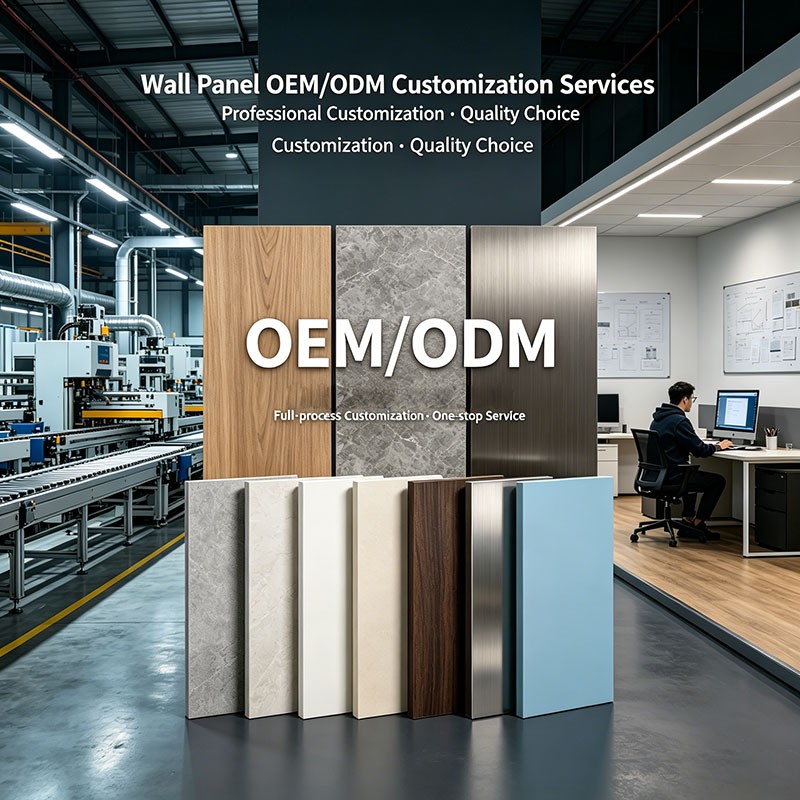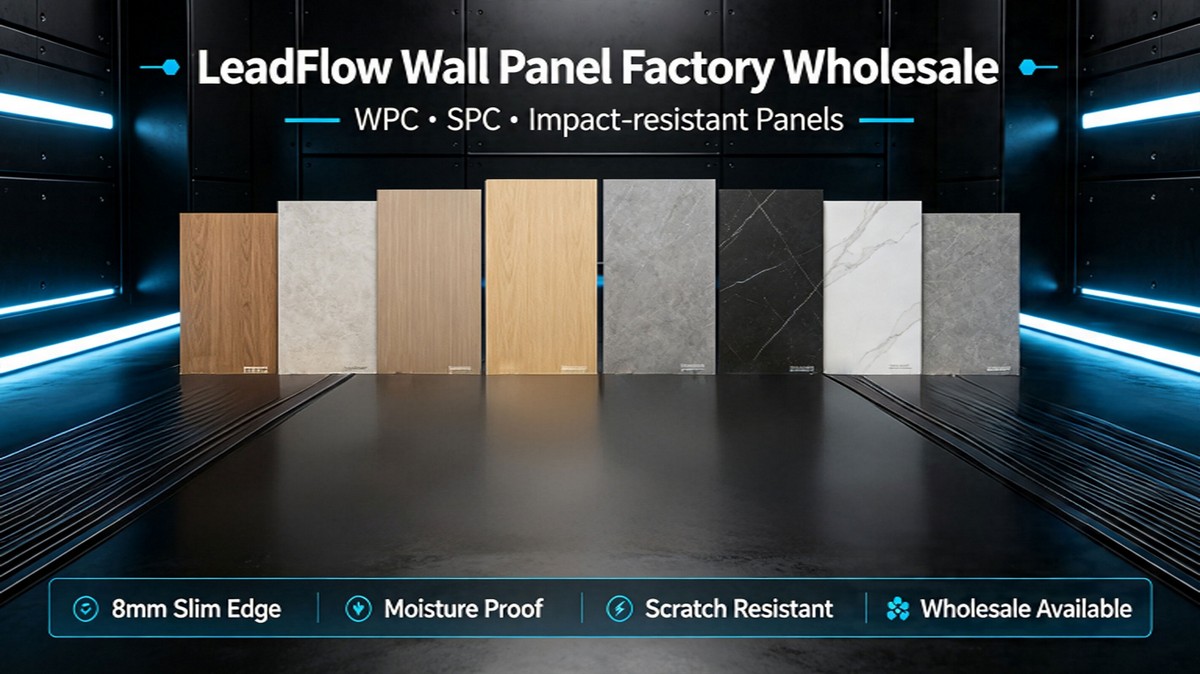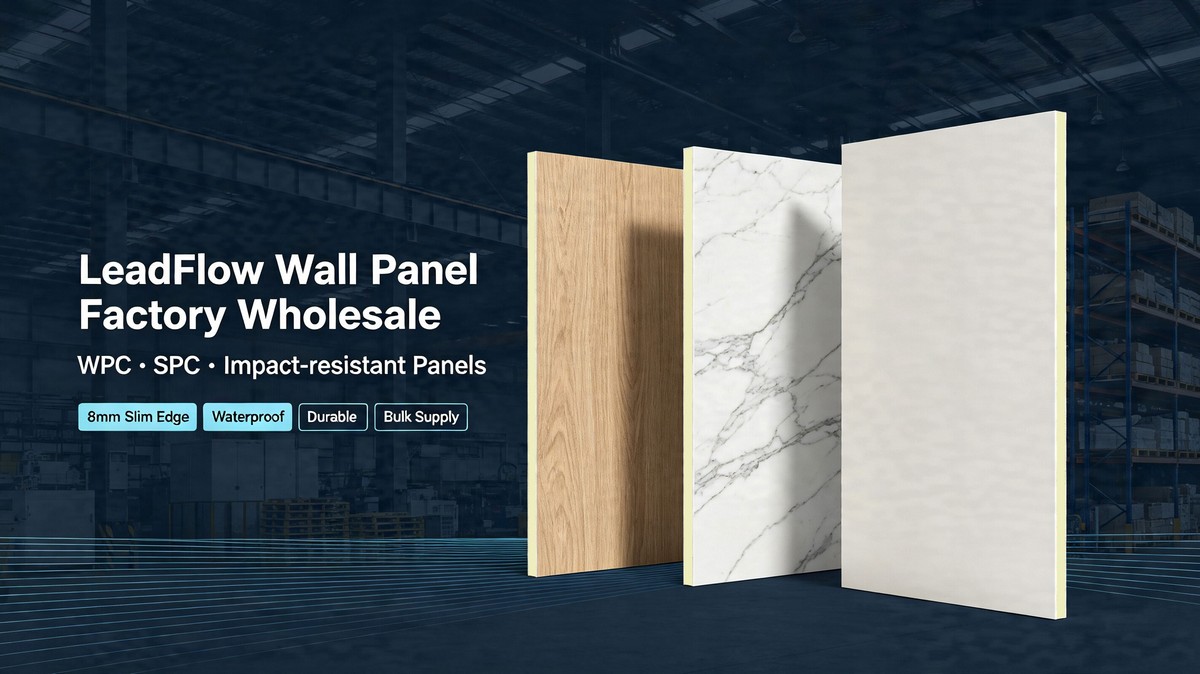
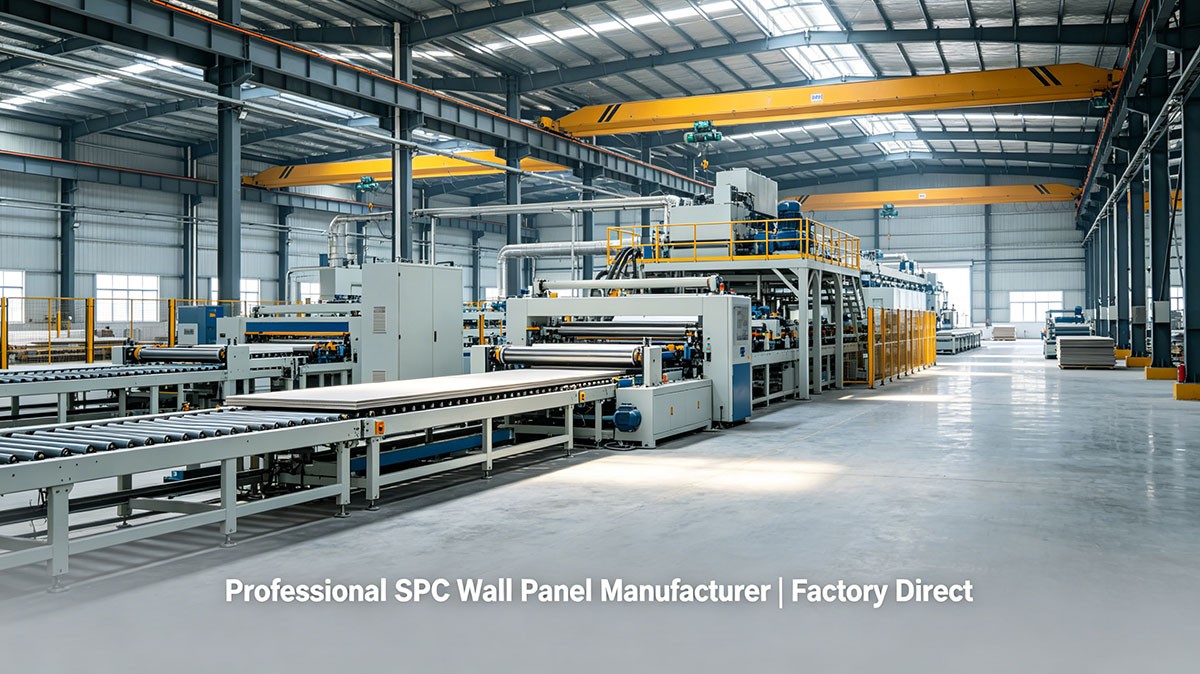
The choice between a WPC Wall Panel and an SPC alternative has quietly become one of the most consequential sourcing decisions in the global decorative wall cladding market. To the untrained eye, the two products can look nearly identical: same profiles, similar finishes, comparable price points on a distributor's spreadsheet. Beneath the surface laminate, however, sit two fundamentally different core formulations — one built on wood fiber, the other on stone powder — and those differences cascade into nearly every attribute that matters, from density and moisture behavior to impact strength, shipping weight, and lifetime cost. This deep dive examines what actually separates the two core materials, how each performs under real-world conditions, and what buyers, distributors, and specifiers should weigh when building their product lines for the years ahead.
The stakes are practical rather than academic. A core chosen for the wrong environment can mean edge swelling in a humid lobby, cracked boards in a high-traffic corridor, or inflated freight bills that erode margins. In today's market, understanding the material science behind a panel is a genuine commercial skill.
Key Takeaways
• WPC (wood-plastic composite) cores blend wood fiber with thermoplastic resin, producing a lighter board that is easy to machine and favored for decorative fluted profiles.
• SPC (stone-plastic composite) cores fuse calcium carbonate with PVC resin, delivering significantly higher density, hardness, and water resistance.
• SPC generally suits wet, high-traffic, and commercial environments, while WPC excels in interior feature walls and lightweight cladding.
• Buyers should verify core density, filler ratios, and surface treatment with any supplier — these specifications separate reliable manufacturers from inconsistent ones.
WPC Wall Panel vs SPC: Core Formulations Explained
At the most fundamental level, the distinction is a question of what the core is made of. A WPC wall panel — short for wood-plastic composite — is produced by blending wood flour or wood fiber, typically derived from sawdust and forestry by-products, with a thermoplastic matrix such as PVC or polyethylene, together with stabilizers, lubricants, and foaming agents. Depending on the formulation, wood content can range from roughly one-third to more than half of the compound. The result is a board that inherits the workability and warm, matte texture of timber while gaining the water and rot resistance of plastic.
SPC, or stone-plastic composite, takes the opposite approach. In place of wood fiber, the core is dominated by calcium carbonate — finely ground limestone powder — fused with PVC resin; in most commercial formulations the mineral filler accounts for more than half of the compound by weight. Because SPC contains little to no organic material, its core behaves essentially like stone wrapped in polymer: extremely dense, dimensionally stable, and nearly non-porous.
These compositional differences translate directly into physical ones. Foamed WPC boards sit far below SPC on the density scale, which is why SPC panels feel heavy and rigid in the hand while WPC panels are noticeably lighter and easier to cut, rout, and fasten on site. That machinability explains a market pattern buyers will recognize immediately: fluted and ribbed decorative profiles are most often produced from WPC, because a WPC Fluted Wall Panels supplier can rout crisp, repeatable grooves without the excessive tool wear and breakage risk that a stone-filled core would create. It is the same reason WPC dominates slat cladding, wave boards, and other finely detailed geometries.
Neither category is a universal substitute for the other. Each core defines a different performance envelope, and matching that envelope to the application is the first discipline of professional panel selection — a theme explored further in our guide to interior wall cladding systems.
Performance Under Pressure: Moisture, Impact, and Durability
Moisture behavior is the single most cited difference between the two cores. Because the mineral-filled SPC core contains virtually no organic matter, it absorbs almost no water, will not swell, rot, or support mold, and holds its dimensions in humid environments such as bathrooms, kitchens, and coastal buildings. WPC, by contrast, contains wood fiber, which is naturally hygroscopic. A well-made WPC panel counters this by tightly encapsulating the wood particles in polymer and, increasingly, by adding co-extruded outer layers that seal the core completely. A low-grade formulation with poor encapsulation, however, can absorb moisture over years of service, producing edge swelling or surface waviness. In practice, the quality of the extrusion process matters as much as the raw recipe.
Impact and structural behavior diverge in the opposite direction. The rigidity of SPC makes it highly resistant to dents and surface deformation, which is why it is frequently specified for corridors, retail interiors, and other locations exposed to knocks and abrasion. The trade-off is brittleness: a stone-heavy core can crack under sharp point loads or careless handling, and once cracked it cannot be subtly repaired. The fiber-reinforced matrix of WPC behaves differently — it tends to flex rather than shatter, absorbs minor impacts gracefully, and tolerates the slight curvature sometimes needed for feature wall detailing.
Weight deserves commercial attention as well. Because SPC is far denser, panels of equal dimensions weigh substantially more, raising freight cost per container and increasing handling time on site. Lighter WPC reduces shipping expenditure and installation labor, and lowers the dead load applied to partitions — a genuine advantage in high-rise renovation projects where structural loading is a constraint.
On fire performance, neither material should be described as fireproof. The mineral content of SPC generally contributes to better char behavior and a lower combustible load than a wood-filled core, but category-level assumptions are no substitute for documentation: buyers should request test certificates to recognized standards such as EN 13501 or ASTM E84 for the specific product they intend to purchase, not for the category in general.
Sourcing Strategy: Matching the Core to the Market
From a commercial standpoint, the WPC-versus-SPC decision is as much about channel strategy as material science. SPC has become the default specification for waterproof commercial fit-outs, and the distribution structure reflects that: SPC Wall Panel wholesale channels typically serve contractors and project buyers purchasing by the container for hotels, offices, clinics, and retail chains. Because PVC resin and calcium carbonate are widely traded commodities, wholesale pricing tends to be comparatively transparent and stable, which simplifies quoting for large, multi-phase projects.
WPC occupies the decorative and residential end of the spectrum, where lighter weight, finer routing detail, and a broad palette of embossed and laminated finishes drive purchasing decisions. Distributors building consumer-facing ranges — feature walls, TV backdrops, slat and fluted programs — typically anchor them on WPC cores, with SPC offered alongside as the upgrade for wet areas and high-traffic zones.
Between the two sits an emerging third category. Carbon crystal wall panels use a high-density, carbon-enhanced core — typically a mineral-based board reinforced with carbonaceous additives — and are positioned as a premium middle ground, combining the flatness and rigidity associated with stone-filled cores with improved surface hardness for high-definition laminated finishes. The category is young and product quality varies considerably between producers, so the same scrutiny applies: a credible Carbon Crystal Wall Panel factory will publish core density figures, disclose its lamination and pressing process, and supply fire and emissions documentation on request, rather than relying on marketing language alone.
Whatever the core, due diligence follows the same logic. Ask for the density specification in grams per cubic centimeter, the filler-to-resin ratio, whether the board is co-extruded or bare-edged, and third-party certificates for fire performance and formaldehyde emissions. A trustworthy manufacturer answers with data; hesitation on basic technical questions is itself a signal. For a broader view of decorative surface options, our overview of UV marble sheets and laminated finishes offers a useful companion read.
Conclusion and Outlook
WPC and SPC are best understood not as competitors but as complements — two cores optimized for different corners of the same market. WPC wins on weight, workability, and decorative finesse; SPC wins on density, water immunity, and commercial durability. The carbon crystal category is attempting to straddle the divide, and time will tell whether it earns a durable position or remains a niche.
The trajectory of the industry points toward refinement rather than replacement. Co-extrusion technology continues to narrow the moisture gap for WPC, while recycled content and lower-emission formulations are becoming differentiators on both sides as green building codes tighten across major markets. For distributors and specifiers, the practical takeaway is portfolio logic: carry both core types, position each where it verifiably performs, and let published core specifications — not surface appearance alone — drive the buying decision. In a market where two products can look identical on a pallet, the core is where the truth lives.
FAQ
Q: What is the main difference between WPC and SPC wall panels?
A: The core composition. WPC blends wood fiber with thermoplastic resin to create a lighter, easier-to-machine board, while SPC combines calcium carbonate (stone powder) with PVC resin, producing a much denser, harder, and more water-resistant panel.
Q: Which core material is better for bathrooms and other wet areas?
A: SPC is generally the safer choice because its mineral-filled core absorbs almost no water and will not swell, rot, or support mold. WPC can be suitable if the core is fully encapsulated or co-extruded, but buyers should confirm the surface sealing before specifying it for wet zones.
Q: Are WPC wall panels lighter than SPC panels?
A: Yes. Foamed WPC cores are significantly less dense than SPC, making WPC panels easier to cut, faster to install, and cheaper to ship. SPC panels weigh more but deliver superior dent resistance and rigidity.
Q: How can buyers verify core material quality before placing an order?
A: Request the core density specification, the filler-to-resin ratio, details of any co-extruded layers, and third-party test reports for fire performance and emissions. Reputable manufacturers provide this data routinely; reluctance to disclose it is a warning sign.