The rise of Stone Plastic Composite (SPC) as a go-to interior cladding material has turned SPC Wall Panel wholesale from a niche trade into one of the most active segments of the global building materials market. Engineered from a dense blend of calcium carbonate powder, PVC resin, and performance stabilizers, SPC wall panels deliver the waterproof strength and dimensional stability that modern interiors demand — from hotel bathrooms and restaurant feature walls to residential kitchens and retail fit-outs. For distributors, contractors, and design-build firms, the challenge today is no longer finding product, but identifying wholesale partners who can guarantee consistent formulation, certified safety, and dependable delivery at scale.
Key Takeaways
SPC wall panels are rigid, stone-filled composite boards engineered for waterproof, impact-resistant interior wall cladding in both residential and commercial spaces.
Smart wholesale sourcing prioritizes formulation consistency, certifications, and production capacity over unit price alone.
Consolidated sourcing is reshaping procurement, as many suppliers now offer SPC boards alongside WPC fluted panels, carbon crystal panels, and UV marble sheets within a single container.
Differentiation is shifting toward thicker profiles, co-extruded surfaces, and custom finishes as the wholesale market matures and commoditization pressures grow.
Why SPC Wall Panels Keep Gaining Ground in Interior Cladding
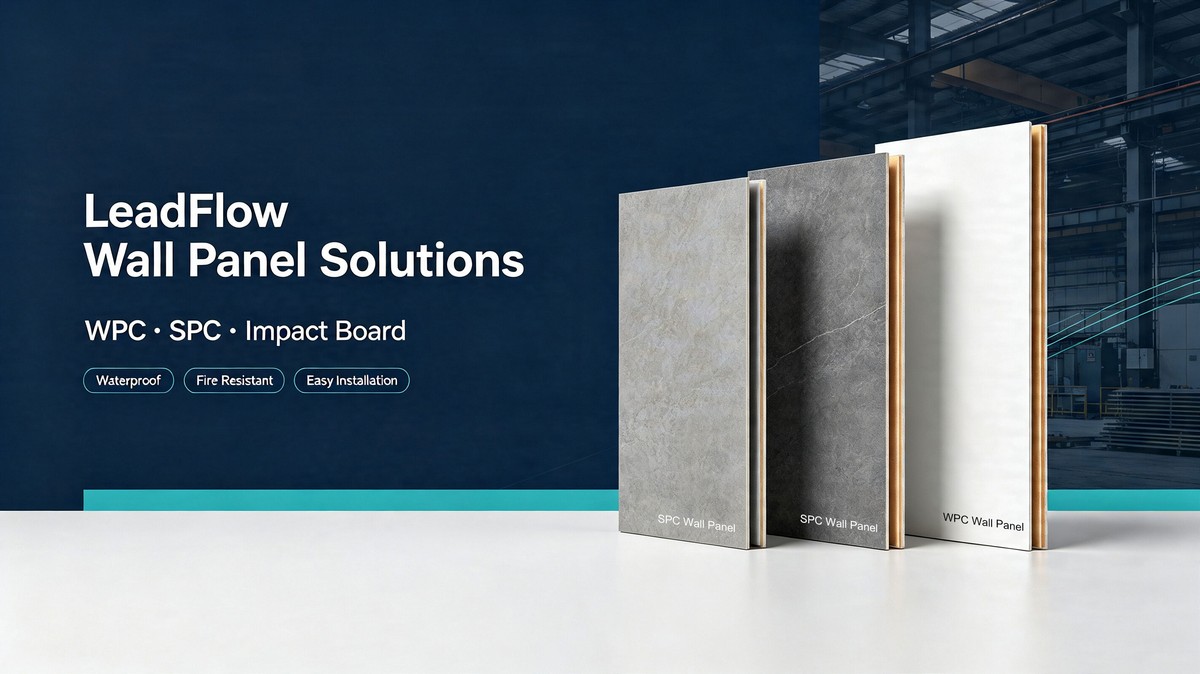
SPC — short for Stone Plastic Composite, and sometimes written as Stone Polymer Composite — is defined by its core recipe: a high proportion of mineral powder bound with PVC resin and processed into a solid, homogeneous board. This composition explains the material's signature traits. It is effectively waterproof, making it suitable for wet zones where MDF or gypsum-based products fail. It is dimensionally stable across temperature swings, which reduces the expansion gaps and buckling issues associated with thinner hollow PVC panels. And it is impact resistant enough to survive the realities of transport, jobsite handling, and daily use in high-traffic areas.
Installation economics are a second driver of demand. Most SPC wall panels use tongue-and-groove or click-joint edges that allow rapid, low-adhesive mounting over existing walls, studs, or battens. A two-person crew can clad a full room in hours rather than the days required for ceramic tile, with no grout lines to maintain and no heavy stone slabs to hoist. As skilled-labor shortages tighten across Europe, North America, and the Middle East, this labor-saving profile has become a decisive selling point for renovation projects and new-build programs alike.
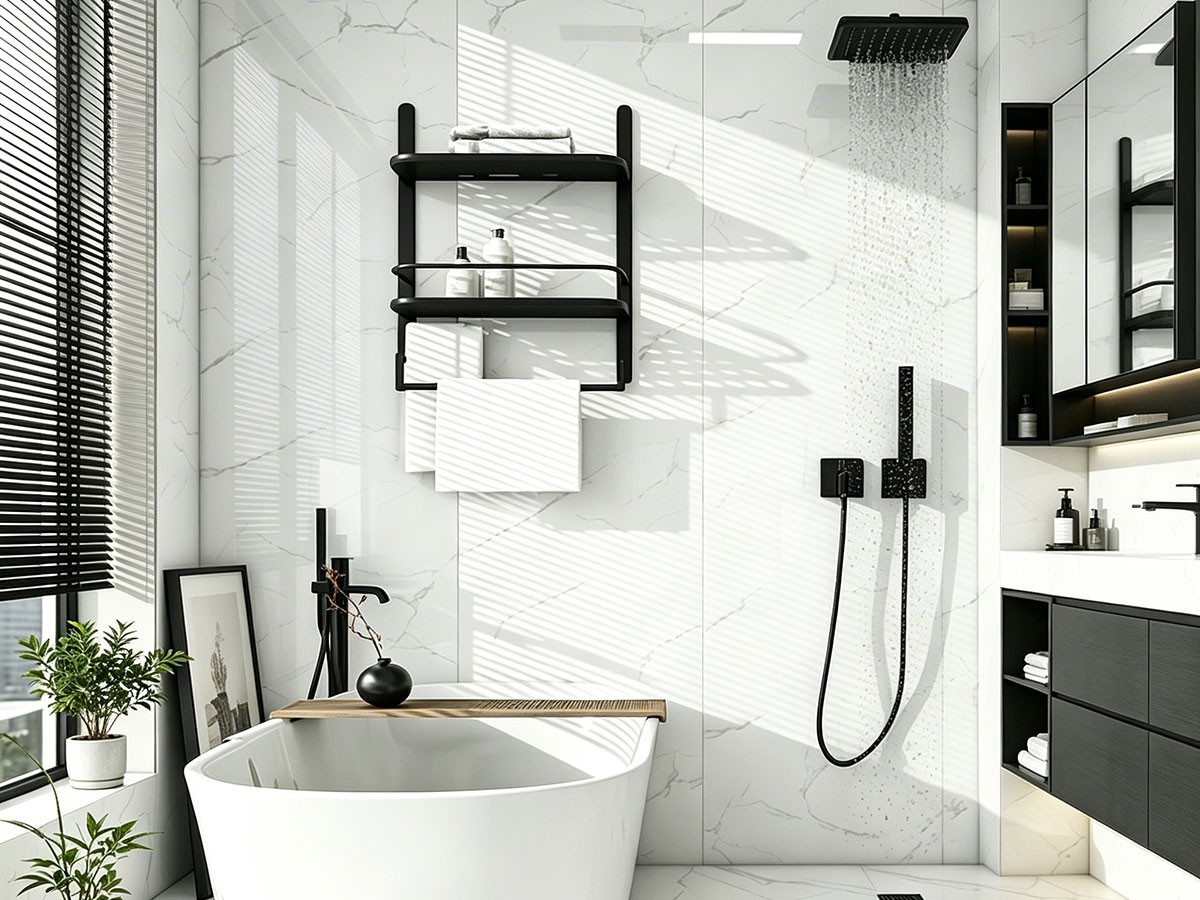
Aesthetics have closed the gap as well. Modern lamination and UV-coating technologies reproduce marble veining, wood grain, fabric texture, and micro-cement looks with convincing realism, while fluted and wave-profile variants add three-dimensional depth to feature walls. Notably, buyers who previously stocked only slatted decorative profiles from a WPC Fluted Wall Panels supplier are increasingly adding SPC lines to their catalogs, because the two products serve complementary roles: fluted WPC brings sculptural accent, while SPC delivers full-coverage, water-resistant surfaces. The result is a broader one-stop offering for interior design — and a stronger argument for consolidated wholesale sourcing.
Inside SPC Wall Panel Wholesale: How Buyers Evaluate Suppliers
As the market has expanded, supplier quality has become the single biggest differentiator for wholesale buyers. The first checkpoint is production capability. Serious manufacturers run dedicated extrusion lines with calibrated thickness control, in-line density monitoring, and automated lamination presses. Buyers should request thickness tolerance data, core density specifications, and peel-strength values for laminated surfaces, because these numbers predict how panels will behave during machining, transport, and years of service. A panel that measures well on a showroom sample can still fail in a container load if the factory lacks process discipline.
Compliance documentation is the second checkpoint. Depending on the destination market, buyers should verify ISO 9001 quality-management certification, CE marking for European distribution, fire-test reports for the specific panel formulation, and third-party VOC or formaldehyde emission testing. The cause-and-effect relationship is straightforward: panels destined for hotels, schools, and healthcare projects face stricter scrutiny, and missing paperwork can block an entire shipment at customs or fail a project inspection. Wholesale buyers increasingly treat documentation as part of the product itself, not an afterthought.
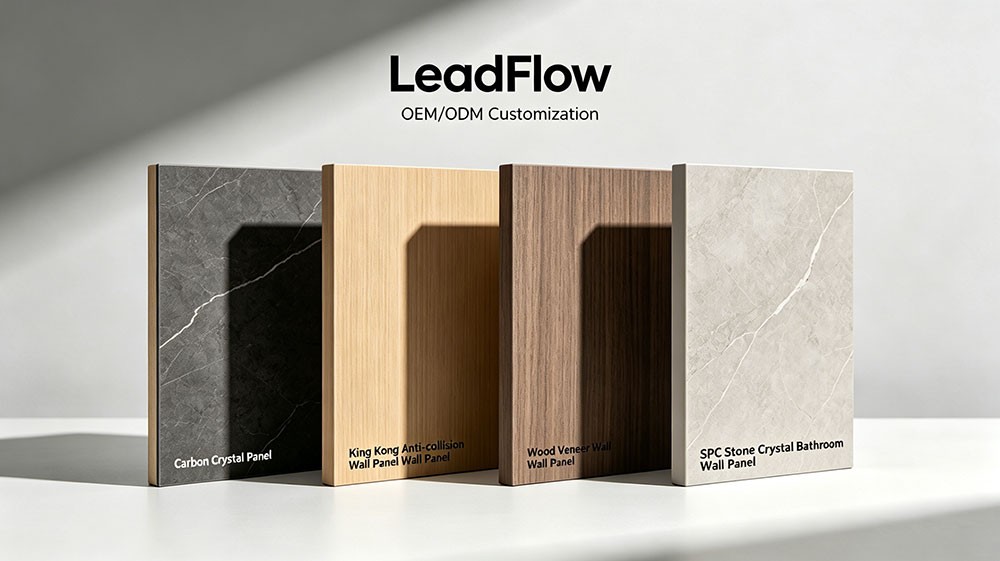
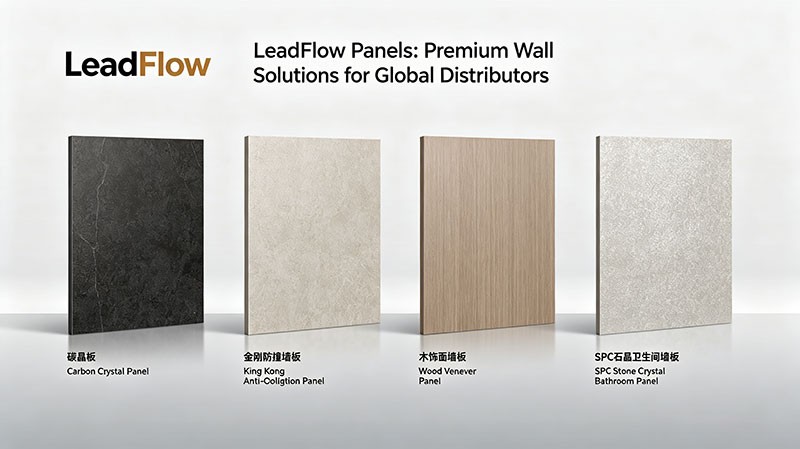
The third checkpoint is service capacity — minimum order quantities, lead times, mixed-container loading, and export-grade packaging with edge protection and moisture barriers. This is also where the broader product ecosystem comes into play. Many manufacturing hubs now operate multi-product portfolios under one roof or across closely linked plants: a Carbon Crystal Wall Panel factory produces dense, high-hardness panels engineered for superior scratch and wear resistance, while a UV Marble Sheet manufacturer specializes in high-gloss, marble-effect sheets for feature walls, columns, and ceilings. Distributors who consolidate SPC boards, carbon crystal panels, and UV marble sheets into single mixed containers typically reduce freight cost per square meter, simplify customs paperwork, and present a unified brand story across their wall cladding range. When auditing such suppliers, buyers should confirm whether the various product lines are produced in-house or outsourced, since quality control and after-sales responsibility should ultimately rest with a single accountable party.
Wholesale Pricing Drivers and Logistics Realities
Wholesale pricing for SPC wall panels is shaped by a handful of controllable variables. Raw material costs form the base layer: PVC resin prices track petrochemical market cycles, while calcium carbonate remains abundant and inexpensive, so formulation ratios directly influence cost. Above that sit product specifications — thickness, density, and surface treatment. Hot-laminated decorative films, deep embossing, UV coatings, and co-extruded wear layers each add cost but also add durability and visual value. Panel dimensions matter too, since larger formats reduce joint count on site yet demand tighter machining tolerances.
Buyers should read low quotes carefully, because price and lifecycle cost are not the same thing. Under-dense cores save pennies at the factory gate but tend to chip during edge machining, crack around fasteners, and degrade visually long before their promised lifespan — costs that eventually land on the distributor in warranty claims and reputation damage. Experienced procurement teams therefore benchmark quotes against specifications sheet by sheet, comparing density, wear-layer thickness, and certification scope rather than headline price alone.
Logistics complete the picture. SPC panels are heavy relative to their volume, so container weight limits and palletizing patterns directly affect landed cost. Standard practice involves export-grade cartons, protective corner strips, and moisture-resistant wrapping for ocean freight, with incoterms — FOB, CIF, or DDP — clearly assigned before contract signing. For private-label buyers, OEM and ODM programs have become widely available: custom colors, exclusive embossing patterns, tailored packaging, and even dedicated molds. Shorter sampling cycles driven by digital printing and rapid prototyping mean a distributor can move from concept to shelf-ready product in a matter of weeks rather than months, tightening the feedback loop between retail demand and factory output.
Conclusion and Outlook
The SPC wall panel wholesale market is moving from a commodity phase into a differentiation phase. As base production technology spreads, competitive advantage is shifting toward formulation expertise, certified safety, surface innovation, and the ability to supply coordinated product families — SPC boards, fluted WPC accents, carbon crystal panels, and marble-effect sheets — under consistent quality standards. Sustainability pressure is mounting in parallel: buyers increasingly ask about recyclable content, lead-free stabilizers, and low-VOC emissions, and suppliers who document these attributes early will hold a pricing and trust advantage. For wholesale buyers, the practical playbook is clear: audit the factory before the contract, verify certifications against the destination market, benchmark quotes against specifications, and build long-term partnerships with suppliers capable of growing from a single container to a multi-product program. Those who do will be positioned to capture the next phase of growth in interior wall cladding.
FAQ
Q: What does SPC stand for in wall panels?
A: SPC stands for Stone Plastic Composite, sometimes called Stone Polymer Composite. It is a rigid blend of calcium carbonate powder, PVC resin, and stabilizers that forms a dense, waterproof core for wall panels.
Q: What minimum order quantities apply to SPC wall panel wholesale purchases?
A: MOQs are typically set per design or color, and many manufacturers offer mixed-container loading so one order can combine several designs to fill a full 20-foot or 40-foot container. Buyers should confirm MOQ per SKU, lead time, and mixing rules before contracting.
Q: How do SPC wall panels compare with WPC fluted panels and UV marble sheets?
A: SPC panels provide a rigid, waterproof surface for full-wall coverage; WPC fluted panels add three-dimensional accent texture to feature walls; and UV marble sheets deliver high-gloss marble effects at a fraction of natural stone's weight. Many distributors stock all three from consolidated suppliers to cover complete wall design schemes.
Q: Which certifications should wholesale buyers verify before signing a supply contract?
A: At minimum, request ISO 9001 quality-management certification, market-specific compliance such as CE marking for Europe, fire-test reports for the exact panel formulation, and third-party VOC or formaldehyde emission testing matched to the destination country's requirements.
Your next wall panel program starts with the right sourcing partner. Looking for competitive pricing? Request a quote now and let us help you source the right materials.