Every renovation project eventually hits the same bottleneck: the walls. While flooring, wiring, and structural work have all become faster and more predictable over the past decade, wall finishing remains the stage where schedules slip most often. Tiling demands mortar and grout curing, painting requires multiple drying cycles, and wallpaper is only as fast as the substrate preparation beneath it. Quick-install carbon crystal panels have emerged as a direct answer to this problem. These rigid decorative boards, joined by interlocking edges and mounted directly over existing surfaces, can transform a bare or dated wall into a finished, high-end interior feature in hours rather than days—compressing finishing timelines by up to 70% on typical projects. This article examines how the technology achieves those savings, where the panels perform best, and what buyers should evaluate when sourcing them.
Key Takeaways
• Quick-install carbon crystal panels use a click-lock or tongue-and-groove edge system that mounts over existing walls, eliminating mortar, grout, and curing time.
• By removing wet trades and drying cycles, wall finishing that traditionally takes three to five days can often be completed in a single working day—a time reduction of up to 70%.
• The panels pair a rigid mineral-reinforced polymer core with a decorative film and UV-cured protective layer, delivering marble, wood, and fabric looks with strong moisture and scratch resistance.
• Installation speed depends on edge-profile precision, so factory capability and quality control are the most important factors in supplier selection.
What Carbon Crystal Panels Are and Why the Market Is Shifting
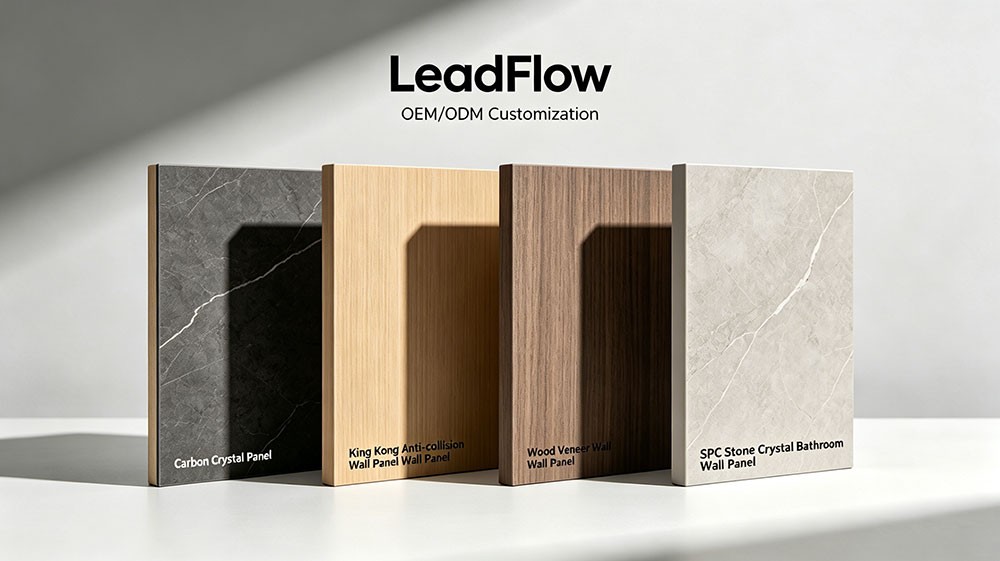
Carbon crystal panels are rigid decorative wall boards engineered for fast, largely adhesive-free installation. A typical construction combines a dense polymer core reinforced with mineral and carbon-based fillers, a high-definition decorative film, and a UV-cured protective topcoat. The result is a board that behaves like a finished surface rather than a substrate: it is waterproof, wipeable, dimensionally stable, and available in marble, wood grain, fabric, and solid-color effects.
The market logic behind their rapid rise is straightforward. Distributors who already operate SPC Wall Panel wholesale businesses have been among the quickest to add carbon crystal lines, because the two categories share production methods, shipping profiles, and customer bases. SPC panels established buyer confidence in rigid, click-together wall systems; carbon crystal boards extend that concept with thicker profiles, larger formats, and more premium surface effects. For contractors, this means the category arrives with familiar installation habits—measure, cut, click, and seal—without requiring new trade skills.
How Quick-Install Carbon Crystal Panels Cut Construction Time by Up to 70%
The time savings of quick-install carbon crystal panels come from a simple principle: they remove every waiting period built into traditional wall finishing. Conventional methods are sequences of application and drying—mortar must cure, grout must set, primer must dry before the next coat. Interlocking panel systems replace that sequence with a single mechanical operation. Four factors drive the speed advantage:
1. No substrate rebuilding. The boards can be mounted on furring battens or fixed directly over existing tiles, plaster, or concrete in sound condition. Demolition and re-leveling—often the messiest, slowest phases of a refit—are largely eliminated.
2. Mechanical locking instead of bonding. Because each board locks into the next rather than being bedded in mortar, the installed surface is finished the moment it is clipped together. There is no grouting, no drying, and no return visit.
3. Dry, low-dust workflow. No mixing, no water, and minimal cutting debris mean adjacent rooms stay usable and cleanup takes minutes instead of hours.
4. Simple tooling and smaller crews. Standard saws and measuring tools are sufficient, and a two-person generalist crew can complete work that previously required tilers or plasterers. Fewer specialized trades also mean less scheduling friction on site.
Set against traditional timelines, the difference becomes concrete. A tiled feature wall typically involves surface preparation, adhesive, setting, grouting, and cleaning, with curing gaps pushing practical completion to three or more days before the space can be used. A painted wall needs patching, priming, and at least two topcoats with drying time between each. The same wall finished with carbon crystal panels is commonly measured, cut, and clicked into place within a single working day—often without the occupants moving out. That ratio of elapsed time is precisely where the 70% figure originates: not from a faster worker, but from the deletion of waiting periods that no amount of labor can compress in wet-trade systems.
Performance, Aesthetics, and What Buyers Should Evaluate
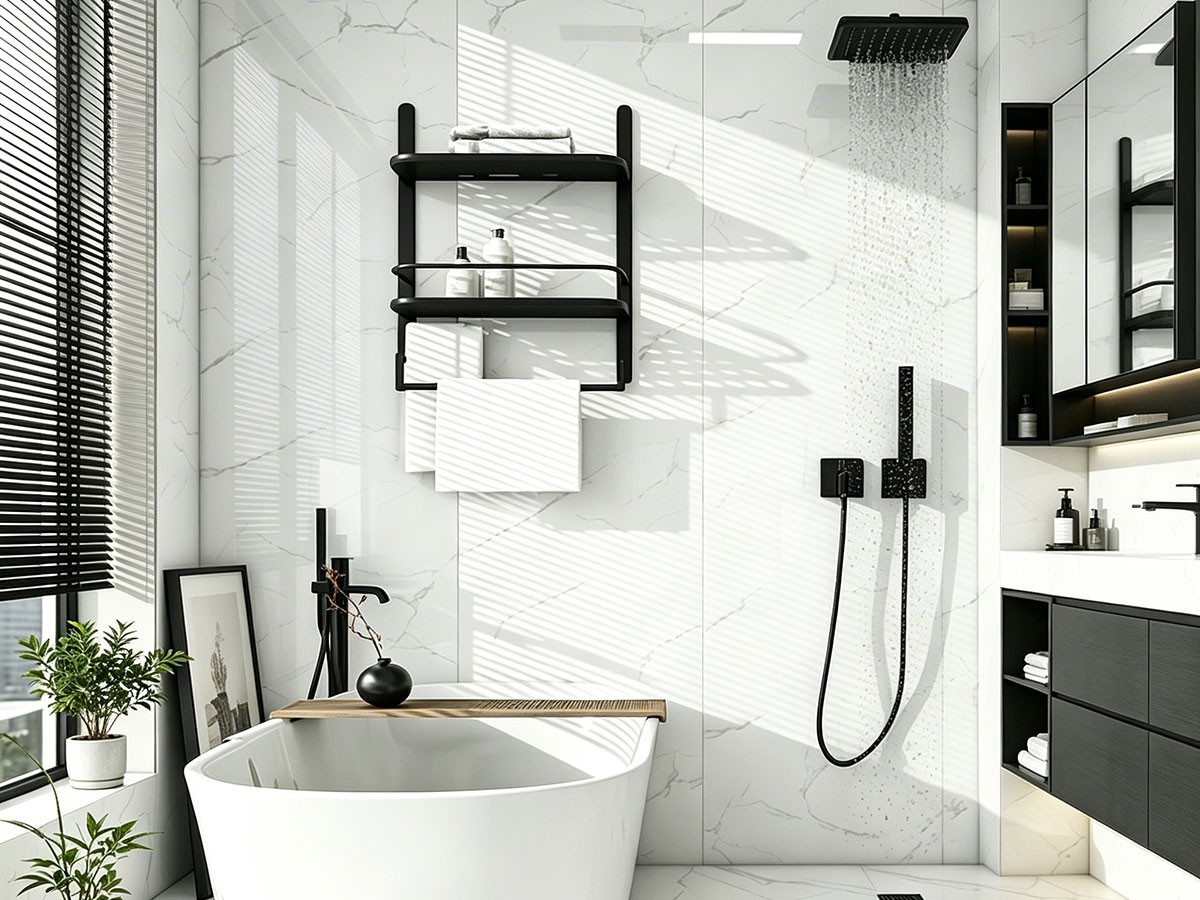
Speed only matters if the finished wall performs, and this is where carbon crystal panel technology has matured considerably. The UV-cured surface layer resists scratches, stains, and moisture, making the boards suitable for living rooms, bedrooms, hotel corridors, office lobbies, retail fit-outs, and—with properly sealed edges—kitchens and bathrooms. Panels are wipe-clean, dimensionally stable in humid conditions, and increasingly available well beyond imitation marble: current ranges include wood grain, textile effects, matte solids, and three-dimensional fluted geometries that create depth under both natural and artificial light. Designers seeking coordinated schemes often pair these boards with ceiling and furniture surfaces from a UV Marble Sheet manufacturer, since both product types rely on similar film-and-coating technology and can be matched in tone and veining across a single interior. For readers exploring textured wall treatments further, our WPC fluted wall panel design guide covers complementary three-dimensional approaches.
Sourcing discipline determines whether the promised speed is actually delivered. A click-lock profile with loose tolerances produces visible seams, rattling joints, and slow, forced fitting—so edge-profile consistency is the first thing to verify. An experienced Carbon Crystal Wall Panel factory with in-house extrusion, film lamination, and batch inspection will hold locking geometry to the tight tolerances that let crews work at full pace. Buyers should also check film adhesion and coating thickness, request density and fire-classification documentation along with VOC reports for commercial work, and insist on cross-section samples or a small trial installation. Finally, compare offers on installed cost rather than per-board price: clean-clicking panels reduce labor hours, breakage, and callback visits, which is where the category's real economy sits. Contractors weighing rigid panel systems across categories may also find our SPC wall panel and WPC wall panel comparison helpful when matching product to project conditions.
Conclusion and Outlook
The renovation industry's constraint is no longer materials—it is skilled labor and time. Quick-install carbon crystal panels address both. By converting wall finishing from a multi-day wet trade into a one-day mechanical assembly task, they cut construction time by up to 70%, reduce dependence on scarce tilers and plasterers, and deliver a durable, design-forward surface in the process. The mechanism behind the savings is structural rather than cosmetic, which explains why the category is expanding from residential feature walls into hospitality, retail, and office refurbishment, where every day of downtime carries a measurable cost.
Looking ahead, expect wider formats, improved fire performance, and deeper texture options as competition intensifies among manufacturers. For buyers, the practical takeaway is clear: treat installation speed as a supply-chain property, not just a product feature. The panels will only click together as fast as the factory's tolerances allow, and the projects that capture the full 70% saving will be those whose materials were sourced with that principle in mind.
FAQ
Q: How do quick-install carbon crystal panels save up to 70% of construction time?
A: The savings come from eliminating the waiting periods built into traditional wall finishing. The panels lock together mechanically and mount over existing walls, so there is no mortar to cure, no grout to set, and no multi-coat painting to dry. Work that traditionally spans three to five days can often be completed in a single day.
Q: Can carbon crystal panels be installed directly over existing tiles?
A: Yes. When the existing surface is sound, flat, and well bonded, panels can be fixed directly over tiles using battens or adhesive, avoiding demolition and re-leveling. Loose or severely uneven surfaces should still be repaired or leveled before installation.
Q: Are carbon crystal wall panels suitable for bathrooms and kitchens?
A: Generally yes. The boards are waterproof and wipeable, making them a practical alternative to tile in wet and greasy environments. Proper edge and joint sealing is recommended in showers and splash zones to prevent moisture ingress behind the boards.
Q: What should buyers look for when choosing a carbon crystal panel supplier?
A: Prioritize edge-profile precision, film adhesion, UV coating quality, core density, and fire and VOC documentation. A supplier with in-house manufacturing and consistent quality control will deliver the tight tolerances that fast, clean installation depends on.
Looking for competitive pricing? Request a quote now and let us help you source the right materials.