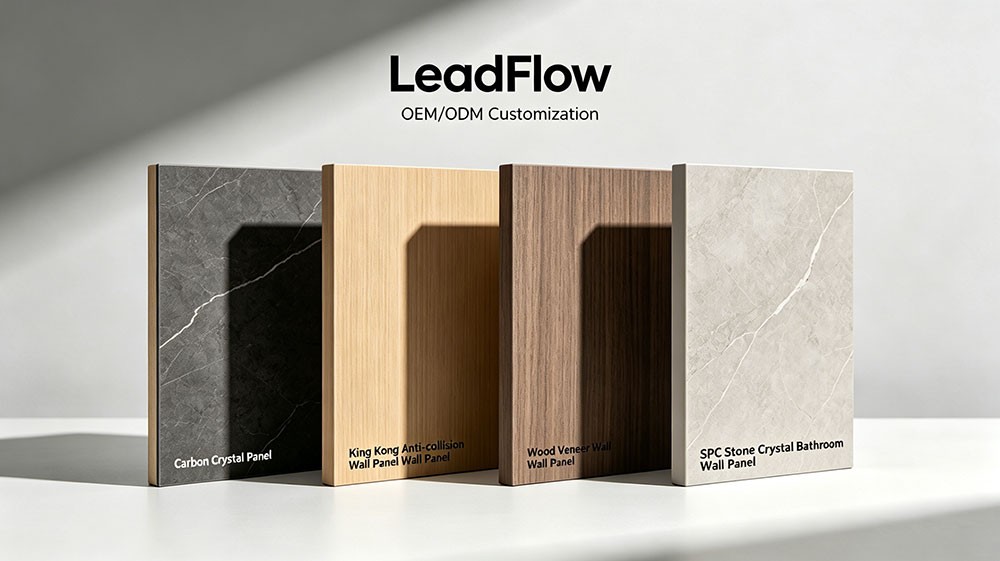
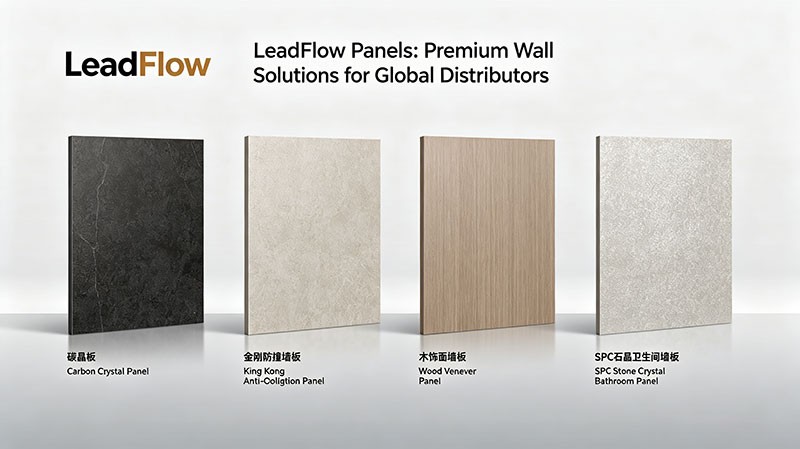
The interior finishing industry is undergoing a quiet but decisive procurement transformation, and SPC Wall Panel wholesale sits at the center of it. Stone Plastic Composite (SPC) — a rigid blend of limestone-derived calcium carbonate, polyvinyl chloride (PVC) resin, and performance stabilizers — began as a flooring material but has rapidly evolved into a mainstream wall cladding solution. Its waterproof core, dimensional stability, and tool-friendly installation have made it a default specification for bathrooms, kitchens, basements, hotel corridors, and commercial fit-outs. As renovation cycles shorten and labor costs climb across North America, Europe, the Middle East, and Southeast Asia, distributors and contractors are consolidating purchases through wholesale channels to lock in batch consistency and competitive landed costs. This analysis examines what is driving that shift, how the modern sourcing chain is structured, and which technical checkpoints buyers should verify before committing to a supplier.
Key Takeaways
• SPC wall panels combine calcium carbonate, PVC resin, and stabilizers into a rigid, waterproof core that resists warping in humid and high-traffic environments.
• Wholesale demand is consolidating toward vertically integrated manufacturers capable of guaranteeing batch consistency, stable pricing, and shorter lead times.
• A diversified WPC Wall Panels supplier typically carries SPC and carbon crystal lines, giving buyers one-stop access to complementary material categories.
• Technical due diligence — density, thickness tolerance, UV coating quality, and fire or emissions certification — should always precede price negotiation in wholesale contracts.
Why SPC Wall Panel Wholesale Demand Is Accelerating Worldwide
SPC wall panels are winning market share because they solve three persistent problems in interior cladding: moisture, dimensional instability, and labor intensity. Gypsum board swells when exposed to water, natural stone is heavy and costly to install, and wood-based panels expand and contract with humidity. SPC's mineral-filled rigid core contains no cellulose fibers, which means it neither absorbs water nor supports mold growth — a decisive advantage for bathrooms, laundry rooms, commercial kitchens, and coastal properties.
The physics behind the material explains much of its commercial appeal. Because calcium carbonate typically constitutes the majority of the formulation, SPC panels exhibit extremely low thermal expansion and contraction. Large-format panels — increasingly produced at widths exceeding one meter and lengths approaching three meters — stay flat and aligned over time, reducing visible seams and costly callbacks. Click-lock and tongue-and-groove edge systems further cut installation time, allowing a two-person crew to clad far more wall area per day than tile or stone would permit.
Wholesale dynamics amplify these advantages. For large-format products, container loading efficiency directly determines landed cost, and manufacturers that optimize carton design and palletization can meaningfully reduce freight per square meter. Wholesale buyers — importers, regional distributors, and procurement teams for hospitality or rental-housing portfolios — also gain access to customization programs that retail channels rarely offer: bespoke embossing textures, film designs matched to a brand palette, private-label packaging, and tailored edge profiles. As a result, SPC Wall Panel wholesale has shifted from a purely price-driven transaction to a capacity-and-consistency decision in which the manufacturer's production depth matters as much as the quoted number.
Inside the Wholesale Chain: How Suppliers and Factories Structure Modern Sourcing
The wholesale chain for decorative wall panels has consolidated into three distinct sourcing models, and understanding the differences is essential for procurement teams. At the top sit vertically integrated manufacturers that extrude their own SPC cores, laminate surfaces in-house, and control quality from raw material to finished pallet. In the middle are specialized multi-line producers — for example, a WPC Wall Panels supplier that also operates SPC and PVC production lines — allowing buyers to consolidate orders across material categories and fill mixed containers efficiently. At the base are pure trading companies, which add a margin without adding manufacturing control.
Multi-line sourcing has become the dominant strategy for mid-sized distributors, and for good reason. A portfolio buyer stocking SPC panels alongside WPC fluted designs and high-gloss sheets can serve renovation, retail display, and hospitality projects through a single vendor relationship, reducing administrative overhead and harmonizing quality standards. This is also where adjacent product categories enter the conversation. Output from a Carbon Crystal Wall Panel factory — high-density, polymer-based sheets with exceptional scratch resistance and a furniture-grade gloss finish — has grown quickly in markets seeking a premium, seamless alternative to paint and tile. Buyers who source SPC and carbon crystal panels from the same integrated group can typically negotiate better freight economics, align packaging standards, and simplify after-sales handling.
For wholesale buyers, the practical questions to ask any supplier are straightforward but revealing: Does the factory extrude its own core material or purchase semi-finished board? What is the minimum order quantity (MOQ) per design, and how flexible is it for trial orders? What is the standard lead time from deposit to vessel loading, and how does it move during peak season? Is OEM or ODM cooperation supported, including custom film design and packaging? Manufacturers with transparent answers — and ideally with verifiable production documentation or an invitation to audit the line — tend to be safer long-term partners than those competing only on price.
Wholesale Quality Checkpoints Buyers Should Verify Before Signing
Quality verification should precede price negotiation in any SPC Wall Panel wholesale agreement, because the differences between well-made and poorly made panels rarely appear in photographs. The first checkpoint is composition and density: a properly formulated panel feels rigid and heavy for its size, resists dents when pressed, and cuts cleanly without crumbling. Panels that feel unusually light for their thickness often signal excessive filler content, which compromises impact resistance and fastening strength.
The second checkpoint is dimensional precision. Consistent thickness across the panel — often controlled within a fraction of a millimeter by quality extrusion lines — determines whether large-format installations remain flush. Buyers should request thickness measurements at multiple points on sample panels and confirm edge straightness tolerances, since warped edges translate directly into visible gaps on the finished wall.
Surface engineering is the third and most visible checkpoint. UV-cured coatings protect printed films against abrasion, yellowing, and staining, while lamination quality determines whether the decorative layer will delaminate at edges over time. A simple cross-cut adhesion test and a scratch check on samples can quickly expose weak surface treatment. Buyers targeting commercial projects should also confirm the fire classification relevant to their market, along with emissions documentation such as low-VOC or formaldehyde-safety compliance, since regulatory thresholds for interior materials continue to tighten across the EU, North America, and the Gulf region.
Finally, wholesale buyers should audit logistics and after-sales terms before signing. Well-engineered packaging — corner protection, edge guards, moisture-barrier film, and container-ready cartons — prevents the transit damage that accounts for a large share of disputes in the panel trade. Clear policies on damaged-panel replacement, batch traceability, and installer documentation complete a professional wholesale relationship. Buyers who compare a wall panel installation guide and specification sheets during due diligence will notice that manufacturers publishing detailed technical data are usually the ones prepared to stand behind it.
Conclusion and Outlook
The wholesale market for SPC wall panels is maturing along a predictable path: away from price-first transactions and toward partnership-based sourcing built on material science, production transparency, and logistics competence. Three trends will shape procurement decisions in the years ahead. First, sustainability pressure will push manufacturers toward recyclable formulations and reduced-plastic content without sacrificing the mineral core that defines SPC performance. Second, digital sourcing tools — virtual factory tours, digital sample libraries, and faster quotation workflows — will compress the distance between global buyers and production floors. Third, portfolio sourcing will deepen: the same integrated groups that produce SPC panels increasingly supply carbon crystal sheets, WPC fluted designs, and UV marble alternatives, enabling distributors to build complete interior solutions rather than isolated product lines. For distributors, contractors, and project developers, the competitive edge will belong to those who treat wholesale procurement not as a purchase but as a supply-chain design exercise — choosing manufacturing partners whose technical capability matches the ambition of the projects they serve.
FAQ
Q: What is an SPC wall panel made of?
A: An SPC wall panel consists of a rigid core made primarily of calcium carbonate (limestone powder) blended with polyvinyl chloride (PVC) resin and stabilizers, topped with a printed decorative film and a protective UV-cured or laminated surface layer. This mineral-heavy composition gives the panel its waterproof, dimensionally stable character.
Q: How do SPC wall panels differ from WPC wall panels?
A: SPC panels use a mineral-filled rigid core with little or no wood content, making them harder, more water-resistant, and better suited to wet areas. WPC (Wood Plastic Composite) panels blend wood fiber or flour with polymer, producing a lighter, warmer-textured panel often favored for decorative fluted designs and dry interior walls. Many wholesale buyers stock both categories to cover different project requirements.
Q: What minimum order quantity is typical for SPC Wall Panel wholesale purchases?
A: MOQs vary by manufacturer and design, but wholesale programs commonly start at one mixed container combining several designs, with per-design minimums measured in cartons or square meters. Trial orders at lower volumes are often possible for new buyers, though unit prices improve significantly at full-container quantities.
Q: Are SPC wall panels suitable for bathrooms and kitchens?
A: Yes. Because the core contains no wood fiber, SPC panels do not absorb water, swell, or support mold, which makes them well suited to humid environments such as bathrooms, kitchens, laundry rooms, and basements, as well as commercial spaces with frequent cleaning requirements.