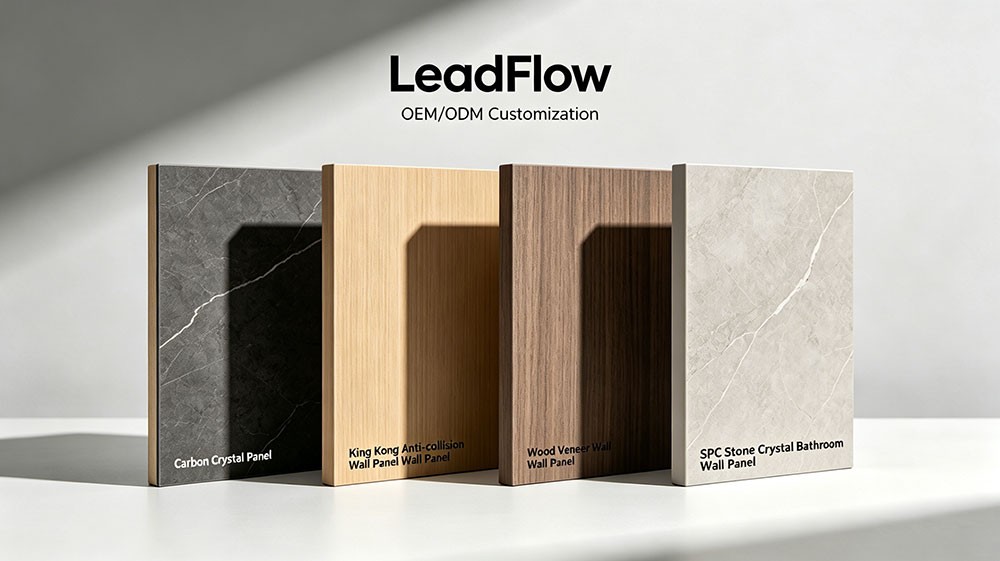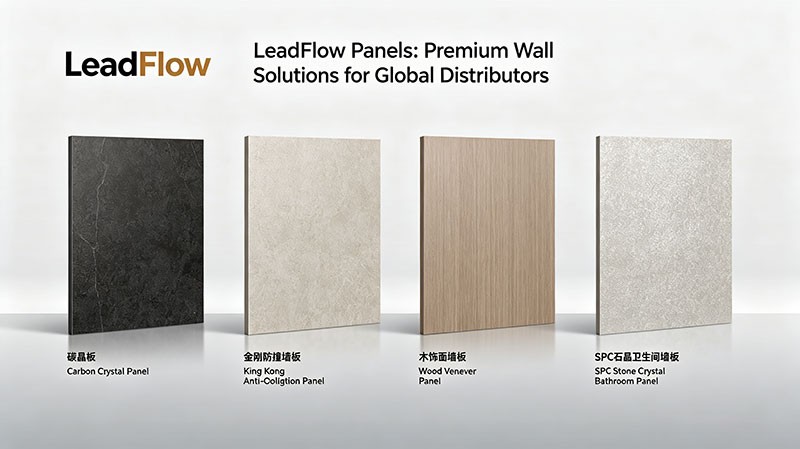
The shift toward rigid, waterproof interior cladding has turned SPC Wall Panel wholesale sourcing into one of the most active segments of the global decorative building materials trade. Stone plastic composite (SPC) panels — built on a dense core of PVC resin blended with calcium carbonate and stabilizers — have moved from a niche alternative to ceramic tile and natural stone into a mainstream specification for commercial fit-outs, residential renovations, and large-scale hospitality projects. For distributors, contractors, and importers, the wholesale channel is where margin, quality, and delivery reliability are ultimately decided, and understanding how this channel works has become a core procurement skill rather than a back-office task.
This article examines the structure of the wholesale market for SPC wall panels, breaks down the factors that genuinely drive bulk pricing, and outlines a practical framework for evaluating suppliers. The goal is to give trade buyers a clear, vendor-neutral picture of what to expect — and what to verify — before committing to a container.
Key Takeaways
• SPC wall panels combine a rigid, mineral-filled PVC core with decorative surface layers, delivering waterproof, mold-resistant interior wall cladding at a lower installed cost than ceramic tile or natural stone.
• Wholesale prices are driven primarily by raw-material composition, panel thickness and density, surface treatment, order volume, and freight terms — not by headline quotes alone.
• Many SPC producers run hybrid product lines: a factory positioned as a WPC Wall Panels supplier often extrudes rigid composite boards for multiple categories, which creates opportunities for consolidated, multi-category sourcing.
• Supplier vetting should focus on production ownership, batch color consistency, fire and VOC documentation, and transparent claims handling rather than the lowest unit price.
What SPC Wall Panel Wholesale Covers: Products, Buyers, and Market Structure
SPC wall panel wholesale refers to the bulk sale of stone plastic composite interior cladding directly from manufacturers or authorized trading partners to professional buyers, usually at minimum order quantities (MOQs) structured around square-meter thresholds or full container loads. Unlike retail purchasing, wholesale transactions typically include OEM and ODM services — custom decor films, embossing patterns, private-label packaging, and project-specific dimensions.
From a construction standpoint, an SPC wall panel generally consists of a rigid, dimensionally stable core; a printed decorative layer; and a protective transparent wear layer, often finished with a UV-cured coating. Compared with wood-based alternatives, the mineral-filled core does not absorb water, will not swell in humid environments, and maintains dimensional stability across temperature swings — the key reasons the category has displaced plywood and MDF-based cladding in bathrooms, kitchens, and coastal projects.
Surface design has become the main competitive battleground. Wholesale catalogs now routinely span marble-look and stone-look decors, wood-grain finishes, fabric textures, and three-dimensional fluted profiles. The 3D and fluted formats command higher wholesale prices because they require additional profile machining or lamination steps, but they also carry stronger margins at the distribution level, which is why they dominate current export catalogs.
The trade flow is heavily export-oriented, with manufacturing concentrated in Asia and demand distributed across North America, Europe, the Middle East, Southeast Asia, and Latin America. One structural feature of this market deserves particular attention: category boundaries are porous. A factory positioned as a WPC Wall Panels supplier very often operates SPC extrusion lines as well, because wood plastic composite and stone plastic composite share core process technology — mixing, extrusion, calendering, and surface laminating. Similarly, a UV Marble Sheet manufacturer serves an almost identical buyer profile, since high-gloss UV-cured marble sheets and SPC cladding are frequently specified together within the same interior fit-out. For buyers, this overlap is an opportunity: sourcing several decorative categories from one production group can improve container utilization, align color codes across products, and reduce the coordination cost of multi-supplier projects.
SPC Wall Panel Wholesale Pricing: The Cost Drivers That Matter
Wholesale pricing for SPC wall panels follows a small number of auditable cost drivers, and buyers who understand them can distinguish genuine value from low-quality bait pricing.
Raw-material composition. The core is a blend of PVC resin, calcium carbonate filler, and stabilizers. Higher mineral loading reduces material cost but, past a certain point, makes the panel more brittle and more prone to edge chipping during cutting and handling. Reputable wholesalers can state the density of their panels in kilograms per cubic meter and explain the trade-off; vague answers on density or filler content are an early warning sign. Stabilizer chemistry matters as well — calcium-zinc systems, which avoid lead-based additives, are the expectation in regulated markets.
Thickness, density, and tolerances. Thicker panels cost proportionally more in raw material, but the bigger pricing lever is consistency. Tight thickness tolerances reduce installation callbacks and dry-fit adjustments on site, and achieving them requires better calendering and in-line monitoring — capital equipment that separates dedicated factories from outsourced assembly operations.
Surface treatment and tooling. A flat printed laminate is the entry-level configuration. Adding a UV-cured coating improves scratch and stain resistance; deep embossing and fluted geometries add machining cost; custom decor films for OEM orders involve film procurement or cylinder costs that are typically amortized into the order. These line items explain much of the price spread between otherwise similar-looking quotations.
Order structure and logistics. MOQs are commonly tied to container economics. Suppliers price aggressively for full container loads because they can plan production runs efficiently, while mixed-container loading — combining panel designs or even related categories such as SPC panels and decorative UV-cured sheets — trades a slightly higher unit price for lower overall landed cost and smaller inventory risk per design. Freight terms (FOB versus CIF or DDP), packaging format, and destination-market duties all shape the final landed cost, sometimes more than the ex-works price itself.
Compliance and certification. Fire performance ratings, VOC emissions data, and chemical-compliance documentation cost money to obtain and maintain, so panels carrying credible third-party test reports are legitimately priced higher than undocumented equivalents. For projects in regulated markets, this premium is not optional — it is the cost of market access.
Evaluating an SPC Wall Panel Wholesale Supplier: A Practical Checklist
Selecting a wholesale supplier is less about finding the lowest quote and more about confirming process transparency and product consistency. The following checklist reflects the practices experienced importers rely on.
1. Verify production ownership. Determine whether the supplier operates its own extrusion and laminating lines or functions as a trading intermediary. Factory audits — in person or through third-party inspection services — remain the most reliable method. Owning production does not automatically mean better quality, but it does mean faster technical feedback, more flexibility on custom orders, and clearer accountability when problems arise.
2. Test batch consistency. Color drift between production batches is the most common quality complaint in decorative panels. Buyers should request samples from recent production runs — not showroom pieces — and compare decor alignment, gloss level, and core color across samples. A supplier confident in its quality control will support this request without hesitation.
3. Review documentation. Fire test reports, VOC emissions data, and material composition statements should be current, specific to the product being quoted, and traceable to a recognized testing body. Documents that are generic, undated, or recycled across product lines warrant caution.
4. Assess category breadth where it adds value. For mixed-material projects, a supplier group that also operates as a Carbon Crystal Wall Panel factory or produces complementary decorative boards can offer coordinated decors across categories — a meaningful advantage for hotel and retail rollouts where walls, feature panels, and ceiling elements must visually match. Buyers comparing options may find it useful to review our WPC fluted wall panel guide and carbon crystal wall panel overview alongside SPC specifications. Breadth should not be confused with dilution, however: a factory that claims to manufacture everything should still be able to show which lines run in-house.
5. Examine commercial practices. Sample policies, transit-damage replacement terms, retention of decor films for future reorder color matching, and responsiveness during the quotation stage are reliable predictors of how the relationship will behave after problems occur. Quotations far below the prevailing market range, reluctance to name material specifications, and the absence of any claims process are classic red flags.
6. Start with a structured trial order. Even with strong documentation, a pallet-level or partial-container trial covering the intended designs remains the lowest-risk path to validating a new supplier relationship. Treat the trial as a test of the entire system: documentation, packaging, labeling, communication, and shipment accuracy.
Conclusion and Outlook
The SPC wall panel wholesale market is consolidating around a simple dynamic: buyers are reducing the number of suppliers they work with while increasing the range of products they source from each one. Factories that combine in-house extrusion, modern surface finishing, credible compliance documentation, and the flexibility to handle both container-scale and trial orders are best positioned to capture this demand. Looking ahead, expect surface innovation — deeper embossing, fluted geometries, coordinated multi-panel systems — to keep differentiating catalogs, and expect sustainability criteria such as recyclable content and low-VOC formulations to move from differentiator to baseline requirement in regulated markets.
For wholesale buyers, the practical takeaway is consistent across regions: audit the process, not just the price; verify density, tolerances, and batch consistency before scaling; and prioritize supplier groups whose product range genuinely matches the projects being served. In a category where the visible surface of two panels can look identical while their long-term performance diverges sharply, disciplined wall panel sourcing is the most durable competitive advantage available.
FAQ
Q: What is SPC wall panel wholesale, and how does it differ from retail purchasing?
A: SPC wall panel wholesale is the bulk sale of stone plastic composite cladding from manufacturers or authorized distributors to trade buyers, usually at minimum order quantities based on square meters or container loads and often including OEM customization. Retail purchasing involves single units at marked-up prices with no customization options.
Q: What minimum order quantity should buyers expect when sourcing wholesale?
A: MOQs are typically structured around full container loads for the best unit pricing, with per-design minimums within the container. Many suppliers also support mixed-container loading across designs or related categories, and pallet-level trial orders are a common way to begin a new relationship.
Q: How can buyers verify SPC wall panel quality before placing a bulk order?
A: Request samples from recent production batches rather than showroom stock, check density and thickness tolerances against the written specification, review fire and VOC test documentation, and consider a third-party inspection of the production facility. A structured trial order is the final validation step.
Q: Are SPC wall panels suitable for bathrooms and other wet areas?
A: Yes. The mineral-filled PVC core is waterproof and dimensionally stable, so the panels do not swell or deform in humid conditions. For showers and direct water zones, seams, edges, and penetrations should be sealed according to the manufacturer's installation guidance.