Wholesale demand for SPC wall panels is entering a new phase of growth as wall panel distributors, contractors, and fit-out specialists across North America, Europe, the Middle East, and Southeast Asia seek rigid, moisture-resistant alternatives to tile, plywood, and gypsum-based cladding. SPC Wall Panel wholesale procurement has accordingly shifted from a price-driven transaction into a strategic sourcing exercise in which buyers weigh core formulation, surface technology, certification, and logistics capability alongside unit cost. This report examines what is fueling the shift toward stone plastic composite interior cladding, how wholesale pricing and supply chains actually work, and which evaluation criteria separate reliable manufacturers from opportunistic intermediaries.
Key Takeaways
• SPC (stone plastic composite) wall panels pair a limestone-filled rigid core with polymer binders, delivering waterproofing, dimensional stability, and impact resistance suited to bathrooms, kitchens, and commercial interiors.
• Wholesale pricing is shaped primarily by panel thickness and density, surface treatment, order volume, and Incoterms — with direct-from-factory sourcing generally reducing landed cost compared with trading-company channels.
• Quality evaluation should focus on core density, edge precision, batch color consistency, and recognized certifications such as CE marking and indoor-air emissions documentation.
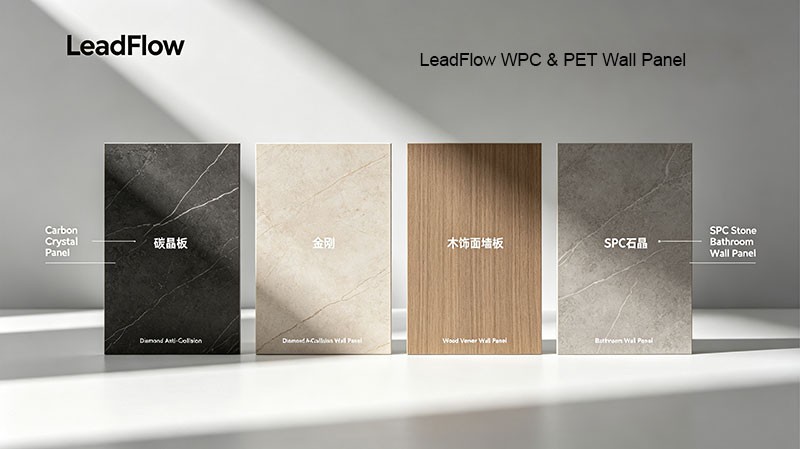
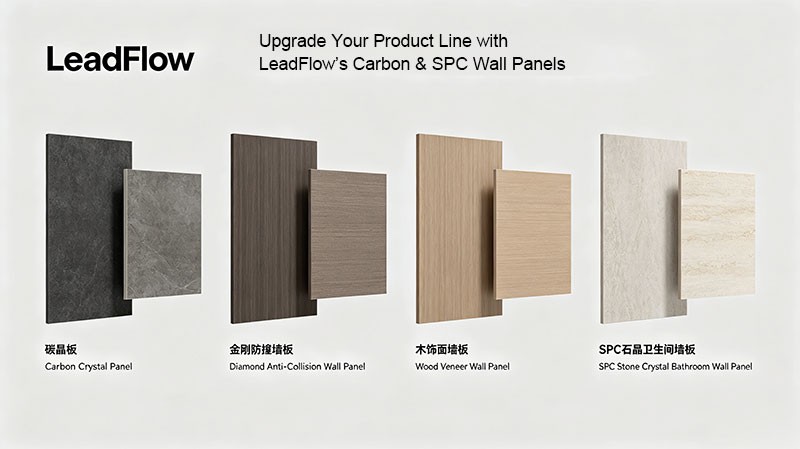
• Diversified manufacturers that produce SPC alongside WPC fluted profiles and carbon crystal lines allow buyers to consolidate containers and simplify procurement.
Why Demand for Rigid Core Cladding Keeps Accelerating
SPC — short for stone plastic composite, sometimes written as stone polymer composite — is a rigid-sheet building material produced by blending calcium carbonate (limestone powder) with PVC resin and stabilizers, then extruding the compound into dense, dimensionally stable boards. While the formulation originated in flooring, manufacturers have adapted it for vertical surfaces, and it now competes directly with ceramic tile, painted drywall, plywood, and PVC laminates as a rigid core wall panel option in the interior wall cladding market.
The material's commercial appeal rests on a handful of verifiable performance characteristics. A typical SPC core contains a high proportion of mineral filler, which gives the panel rigidity that hollow or foam-based PVC boards cannot match. The panels are waterproof throughout their cross-section rather than merely at the surface, making them suitable for wet areas. They resist expansion and contraction across normal indoor temperature ranges, hold screws and adhesive reliably, and install quickly with tongue-and-groove joints, adhesive, or battens. For renovation and commercial fit-out projects where schedule pressure is intense, the speed of dry installation over existing substrates is often the deciding factor.
Market drivers also extend beyond product performance. Skilled tile-labor shortages in many developed markets have pushed contractors toward click-together wall systems that a general crew can install. Meanwhile, hospitality, retail, and multifamily housing operators favor panels that can be cleaned with water and replaced individually if damaged. These conditions have converted SPC wall panels from a niche substitute into a mainstream specification item, and wholesalers have responded by building dedicated inventory programs rather than treating the category as an add-on to flooring lines.
Inside SPC Wall Panel Wholesale Pricing and Sourcing
Wholesale pricing for SPC wall panels is determined by a relatively transparent set of variables, and buyers who understand them negotiate from a stronger position. The most influential factors are panel thickness — commonly available in a range from roughly 4 mm to 9 mm for wall applications — core density, the type of surface layer (printed film, laminated decor paper, or UV-cured coating), the embossing pattern, and whether the panel includes a click profile or a square edge for glue-down installation. Decor film quality and register-embossed textures command measurable premiums over basic printed surfaces.
Order structure matters just as much as specification. Wholesale quotations are typically issued per square meter and structured around full-container loads, because 20-foot and 40-foot containers can be packed efficiently with rigid boards. Buyers sourcing ex-factory or on FOB terms take on freight and insurance, while CIF terms bundle them into the quoted price; the visible unit-price difference between these Incoterms can be misleading, so landed-cost comparison remains essential. Minimum order quantities vary by manufacturer, but smaller factories commonly accept mixed-color orders within a container, which lowers the entry barrier for regional wall panel distributors testing new decors.
Channel choice is a third lever. Purchasing directly from an integrated manufacturing group generally yields better pricing transparency, batch consistency, and after-sales accountability than buying through intermediaries. It also opens the door to consolidated loading: many Asian production groups operate multiple product lines under one roof, so a WPC Fluted Wall Panels supplier that also extrudes SPC boards and presses UV marble sheets can fill a single container with complementary categories. For distributors building a decorative cladding portfolio, this consolidation reduces freight cost per square meter, simplifies customs paperwork, and ensures that adjacent product lines share a consistent color palette.
Lead time and communication round out the sourcing picture. Standard production cycles for wholesale orders generally run several weeks from deposit to ex-factory date, longer when custom colors or embossing are involved. Experienced buyers therefore build buffer time around seasonal freight squeezes and confirm packaging specifications in writing — corner protection, shrink wrap, and palletization all influence damage rates during long-haul shipping.
How to Evaluate Quality and Choose the Right Manufacturing Partner
Because SPC wall panels look similar in catalogs but perform very differently in service, disciplined quality evaluation is the buyer's most important safeguard. The starting point is the core: higher-density boards resist flexing and denting, while under-filled cores may crack during transport or joint engagement. Requesting density figures in kilograms per cubic meter, along with third-party test reports, is standard practice among professional importers. Surface performance matters equally — buyers should verify wear-layer thickness, scratch resistance, and UV stability, particularly for panels destined for sunlit retail or hospitality spaces.
Certification and compliance documentation provide a second filter. Depending on the destination market, relevant evidence may include CE marking under European construction-product rules, fire-classification test reports, and indoor-air quality documentation covering formaldehyde and VOC emissions. Reputable exporters supply these documents without friction; reluctance to share test data is itself a warning sign. Physical inspection of samples — checking edge straightness, tongue-and-groove precision, color consistency between production batches, and the integrity of protective packaging — remains indispensable before any wholesale commitment.
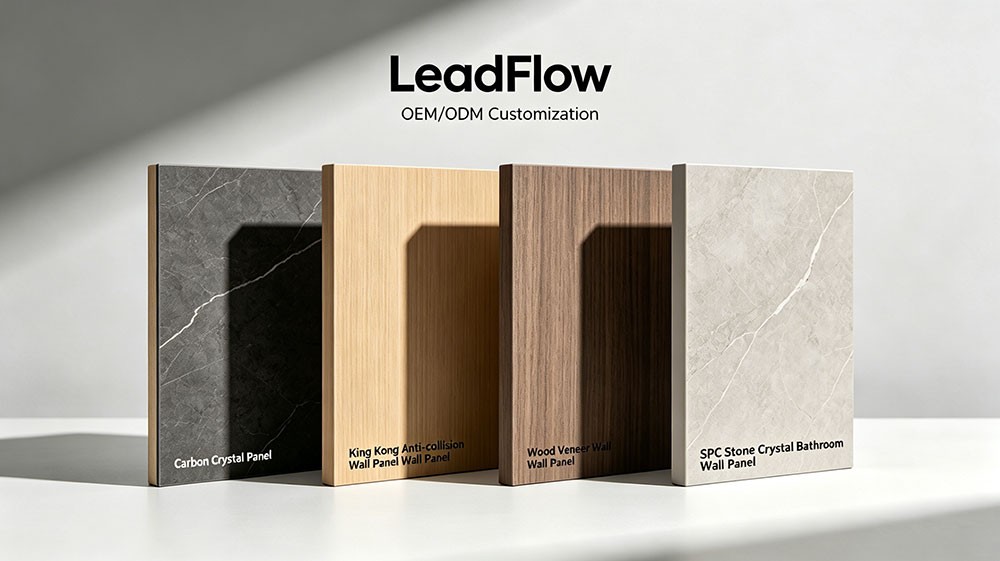
Supplier capability assessment should also look at manufacturing depth rather than assembly alone. A modern Carbon Crystal Wall Panel factory, for example, will control the full process chain — mixing, hot-pressing or extrusion, laminating, and cutting — on-site, which shortens reaction time on custom orders and protects batch consistency. The same logic applies across categories: factories with in-house tooling and decor printing can produce custom finishes faster and at lower cost than those outsourcing decoration. Buyers are advised to audit or commission third-party inspection covering production lines, QC procedures, and container loading, especially for first orders.
Finally, commercial reliability often predicts long-term satisfaction better than any single test result. Responsive technical communication, willingness to hold master batches for repeat orders, transparent handling of claims, and the ability to provide replacement material quickly all distinguish manufacturers built for export partnerships from volume-driven sellers. Distributors planning multi-year programs should weigh these factors into supplier scoring alongside headline pricing.
Conclusion and Outlook
The SPC wall panel category has matured into a core pillar of the global decorative wall cladding trade, supported by labor-saving installation, all-weather durability, and a widening range of surface decors. For wholesale buyers, competitive advantage will increasingly come from specification discipline — density, certification, packaging — and from partnering with diversified manufacturers able to supply SPC, WPC fluted, UV marble, and carbon crystal lines in consolidated programs. Looking ahead, expect continued innovation in texture realism, growing scrutiny of indoor-air and fire-safety documentation, and steady expansion of SPC cladding into commercial specification as its installation economics become more widely understood.
FAQ
Q: What does SPC mean in wall panels?
A: SPC stands for stone plastic composite (also called stone polymer composite). It is a rigid board made from limestone powder blended with PVC resin and stabilizers, giving the panel high density, waterproof performance, and dimensional stability for interior wall cladding.
Q: How is an SPC wall panel different from a WPC wall panel?
A: SPC panels use a mineral-filled rigid core that is denser and harder, while WPC panels incorporate wood fiber or flour for a lighter, more workable board. SPC generally offers superior impact resistance and moisture performance, whereas WPC fluted profiles are often preferred for decorative slat-wall designs.
Q: What is a typical minimum order for SPC Wall Panel wholesale purchases?
A: Most manufacturers structure wholesale orders around full-container loads, though many accept mixed colors or mixed product categories within one container. Smaller trial orders are possible from some suppliers but usually carry higher per-square-meter pricing.
Q: Are SPC wall panels suitable for bathrooms and kitchens?
A: Yes. The composite core is waterproof throughout, so the panels are widely specified for wet-area walls, kitchen splashbacks, and laundry rooms, provided joints and penetrations are sealed correctly during installation.
Looking for competitive pricing? Request a quote now and let us help you source the right materials.