As decorative wood-plastic composite cladding moves from niche product into mainstream specification across Europe, North America, the Middle East and Southeast Asia, compliance has quietly become the decisive variable in cross-border trade. For importers, distributors and project contractors, understanding WPC wall panel certifications and export standards now determines not only whether a shipment clears customs, but whether a panel can legally be installed in its destination market. A product that misses a fire classification or a formaldehyde limit can trigger shipment rejection, expensive rework or, in severe cases, removal from an occupied building.
This article interprets the current certification landscape for WPC wall panels — including fluted, carbon crystal and SPC-based decorative lines — explains which standards matter in which markets, and sets out a practical verification process buyers can apply before releasing payment. Read together with a companion overview of WPC wall panel types and applications, it forms a working compliance checklist for first-time and repeat importers alike.
Key Takeaways
• Fire performance and chemical emissions are the two most frequent rejection points for WPC wall panels in regulated markets such as the EU and North America.
• CE marking under the EU Construction Products Regulation, EN 13501-1 fire classification and ASTM E84 flame-spread ratings form the baseline for market access in their respective regions.
• US buyers should require CARB Phase 2 / TSCA Title VI formaldehyde documentation, while REACH compliance governs chemical safety across Europe.
• Certificate authenticity must be verified at the issuing laboratory — counterfeit test reports remain a documented risk in the decorative panel trade.
The Global Certification Landscape for WPC Wall Panels
WPC wall panel certifications fall into four practical groups — fire safety, indoor air quality, chemical and environmental compliance, and market-entry marks — and knowing which group each document belongs to is the fastest way to judge a supplier's professionalism.
A quick definition helps frame the rules: WPC (wood-plastic composite) wall panels are cladding boards produced from wood flour blended with thermoplastic polymers — typically PVC, PE or PP — plus stabilizers and a laminated, hot-stamped or co-extruded surface layer. Because this construction spans both wood and plastic regulatory categories, a single panel can trigger requirements from two different rulebooks, which is exactly why a structured compliance review matters.
In the European Union, the Construction Products Regulation (CPR 305/2011) requires construction products covered by a harmonized standard to carry CE marking supported by a Declaration of Performance. For wall cladding, the most consequential declared property is reaction to fire under EN 13501-1, alongside durability and the content of hazardous substances. Following the United Kingdom's exit from the EU, UKCA marking applies to the Great Britain market, so buyers serving both regions should confirm which mark each destination currently accepts.
In North America, interior finish materials are commonly evaluated under ASTM E84, which assigns a Class A, B or C rating based on flame spread and smoke development, with Class A as the strictest tier and the most frequent requirement in commercial specifications. Gulf-region authorities generally accept reports referenced to British or American standards, but civil defense approval procedures differ by country, so exporters should confirm requirements market by market rather than assuming one certificate covers the whole region.
Indoor air quality rules have tightened sharply over the past decade. Formaldehyde emission limits — expressed as E1 or E0 in many Asian and European specifications, and enforced in the United States through CARB Phase 2 and the federal TSCA Title VI — now apply to composite materials containing wood fiber or resin-bonded layers. Because WPC formulations combine wood flour with polymers and adhesive-backed decorative films, buyers should request emission testing on the finished laminated panel rather than the raw compound.
Chemical compliance is dominated by the EU REACH regulation, which restricts substances of very high concern and certain phthalates used as plasticizers in flexible polymers. California Proposition 65 adds warning obligations for listed substances, and suppliers to US retail channels increasingly treat Prop 65 screening as standard practice. Management system certificates — ISO 9001 for quality and ISO 14001 for the environment — signal process discipline, while FSC or PEFC chain-of-custody documentation supports the wood-fiber sourcing claims that European public tenders increasingly demand.
A professional WPC Fluted Wall Panels supplier should be able to produce, on request, a reaction-to-fire report and an emission report for the exact profile, thickness and color being ordered — not a generic certificate for an unrelated product line. For exterior-grade fluted cladding, UV and weathering data generated under standards such as EN ISO 4892 or ASTM G154 similarly separate genuine outdoor specialists from distributors reselling interior-only stock.
Fire Performance and Indoor Air Quality: The Tests That Decide Market Access
Two test families dominate acceptance decisions for decorative wall panels, and buyers who understand their logic can read any test report in minutes. For a deeper comparison of flame-spread behavior across cladding materials, see our article on fire-rated interior wall cladding specifications.
EN 13501-1 classifies building products from A1 (non-combustible) down to F, and WPC wall panels typically land in Class B, C or D depending on formulation. Mineral fillers such as calcium carbonate raise the class, while higher polymer content lowers it. The suffixes matter as much as the main class: s1 signals limited smoke production and d0 no flaming droplets, and specifications for hotels, schools and healthcare buildings frequently demand B-s1,d0 rather than a bare Class B result.
Under ASTM E84, Class A corresponds to a flame spread index of 25 or below, Class B to 26–75 and Class C to 76–200, with the smoke developed index reported alongside. These thresholds are industry common knowledge, yet disputes persist because a supplier may hold a Class A certificate for one thickness while quoting a different profile; core density, geometry and the decorative film all influence the result.
On emissions, E1 has long been the international benchmark, with stricter E0 and the Japanese F★★★★ (four-star) label now common in premium specifications. In the United States, TSCA Title VI aligned federal limits with CARB Phase 2, so a single CARB2/TSCA-aligned report satisfies most North American projects. That convergence also simplifies life for distributors handling SPC Wall Panel wholesale assortments alongside WPC lines, because one documentation format can cover both product families. PVC-dominant WPC panels generally emit less formaldehyde than resin-bonded wood boards, but lamination adhesives and hot-stamped films remain variable points that only finished-panel testing can capture.
Heavy metal restrictions complete the picture: lead, cadmium and certain pigment compounds are limited under REACH Annex XVII and screened under Prop 65, and dark-colored or deep-textured films deserve specific attention because formulation changes at film suppliers can quietly affect compliance. The cause-and-effect chain is simple — a missing or mismatched fire certificate delays building-permit approval, while a failed emission test can void handover documentation for the end project. Compliance files are therefore not paperwork overhead; they are the product's license to be installed.
Export Documentation, HS Codes and Verifying Supplier Claims
Export compliance extends well beyond product testing, and shipping documents are where otherwise-clean orders most often stall.
A complete export set for decorative panels normally includes the commercial invoice, packing list, certificate of origin (with preferential variants such as RCEP or EUR.1 where trade agreements apply), bill of lading and insurance documents. Wooden pallets and crates must comply with ISPM 15 heat-treatment or fumigation marking — a phytosanitary rule that inspectors check physically at ports, and a missing stamp remains a classic cause of demurrage costs.
Classification is a live issue for composites. WPC wall panels can be argued into plastic building panel headings around HS 3925 or into agglomerated wood headings around HS 4410 and 4411, and the chosen code changes duty rates, VAT treatment and exposure to trade-remedy measures. Experienced exporters pre-confirm the code with the destination customs broker and, where contract values justify it, request a binding classification ruling rather than defaulting to whichever heading produces the lowest landed cost. Buyers should also monitor trade-remedy developments, since anti-dumping investigations covering composite building products appear periodically in major markets and can reshape long-term project budgets.
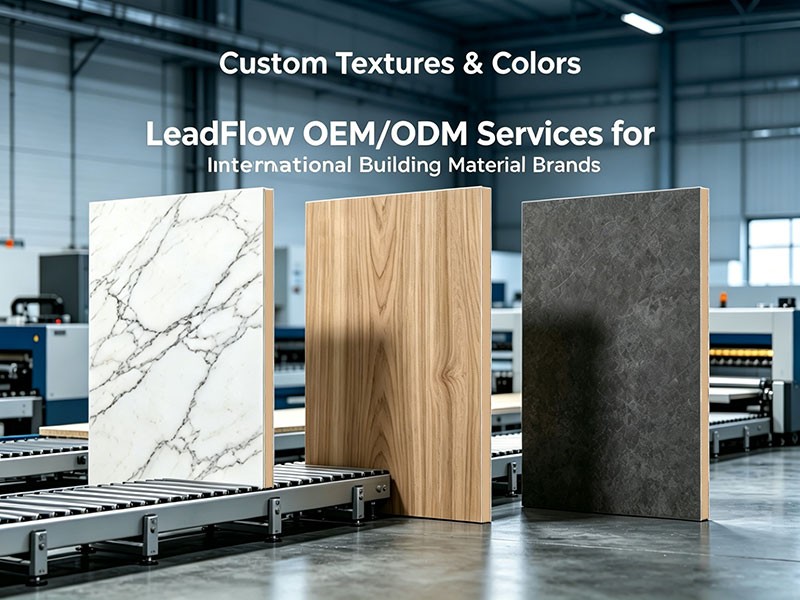
Verification deserves the same rigor as testing. Report numbers can be cross-checked against the public databases of laboratories such as SGS, Intertek, TÜV and Bureau Veritas; the sample description on a report must match the ordered profile, density and film; and for major tenders, buyers increasingly commission witnessed testing or third-party pre-shipment inspection instead of relying on certificates presented at negotiation stage. Retaining a sealed “golden sample” from the certified production batch, agreed in writing, gives both parties a physical reference if a later shipment is questioned.
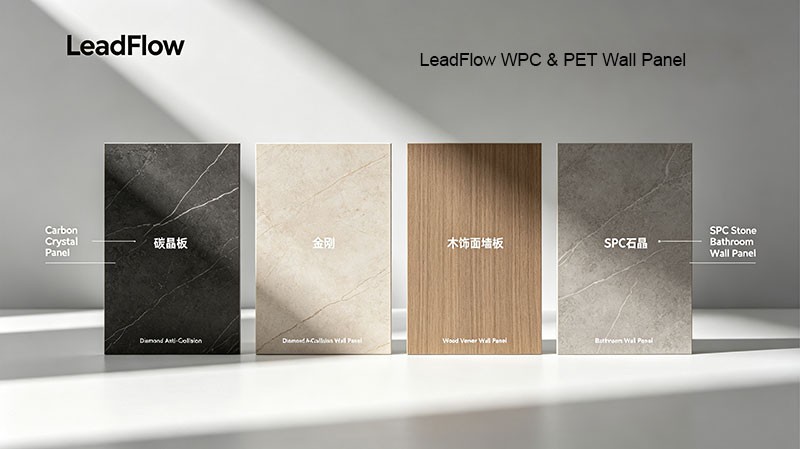
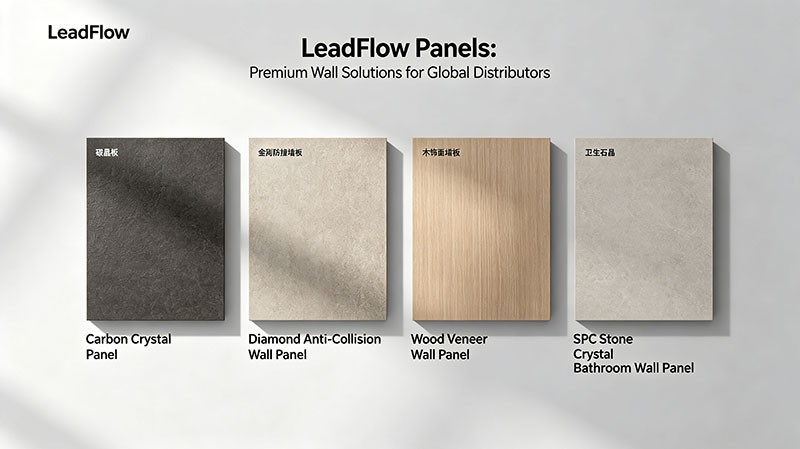
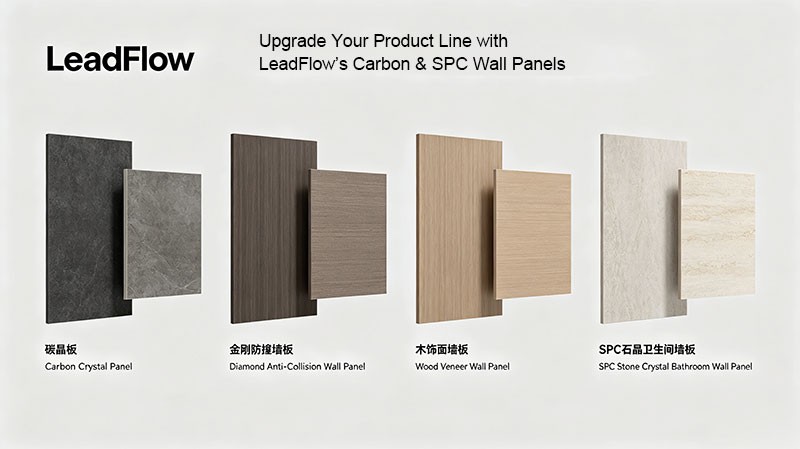
Factory audits add a further layer of assurance. When qualifying a Carbon Crystal Wall Panel factory, buyers should review raw-material traceability, film lamination process controls and in-house emission checks, because this newer category does not yet enjoy a single mature international standard and factory discipline substitutes for harmonized regulation. The same audit logic protects distributors building multi-line assortments, since regulators increasingly treat decorative wall and ceiling panels as one compliance group — and inconsistent certificates across product families are among the first things inspectors notice.
Conclusion: WPC Wall Panel Certifications as a Competitive Advantage
Certification requirements for decorative wall panels are tightening rather than relaxing. The EU's reform of construction product rules emphasizes environmental performance alongside safety, digital product passports are moving from concept toward implementation, and environmental product declarations together with recycled-content documentation are entering public tender criteria in several markets. Suppliers that invest early in testing infrastructure and transparent documentation will find that WPC wall panel certifications shift from a cost center into a commercial weapon — shortening approval cycles, supporting premium pricing and unlocking specification business that undocumented competitors cannot reach. For buyers, the guidance is equally clear: treat certifications as a procurement criterion equal in weight to price and design, verify every document at its source, and build the compliance file before the first container ships — not after the first problem appears.
FAQ
Q: What certifications are required to export WPC wall panels to the European Union?
A: CE marking with a Declaration of Performance under the Construction Products Regulation is the baseline where a harmonized standard applies, supported by EN 13501-1 reaction-to-fire classification and REACH compliance covering restricted substances such as certain phthalates.
Q: Which fire rating do interior WPC wall panels typically need?
A: Commercial projects in Europe commonly specify EN 13501-1 Class B-s1,d0, while North American specifications usually reference ASTM E84 Class A; residential applications may accept Class C or D depending on local building codes.
Q: How can buyers verify that a supplier's test report is genuine?
A: Check the report number on the issuing laboratory's official database (SGS, Intertek, TÜV or Bureau Veritas), confirm the sample description matches the ordered profile and film, and commission witnessed testing for high-value tenders.
Q: Do WPC wall panels require fumigation for export?
A: The panels themselves are composite products outside ISPM 15 scope, but all solid wood packaging such as pallets and crates must carry ISPM 15 heat-treatment or fumigation marks, and some destinations request additional fumigation certificates — always confirm with the destination customs broker.