For renovation teams around the world, the most expensive material on any job site is time. Tight handover deadlines, rising labor costs, and a persistent shortage of skilled finishers have made traditional wall finishing — tiling, plastering, multi-coat painting — a costly bottleneck. A new generation of quick-install carbon crystal panels is changing that equation. By replacing wet trades with a dry, fix-and-finish installation method, these large-format decorative boards allow a finished, ready-to-use wall to be completed in a single working day, trimming overall construction time by up to 70%. This article examines what carbon crystal panels are, why they install so quickly, and how contractors, distributors, and importers can turn that speed into a competitive advantage.
Key Takeaways
• Carbon crystal panels can reduce wall-finishing time by up to 70% because they eliminate mortar, grout, plaster, and paint — and therefore every curing and drying stage.
• Installation is a fully dry process: boards are cut to size and fixed with adhesive, nails, or clip systems, so a finished wall is ready for immediate use with no downtime.
• Beyond speed, the panels deliver durability: dense, carbon-reinforced cores provide scratch resistance, moisture resistance, and easy maintenance for residential and commercial interiors alike.
• Speed translates into profit: fewer trades per project and lower labor cost per square meter — advantages that distributors sourcing through an experienced WPC Wall Panels supplier or integrated panel manufacturer can pass directly to customers.
What Are Carbon Crystal Panels? Structure, Properties and Market Position
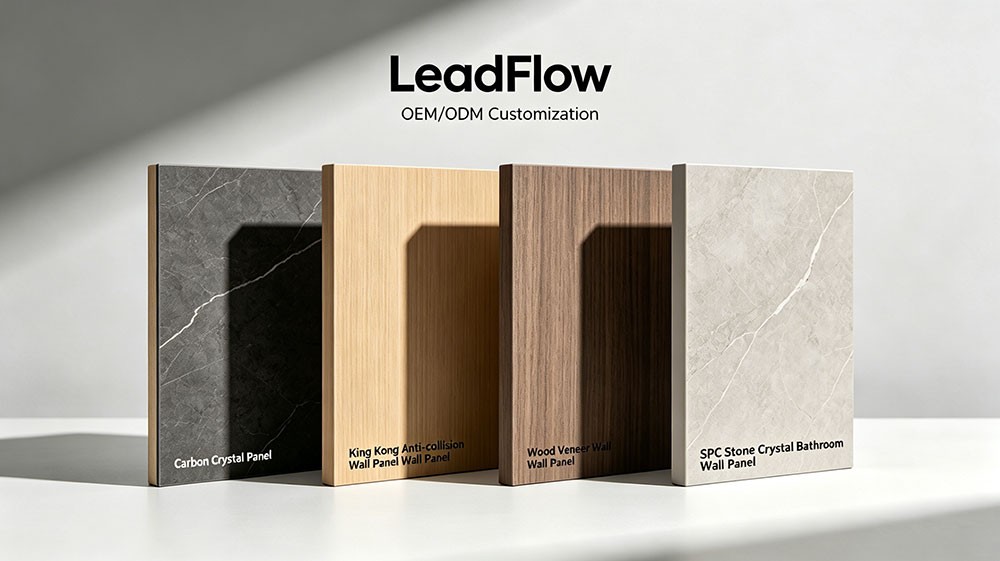
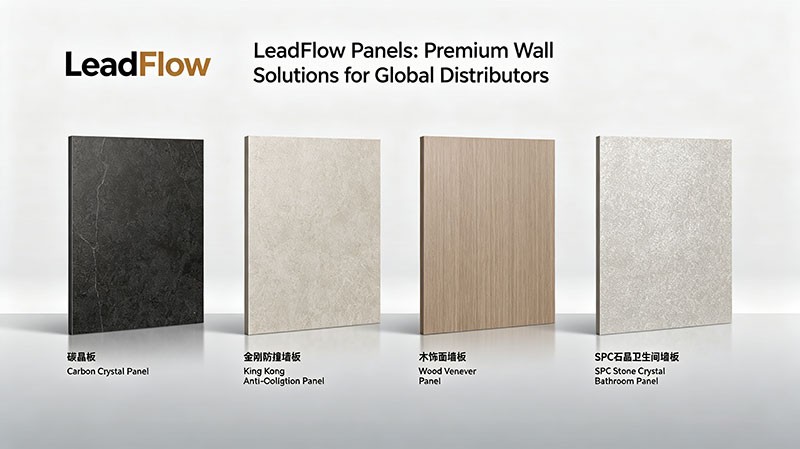
Carbon crystal panels are large-format engineered decorative boards that combine a mineral-reinforced, carbon-enriched core with a hard, wear-resistant decorative surface. In most product lines, the core is a blend of polymer resin and mineral fillers enriched with fine carbon powder — the “carbon crystal” phase — which raises density, hardness, and dimensional stability well above ordinary thin PVC sheets. Boards are typically produced in thicknesses of roughly 4 to 9 millimeters and in wide formats (commonly around 1220 millimeters, with lengths up to about 2.9 meters), allowing a single panel to cover a large wall area with minimal jointing.
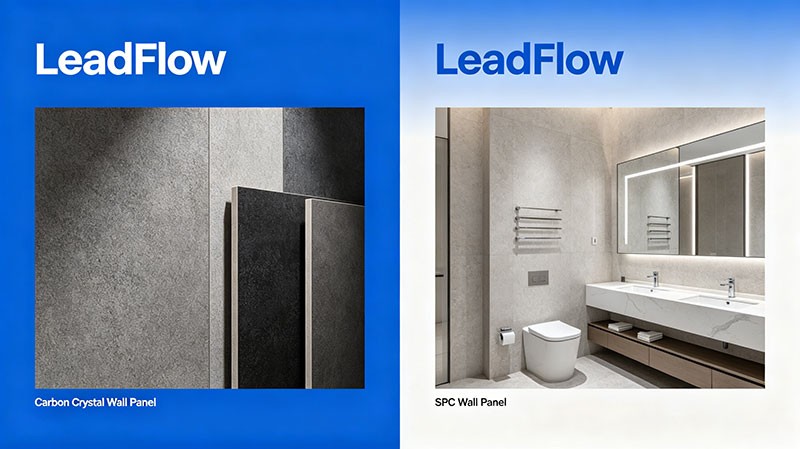
The decorative surface is where the category earns its design reputation. A bonded decorative film, protected by a UV-cured or wear-resistant layer, reproduces marble veining, wood grain, fabric, leather texture, or solid colors in matte, gloss, or skin-feel finishes. Because the surface is fully pre-finished at the factory, no painting, sealing, or polishing is required on site. The result is a wall that is scratch-resistant, waterproof, stain-resistant, and easy to clean the moment installation ends.
Within the wider panel market, carbon crystal boards occupy the premium decorative segment alongside established categories. Wood-plastic composite products remain the workhorse for textured feature walls — any established WPC Wall Panels supplier will confirm that fluted and slatted profiles dominate that segment — while rigid stone-polymer boards compete on stiffness and impact strength. Carbon crystal panels combine much of the best of both worlds: the large-format coverage and hardness of rigid boards, with surface quality that rivals natural stone or engineered marble at a fraction of the weight and cost.
Why Quick-Install Carbon Crystal Panels Cut Construction Time by 70%
The 70% time saving is not marketing shorthand; it follows directly from one structural fact: quick-install carbon crystal panels remove every wet trade from the wall-finishing sequence. Traditional renovation methods are serial processes — each stage must dry before the next can begin — while panel installation is a single-stage, dry operation.
Consider a conventional wall upgrade using tile or painted gypsum. The sequence typically runs from surface preparation and leveling, through adhesive or mortar application, tile setting, and grouting, into multi-day curing; paint systems add primer plus two or three topcoats with drying time between each. Across a typical residential room, this easily consumes five to ten working days, most of it waiting rather than working. Wallpaper shortens the cycle slightly but still requires paste, seam alignment, and drying, and it offers limited durability in high-traffic environments.
The panel route is dramatically shorter. A crew measures the wall, cuts each board to size using standard woodworking tools, applies construction adhesive or mechanical fixings to the substrate, presses the panel into place, and finishes joints with a matching trim or edge profile. There is no mortar to cure, no grout to seal, and no paint to dry — the surface is a finished, wipeable wall the moment the last clip is set. A single room can be completed in one working day, and an apartment handover that once took two weeks can be turned around in three to five.
Three cause-and-effect mechanisms drive the savings. First, elimination of drying time: because there is no water in the system, “waiting” disappears from the schedule entirely. Second, trades consolidation: one installation crew replaces plasterers, tilers, painters, and cleaners, reducing coordination delays and site management overhead. Third, immediate handover: with no wet materials releasing moisture, furniture and fixtures can be reinstated almost immediately — a decisive advantage in commercial refurbishments such as hotels, offices, and retail units, where every closed day is lost revenue. For volume buyers comparing catalog options through SPC Wall Panel wholesale channels or direct-from-manufacturer programs, this speed-to-revenue argument is frequently the deciding factor in adopting carbon crystal lines.
Beyond Speed: Durability, Lifecycle Cost and Sourcing Strategy
Speed wins the contract, but long-term performance wins the repeat customer — and this is where carbon crystal panels justify their premium positioning. The dense, carbon-reinforced core resists impact and flexing far better than thin decorative sheets, while the factory-applied wear layer withstands daily abrasion, stains, and UV exposure in high-traffic settings. The closed, dense structure shrugs off moisture, which is why the panels are increasingly specified for kitchen splashbacks, bathroom feature walls, and full-height cladding in humid climates. Maintenance is limited to a damp cloth — no repainting, resealing, or regrouting across the service life of the wall.
The economics reward both sides of the transaction. Contractors save on labor hours, waste disposal, and rework callbacks; because boards cut cleanly and predictably, offcuts are minimized, and a damaged section can be replaced panel by panel rather than rebuilt entirely. Building owners save on downtime and enjoy a surface that stays presentable for years. Distributors, meanwhile, benefit from a lightweight, flat-packed product that ships and stores efficiently — a meaningful logistics advantage over tile, stone, or plaster-based systems.
Sourcing strategy matters as much as product choice. Global buyers evaluating manufacturers should look for consistent core density, high-quality bonded films, documented fire-performance classifications, and the capacity to supply matching trims, skirtings, and profiles. A notable commercial advantage is that many of the strongest carbon crystal producers are also established composite manufacturers: a vertically integrated WPC Fluted Wall Panels supplier can typically pair smooth large-format carbon crystal boards with ribbed WPC feature-wall profiles and SPC accessories from a single production base, ensuring color and texture continuity across an entire project. For importers and retail chains, this kind of consolidated sourcing reduces lead times, simplifies quality control, and strengthens the one-stop renovation proposition that end customers increasingly expect.
Conclusion and Outlook: The Shift Toward Dry, Fast Wall Finishing
Quick-install carbon crystal panels represent more than a faster product; they signal a structural shift in how walls are finished. As skilled-labor scarcity deepens and renovation cycles shorten worldwide, dry installation methods — panels that go on clean, cure instantly, and perform for years — will continue taking share from wet trades. The up-to-70% time saving achievable with carbon crystal panels is the clearest expression of that trend, and it explains why the category is moving from novelty to standard specification among contractors and designers.
The outlook points toward wider formats, tougher fire-rated and recycled-content cores, and richer surface customization through digital printing and synchronized textures — developments that will further blur the line between premium decoration and mass-market affordability. For distributors and contractors, the practical takeaway is straightforward: the sooner quick-install carbon crystal panels are added to the offering — alongside complementary WPC and SPC lines — the better positioned the business will be for the fast, dry, deadline-driven renovation market now taking shape.
FAQ
Q: How exactly do carbon crystal panels save 70% of construction time?
A: They eliminate all wet trades — mortar, grout, plaster, and paint — which means every curing and drying stage disappears from the schedule. Measuring, cutting, fixing, and jointing can all be completed in a single visit, turning a multi-day finishing process into a matter of hours per room.
Q: Can carbon crystal panels be installed over existing tiles or old walls?
A: In most cases, yes. The panels bond to clean, sound, and reasonably flat surfaces with construction adhesive or mechanical fixings, so old tiles can often remain in place. This skips demolition and debris removal, adding further time savings to an already fast process.
Q: Are carbon crystal panels waterproof enough for bathrooms and kitchens?
A: The dense core and sealed decorative surface make the panels highly moisture-resistant, and they are widely used in humid environments, including full-height bathroom walls. Edges and joints should be finished with compatible trims and sealed according to the supplier's wall panel installation guidelines.
Q: How do carbon crystal panels compare with WPC and SPC wall panels?
A: WPC fluted panels specialize in ribbed, three-dimensional feature walls; SPC panels emphasize a rigid stone-polymer core for impact resistance; carbon crystal panels focus on large-format, hard-surface finishes that imitate marble, wood, and fabric. Many project teams combine all three — using carbon crystal boards for broad wall areas and fluted WPC profiles for accent sections.