The global interior finishing market has embraced fluted textures with remarkable speed, and the search for a dependable WPC Fluted Wall Panels supplier has become a central procurement question for distributors, design-build firms, and contractors across North America, Europe, the Middle East, and Southeast Asia. WPC fluted wall panels — ribbed wood-plastic composite boards that create elegant shadow lines on interior walls — have moved from niche decorative accents to mainstream specifications in residential renovations, hospitality projects, and retail fit-outs. For buyers, however, the real challenge is no longer finding a product; it is identifying a manufacturing partner capable of delivering consistent quality, credible certification, and scalable supply. This guide examines what separates a professional WPC Wall Panels supplier from an average one, how factory capability and quality control shape long-term value, and which sourcing models — from OEM customization to wholesale distribution — best fit different business needs.
Key Takeaways
• A WPC fluted wall panel is a wood-plastic composite board extruded into ribbed profiles, valued for its textured finish, moisture resistance, and fast clip-based installation.
• Reliable suppliers are defined by in-house extrusion and mold-making, transparent certifications such as ISO 9001 and CE, and strict batch-to-batch color consistency.
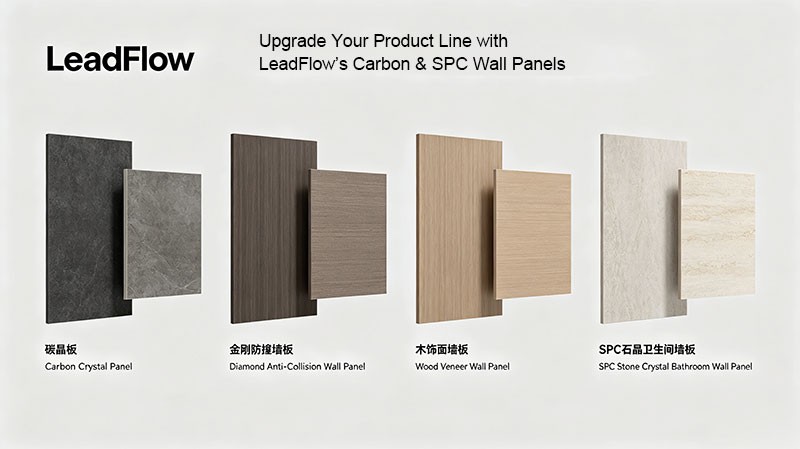
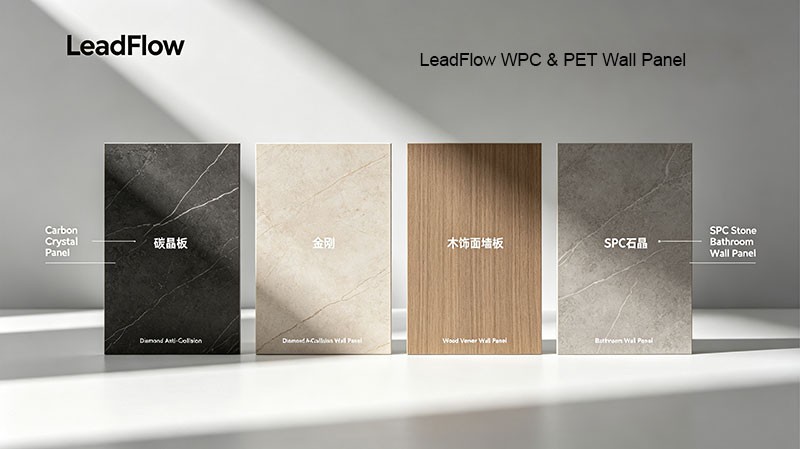
• Integrated production bases that also operate as a Carbon Crystal Wall Panel factory let buyers consolidate mixed containers and harmonize quality across product lines.
• Wholesale sourcing structure — pallet-level orders for stock designs, container-level OEM production, and mixed-category loading — directly affects landed cost, lead time, and brand differentiation.
What Defines a Reliable WPC Fluted Wall Panels Supplier
A WPC fluted wall panel is manufactured by blending wood flour or wood fiber with thermoplastic resin — most commonly PVC — together with stabilizers and density modifiers, then extruding the compound through a profile die that forms the characteristic parallel grooves. The surface is subsequently finished by hot stamping, laminate film lamination, wood-grain transfer, or UV coating. Because the fluted geometry concentrates attention on line regularity and surface uniformity, profile precision is the single most important quality attribute of the category.
The most important distinction for global buyers is between a genuine manufacturer and an intermediary trading company. A professional WPC Wall Panels supplier operates its own extrusion lines, develops and maintains profile dies in-house, and controls the raw material formulation — variables that determine density, screw-holding strength, and long-term dimensional stability. Trading intermediaries resell output from third-party mills, which makes formulation drift, batch color variation, and slower technical support far more likely. Verifying factory ownership through a video audit, business license review, or third-party inspection is therefore the first step of supplier due diligence.
Compliance documentation is the second pillar. Serious suppliers provide ISO 9001-certified quality management, CE conformity for European markets, fire performance test reports matched to the destination market's code, and formaldehyde or VOC emission data for indoor air quality. Because fluted panels are increasingly specified in hotels, schools, and healthcare interiors, fire classification and emissions transparency have shifted from optional extras to bidding prerequisites in many regions. A supplier unwilling to share verifiable test reports should be treated as a significant risk signal.
Inside the Factory: Manufacturing Capability and Quality Control
Modern WPC panel production follows a tightly controlled chain: raw material weighing and mixing, high-speed hot blending, extrusion through calibrated profile dies, online sizing and cooling, precision cutting to length — typically around 2.9 meters to suit container loading — and finally surface treatment. Each stage introduces potential defects, so mature factories deploy in-line inspection for profile tolerance, digital color measurement for surface consistency, and scheduled die maintenance to keep groove spacing uniform across production runs.
Buyers evaluating a prospective partner should request specific quality control data rather than generic assurances. Key checkpoints include panel density and its effect on impact resistance, film adhesion or coating hardness measured through peeling and abrasion tests, moisture absorption and dimensional stability under humidity cycling, and screw-holding capacity for concealed clip systems. Sampling from actual production batches — not showroom-grade pieces — remains the most reliable verification method.
Capability breadth also deserves weight. Leading composite panel manufacturers increasingly run multi-category production bases where one engineering team manages WPC extrusion alongside adjacent product lines. A base that also functions as a Carbon Crystal Wall Panel factory applies high-density board technology and advanced lamination lines that raise the consistency bar for its WPC output as well. For distributors, consolidating WPC fluted panels with carbon crystal panels, UV marble sheets, and other decorative surfaces from one audited base simplifies logistics, harmonizes quality standards, and strengthens negotiating leverage — a strategy explored in our mixed-category container sourcing guide.
Wholesale Sourcing Models: Pricing, MOQ, and Supply Chain Trends
Wholesale dynamics shape both price and flexibility. In the SPC Wall Panel wholesale channel — where stone-plastic composite panels move through tiered distributor networks — buyers have learned that order structure matters as much as unit price, and the same principles now govern the fluted panel trade. Stock colors and standard designs are typically available from pallet-level minimum orders, while custom colors, private-label packaging, or new profile molds require container-level commitments. Matching order volume to the supplier's production scheduling windows is the practical way to secure better pricing without tying up capital in slow-moving inventory.
Landed cost is driven by far more than the quoted unit price. Fluctuations in PVC resin and wood flour prices, the type of surface treatment — plain lamination versus deep-embossed or digitally printed finishes — panel density, and freight conditions all move the final number. On logistics, fluted panels are long, rigid, and surface-sensitive, so professional suppliers invest in protective corner packing, moisture-proof film, and pallet layouts optimized for 20-foot and 40-foot containers. Buyers should confirm packing specifications in writing, align lead times with seasonal port congestion, and agree on shipping documents and test certificates before dispatch.
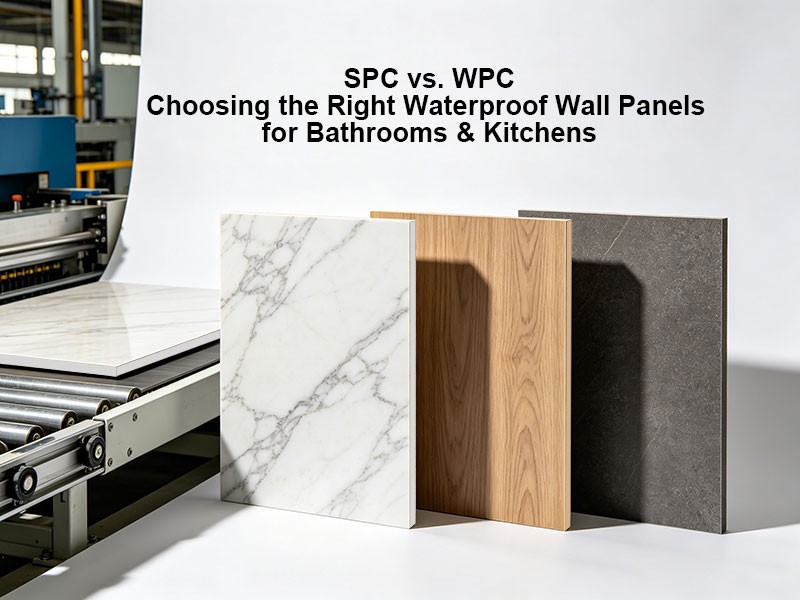
Sourcing itself has digitalized. Video factory walkthroughs, sample kits shipped within days, and third-party pre-shipment inspection are now standard practice, compressing an evaluation cycle that once required overseas travel. For technical planning, many buyers pair fluted feature walls with complementary materials — a combination compared in our SPC and WPC wall panel selection guide — to balance texture, cost, and installation speed across an entire project.
Conclusion and Outlook
The WPC fluted panel category is maturing quickly, and supplier selection is becoming the decisive competitive variable. Three trends will define the next phase: sustainability pressure, pushing manufacturers toward recycled cores, lower-VOC formulations, and circular material documentation; stricter fire and emissions codes in commercial construction, raising the value of certified production; and design innovation, bringing deeper textures, wider formats, and hybrid panels that pair WPC bodies with premium surface films.
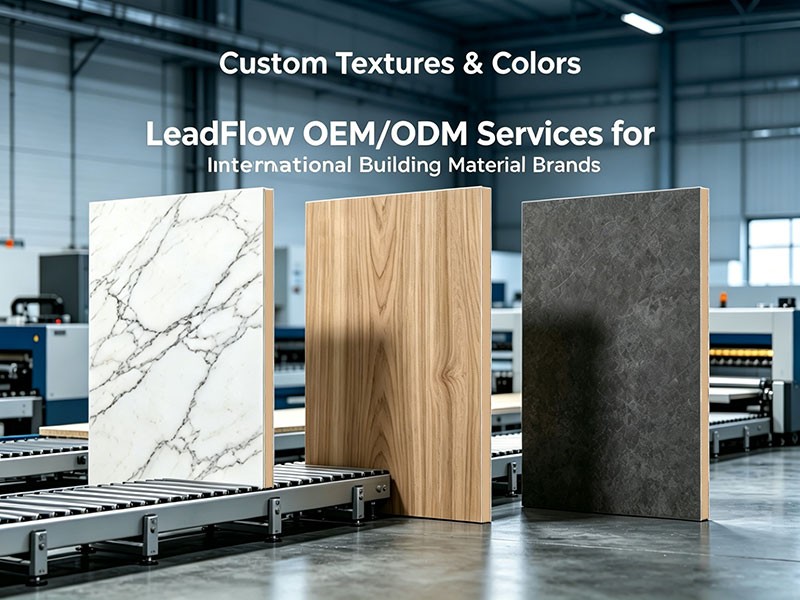
For global buyers, the practical conclusion is to treat supplier choice as a long-term partnership rather than a transaction. The strongest WPC Fluted Wall Panels supplier candidates will be those combining vertical manufacturing control, transparent certification, flexible OEM and ODM service, and multi-category capability spanning SPC, carbon crystal, and UV marble surfaces. Procurement teams that audit these dimensions systematically — and lock quality agreements into contracts early — will be best positioned as fluted panels complete their shift from trend to standard specification in interior design worldwide.
FAQ
Q: What exactly is a WPC fluted wall panel?
A: A WPC fluted wall panel is an interior wall cladding board made from wood-plastic composite — a blend of wood fiber and thermoplastic resin, usually PVC — extruded into a ribbed, fluted profile that adds linear texture and visual depth to walls. Panels are typically finished with laminate film, wood-grain transfer, or UV coating and installed with clips or adhesive.
Q: How can I verify a WPC Fluted Wall Panels supplier before placing a bulk order?
A: Confirm factory ownership through a business license check and a video or on-site audit, request ISO 9001, CE, and fire performance test reports, evaluate samples drawn from real production batches, and use third-party pre-shipment inspection for the first order.
Q: What is the typical minimum order quantity for wholesale wall panel orders?
A: MOQs vary by supplier and specification. Stock colors and standard designs are often available from a single pallet, while custom colors, packaging, or new molds usually require container-level volumes. Combining categories — for example fluted panels alongside an SPC Wall Panel wholesale order — helps fill mixed containers efficiently.
Q: How do WPC fluted panels compare with carbon crystal wall panels?
A: WPC fluted panels are lighter, warmer in appearance, and faster to install, making them ideal for feature walls in residential and hospitality spaces. Carbon crystal wall panels are denser and harder, with superior scratch resistance and suitability for CNC-carved relief designs. Many buyers source both from an integrated Carbon Crystal Wall Panel factory to keep quality and logistics consistent.