The global trade in SPC Wall Panel wholesale is entering a period of structural expansion, as developers, contractors, and distributors seek wall cladding materials that combine stone-like durability with the economics of engineered composites. Stone Plastic Composite (SPC) panels—rigid sheets extruded from a high-density blend of PVC resin and calcium carbonate, then finished with decorative films and protective wear layers—have migrated from the flooring segment into mainstream interior wall decoration. For wholesalers and procurement teams, the question in 2025 is no longer whether to stock SPC panels, but how to secure competitive pricing, consistent quality, and flexible supply in an increasingly consolidated market.
Key Takeaways
• Cost advantage is the core driver: SPC wall panels deliver waterproof, impact-resistant, and dimensionally stable performance at a fraction of the installed cost of natural stone, ceramic tile, or solid wood cladding, making them a preferred specification for both new construction and renovation.
• Pricing follows panel structure: Wholesale SPC wall panel prices are shaped primarily by thickness, core density, decorative film grade, surface treatment, and raw material costs for PVC resin and calcium carbonate.
• Factory-direct sourcing is consolidating: Buyers increasingly bypass intermediaries and work directly with integrated manufacturers to secure better minimum order quantities, deeper customization, and container-level pricing.
• Mixed-container bundling is the new norm: Distributors favor suppliers able to combine SPC panels with WPC fluted wall panels and UV marble sheets in a single shipment, reducing freight cost per unit and simplifying project procurement.
Why SPC Wall Panel Wholesale Demand Keeps Accelerating
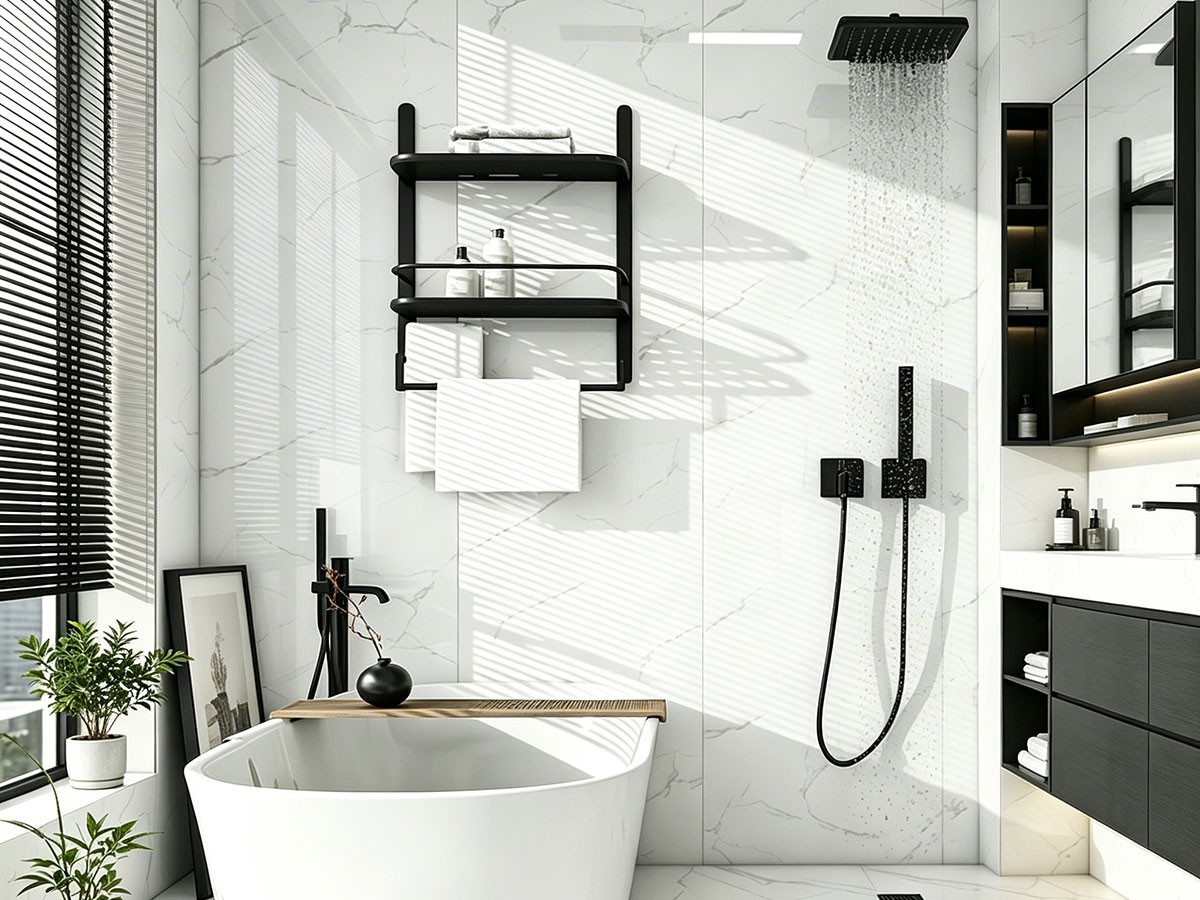
SPC wall panel wholesale volumes continue to climb because the material solves three persistent pain points in interior construction: moisture vulnerability, installation labor cost, and finish inconsistency. Unlike gypsum board or medium-density fiberboard, the rigid SPC core does not swell, warp, or delaminate in humid environments, which makes SPC cladding suitable for bathrooms, kitchens, basements, and ground-floor commercial spaces in tropical and coastal markets.
Installation economics reinforce the shift. SPC panels lock or bond directly over existing substrates, eliminating the wet trades associated with tile and stone and compressing wall-finishing schedules from days to hours. For renovation-driven markets across North America, Europe, Southeast Asia, and the Middle East, that speed advantage translates directly into project savings—a decisive factor at a time when labor costs are rising faster than material costs.
Understanding where SPC sits within the composite panel family helps buyers specify correctly. Compared with WPC (wood plastic composite), SPC contains no wood fiber and therefore offers higher density, greater rigidity, and superior moisture resistance, at the cost of slightly lower screw-holding strength. Compared with thin PVC laminates, SPC provides noticeably better impact resistance and sound damping. These differences explain why SPC cladding is frequently chosen for high-traffic commercial interiors, while WPC panels remain popular for decorative feature walls. The competitive landscape is converging accordingly: many an established WPC Wall Panels supplier has added SPC lines to its catalog, recognizing that buyers rarely specify a single material in isolation and increasingly prefer one-stop programs spanning complete interior wall cladding solutions.
Inside the Wholesale Supply Chain: Sourcing Strategies That Work
Sourcing outcomes are determined less by negotiation tactics than by supplier selection. The SPC wall panel market spans three supply models—factory-direct purchasing, trading-company intermediation, and regional distribution—each with distinct trade-offs in price transparency, quality control, and customization depth.
In bulk wall panel sourcing, factory-direct purchasing remains the dominant strategy for volume buyers. When a manufacturer controls core extrusion, lamination, and profiling in-house, buyers gain three tangible advantages: pricing free of intermediary markups, direct influence over panel specifications, and faster response to engineering changes. Vertically integrated factories can typically maintain tighter thickness tolerances and more consistent batch color matching than assemblers who outsource semi-finished sheets.
Category breadth has become a selection criterion in its own right. Procurement managers increasingly prefer a single factory capable of shipping SPC panels, WPC fluted panels, and UV marble sheets together, and the same logic applies at the production level: an experienced UV Marble Sheet manufacturer with adjacent SPC and WPC lines can align film quality, texture libraries, and color standards across categories, giving distributors a visually coherent product program governed by one quality system.
Quality verification should follow a consistent checklist regardless of supplier type. Wholesale buyers typically evaluate core density and thickness tolerance; adhesion strength between the decorative film and substrate; edge profiling accuracy for tongue-and-groove or V-groove systems; fire classification and emission certificates relevant to the destination market; and packaging specifications that protect surface films during long-haul container shipping. Sampling across multiple production batches—rather than a single curated sample—remains the most reliable predictor of wholesale consistency, and buyers building a formal evaluation framework benefit from consulting a detailed SPC wall panel specification guide before finalizing tolerances.
Pricing Dynamics and How to Evaluate a Wholesale Partner
Wholesale pricing for SPC wall panels is transparent in structure even when it varies by supplier. The cost base comprises raw materials—PVC resin, calcium carbonate, and stabilizers—plus the decorative film, wear layer or UV coating, labor, energy, and packaging. Thickness and density are the strongest levers: a 9 mm panel commands a materially different ex-works price than a 5 mm panel of the same design, and higher calcium carbonate content lowers cost while reducing impact performance. Buyers who understand this trade-off can negotiate specifications that match real project needs instead of paying for over-engineering.
Order structure shapes the final landed cost as well. Most manufacturers set minimum order quantities per design, with mixed-design loading available at adjusted pricing. Full-container shipments maximize freight efficiency, and buyers in distant markets increasingly consolidate SPC wall panels with complementary categories—such as a WPC Fluted Wall Panels supplier line whose fluted textures and finishes match SPC surfaces for feature-wall combinations—to build mixed containers that spread freight cost across higher-value cargo. Lead times, payment terms, and after-sales handling of damaged-panel claims should be weighed alongside unit price, since a nominally cheaper offer can erode margin through delays, quality disputes, or elevated breakage rates.
Partner evaluation extends beyond the price list. Experienced importers assess production capacity and equipment condition, export track record with the buyer's certification requirements, responsiveness during the sampling stage, and willingness to disclose material breakdowns and test reports. A supplier that proactively shares density figures, film sourcing, and compliance documentation is generally a safer long-term partner than one competing solely on the lowest quote.
Conclusion and Outlook
The SPC wall panel wholesale market is maturing from a price-led commodity trade into a specification-driven segment where material science, supply reliability, and category breadth decide the winners. Rising demand in renovation-heavy economies, combined with the logistics advantages of mixed-container sourcing, favors vertically integrated manufacturers capable of producing SPC, WPC fluted, and UV marble sheet products under consistent quality standards. For wholesalers and distributors, the strategic imperative is clear: build direct factory relationships, verify quality at the batch level, and select partners whose product programs support complete interior wall solutions rather than isolated products. Buyers who align with such suppliers early will be best positioned as the market continues to consolidate.
FAQ
Q: What is the typical minimum order quantity for SPC wall panel wholesale purchases?
A: Most manufacturers set MOQs per design, commonly ranging from a few pallets to a full 20-foot or 40-foot container depending on panel size and thickness. Many factories also offer mixed-design or mixed-category container loading, allowing buyers to combine SPC panels with WPC fluted panels or UV marble sheets in a single shipment.
Q: How do SPC wall panels differ from WPC wall panels?
A: SPC panels use a rigid core of PVC resin and calcium carbonate with no wood fiber, delivering higher density, better moisture resistance, and greater impact strength. WPC panels incorporate wood fiber, producing a lighter panel with a warmer texture that suits decorative fluted feature walls. The two materials are often specified together within the same interior project.
Q: What factors most influence SPC wall panel wholesale prices?
A: The main drivers are panel thickness and core density, the grade of the decorative film and wear layer, surface treatments such as UV coating or embossed grain, order volume and container utilization, and fluctuations in PVC resin and calcium carbonate raw material costs.
Q: Can wholesale buyers customize SPC wall panel designs?
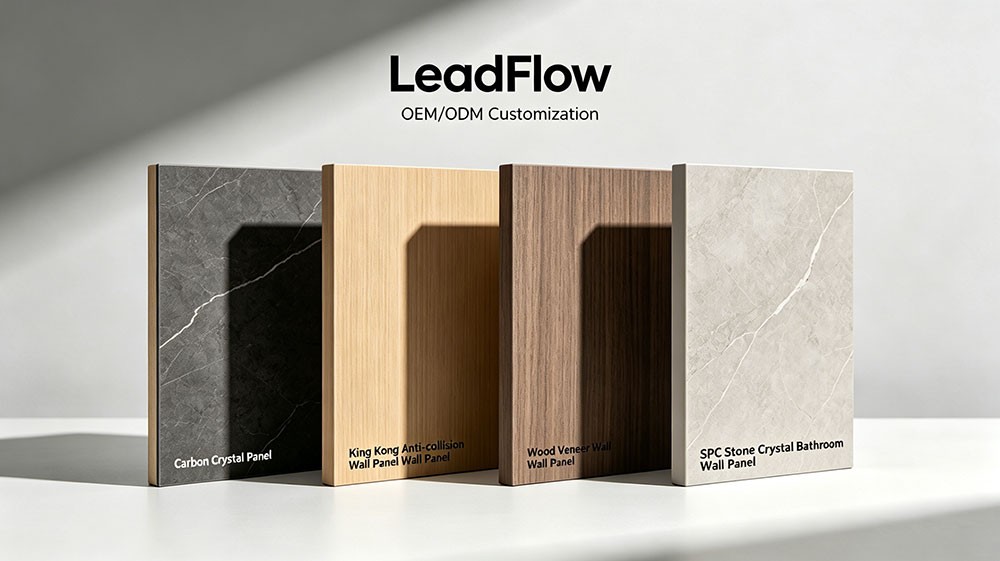
A: Yes. Factory-direct suppliers typically offer customization of decorative film patterns, colors, surface textures, panel dimensions, and packaging, usually subject to higher MOQs and longer lead times than catalog designs. OEM and ODM services are common among integrated manufacturers.