For contractors, developers, and fit-out teams worldwide, time is the most expensive material on any renovation site. Traditional wall finishing relies on wet trades — plastering, skim-coating, putty application, sanding, and painting — each followed by unavoidable drying windows that stretch schedules from days into weeks. Quick-install carbon crystal panels have emerged as a disruptive alternative: a large-format, factory-finished wall material that, according to field reports from renovation contractors and industry estimates, can cut total wall-construction time by up to 70%. This article explains the material science behind that claim, breaks down the installation workflow that makes it possible, and outlines what buyers should evaluate when sourcing these panels for global projects.
Key Takeaways
• Quick-install carbon crystal panels are large-format decorative boards with a factory-finished surface, eliminating wet trades such as plastering, putty, and painting.
• Time savings of up to 70% stem from three mechanisms: direct-on-wall installation, large panel coverage with fewer joints, and a zero-drying-time finished surface.
• The panels are best suited to hotels, offices, retail refreshes, and residential renovations where schedule, dust control, and downtime are critical.
• Sourcing quality matters: buyers should assess a carbon crystal wall panel factory's pressing, lamination, and edge-machining capabilities before committing to volume orders.
What Are Carbon Crystal Panels and Why Do They Renovate Faster?
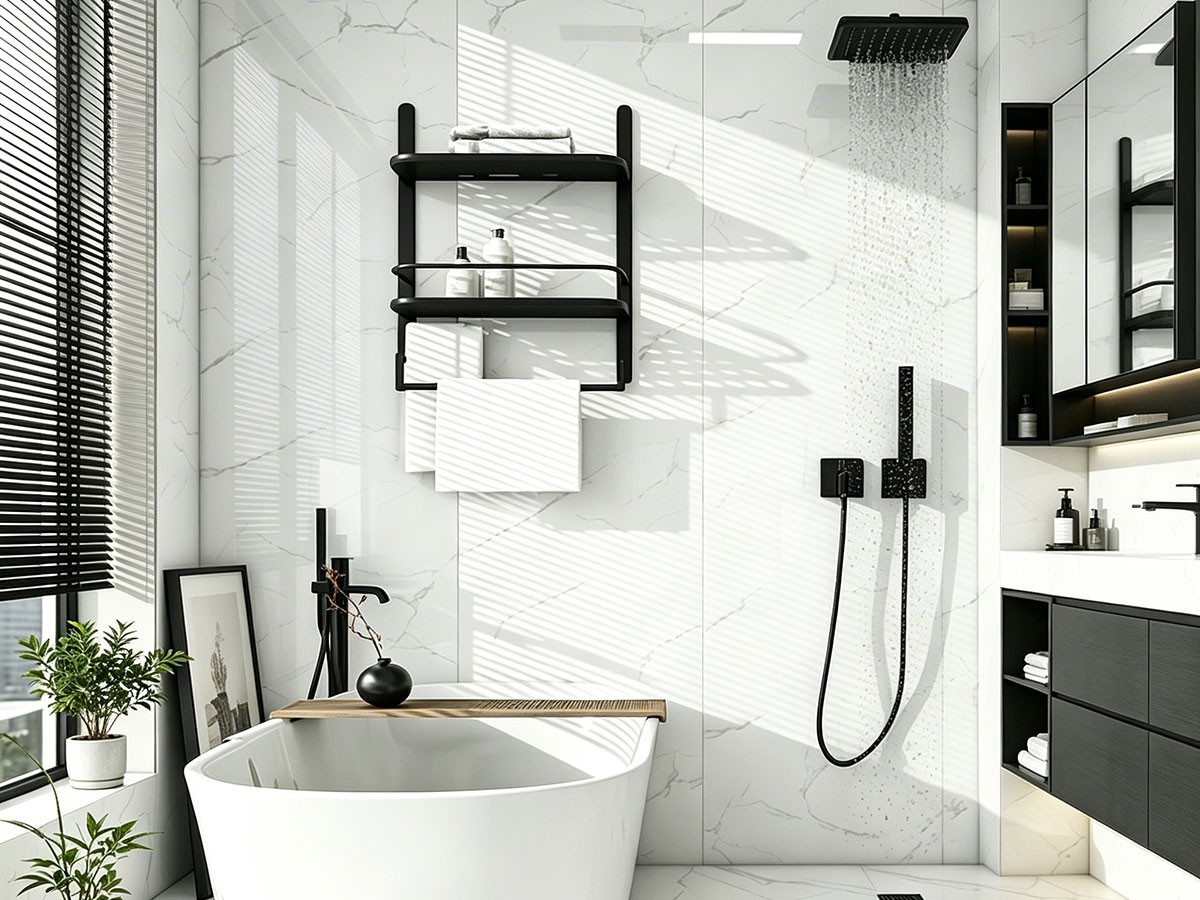
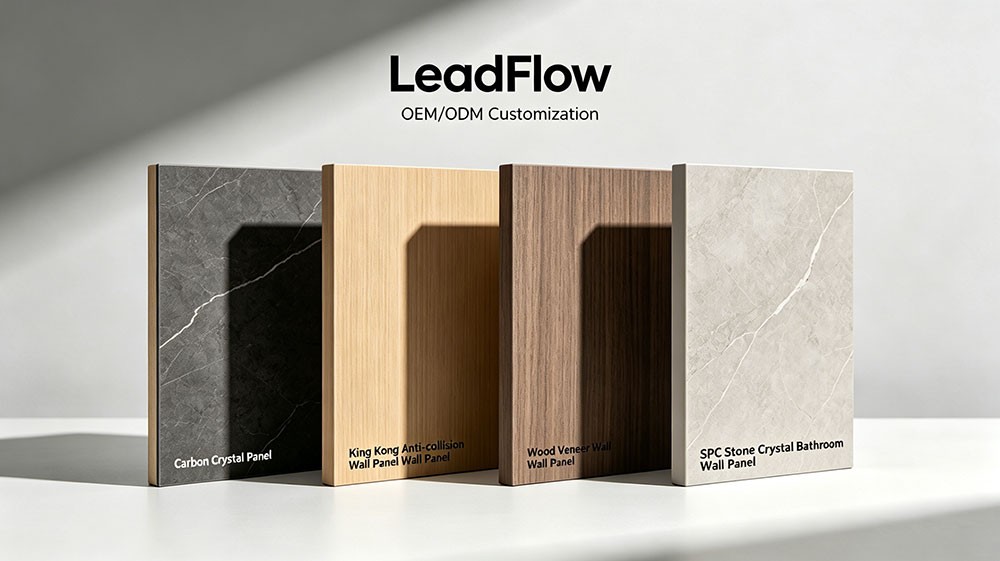
Carbon crystal panels are engineered decorative wall boards produced by hot-pressing a dense blend of bamboo or wood fiber, fine mineral powder, and polymer resin into a rigid core, then bonding a UV-cured or PET-laminated decorative layer onto the face. The result is a flat, high-density board — typically around 8 to 9 millimeters thick — that arrives with the look of marble, fabric, metal, or wood grain already applied at the factory.
The decisive difference from conventional wall materials is that the surface is finished before it reaches the site. A painted wall is not finished until the final coat has cured; a carbon crystal panel is finished the moment it leaves the production line. This single structural fact is the root cause of the time savings discussed below, because everything a wet-trade workflow does on site — smoothing, coloring, protecting — has already been done in a controlled factory environment.
Large format also plays a role. Standard sheet sizes commonly reach 1,220 by 2,440 millimeters, with longer profiles extending beyond 2,800 millimeters, so one panel can cover several square meters in a single piece. Fewer pieces mean fewer joints, less cutting, less fastening, and fewer opportunities for alignment errors — all of which compress installation time per square meter. For readers evaluating which board type suits their project, our comparison of carbon crystal, WPC, and SPC wall panels offers a side-by-side breakdown of cost, durability, and application scenarios.
How Quick-Install Carbon Crystal Panels Cut 70% of Construction Time
The 70% time saving is not a marketing abstraction; it follows directly from what the installation process eliminates. A conventional wall renovation follows a linear, drying-bound sequence: base plaster or skim coat, curing, two or three coats of putty with sanding between each, drying again, primer, then two to three paint coats with final curing. Depending on humidity and temperature, each stage can add days, and the wall remains unusable until the last one completes.
A quick-install carbon crystal panel workflow replaces that entire sequence with three steps: measure and cut, fix, and finish inspection. Panels are secured either with structural adhesive and mechanical clips directly onto the existing wall, or onto a lightweight wooden or metal keel frame. Because the surface is pre-finished, the room is effectively usable the same day. Three mechanisms drive the savings:
1. Direct-on-wall application. The panels can bridge minor unevenness or cover damaged old finishes without demolition or re-plastering, removing the most labor-intensive phase of renovation entirely.
2. Large-format coverage. Fewer seams per square meter reduce cutting, joining, and correction work, which is especially valuable in wide-open commercial interiors.
3. Zero drying time. No putty, no paint, no curing windows. Weather and humidity — the classic enemies of renovation schedules — no longer control the timeline.
Beyond speed, the process is dust-light and odor-light, which matters enormously in occupied environments. Hotel operators refreshing guest floors, retailers updating stores between trading days, and landlords turning around apartments all choose finished-surface panels because they allow renovation without evacuating the space. In these contexts, the 70% figure often understates the true business value, since avoided downtime frequently costs more than the installation itself. For material-selection fundamentals across wall systems, this guide to interior wall cladding options covers the broader landscape in depth.
Choosing a Carbon Crystal Wall Panel Factory and Matching Materials to the Project
As demand accelerates, procurement teams face a widening range of suppliers, and quality varies significantly between production bases. When evaluating a carbon crystal wall panel factory, buyers should look closely at four capability areas: core density and pressing consistency, the adhesion quality of the UV or PET decorative layer, precision of tongue-and-groove edge machining, and documented performance in water, fire, and abrasion testing. A factory with in-house lamination and edge milling will typically deliver tighter tolerances, which directly reduces on-site fitting time — reinforcing the very speed advantage that makes the product attractive in the first place.
It is equally important to match the material to the design intent rather than defaulting to one board type for every wall. Projects requiring three-dimensional, slatted feature walls are usually better served by a WPC fluted wall panels supplier, whose fluted profiles create shadow-line texture that flat carbon crystal sheets cannot replicate. Conversely, budget-driven commercial programs — large housing conversions, rental-unit rollouts, or wet-area upgrades — often source through SPC wall panel wholesale channels, where rigid-core boards are distributed in bulk at lower unit cost and perform well in moisture-prone spaces.
In practice, experienced contractors increasingly combine materials: carbon crystal panels for expansive, premium flat surfaces; WPC fluted panels for accent walls; SPC boards for high-traffic or humid zones. The result is a wall-system approach in which each product is used where its economics and aesthetics are strongest, and installation speed is preserved across all of them because none depends on wet trades.
Conclusion and Outlook
The claim that quick-install carbon crystal panels save 70% of construction time holds up under scrutiny because it is mechanistic rather than promotional: the panels delete the curing-dependent stages of wall renovation instead of merely accelerating them. As skilled plasterer and painter shortages deepen in many labor markets and clients demand faster, cleaner, less disruptive fit-outs, finished-surface panel systems are positioned to capture a growing share of interior wall construction globally.
Looking ahead, expect continued advances in surface digital printing and embossing that broaden the design vocabulary, tighter integration with click-lock and keel mounting systems that push installation times down further, and more transparent factory-level performance certification that helps global buyers source with confidence. For distributors, contractors, and developers, the message of the current market cycle is clear: the future of fast renovation belongs to materials that arrive finished — and carbon crystal panels are currently the most prominent example of that shift.
FAQ
Q: What are quick-install carbon crystal panels made of?
A: They are hot-pressed boards combining bamboo or wood fiber, fine mineral powder, and polymer resin into a dense rigid core, finished with a UV-cured or PET-laminated decorative layer that is ready to use immediately after installation.
Q: How do carbon crystal panels save up to 70% of construction time?
A: The savings come from eliminating wet trades. There is no plastering, no putty, no sanding, and no paint drying time; panels mount directly onto the existing wall or a light keel frame, and because the surface is factory-finished, rooms are typically usable the same day.
Q: Can carbon crystal panels be installed over old or uneven walls?
A: Yes. Minor unevenness and damaged old finishes can usually be bridged without demolition or re-plastering, using adhesive and clips or a lightweight keel. Severely damaged or water-logged substrates should be repaired first to ensure long-term stability.
Q: How do carbon crystal panels compare with WPC fluted panels and SPC panels?
A: Carbon crystal panels suit large, flat, premium-looking surfaces; WPC fluted panels deliver three-dimensional slat textures for feature walls; SPC panels offer a lower-cost rigid-core option that performs well in humid or high-traffic areas. Many projects combine all three by zone.
Want to see more options? Download our full product catalog and find the perfect solution for your needs.