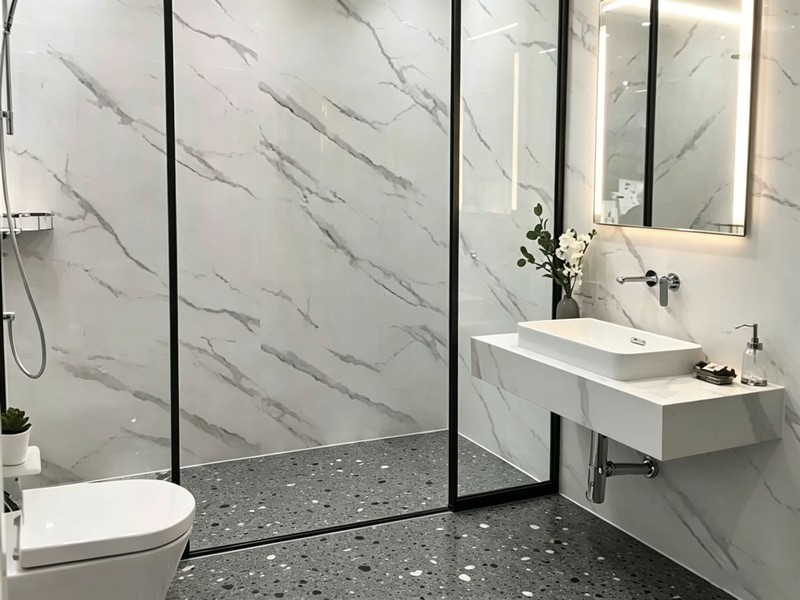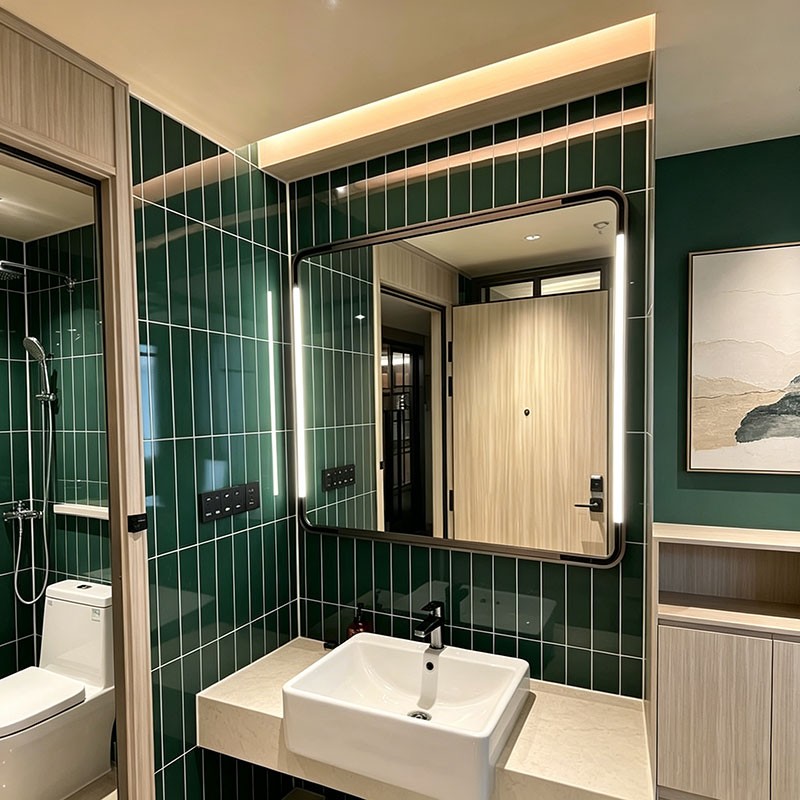
Marble-look interior surfaces are no longer the preserve of natural stone, and the UV Marble Sheet manufacturer has become one of the most closely watched players in the global decorative building materials trade. From commercial lobbies in the Gulf to residential renovations across Southeast Asia, Africa and Latin America, rigid PVC sheets finished with UV-cured coatings are replacing heavy, costly stone cladding at a remarkable pace. For importers, distributors and project contractors, understanding how these sheets are actually made — and what separates a reliable factory from a trading middleman — has become a decisive sourcing skill. This report examines the manufacturing process, the quality benchmarks that matter, and the evaluation criteria global buyers should apply when choosing a supplier.
Key Takeaways
• A UV marble sheet combines a rigid PVC substrate, a printed or laminated decorative layer, and a UV-cured protective topcoat, delivering stone aesthetics at a fraction of the weight and cost of natural marble.
• Product quality is determined primarily by substrate formulation, lamination precision and UV coating thickness — all factory-controlled variables that buyers should verify through samples and test reports.
• Many leading factories operate diversified production lines, and a growing number of buyers consolidate orders for UV marble sheets, SPC wall panels and WPC fluted panels with a single supplier to reduce logistics costs.
• Certification documents (ISO 9001, CE, fire test reports), OEM/ODM capability and export packaging standards are the most reliable indicators of a manufacturer's professionalism.
What Is a UV Marble Sheet? Definition and Market Context
A UV marble sheet is a decorative interior wall panel consisting of a rigid PVC base — typically 2.0 to 3.5 mm thick — bonded with a marble-effect decorative layer and sealed under a transparent coating that is cured instantly using ultraviolet light. The result is a lightweight, waterproof panel with a high-gloss or satin finish that visually replicates natural marble veining while resisting scratches, moisture and everyday impact.
The product's rise follows a clear cause-and-effect logic: natural marble is heavy, expensive and slow to install, while painted walls and wallpaper lack durability in high-traffic environments. UV marble sheets occupy the middle ground. Because the panels can be cut with standard tools, fixed with adhesive or jointing profiles, and installed directly over existing walls, they have become a preferred specification for hotels, offices, retail units, clinics and apartment renovations in both emerging and developed markets. Buyers new to interior panels can start with a comparison of WPC, SPC and PVC wall panel types to see exactly where UV marble sheets fit within the wider category.
Market context also matters. The category has grown largely through export channels centered in major building materials manufacturing clusters, where production capacity is dense and product development moves quickly. Interestingly, many of today's most competitive UV marble producers did not start with this product at all. A significant share evolved from adjacent categories: an established WPC Wall Panels supplier expanding into interior decorative sheets, or an SPC flooring extruder adding rigid board lines. This crossover background matters for buyers, because factories with multi-category experience tend to bring mature quality management systems and stronger process control to the UV marble segment.
Inside the Factory: How a UV Marble Sheet Manufacturer Controls Quality
The defining characteristic of a professional UV marble sheet manufacturer is process discipline across three production stages: substrate extrusion, decorative lamination and UV coating. Each stage leaves measurable fingerprints on the finished panel.
Stage one: substrate extrusion. The PVC base sheet is produced by blending PVC resin with calcium carbonate, stabilizers and processing aids, then extruding or calendering the compound into a rigid board. Substrate quality determines everything that follows. Sheets made with excessive filler are lighter and cheaper but more brittle and prone to warping; sheets built on a well-balanced rigid PVC formula hold flatness, edge strength and impact performance over years of service.
Stage two: decorative lamination. The marble appearance comes from a printed film — most commonly a high-definition PET decorative film — that is heat-laminated onto the substrate. Precision here is critical. Poor lamination produces bubbles, visible glue lines and delamination during transport in hot climates. Advanced lines use temperature- and pressure-controlled lamination to ensure the film bonds uniformly across the full sheet area.
Stage three: UV coating and curing. The panel then passes through roller-coating stations that apply a UV primer and one or more topcoats, followed by ultraviolet curing tunnels where the liquid coating polymerizes within seconds. This is the stage that gives the product its name. The instant-cure process creates a hard, dense, highly scratch-resistant surface that conventional air-dried coatings cannot match. Coating thickness and curing intensity directly affect surface hardness, gloss consistency and yellowing resistance — which is why serious manufacturers treat UV line parameters as core production knowledge and run in-line inspection for gloss level, adhesion and surface defects.
After curing, sheets are cut to standard export sizes — commonly 1220 mm × 2440 mm and 1220 mm × 2800 mm or longer — protected with PE film and edge protection, then packed in export cartons. A capable factory will also run batch-level quality control: checking thickness tolerance, surface hardness, impact resistance, flatness and, increasingly, fire performance and VOC emissions to satisfy stricter building codes in destination markets.
It is also worth noting the manufacturing ecosystem around this product. Many UV marble sheet factories operate adjacent extrusion lines for related panel categories, and several run established SPC Wall Panel wholesale programs alongside their decorative sheet business. For buyers, this adjacency is practical rather than cosmetic: shared quality-control laboratories, shared raw material sourcing and shared export documentation teams usually translate into more consistent quality and smoother communication across product lines.
How Global Buyers Should Evaluate a UV Marble Sheet Manufacturer
Choosing the right manufacturer comes down to verifying capabilities that cannot be judged from a product photo alone. Industry experience points to five evaluation dimensions.
1. Certifications and test documentation. Professional factories can provide ISO 9001 quality management certification, third-party test reports covering fire classification and formaldehyde/VOC emissions, and market-specific compliance such as CE documentation for Europe. A manufacturer hesitant to share these documents should be treated as a warning sign.
2. Substrate and coating transparency. Buyers should ask directly about PVC formulation (virgin versus recycled content), typical sheet thickness tolerance, the number of UV coating layers and warranty terms against yellowing or delamination. Reliable suppliers answer these questions with specifications, not adjectives.
3. OEM/ODM and customization capacity. The strongest manufacturers can develop custom marble patterns, match project color references, produce non-standard lengths and print buyer-branded packaging. For distributors building their own brand, low-customization factories limit long-term differentiation.
4. Sampling and batch consistency. A pre-shipment sample proves little if container-to-container color varies. Buyers should request samples from different production batches and confirm that the factory maintains color coding and batch traceability — a standard practice among organized producers.
5. Consolidated sourcing potential. Interior fit-out orders increasingly mix categories: UV marble sheets for feature walls, fluted panels for texture, and SPC or WPC products for floors and ceilings. Sourcing from a WPC Fluted Wall Panels supplier that also manufactures UV marble sheets under one quality system can reduce container space waste, unify color coordination and simplify after-sales responsibility — a practical advantage explored further in guides to multi-category wall panel sourcing.
Conclusion and Market Outlook
The UV marble sheet segment has matured from a low-cost marble imitation into a technically refined product category with its own quality standards, installation methods and brand dynamics. For manufacturers, competitive advantage is shifting from price alone toward process capability: better substrates, thicker and more stable UV coatings, richer surface textures and credible certification packages. For buyers, the evaluation framework is correspondingly clear — verify the factory, test samples across batches, read the documents, and favor suppliers with multi-category strength and export experience.
Looking ahead, several trends will shape the category: digital printing technology lowering minimum order quantities for custom designs, antibacterial and matte-skin coatings responding to hospital and hospitality specifications, larger panel formats reducing joint lines, and growing pressure for recyclable substrates and low-VOC formulations as green building codes spread globally. Manufacturers that invest in these directions — and communicate that investment transparently — are best positioned to capture the next wave of global demand. Importers who build supplier relationships on verified quality rather than the lowest quoted price will be the ones still winning tenders five years from now.
FAQ
Q: What exactly is a UV marble sheet made of?
A: It consists of a rigid PVC substrate (typically 2.0–3.5 mm thick), a marble-effect decorative layer — usually a printed PET film heat-laminated to the base — and a transparent UV-cured topcoat that provides gloss, scratch resistance and moisture protection.
Q: Where can UV marble sheets be installed?
A: They are suitable for interior feature walls, ceilings, columns, hotel lobbies, offices, retail spaces, kitchen splashbacks and bathroom dry zones. The panels are water-resistant, but seams in wet areas should be properly sealed, and the product is not intended for surfaces under continuous water immersion.
Q: How do UV marble sheets compare with natural marble and acrylic sheets?
A: Compared with natural marble, UV marble sheets are dramatically lighter, faster to install and far more affordable, though they do not replicate the depth of real stone. Compared with cast acrylic sheets, PVC-based UV sheets are generally more cost-effective and easier to fabricate, while acrylic can offer higher optical clarity at a premium price.
Q: What should buyers confirm before placing an order with a manufacturer?
A: Request certification documents (ISO 9001, fire and VOC test reports), confirm substrate formulation and UV coating thickness, order samples from different production batches, clarify MOQ and OEM options, and agree on export packaging standards and warranty terms in writing.