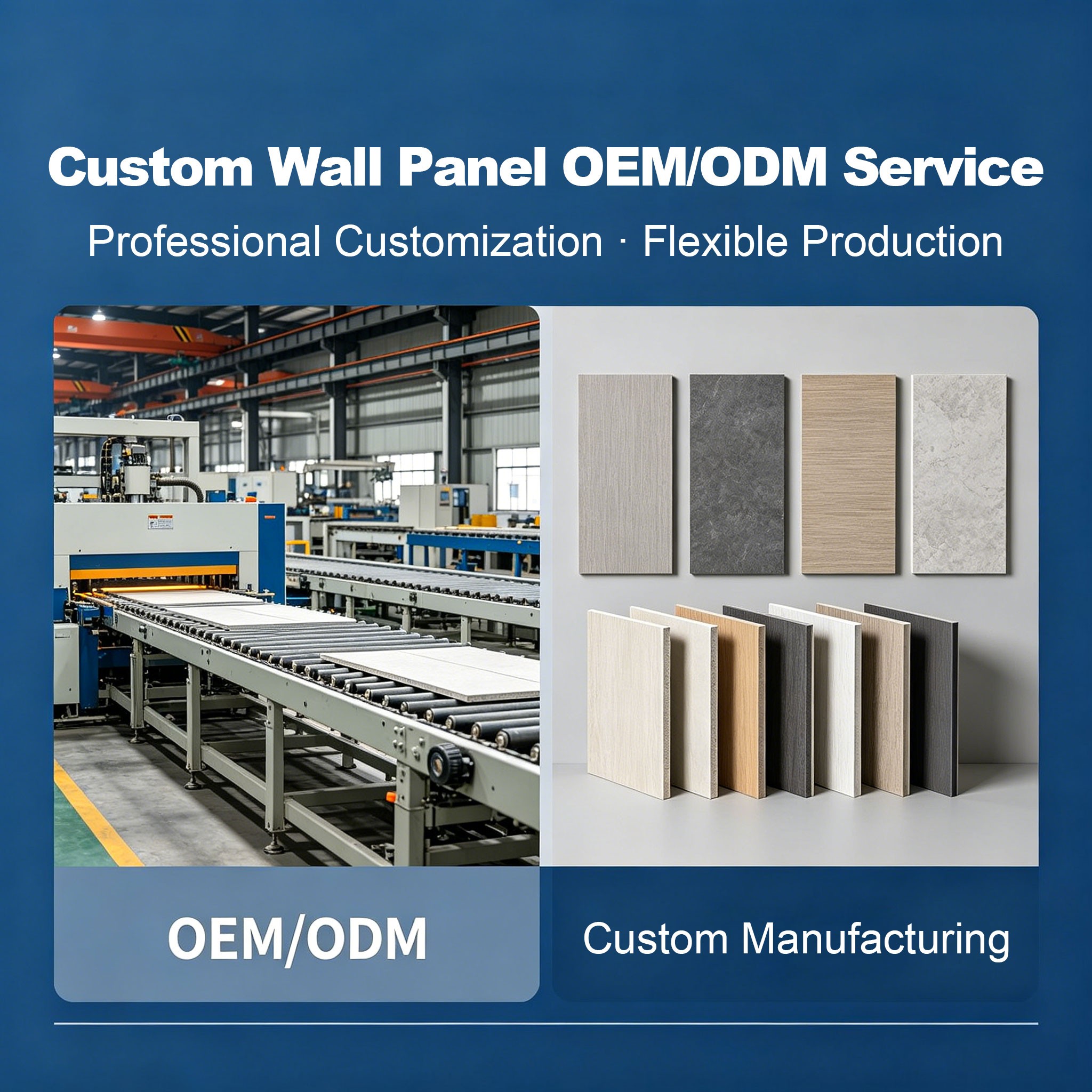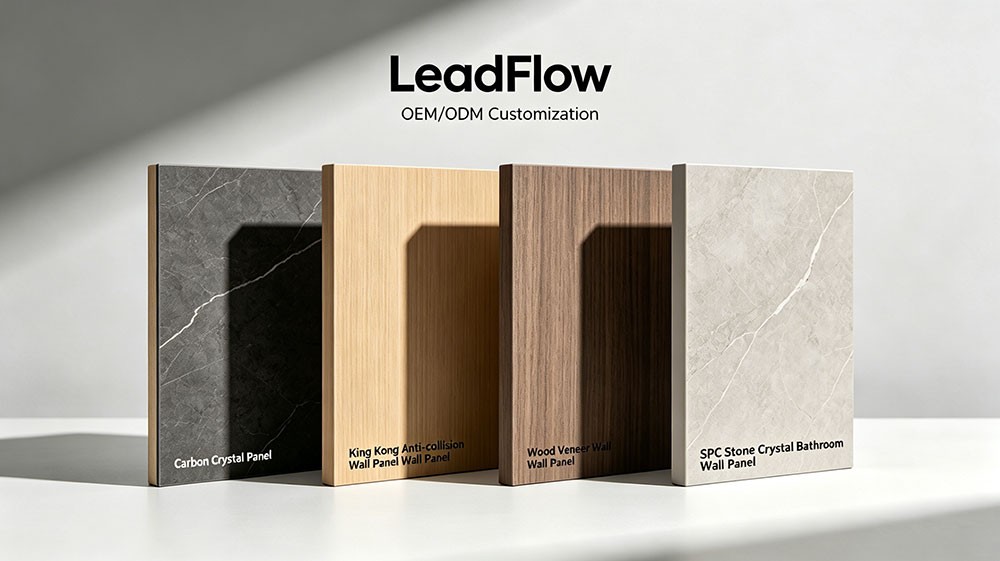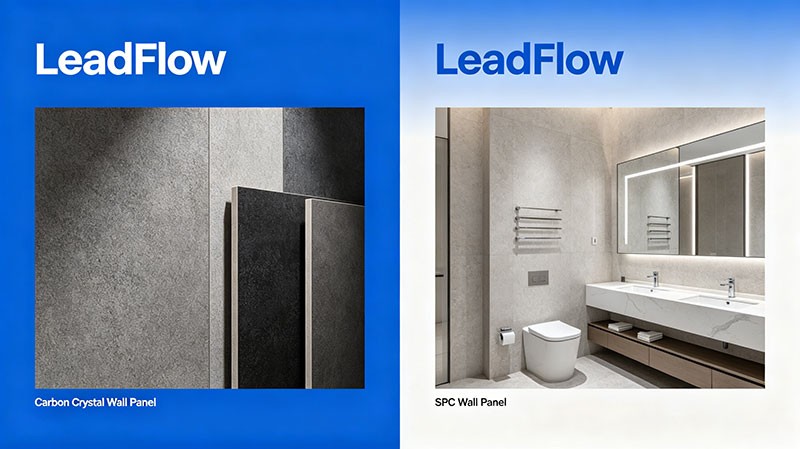
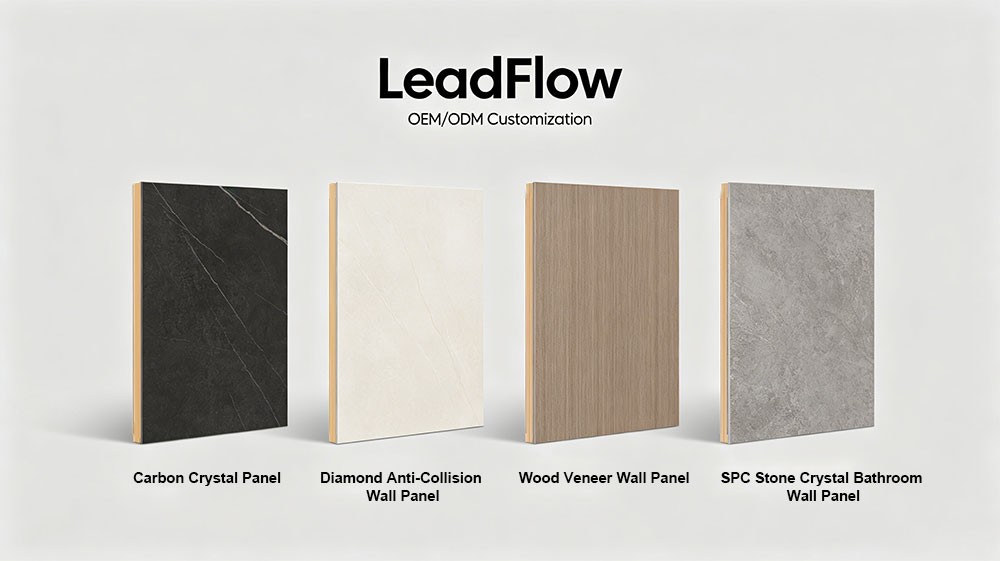
The decorative wall panel market has entered a new phase: distributors and importers across Europe, North America, the Middle East, and Southeast Asia increasingly refuse to stock products that look identical to their competitors'. In response, OEM/ODM wall panel customization has become the defining capability that separates world-class manufacturers from commodity producers. By partnering with an experienced WPC Wall Panels supplier, an overseas brand can transform a generic catalog item into an exclusive product line — with its own colors, textures, dimensions, packaging, and technical specifications — and secure a distribution advantage that price discounting alone cannot replicate. This article examines how the OEM and ODM models differ in practice, how a customization project moves from design brief to finished container, and which criteria brands should weigh when selecting a production partner.
Key Takeaways
• OEM means the brand supplies the design and specifications while the factory manufactures; ODM means the factory develops the design and the brand sells it under its own label.
• Customization goes far beyond color: surface texture, embossing, profile geometry, dimensions, packaging, and technical documentation can all be tailored.
• Material choice — WPC, carbon crystal, or SPC — sets the technical ceiling of any custom design, from moisture resistance to fire classification.
• The strongest brand-factory partnerships combine in-house tooling, recognized certifications, fast sampling, and transparent quality control.
OEM vs. ODM: Two Paths to Exclusive Wall Panel Designs
Understanding the difference between OEM and ODM is the foundation of every successful customization project. In an OEM (Original Equipment Manufacturer) arrangement, the overseas brand owns the design: it provides drawings, color standards, dimension requirements, and sometimes custom tooling, while the factory is responsible for production. The finished goods carry only the brand's identity. This model gives brands maximum design control and is favored by established companies with in-house design teams and mature distribution networks.
In an ODM (Original Design Manufacturer) model, the factory acts as the design engine. The manufacturer develops new profiles, surface finishes, and product concepts, then allows the brand to select, refine, and relabel these designs as its own. For newer importers — or brands entering a new market segment — ODM dramatically shortens time-to-market because the engineering and tooling risks rest with the manufacturer. With no need to develop a profile from scratch, a brand can typically move from selection to shelf in a fraction of the time a fully bespoke OEM project requires.
In practice, most overseas brands adopt a hybrid approach: they choose a base profile from the manufacturer's existing library, then customize the elements customers actually see and touch — laminate film, color tone, embossing depth, and packaging. This middle path delivers genuine differentiation without the cost and lead time of fully bespoke tooling, which explains why it has become the dominant form of private label wall panels in international trade.
Inside OEM/ODM Wall Panel Customization: From Design Brief to Finished Container
A professionally managed OEM/ODM project follows a structured workflow that converts a creative brief into a repeatable, export-ready product. Six stages define the process.
1. Design brief and specification. The brand submits reference images, Pantone or RAL color codes, target dimensions, profile style, and the compliance requirements of its destination market. The more precise the brief, the fewer revision cycles later.
2. Color and surface development. This is where brand identity is physically built. Manufacturers match brand colors through custom-printed lamination films, hot stamping foils, or UV coatings, while embossing rollers press wood grain, marble veining, or fabric textures into the surface. Brands seeking seamless continuity can align their custom wall panel colors with matching trims and complementary categories, such as coordinating a wall program with a UV marble sheet series for feature walls.
3. Profile and tooling. If the project requires a new geometry — such as a proprietary slat width for a WPC fluted wall panel series — the factory engineers extrusion dies or press molds. Tooling time is typically measured in weeks and depends on profile complexity, so brands should confirm early whether a partner maintains in-house mold workshops.
4. Sampling and approval. Pre-production samples allow the brand to verify color accuracy under different lighting conditions, surface hardness, and joint alignment. A reliable manufacturing partner will provide physical samples together with detailed specifications — density, thickness tolerance, and fire-test reports — before mass production begins.
5. Pilot run and quality control. A first-article inspection confirms that color consistency, embossing registration, and mechanical performance match the approved sample. Reputable factories welcome third-party inspection agencies at this stage, which is a clear signal of production confidence.
6. Mass production and branded packaging. The final stage covers private-label cartons, barcodes, multilingual installation guides, and mixed-container loading plans. Packaging is often underestimated, yet it is the first physical touchpoint a customer has with the brand — and one of the easiest elements to customize.
Choosing the Right Manufacturing Partner: Materials, Certifications, and Capacity
The success of any exclusive design ultimately depends on the technical depth of the factory behind it. Three factors deserve the closest scrutiny.
Material expertise. Each panel material serves a different segment of the market. WPC composite panels excel in moisture-prone and semi-outdoor environments thanks to their wood-plastic formulation. High-density carbon crystal panels deliver superior flatness, impact resistance, and flame retardancy, making them a preferred specification for premium residential and hospitality projects — which is why evaluating a Carbon Crystal Wall Panel factory means checking its hot-press lamination capacity, board density control, and UV coating lines. SPC panels, built on a rigid stone-plastic core, offer dimensional stability for large-format designs, and established SPC Wall Panel wholesale programs allow distributors to combine stock profiles with fully private-label packaging for faster inventory turnover.
Compliance and certification. A panel that cannot clear customs or pass local building codes becomes an expensive liability. Before signing, brands should verify which standards the factory routinely tests against — such as European fire classifications, formaldehyde emission limits, and relevant ASTM or EN requirements for the destination market — and request recent third-party-issued test reports rather than self-declared data. Certification cannot be improvised after production; it must be engineered in from the material stage onward.
Capacity, communication, and service. Beyond product quality, practical factors determine whether a partnership survives: minimum order quantities flexible enough for a first trial order, sample policies with clear lead times, English-language technical documentation, photographic quality reports during production, and a defined after-sales process for claims. Brands should treat the first order as a test of the relationship, not merely of the product.
Conclusion: Customization Is Becoming the New Competitive Baseline
Exclusive design is shifting from a premium option to a market requirement in the wall panel trade. As product cycles shorten and buyers grow more design-literate, manufacturers that invest in in-house tooling, digital texture printing, low-emission formulations, and small-batch flexibility will win the loyalty of the brands that matter most. For overseas importers, the message is equally clear: the earlier a brand locks in its own colors, profiles, and packaging with a capable partner, the harder it becomes for competitors to substitute its products. OEM/ODM customization is no longer a simple sourcing tactic — it is the strategy through which brands convert a factory's engineering capability into lasting market identity.
FAQ
Q: What is the difference between OEM and ODM in wall panel manufacturing?
A: In OEM, the brand owns the design and the factory produces strictly to the brand's specifications. In ODM, the factory develops the design and the brand markets the finished product under its own label. Many brands use a hybrid approach, selecting an existing ODM profile and customizing color, texture, and packaging.
Q: What is the typical minimum order quantity for customized wall panels?
A: Minimum order quantities vary by factory and by the depth of customization. Changing the color or film on an existing profile usually requires a smaller volume than commissioning a new profile, which demands custom tooling and higher quantities to be economical. Brands should request MOQ terms in writing for each customization tier.
Q: How long does an OEM/ODM wall panel project take from brief to delivery?
A: Projects based on existing profiles with custom colors move fastest, while projects requiring new molds add tooling time, followed by sampling, pilot production, and sea freight. Confirming sampling schedules and tooling lead times at the quotation stage prevents the most common delays.
Q: Can a brand customize certifications or fire ratings?
A: Certifications are not decorative features — they are verified test outcomes. A brand cannot simply order a rating as a specification line item; instead, it should confirm that the factory's materials and construction routinely pass the required standards of the destination market and obtain third-party test reports before mass production.
Ready to elevate your next project? Get free samples today and experience the quality firsthand.