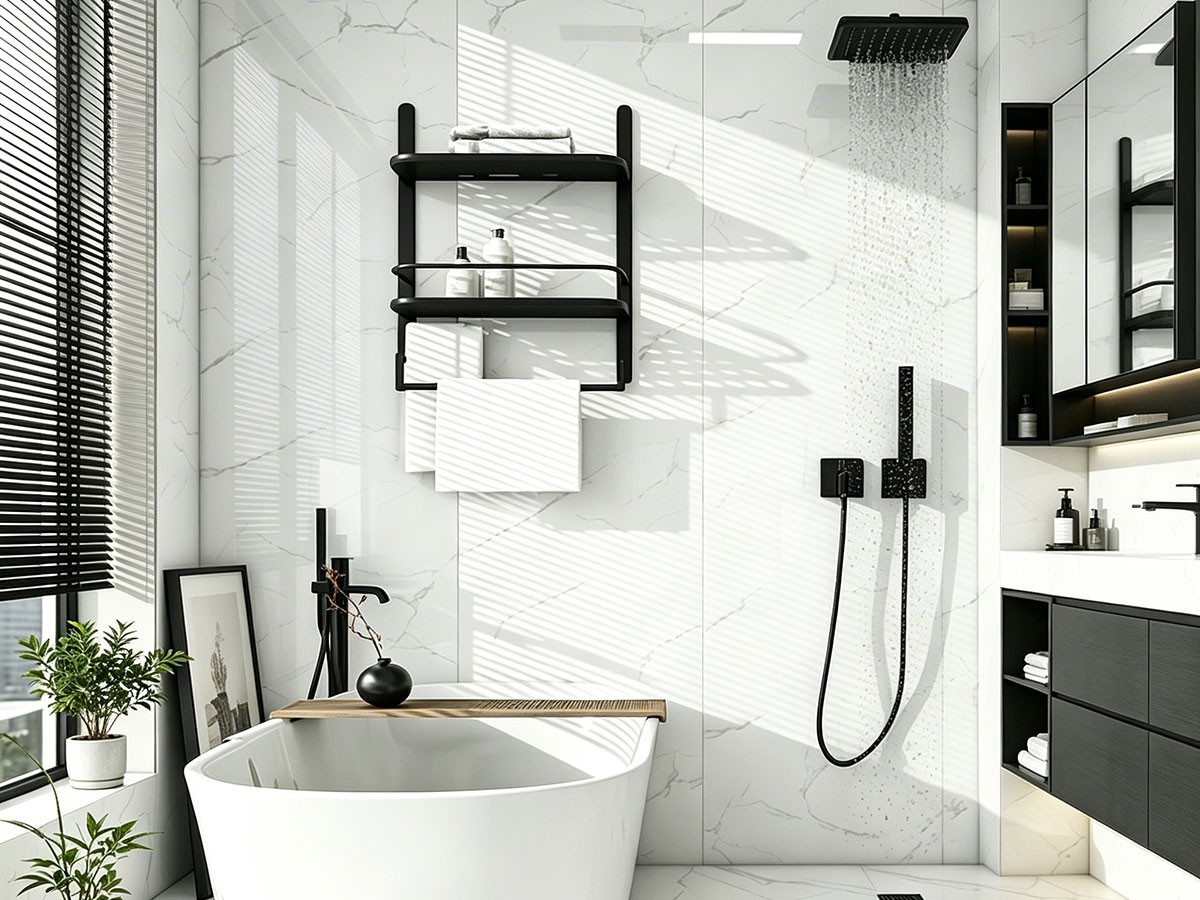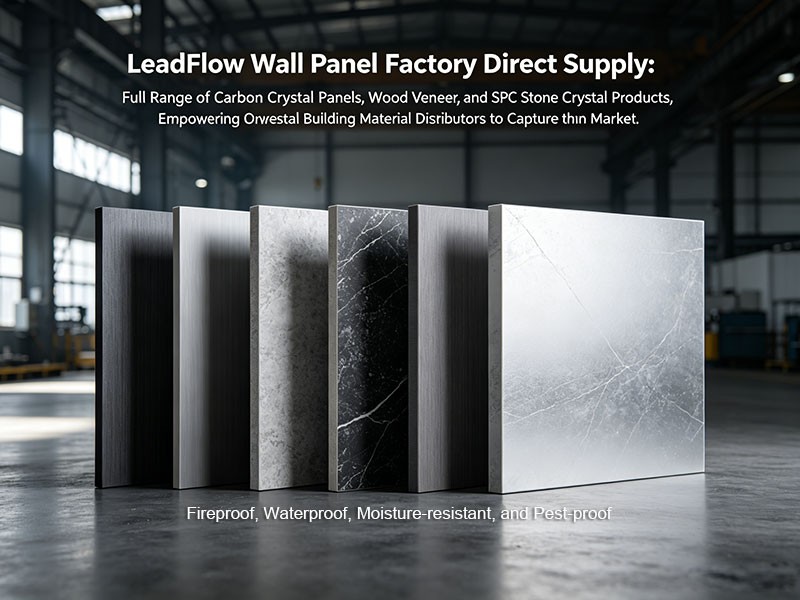
The interior finishing industry is undergoing a quiet transformation, and much of it begins on the production floor. As demand surges for wall surfaces that install quickly, resist moisture, and deliver high-end visuals without the cost of natural stone or timber, the Carbon Crystal Wall Panel factory has emerged as a pivotal node in the global building-materials supply chain. These specialized facilities combine dense polymer-mineral core technology, high-definition decorative laminates, and automated finishing lines to produce rigid panels now specified across residential, hospitality, and commercial projects on every continent. For importers, distributors, and contractors, understanding how these factories actually operate is no longer optional knowledge — it directly determines product consistency, delivery reliability, and the long-term performance of what ends up on the wall.
Key Takeaways
• A carbon crystal wall panel is a rigid decorative board built on a high-density PVC–calcium carbonate core, finished with a printed decorative film and a wear-resistant protective layer for interior walls and ceilings.
• Production consistency inside a Carbon Crystal Wall Panel factory depends on raw-material purity, precise lamination temperature and pressure, calibrated thickness control, and disciplined batch-level quality checks.
• Global buyers typically access products through three channels: direct factory sourcing for customization, a WPC Wall Panels supplier for multi-material project baskets, and SPC Wall Panel wholesale channels for standardized, high-volume inventory.
• Competitive advantage is shifting from unit price toward verified quality documentation, environmental compliance, and flexible order structures as renovation demand grows worldwide.
What Is a Carbon Crystal Wall Panel? Composition and Core Properties
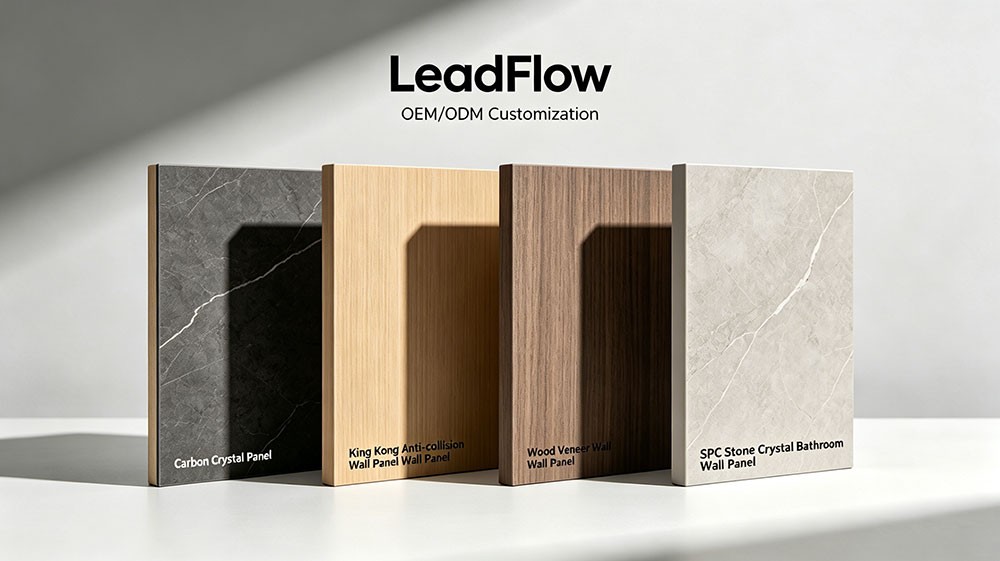
A carbon crystal wall panel is a rigid, flat decorative board engineered for interior wall and ceiling applications. Its structure typically consists of three functional layers: a structural core made from PVC resin compounded with mineral fillers — most commonly calcium carbonate — a decorative layer of high-definition printed film that reproduces marble, fabric, woodgrain, or solid-color finishes, and a protective top layer, often UV-cured, that resists scratches, stains, and surface wear.
The term carbon crystal refers to the densely fused core structure of the panel rather than a literal carbon-fiber composition, a distinction that matters when buyers compare technical specifications. Because the core is fully consolidated and non-porous, the finished panel exhibits properties that have made it a preferred alternative to MDF, gypsum, and plywood cladding in moisture-exposed environments: it does not absorb water, it resists deformation, and it can be cleaned with ordinary household agents. Panels are commonly produced in thicknesses ranging from roughly 3 to 9 millimeters and in large formats, including standard 1220 × 2440 mm sheets and elongated lengths suited to full-height wall coverage with minimal jointing.
Installation logic reinforces the material advantages. Panels can be fixed with adhesive, mounted on battens or keel systems, or joined with slotted and tongue-and-groove edge profiles, allowing large wall areas to be finished in a fraction of the time required for tile or painted plaster. This combination of speed, cleanliness, and finish quality explains why architects and fit-out contractors increasingly treat carbon crystal boards as a first-line specification rather than a budget substitute.
Inside the Production Line: How a Carbon Crystal Wall Panel Factory Maintains Consistency
What separates a dependable Carbon Crystal Wall Panel factory from a generic board producer is disciplined process control across a continuous, multi-stage manufacturing line. Each stage introduces variables that, if unmanaged, surface later as warping, delamination, color drift, or dimensional inconsistency in the field.
Production begins with raw-material dosing and mixing, where resin, mineral filler, stabilizers, and processing aids are weighed against a fixed formulation and blended under controlled moisture conditions. The compound is then extruded or calendered into a continuous core sheet; here, temperature profiles, screw speed, and line tension govern the density and internal structure of the board. Well-equipped factories deploy inline thickness gauging so that deviations are corrected during production rather than discovered at final inspection. Controlled cooling follows, relieving internal stress that would otherwise cause panels to bow after cutting.
Surface finishing is where visual quality is won or lost. The decorative film is bonded to the core through hot pressing or adhesive lamination in controlled environments that exclude dust and airborne particles, while calibrated pressure and temperature windows ensure complete, bubble-free adhesion. A UV-cured wear layer is then applied and hardened, giving the panel its stain and abrasion resistance. Downstream, precision saws cut the boards to length, and edge-profiling units produce the V-grooves, tongue-and-groove joints, or slotted edges that modern installation systems require.
Quality control operates at batch level: operators measure thickness at multiple points across each sheet, inspect surfaces under standardized lighting, verify color consistency against approved master samples, and run adhesion and impact tests on production lots. Finished panels are packed with protective films, edge guards, and moisture barriers engineered for long-haul sea freight. Buyers evaluating potential partners should treat these controls as a checklist — in-house formulation capability, automated mixing, inline gauging, dedicated lamination lines, and batch traceability are the visible markers of a factory built for export-grade consistency.
Sourcing Models Compared: Factory Direct, a WPC Wall Panels Supplier, and SPC Wall Panel Wholesale
Global buyers generally access carbon crystal panels through three commercial channels, and choosing correctly among them has a direct effect on cost, flexibility, and lead time.
Direct factory sourcing suits buyers who need customization. Working straight with a Carbon Crystal Wall Panel factory allows specification of bespoke decors, custom dimensions, unique groove profiles, and private-label packaging. The trade-off is a higher minimum order quantity per design and a greater burden on the buyer to communicate technical requirements precisely. At volume, however, factory-direct procurement delivers the strongest unit economics and the clearest line of accountability for quality.
Partnering with a WPC Wall Panels supplier is the preferred route for mixed-project procurement. Because wall panel manufacturing infrastructure overlaps significantly — extrusion, laminating, and coating equipment serves several rigid-board categories — many suppliers of wood-plastic composite products now operate carbon crystal lines alongside fluted and grille panels. For contractors assembling a single container with cladding boards, decorative slats, and flat panels, this one-stop model simplifies logistics and harmonizes color batches across material types. For a closer look at profile-based design options, our WPC fluted wall panel guide covers how fluted geometries pair with flat carbon crystal surfaces in feature-wall applications.
SPC Wall Panel wholesale channels, meanwhile, serve distributors and retail chains that prioritize availability and turnover. Wholesale sourcing favors standardized SKUs in proven decors: buyers accept limited customization in exchange for rapid replenishment and volume pricing. Because stone-plastic composite boards and carbon crystal panels share much of the same production tooling, wholesale distributors frequently consolidate both categories in one order, stabilizing inventory across complementary product lines. Buyers weighing these trade-offs can consult our SPC wall panel buying guide for a deeper breakdown of core formulations and use cases.
Market Outlook: From Price Competition to Verified Quality
The competitive frontier in this category is moving decisively from price toward consistency, compliance, and service depth. Several forces are driving the shift. Digital printing has compressed décor development cycles, allowing factories to move from concept to production sample in days rather than months and enabling retailers to refresh collections faster. Renovation and retrofit activity in North America and Europe continues to favor dry, adhesive-based wall systems that avoid wet trades and shorten project schedules. Procurement standards are also rising: environmental compliance, low-emission formulations, and published test documentation covering fire performance, surface hardness, and adhesion strength are becoming baseline requirements in tenders rather than differentiators.
Factories are responding by investing in inspection automation, batch traceability systems, and more transparent supply chains. The practical consequence for buyers is that factory qualification has become a technical exercise, not merely a price negotiation. Companies that audit production capability, demand sample-to-production matching, and align order structures with the right sourcing channel will be best positioned as the category matures.
Conclusion
The Carbon Crystal Wall Panel factory sits at the intersection of materials science, precision manufacturing, and global construction demand. Its panels succeed because the entire production chain — formulation, extrusion, lamination, coating, and inspection — is engineered to deliver identical results from the first sheet to the ten-thousandth. For procurement teams, the message is clear: evaluate factories the way engineers evaluate materials, match the sourcing channel to the commercial need, and treat documentation as part of the product itself. As interior design trends continue to favor large-format, seamless, and low-maintenance surfaces, factories that pair manufacturing discipline with responsive customization will define the next phase of growth in wall cladding worldwide.
FAQ
Q: What is a carbon crystal wall panel made of?
A: It is a rigid board with a core of PVC resin compounded with mineral fillers, typically calcium carbonate, finished with a high-definition printed decorative film and a UV-cured protective wear layer. The name refers to the densely fused core structure, not to actual carbon fiber.
Q: How does a carbon crystal wall panel differ from a WPC wall panel?
A: Carbon crystal panels are flat, large-format rigid boards designed for seamless wall coverage, while WPC panels incorporate wood fiber and are often produced with fluted or profiled geometries for textured feature walls. Many projects combine both, using flat panels for main surfaces and fluted profiles as accent elements.
Q: What should buyers verify before signing with a Carbon Crystal Wall Panel factory?
A: Key checks include the core formulation and density, thickness tolerances across the sheet, lamination adhesion and peel-strength results, fire-performance and emissions documentation, batch-to-batch color consistency against approved samples, and packaging standards for sea freight.
Q: Can a single supplier ship carbon crystal panels together with SPC or WPC products?
A: Yes. Because extrusion and lamination infrastructure is shared across rigid-board categories, many integrated manufacturers load mixed containers combining carbon crystal panels, SPC wall panels, and WPC profiles, which simplifies logistics and keeps color coordination under one production roof.