Modular construction has shifted from the margins of the building industry to one of the most consequential forces reshaping how the world builds. Driven by skilled labor shortages, compressed project schedules, and mounting pressure to reduce waste, developers across residential, hospitality, healthcare, and commercial segments are moving more of the construction process into controlled factory environments. At the heart of this transition sits an often-underestimated component: the wall panel. Prefabricated wall systems — from WPC fluted panels to UV marble sheets and carbon crystal boards — are determining how fast modules can be assembled, how consistent interior quality will be, and how sustainable the finished building ultimately is. This article examines the innovations propelling prefabricated building forward and what they mean for the global wall panel supply chain.
Key Takeaways
• Modular construction compresses schedules by moving finishing work off site, and prefabricated wall panels are central to that efficiency.
• Modules increasingly arrive fully finished, with decorative surfaces such as WPC fluted panels, UV marble sheets, and carbon crystal wall panels pre-installed in the factory.
• Material selection now hinges on weight, fire performance, indoor air quality, and dimensional tolerance rather than appearance alone.
• Supplier capability — batch consistency, certification, and factory quality control — has become a decisive factor in modular project success.
Why Modular Construction Is Accelerating Worldwide
Modular construction is a building method in which substantial portions of a structure — complete room modules or large wall assemblies — are manufactured in a factory and then transported to the site for installation. The approach divides into two broad families: volumetric modular, in which fully fitted three-dimensional units such as bathroom pods or hotel rooms arrive ready to stack, and panelized systems, in which flat wall, floor, and roof elements are prefabricated and assembled on site. Both share the same core logic: replace unpredictable outdoor site work with repeatable, quality-controlled factory processes.
The momentum behind off-site construction is not a design fad; it is an economic response to structural pressures. Across North America, Europe, the Middle East, and parts of Asia-Pacific, contractors report persistent shortages of skilled finishers, carpenters, and installers. Moving finishing work into a factory allows one supervised team to produce interiors at a steady rhythm, independent of weather, site access, and local labor availability. Because modules are built concurrently with site preparation, overall schedules are routinely shortened by months rather than weeks — a difference that translates directly into earlier revenue for hotel and residential developers.
Sustainability targets are reinforcing the shift. Factory conditions allow precise cutting and material recovery, so off-site production typically generates far less offcut waste than conventional site work, while optimized layouts reduce transport movements and packaging. Public procurement frameworks in many regions now favor prefabricated methods for schools, healthcare facilities, and housing, and tender criteria increasingly reward sustainable building materials alongside speed and cost certainty. Together, these forces are converting modular construction from an alternative approach into mainstream policy.
Interior fit-out is where these gains become most visible. A growing share of modules now arrive fully finished, with flooring, ceilings, and decorative wall surfaces already installed. For wet areas and feature walls, many developers source surfaces directly from a UV Marble Sheet manufacturer, because these sheets combine a high-gloss marble-look finish with low weight, moisture resistance, and fast adhesive-based installation — properties that align closely with the speed and tolerance requirements of factory production.
Prefabricated Wall Panels: Moving Interior Finishes Off Site
The single most important change in recent years is that the finish line of a building has moved indoors. Traditionally, interiors were the last and most schedule-fragile stage of construction. In a modular workflow, decorative wall finishes are applied while the module is still on the production line, protected from weather and inspected under consistent lighting. The result is a measurable reduction in snagging, rework, and post-handover defects — one of the most frequently cited advantages of prefabricated building.
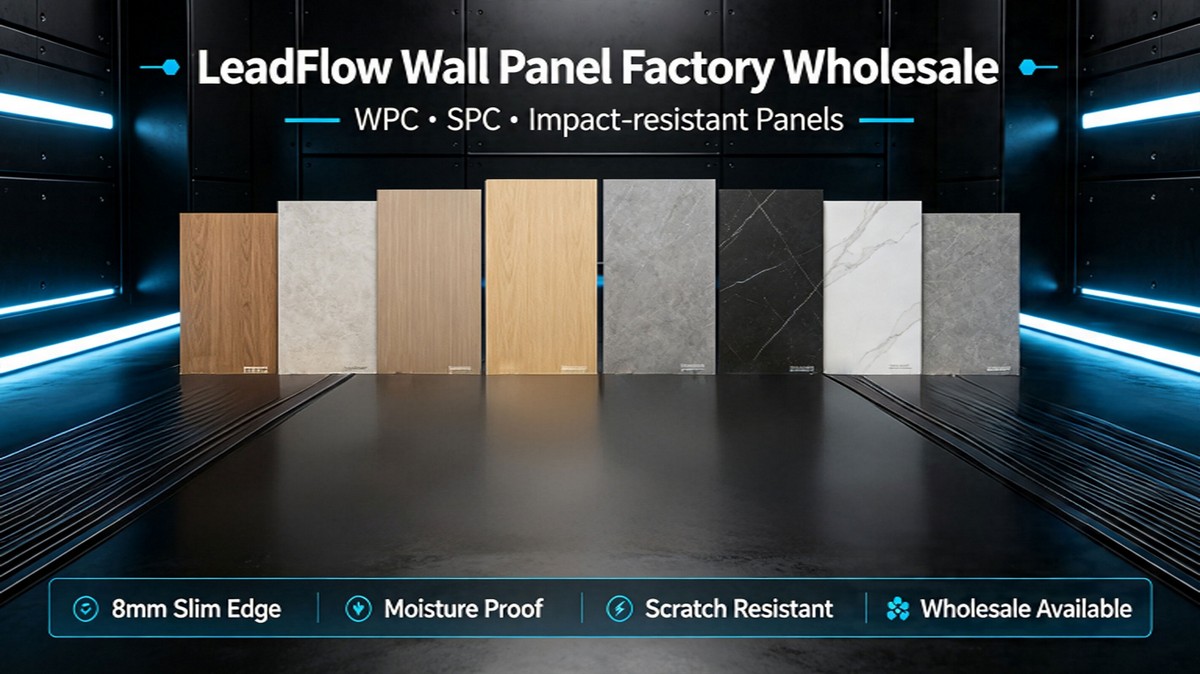
Among decorative surfaces, WPC wall panels have become a particular favorite in prefabricated interiors. Made from wood-plastic composite, they offer dimensional stability, resistance to moisture and termites, and easy machinability — qualities that suit CNC-controlled factory production. Their fluted geometry adds depth to hotel lobbies, residential living walls, and office reception areas without adding significant weight to the module. Choosing an experienced WPC Fluted Wall Panels supplier early in the design phase matters: profile consistency, batch-to-batch color matching, and clip or tongue-and-groove fixing systems all determine how quickly panels can be installed on a moving production line. For a practical overview of fixing methods and substrate preparation, teams can refer to a detailed WPC fluted wall panel installation guide before locking in module drawings.
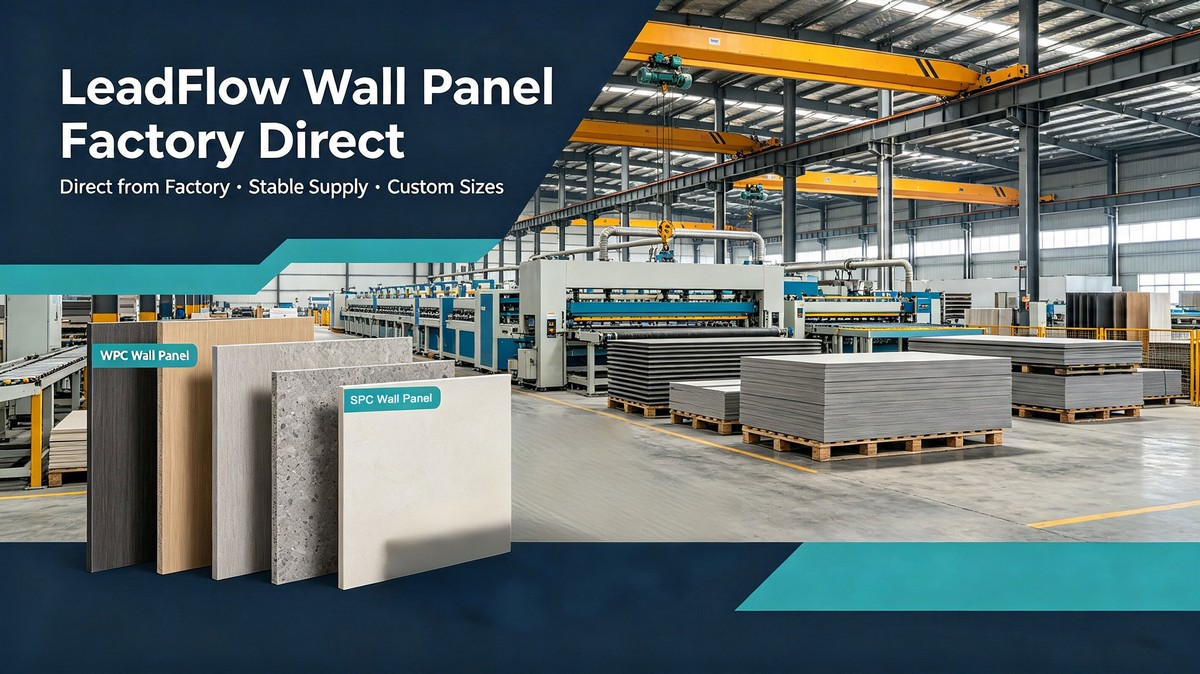
Innovation is also emerging in how panels themselves are delivered. Some modular producers now order decorative panels as pre-cut kits, numbered against the BIM model and shipped with adhesive and fixing schedules, so crews simply assemble rather than measure and cut. Others pre-mount panels onto lightweight backing frames that click into module walls as complete assemblies. These approaches convert interior finishing from a craft process into a standardized assembly task, shortening cycle times per module and making output predictable at scale.
What Modular Projects Demand from Wall Panel Materials
Modular applications impose stricter requirements on wall panel materials than conventional interiors, and the difference is engineering rather than aesthetics. Weight comes first: every kilogram of finish adds to the module's transport mass and crane load, and lightweight panels can allow more modules per shipment — a direct logistics saving. Fire performance follows closely, as many jurisdictions apply stricter reaction-to-fire classifications to multi-story modular buildings, demanding documented test data rather than generic certificates.
Indoor air quality has become equally critical. Because modules are finished and wrapped in the factory, low-VOC materials and adhesives are essential to ensure interior air quality targets are met at handover. Dimensional stability matters too: panels must tolerate temperature and humidity swings during transport and storage without warping or opening joints. Add acoustic performance and compatibility with digital design tools, and it becomes clear why procurement teams now evaluate materials against a technical specification instead of a sample board.
This audit mindset is reshaping supplier relationships across the decorative panel industry. Leading buyers increasingly evaluate their Carbon Crystal Wall Panel factory partners on automated production lines, in-line thickness and surface inspection, and complete documentation for fire and VOC testing. The same scrutiny applies across categories — from SPC boards to WPC and PVC-based panels — and a side-by-side comparison of SPC and WPC wall panels shows how each material balances rigidity, weight, and cost for prefabricated use. The outcome is a more professional supply chain in which factories that invest in consistency and certification win recurring, project-scale orders.
Conclusion and Outlook
Modular construction and prefabricated building methods are no longer niche alternatives; they are becoming the default logic for delivering housing, hospitality, and public buildings at scale. Digitalization will deepen this trend: BIM-to-factory workflows, robotic cutting and finishing, and design-for-manufacture-and-assembly principles are steadily narrowing the gap between drawing and finished module.
For the wall panel industry, the opportunity lies in engineering products for assembly, not just appearance. Lightweight, fire-certified, low-VOC surfaces with tight tolerances and factory-friendly fixing systems will define the next generation of decorative panels. Manufacturers and suppliers that align material development, quality control, and documentation with the requirements of off-site construction will be specified earlier, ordered in larger volumes, and integrated into projects worldwide. The convergence of modular construction and advanced wall panel manufacturing is, in that sense, not merely a trend — it is the new foundation of modern building.
FAQ
Q: What is modular construction?
A: Modular construction is a building method in which major portions of a structure — such as complete room modules or wall assemblies — are manufactured off site in a factory and then transported to the final location for assembly. It includes volumetric modular building (fully fitted three-dimensional modules) and panelized systems (flat prefabricated elements).
Q: How do prefabricated wall panels benefit modular building projects?
A: Prefabricated wall panels allow interior finishes to be installed in the factory under controlled conditions, which shortens schedules, reduces weather-related delays and rework, improves finish consistency, and lowers on-site labor requirements. Lightweight, fire-certified, low-VOC panels also reduce transport loads and simplify compliance for multi-story modular buildings.
Q: Are WPC wall panels suitable for prefabricated interiors?
A: Yes. WPC (wood-plastic composite) wall panels are lightweight, moisture-resistant, dimensionally stable, and easy to machine — qualities that make them well suited to factory production and rapid installation in modular units. Fluted WPC profiles are widely used for feature walls in hotel, residential, and commercial modules.
Q: What should buyers look for in a wall panel supplier for modular projects?
A: Key criteria include batch-to-batch color and profile consistency, documented fire and VOC test reports, low weight, tight dimensional tolerances, factory quality control processes, and the capacity to deliver pre-cut or numbered panel kits aligned with the project's BIM model.