The global interior finishing market has clearly found a favorite: the fluted wall panel. With its rhythmic vertical ribs, soft shadow lines, and premium wood-slat aesthetic, the WPC fluted wall panel has evolved from a niche décor trend into a mainstream specification across residential, hospitality, and commercial projects worldwide. For importers, distributors, and procurement teams, however, the real challenge is no longer whether to stock this product — it is how to identify a professional WPC Fluted Wall Panels supplier in a crowded, fast-growing marketplace. The gap between an established manufacturer and an opportunistic trading middleman can determine everything from batch consistency and lead times to long-term brand reputation.
Key Takeaways
• A professional WPC fluted wall panels supplier is fundamentally a manufacturer with in-house control over formulation, extrusion tooling, and surface finishing — not a reseller of mixed factory stock.
• Material composition, including wood fiber ratio, polymer base, and UV stabilizer content, directly determines dimensional stability, moisture resistance, and service life.
• Baseline compliance — ISO 9001 quality systems, CE marking, and recognized fire classifications — is non-negotiable for global procurement teams.
• Portfolio depth is now a decisive sourcing factor: suppliers that also offer SPC wall panel wholesale programs or operate as a UV marble sheet manufacturer enable one-stop container loading and consistent quality across categories.
What Defines a Professional WPC Fluted Wall Panels Supplier?
A professional WPC fluted wall panels supplier is, first and foremost, a manufacturer with direct control over the production chain. Wood-plastic composite (WPC) is a blend of wood fiber or wood flour with thermoplastic resin — typically PVC or PE — combined with foaming agents, lubricants, and UV stabilizers. The exact formulation is the invisible foundation of product quality: it governs density, screw-holding strength, warpage resistance, and how the panel behaves after years on a humid wall in a coastal city. Suppliers that compound their own raw material, rather than purchasing generic pre-mixed compounds, can fine-tune these properties and reproduce them consistently, batch after batch.
The second marker of a capable supplier is tooling and extrusion expertise. A fluted profile demands precision: rib spacing must remain uniform across the panel width, groove depths must match catalog specifications, and the surface — whether hot-stamping film, PVC lamination, or coated finish — must adhere without bubbling or delamination. Factories with in-house mold design can also respond to customization requests, such as deeper flutes, wider panels, or matching corner trims, which trading companies cannot directly control.
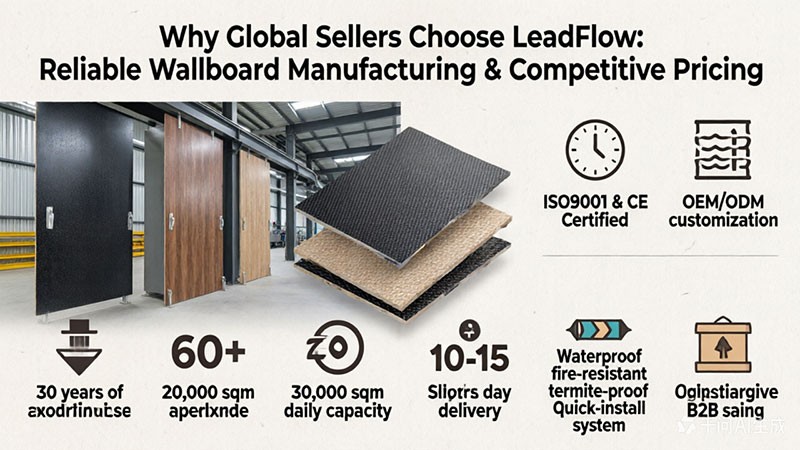
Finally, credible certification separates serious manufacturers from the rest. For global buyers, the minimum checklist should include an ISO 9001 certified quality management system, CE marking for European markets, and verified fire performance documentation such as an EN 13501-1 classification. Environmental compliance — including formaldehyde emission limits and REACH-aligned chemical standards — is increasingly requested by retail chains and project specifiers alike. A transparent supplier will provide third-party test reports without hesitation; hesitation itself is a warning sign.
Why Fluted WPC Panels Have Become a Global Interior Design Staple
The rise of the WPC fluted wall panel reflects a rare combination of aesthetics, durability, and installation efficiency that few wall cladding materials can match. Visually, the vertical flute pattern recreates the high-end look of solid wood slat walls — a signature of contemporary interior design — at a fraction of the material and labor cost. The repeated ribs create natural shadow play that changes with lighting throughout the day, which is why the format has become a default choice for TV feature walls, hotel headboard walls, office receptions, and retail facades.
Functionally, WPC outperforms the natural wood it imitates. Because the polymer matrix encapsulates the wood fiber, panels resist moisture absorption, termite attack, and the warping or cracking that plagues solid timber in humid climates. This makes fluted WPC cladding suitable not only for dry living spaces but also for bathroom feature walls, kitchen-adjacent surfaces, and projects in tropical or coastal regions where wood slats deteriorate quickly. Panels are lightweight, cut with standard tools, and install quickly with adhesive or clip systems, significantly reducing on-site labor compared with joinery-built timber battens.
Sustainability credentials add further momentum. Many established producers incorporate recycled wood fiber and recycled plastics into their formulations, appealing to green-building requirements and eco-conscious end consumers. As the category matures, the market is also shifting toward upgraded surfaces — notably co-extrusion technology, which fuses a protective polymer layer onto the panel during extrusion, improving scratch, stain, and UV resistance for both indoor and semi-outdoor applications.
Portfolio Depth as a Sourcing Advantage: From WPC to SPC and UV Marble
In today's procurement environment, product portfolio depth has become a decisive criterion when evaluating a WPC Wall Panels supplier. Freight costs have pushed distributors toward mixed-container loading: combining fluted panels with complementary categories in a single shipment reduces the per-unit logistics cost and simplifies replenishment. This is why buyers increasingly shortlist manufacturers capable of supplying a coordinated range rather than a single SKU.
Two adjacent categories matter most. First, SPC wall panel wholesale programs: stone-plastic composite panels use a calcium-carbonate-rich core that is denser and more rigid than foamed WPC, making them the preferred option for wet rooms, high-traffic commercial walls, and price-sensitive volume projects. A supplier offering both WPC and SPC lines allows a distributor to cover multiple price tiers and application scenarios under consistent quality standards and unified after-sales support.
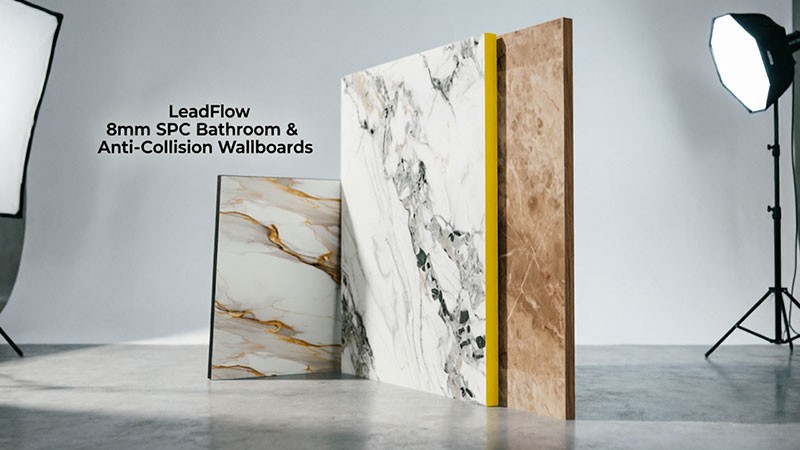
Second, high-gloss decorative surfaces: a supplier that is also an experienced UV Marble Sheet manufacturer can serve the luxury end of the accent wall market, where UV-coated marble-effect sheets deliver a mirror finish and natural veining that fluted panels cannot. More importantly, having marble sheet and fluted panel production under one roof enables coordinated color development, unified packaging design, and harmonized lead times — practical advantages that project clients immediately notice. For a fuller picture of how these categories compare, buyers can refer to a detailed wall panel material comparison before defining their product mix.
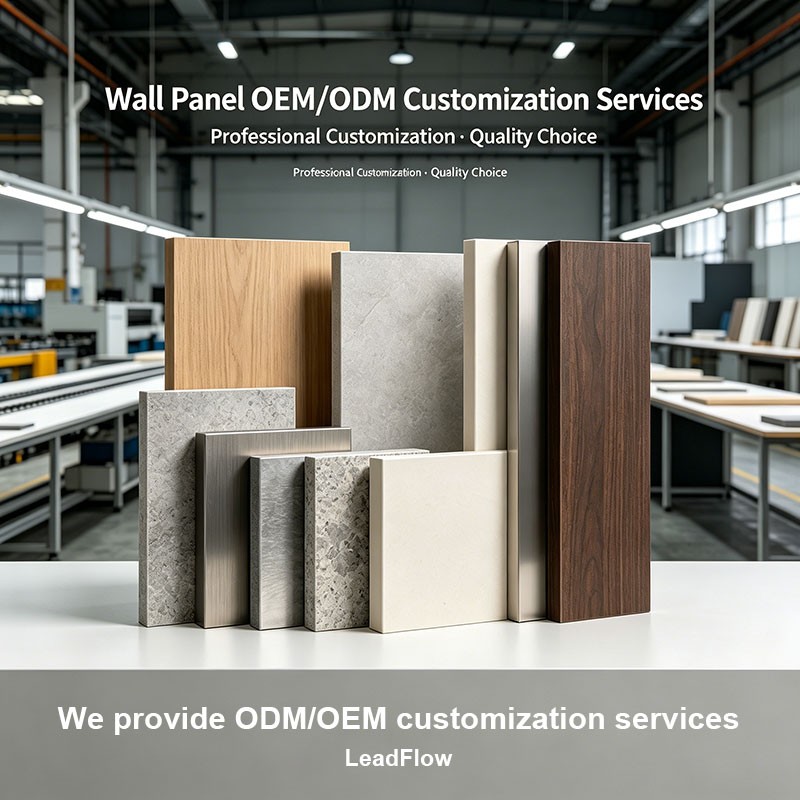
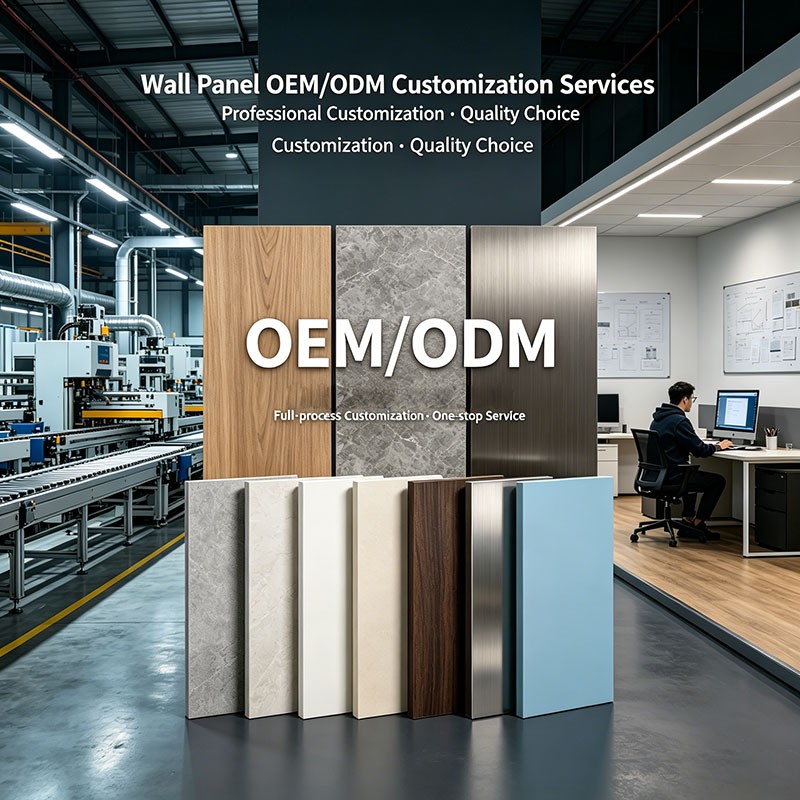
Beyond product range, evaluate OEM and ODM capability. Established suppliers typically offer private-label branding, custom packaging, custom colors, and profile adjustments, with clear minimum order quantities and tooling terms. Equally important is export competence — accurate container loading plans, complete documentation, and realistic lead-time commitments — because in the wall panel trade, a delayed container can cost a distributor an entire selling season.
Conclusion and Outlook
Selecting a WPC fluted wall panels supplier is no longer a simple price negotiation; it is a strategic supply chain decision. The most reliable partners share three traits: manufacturing depth that guarantees formulation and dimensional consistency, certified compliance that withstands scrutiny from regulators and project specifiers, and portfolio breadth that lets buyers consolidate WPC fluted panels, SPC wall panel wholesale supply, and UV marble sheet sourcing into one accountable relationship.
Looking ahead, the category will keep professionalizing. Expect wider formats, deeper and more varied flute geometries, integrated acoustic backing, and fire-retardant formulations engineered for commercial codes — innovations that favor suppliers with genuine R&D investment. For buyers, the practical path is clear: audit factories in person or virtually, request samples from multiple production batches, verify every certificate, and begin with a trial order before scaling. Reviewing a WPC wall panel installation guide and technical datasheets is a useful early step that also reveals a supplier's professionalism. In a market growing this quickly, the partners worth choosing are those that treat quality documentation, transparency, and long-term cooperation as standard practice rather than a concession.
FAQ
Q: What is a WPC fluted wall panel?
A: A WPC fluted wall panel is a decorative wall cladding board made from wood-plastic composite — a blend of wood fiber and thermoplastic resin such as PVC or PE — extruded into a profile with repeating vertical ribs that create a three-dimensional, slat-like appearance on interior walls and ceilings.
Q: How can buyers verify the reliability of a WPC fluted wall panels supplier?
A: Practical steps include confirming in-house extrusion capacity, reviewing third-party test reports for fire performance and formaldehyde emissions, checking ISO 9001 and CE certification validity, ordering samples from different production batches, and speaking with existing overseas clients about batch consistency and delivery reliability.
Q: What is the difference between WPC and SPC wall panels?
A: WPC wall panels use a lighter, foamed wood-plastic core that is easy to cut and ideal for decorative interior walls, while SPC wall panels contain a denser calcium-carbonate-rich core suited to wet areas and high-impact commercial environments. Many distributors source both categories from the same supplier to serve different project tiers.
Q: Do suppliers offer OEM and ODM services for fluted panels?
A: Most established manufacturers provide OEM services such as custom branding, packaging, and colors, along with varying levels of ODM support including custom flute geometry, panel widths, and surface finishes. Buyers should confirm tooling costs, minimum order quantities, and lead times for custom molds before placing orders.
Looking for competitive pricing? Request a quote now and let us help you source the right materials.