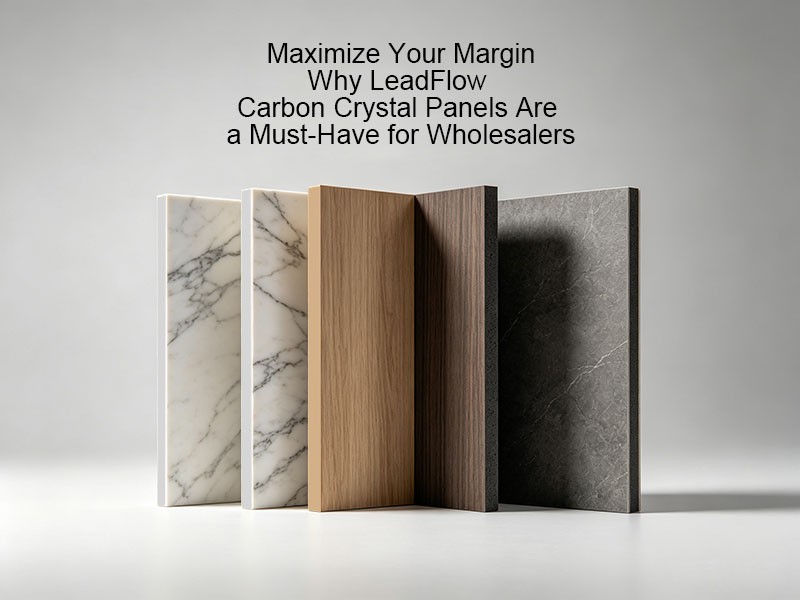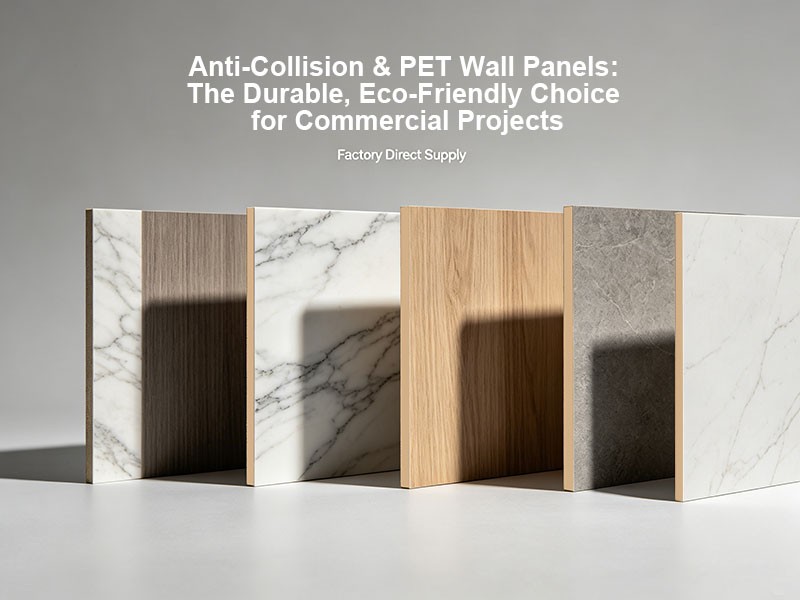
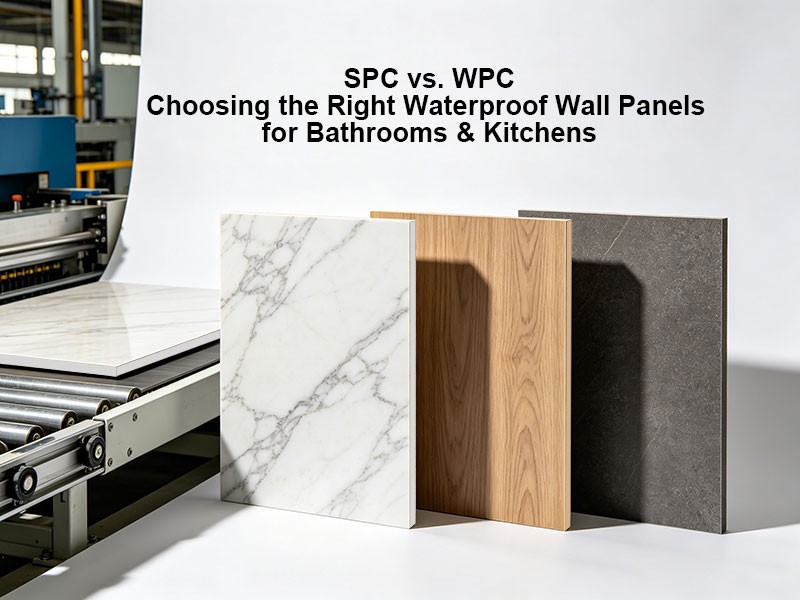
The boom in decorative wall cladding has pushed two composite materials into the spotlight: WPC and SPC wall panels. Both are extruded products that promise the look of premium surfaces without the drawbacks of natural wood, stone, or tile, yet they behave very differently once installed. Specifiers, distributors, and contractors who treat them as interchangeable often discover the difference later—in callbacks over swollen edges, warped boards, or budgets that quietly expand. This deep dive examines how each panel is engineered, how the two compare across moisture, impact, thermal, and fire scenarios, and where their costs genuinely diverge, so project buyers can match material to application with confidence.
Key Takeaways
• Composition is the root difference: WPC blends wood fiber with thermoplastic for a lighter, warmer panel, while SPC fuses PVC resin with mineral powder into a dense, rigid core.
• SPC leads on water resistance, dimensional stability, and dent resistance; WPC offers easier handling, richer profile variety, and a softer, wood-like feel.
• On cost, WPC usually wins for decorative interiors, while SPC's premium buys durability that can lower lifecycle cost in demanding environments.
• Rule of thumb: specify WPC for feature walls in dry interiors; specify SPC for humid, high-traffic, or impact-prone zones.
Composition Basics: What Separates WPC and SPC Wall Panels at the Core
Every performance difference between these two products starts with their formulation. WPC (wood-plastic composite) combines wood flour or wood fiber—often reclaimed sawdust—with a thermoplastic matrix, typically PVC or polyethylene, plus foaming agents, stabilizers, and UV additives. The compound is extruded into solid or hollow profiles and usually finished with a co-extruded outer skin that carries color, texture, and a protective layer. The result is a panel that is light in weight, warm to the touch, and highly workable.
SPC (stone-plastic composite) takes the opposite route. It blends PVC resin with a high proportion of calcium carbonate—finely ground limestone—along with stabilizers, then fuses the mixture into a dense, rigid board. Because the mineral content dominates the formulation, an SPC core is heavier, stiffer, and far less porous than a foamed WPC core. That single difference in density drives most of the performance and cost divergence discussed below.
Profile capability is where the two formulas visibly part ways. A capable WPC Fluted Wall Panels supplier can extrude deep fluted, slatted, and wave geometries that give interior feature walls their signature rhythm, because the wood-filled compound flows well through complex dies and stays light enough for adhesive or batten fixing. SPC's rigid, heavy formulation is better suited to flat boards, tongue-and-groove systems, and large-format panels where stiffness prevents sagging across wide spans.
Performance Head-to-Head: Where WPC and SPC Wall Panels Differ
In installed conditions, the performance gap between the two materials traces directly back to their cores, and four areas matter most to specifiers.
Moisture resistance. Neither material rots like natural wood, but they are not equal. An SPC core absorbs almost no water, which makes it the more dependable choice for bathrooms, kitchen backsplash zones, laundry rooms, and basements. WPC is water-resistant rather than waterproof: the wood fraction inside the panel can slowly wick moisture through unsealed cut edges or drilled points, although modern co-extruded skins close much of this gap in quality lines. Sealing field cuts remains best practice wherever WPC meets water.
Dimensional stability and heat. Dense SPC expands and contracts less than WPC when temperatures swing, which is why it holds joints tighter near sun-exposed glazing, heating systems, or exterior-facing walls. WPC moves more with temperature and therefore needs disciplined expansion gaps during installation; a fluted wall panel installation guide from any reputable manufacturer will stress this detail, because oversized movement without room to travel leads to buckling rather than product failure.
Impact and surface hardness. SPC's mineral-rich core resists dents and surface compression better, an advantage in corridors, retail fit-outs, and hospitality spaces where trolleys, luggage, and furniture contacts are routine. WPC's foamed structure is slightly more forgiving under blunt contact but can compress under sharp point loads. For most dry interior feature walls, the difference is negligible; for high-traffic commercial zones, it is not.
Fire behavior and acoustics. Both products are thermoplastic-based and rely on flame-retardant additives to meet building codes, so neither should be assumed non-combustible—buyers should request the actual classification certificates for the specific formulation. On acoustics and feel, WPC's wood fraction gives panels a warmer touch and a softer, more natural sound when tapped, while SPC reads cooler and more mineral, closer to stone or ceramic.
Cost Breakdown: From Raw Material to Installed Wall
Headline price tags suggest a clear hierarchy, but the real cost picture is more layered: formulation, finish, freight, and installation all move the final number.
At the material level, mineral filler is inexpensive, which keeps commodity SPC boards competitive, while greater density, higher PVC resin content, and premium surface finishes push SPC prices upward. WPC costs are driven by wood fiber sourcing, foaming technology, and above all the finish—deep fluted profiles, woodgrain lamination, and UV coatings add more to unit cost than the base compound does. At comparable specifications, the two materials often land within a similar band, and the decisive premium is usually the surface treatment rather than the core chemistry.
Volume purchasing changes the math. Buyers sourcing through SPC Wall Panel wholesale channels typically secure their best unit pricing at full-container quantities, and the same logic applies to programmatic WPC orders. The practical advice is to compare quotes on identical thickness, density, and finish specifications, because density—not just square-meter price—determines how much product value each shipment actually contains.
Installation and freight are where WPC frequently recovers ground. Hollow or foamed WPC profiles weigh markedly less, cutting transport cost, easing one-person handling, and speeding batten or adhesive fixing on site. SPC's weight and rigidity demand more fasteners, stronger adhesives, and in some cases a second pair of hands, which raises labor hours. Offset against that, SPC's resistance to dents, water, and warping means fewer replacements and warranty claims over the wall's life, so in humid or high-traffic environments the lifecycle cost can favor SPC even when its purchase price is higher.
Conclusion and Outlook
WPC and SPC wall panels are complements, not substitutes. WPC delivers the texture, warmth, and profile freedom that interior feature walls demand at an accessible price; SPC delivers the density, water immunity, and stability that bathrooms, basements, and commercial traffic demand. The correct question is not which panel is better, but which environment the wall must survive.
Category boundaries are also beginning to blur. Mineral-filled rigid boards marketed as carbon crystal panels—essentially SPC-style cores wearing WPC-style decorative skins—have become a flagship product at every leading Carbon Crystal Wall Panel factory, and they illustrate where the market is heading: hybrid formulations that capture SPC stability and WPC design flexibility in one board. Meanwhile, interior wall cladding buying guides across the industry increasingly emphasize verifiable data over marketing claims—formaldehyde emissions, flame classifications, and UV test results—signaling a more professional, specification-driven purchasing culture. For distributors and contractors, the near-term opportunity lies in stocking both categories deliberately, pricing them transparently, and educating end users on matching panel to environment.
FAQ
Q: Which is more waterproof, a WPC wall panel or an SPC wall panel?
A: SPC. Its dense, mineral-filled core absorbs almost no water, making it the safer choice for bathrooms, kitchens, and basements. WPC is water-resistant rather than waterproof; quality co-extruded skins perform well in humid rooms, but exposed cut edges should still be sealed.
Q: Can WPC or SPC wall panels be used outdoors?
A: Standard interior versions of both materials are formulated for indoor conditions and will degrade under sustained UV exposure and rain. Outdoor projects require purpose-made exterior-grade cladding with UV inhibitors and proper certification.
Q: Is SPC always more expensive than WPC?
A: Not necessarily. Mineral filler keeps base SPC economical, while density, thickness, and premium finishes drive its price upward. Compare quotes on identical specifications and factor in freight and installation, since SPC weighs more than WPC.
Q: Do WPC and SPC panels install the same way?
A: Broadly yes—both mount on battens or furring and can be adhered to flat, sound substrates. SPC's weight and rigidity may need more fasteners or stronger adhesive, while WPC's lightness speeds handling. Always follow the manufacturer's expansion-gap and substrate requirements.
Looking for competitive pricing? Request a quote now and let us help you source the right materials.