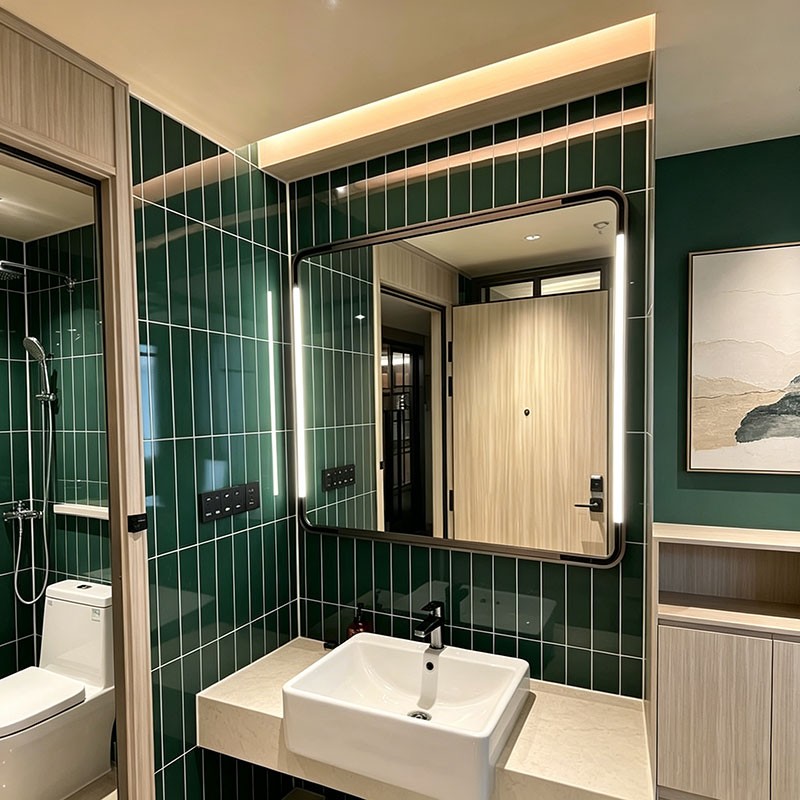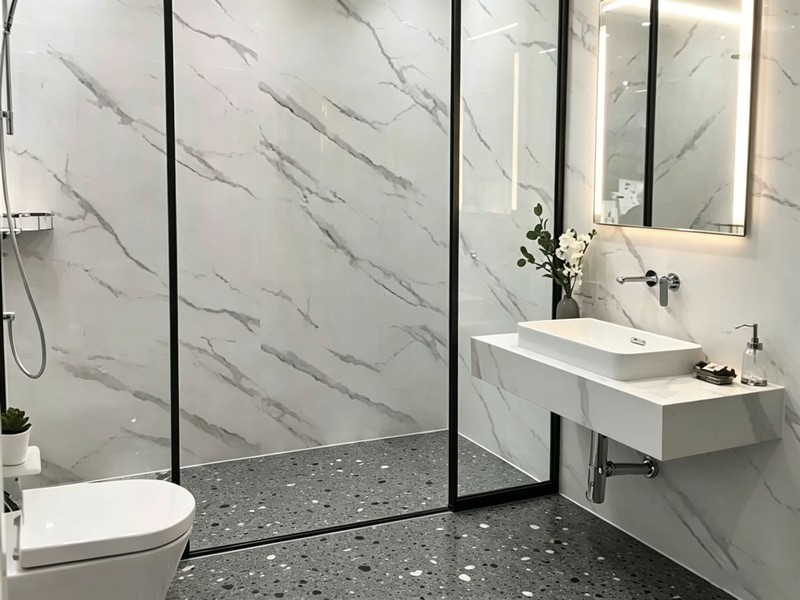
Across hotels, offices, retail fit-outs, and residential renovations, the demand for marble aesthetics without the weight, cost, and installation complexity of natural stone has pushed one product into the global spotlight: the UV marble sheet. Behind every high-gloss, marble-veined panel lies a specialized production process, and selecting the right UV marble sheet manufacturer has become a decisive factor for distributors, contractors, and design firms worldwide. This article examines how these panels are made, which quality benchmarks separate reliable producers from opportunistic intermediaries, and how sourcing strategies are evolving as decorative wall panel categories converge.
Key Takeaways
• A UV marble sheet combines a PVC-based substrate, a printed decorative film, and UV-cured lacquer coatings to deliver a marble aesthetic that is lightweight, moisture-resistant, and faster to install than natural stone.
• The most reliable quality indicators are coating hardness and yellowing resistance, layer adhesion, thickness tolerance, batch color consistency, fire performance, and formaldehyde emissions.
• Genuine manufacturers control substrate production, lamination, and UV curing in-house; trading intermediaries cannot guarantee these parameters over the long term.
• Demand is rising through convergence with adjacent categories — carbon crystal panels, WPC fluted panels, and SPC formats — making integrated sourcing an increasingly common procurement strategy.
What Is a UV Marble Sheet and How Is It Manufactured?
A UV marble sheet is a decorative interior wall panel that reproduces the veining, gloss, and visual depth of natural marble through layered composite construction rather than quarried stone. The typical build-up consists of three elements: a rigid substrate — most often PVC foam board or a wood-plastic composite core — a high-definition printed film that carries the marble pattern, and one or more UV-cured lacquer coatings that create the characteristic high-gloss, hard-wearing surface. Sheets are commonly produced in widths around 1,220 millimeters and lengths approaching 2.9 meters, with thicknesses generally in the 2–4 millimeter range, allowing large wall areas to be covered quickly with minimal joints.
The production process follows a clear sequence. First, the substrate is extruded or calendered to a controlled thickness and cut to size. Next, the surface is primed and the decorative film — printed with marble, onyx, or abstract stone patterns — is laminated under heat and pressure. The defining step is the UV coating stage: liquid lacquer is roller-applied and instantly cured under ultraviolet lamps, typically across several passes, which hardens the surface within seconds and locks in gloss, scratch resistance, and stain protection. The finished sheets are then cooled, edge-trimmed, inspected for flatness and color consistency, and packed for shipment.
This layered architecture explains both the product's appeal and its vulnerabilities. Because the decorative layer is a film rather than through-body color, adhesion quality and coating integrity determine long-term performance. It is also why process control — not merely material selection — defines the difference between a premium panel and one prone to yellowing, delamination, or surface dulling within a few years of installation.
The technology footprint of UV marble sheet production overlaps significantly with other decorative panel categories. It is increasingly common for a Carbon Crystal Wall Panel factory to add UV marble sheet lines alongside its existing output, since both products depend on the same substrate preparation, film lamination, and surface coating infrastructure. For buyers, this convergence matters: a producer already running high-volume lamination and UV curing lines for adjacent categories is structurally more likely to deliver consistent quality than a workshop assembled around a single product.
How to Evaluate a UV Marble Sheet Manufacturer: Quality Benchmarks That Matter
The single most important distinction in this market is between genuine manufacturers and trading intermediaries. A true UV marble sheet manufacturer controls the critical stages in-house — substrate production, film lamination, and UV coating — and can therefore guarantee thickness tolerance, layer adhesion, and surface hardness in a way that assemblers cannot. When auditing a potential supplier, buyers should prioritize the following benchmarks.
Surface performance. The UV-cured coating is the product's shield. Well-engineered sheets achieve high pencil-hardness ratings, resist common household and commercial stains, and — critically — resist yellowing under sustained light exposure. Buyers should request accelerated aging data or verify yellowing resistance through independent testing rather than relying on catalog claims alone.
Fire performance and emissions. Interior cladding is regulated in most markets, and PVC-based panels sit squarely within those rules. Responsible producers supply third-party fire test reports — for example, classifications under the European EN 13501-1 system or equivalent national standards — along with formaldehyde and VOC emission results aligned to E1 or stricter limits. Documentation should reference the actual product, not a generic category certificate, and should be supported by a quality management system such as ISO 9001.
Dimensional and batch consistency. Large installations expose any weakness in production control. Sheets should hold flatness across their full area, maintain uniform thickness, and — above all — match in color and veining across production batches. Reputable manufacturers retain reference samples and manage color batches systematically so that a follow-up order blends seamlessly with an earlier installation.
Customization and export capability. Established manufacturers typically offer OEM and ODM services — custom colors, patterns, sizes, and branded packaging — alongside export-grade moisture-proof packaging and container-loading optimization. For overseas buyers, responsive sampling, transparent lead times, and professional handling of quality disputes are often better predictors of a smooth partnership than the lowest quoted price. For those comparing categories side by side, our guide to interior wall cladding materials breaks down how UV marble sheets, laminated panels, and wood-plastic alternatives differ in performance and application.
Market Trends and Integrated Sourcing: Where UV Marble Sheets Fit in the Wall Panel Ecosystem
The growth of the UV marble sheet category cannot be viewed in isolation. It is part of a broader migration away from heavy, wet-installed finishes — natural stone slabs, ceramic tile, and plaster-based treatments — toward lightweight, dry-installed panel systems that cut labor time and structural loading. Three trends are shaping how global buyers source within this ecosystem.
Realism through digital printing. High-definition printing and improved film technology have narrowed the visual gap between printed patterns and genuine stone, with deep veining, book-matched effects, and matte-to-gloss finish options now standard offerings across the industry. As pattern libraries expand, differentiation increasingly comes from coating quality and batch consistency rather than design variety.
Portfolio consolidation among suppliers. Distributors and project contractors increasingly prefer to consolidate purchases. Pairing a WPC Fluted Wall Panels supplier with a UV marble sheet source, for example, allows a single shipment to cover both seamless decorative surfaces and textured accent walls — simplifying logistics, harmonizing quality standards, and often unlocking better commercial terms. Our companion guide to fluted wall panel applications outlines how these two surface types complement each other in hospitality and residential schemes.
Expansion of wholesale channels. Procurement programs traditionally built around SPC Wall Panel wholesale distribution — which grew rapidly on the strength of rigid-core wall and ceiling products — are now adding UV marble sheets to their catalogs. Because both categories serve the same commercial fit-out, hospitality, and residential renovation projects, wholesale buyers treat them as natural complements, and manufacturers able to supply both under one quality system gain a structural advantage in these channels.
Sustainability pressure. As with the wider building materials sector, environmental expectations are rising. Low-VOC formulations, recyclable substrate choices, reduced production waste, and longer service life — which lowers replacement frequency — are becoming standard topics in procurement conversations. Manufacturers that can document these attributes hold a growing edge in tender processes across Europe, North America, the Middle East, and Southeast Asia.
Conclusion and Outlook
The UV marble sheet has moved from a niche substitute for natural stone to a mainstream interior surface solution, and the dividing line in this market is increasingly drawn at the factory gate. Manufacturers that control their full production chain, maintain verifiable quality documentation, and adapt to integrated sourcing models are positioned to capture demand as renovation cycles and commercial fit-outs accelerate globally. For buyers, the practical path forward is straightforward: verify in-house capability, insist on product-specific test reports, and evaluate partners not as one-off panel vendors but as long-term supply chain components. As digital printing, coating chemistry, and sustainable formulations continue to advance, the gap between leading UV marble sheet manufacturers and the rest of the market will only widen — making supplier selection today a determining factor in product performance for years to come.
FAQ
Q: What is a UV marble sheet made of?
A: A UV marble sheet typically consists of a rigid PVC or wood-plastic composite substrate, a high-definition printed film that carries the marble pattern, and one or more UV-cured lacquer coatings that provide gloss, surface hardness, and stain resistance.
Q: How does a UV marble sheet compare to natural marble?
A: Compared with natural marble, UV marble sheets are far lighter, faster and easier to install without specialized stone-fixing labor, resistant to moisture, and significantly lower in combined material and installation cost — though they do not offer the through-body depth and one-of-a-kind veining of quarried stone.
Q: Can UV marble sheets be used in bathrooms and kitchens?
A: Yes. The PVC-based substrate and UV-cured surface are moisture-resistant, making these sheets suitable for bathrooms, kitchens, and other humid interiors, provided that joints are properly sealed and prolonged standing water is avoided.
Q: What should I check before choosing a UV marble sheet manufacturer?
A: Verify in-house control of lamination and UV coating, request product-specific fire and emissions test reports, inspect samples for flatness and cross-batch color consistency, and confirm the supplier's OEM/ODM capacity and export experience in your target market.