The global appetite for marble aesthetics—once satisfied almost exclusively by quarried stone and heavy ceramic slabs—has migrated decisively toward engineered alternatives, and few products illustrate this shift better than the UV marble sheet. Behind every lightweight, glossy, stone-look panel delivered to a distributor in Europe, a contractor in the Middle East, or a home-improvement chain in North America stands a UV Marble Sheet manufacturer whose production decisions determine how that panel looks, performs, and ages. For importers, architects, and procurement teams, understanding what happens inside these factories is no longer background knowledge; it has become a core commercial competency that shapes warranty costs, installation efficiency, and end-customer satisfaction.
Key Takeaways
• A UV marble sheet is a layered decorative panel combining a rigid substrate (typically PVC), a printed marble-effect film, and an ultraviolet-cured protective coating.
• Most premature failures—yellowing, delamination, warping—trace back to manufacturing choices, which makes factory-level quality control a more reliable indicator than unit price.
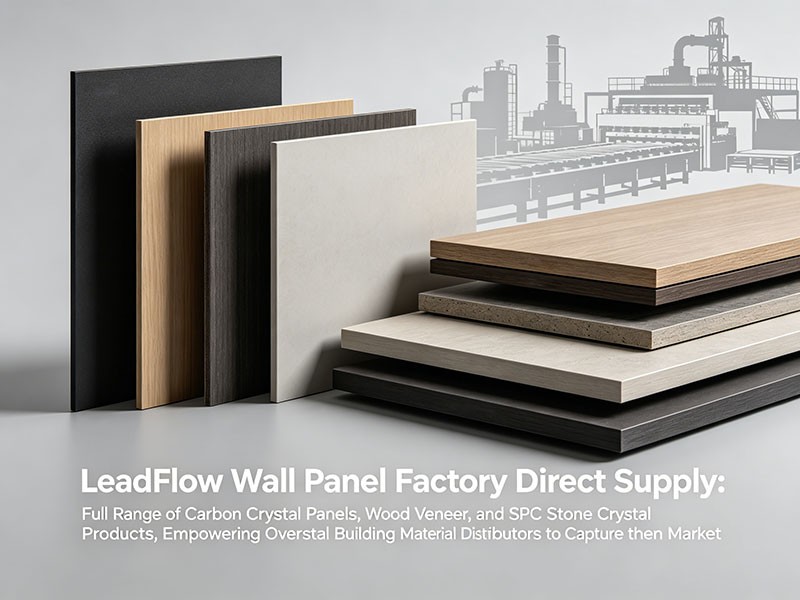
• The decorative panel industry is consolidating around integrated producers: a WPC Wall Panels supplier or a Carbon Crystal Wall Panel factory often shares coating and lamination infrastructure with UV marble production, enabling efficient one-stop sourcing.
• Systematic supplier verification—certification review, sample testing from live production runs, and factory audits—remains the strongest protection for global buyers.
What Is a UV Marble Sheet? Definition, Structure, and Applications
A UV marble sheet is a decorative interior wall panel produced by laminating a marble-effect printed film onto a rigid substrate—most commonly PVC-based—and sealing the surface with an ultraviolet (UV)-cured coating. The result replicates the veining, depth, and gloss of natural marble while weighing a fraction as much, installing in hours rather than days, and costing significantly less per square meter. Because the surface is cured rather than merely painted, the finish resists scratches, moisture, and everyday cleaning chemicals far better than conventional printed boards.
The construction is deceptively simple but performance-critical. The substrate provides rigidity and dimensional stability; the decorative film carries the design; and the UV coating—typically applied in multiple layers and cured under UV lamps—delivers hardness, gloss, and stain resistance. When all three layers are engineered to work together, the panel withstands humid climates, mounted fixtures, and heavy commercial traffic. When any layer is compromised, defects follow: a weak substrate warps, a low-grade film fades, and an under-cured coating yellows.
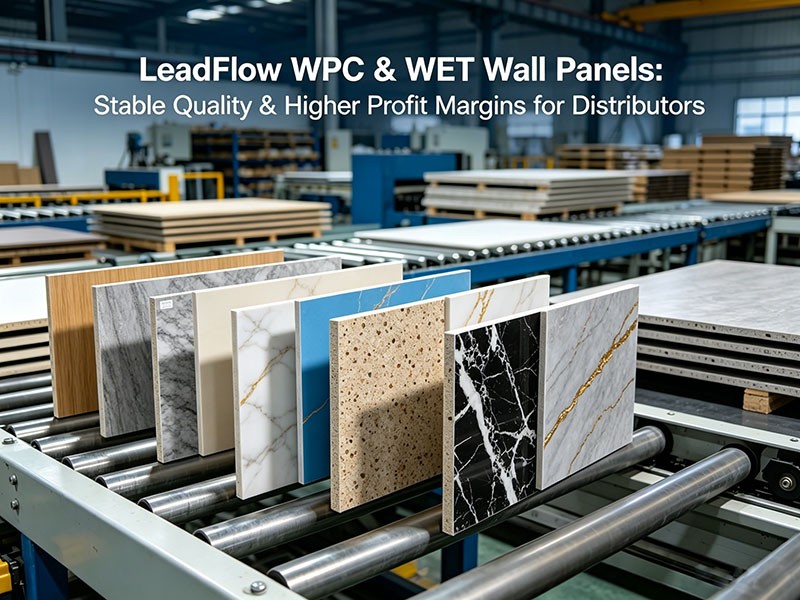
Applications have expanded accordingly. Residential buyers specify the panels for living room feature walls, TV backgrounds, and bedroom headboards; hospitality and retail projects use them for lobbies, corridors, and shopfronts where a consistent marble look must be delivered quickly. Compared with textured alternatives such as WPC fluted wall panels, which favor linear, shadow-casting designs, UV marble sheets target smooth, high-gloss stone aesthetics—an important distinction for distributors building a full decorative panel portfolio.
Inside the Factory: Where UV Marble Sheet Quality Is Made or Lost
In decorative panels, manufacturing—not marketing—determines whether a product performs for a decade or fails within a year. The production sequence at a typical UV Marble Sheet manufacturer runs through several stages, and each stage carries its own quality risks.
Substrate production comes first. PVC resin is blended with fillers, stabilizers, and processing aids, then extruded or calendered into flat boards. Formulation matters: boards with excessive filler content may cost less to produce but tend toward brittleness and warping, while well-balanced formulations hold flatness and edge integrity through cutting, handling, and transport. Serious factories monitor density, thickness tolerance, and moisture behavior at this stage, because no coating can rescue a distorted base.
Film lamination follows. The marble pattern is carried on a printed film that is bonded to the substrate through heat transfer or adhesive lamination under controlled pressure and temperature. Ink quality and lamination pressure are the decisive variables here; insufficient pressure or contamination during bonding creates micro-bubbles that later appear as delamination, particularly in humid export markets. Leading producers increasingly rely on high-definition digital printing to achieve the vein detail and visual depth that older rotary printing could not match.
UV coating and curing is the stage that gives the product its name. Liquid coating is applied in base and top layers, then cured almost instantly under ultraviolet lamps. Curing energy and line speed must be precisely matched: an under-cured coating remains comparatively soft and yellows with age, while excessive curing can embrittle the surface. This is also where gloss levels—from high-gloss to matte finishes—are controlled, and where a factory's equipment investment becomes directly visible in the finished goods.
The final stages include precision cutting, edge finishing, and application of a protective film before packing. Quality control should span the entire line: thickness measurement, cross-cut adhesion tests, abrasion and stain checks, and accelerated aging tests that simulate yellowing over time. Buyers evaluating a potential UV Marble Sheet manufacturer should ask specifically which of these tests are performed in-house and how frequently, because consistent QC discipline—not one impressive showroom sample—is what predicts batch-to-batch reliability.
Choosing a UV Marble Sheet manufacturer: Evaluation Criteria and Market Dynamics
As global demand for decorative panels grows, the competitive landscape is consolidating around integrated manufacturers capable of producing multiple product categories on shared infrastructure. This has practical consequences for sourcing strategy. Many producers known first as a WPC Wall Panels supplier—serving distributors with wood-plastic wall and ceiling products—have added UV coating lines to offer marble-look sheets under the same roof. Likewise, a Carbon Crystal Wall Panel factory producing the rigid, matte-finish panels increasingly specified in commercial fit-outs typically runs lamination and profiling equipment directly comparable to that used for UV marble sheets. For buyers, this convergence means a single audited partner can often supply complementary product lines, reducing logistics complexity and enabling mixed-container shipments.
Evaluation should nonetheless remain product-specific, and experienced importers typically assess five dimensions:
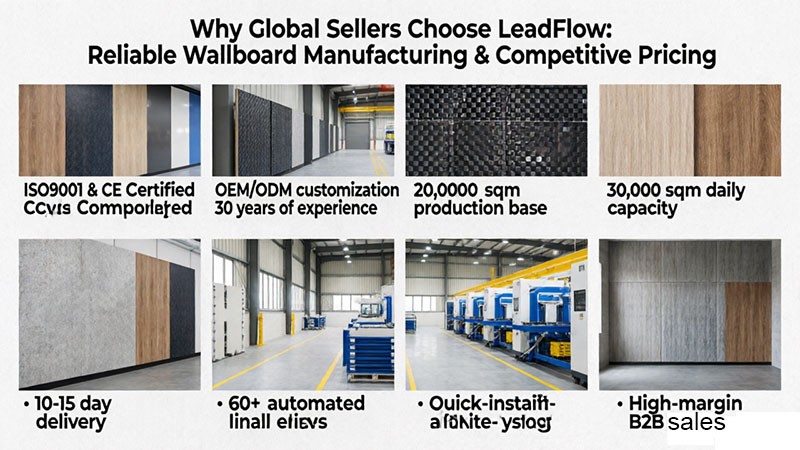
Certifications and compliance. Quality management system certification, fire-performance classification for commercial applications, and environmental or low-emission documentation are baseline requirements in most regulated markets. Buyers should request current, third-party-issued certificates and confirm that the tested product matches the one being quoted.
Production capability. In-house substrate lines, modern UV curing systems, and precision cutting equipment indicate genuine manufacturing depth. Standard sheet formats—commonly around 1220 by 2440 millimeters, with longer lengths available—plus a range of thickness options allow projects to balance cost against rigidity.
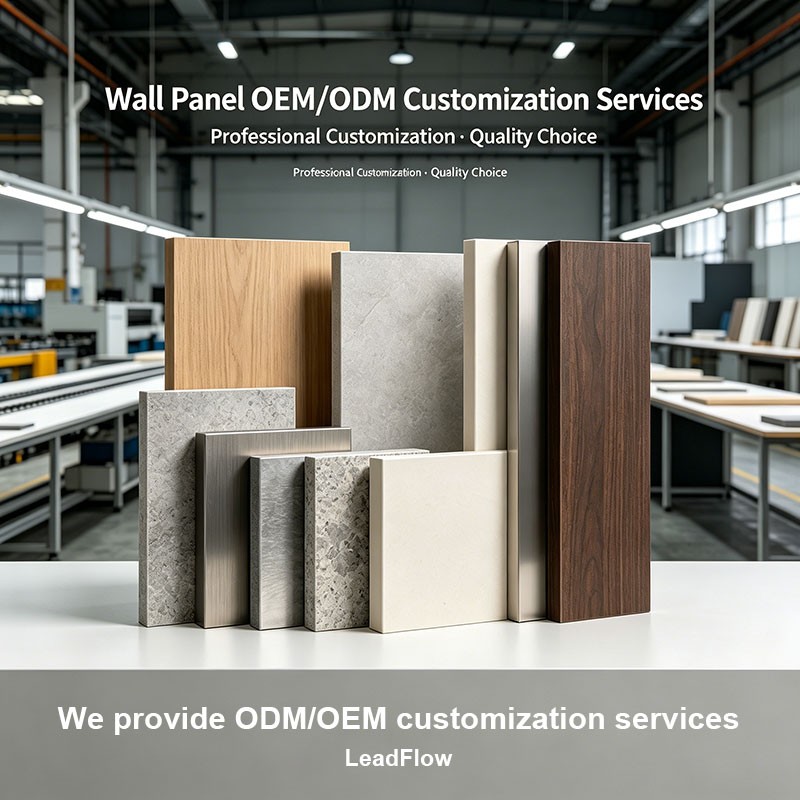
Customization. Leading manufacturers adjust colors, patterns, dimensions, packaging, and private labeling under OEM and ODM arrangements. For distributors building their own brands, the speed and willingness to produce custom designs is often the clearest signal of a capable partner.
Transparency. Factories confident in their process will host audits, share live production videos, and provide samples drawn from current runs rather than curated displays.
Commercial terms. Clear defect-rate policies, replacement procedures, and realistic lead times protect buyers far more effectively than the lowest unit price.
Due diligence also means distinguishing manufacturers from trading companies. Both play legitimate roles in international trade, but buyers should know which they are dealing with, because accountability for quality problems differs. A direct factory visit—physical or via a video walkthrough of the coating line—remains the single most effective verification step, ideally complemented by independent laboratory testing of samples for adhesion, abrasion resistance, and yellowing behavior.
Conclusion and Outlook
The UV marble sheet has earned its place in the global interior materials market by solving a genuine problem: delivering marble's visual authority without marble's weight, cost, and installation burden. That success, however, is not automatic. It is manufactured, layer by layer, through formulation discipline, lamination precision, and curing expertise—which is why supplier selection should be treated as a long-term partnership decision rather than a transaction.
Looking ahead, several forces will shape the category. Digital printing continues to push design realism closer to authentic stone. Environmental expectations—recyclable substrates, low-emission formulations, and reduced production waste—are moving from differentiators to requirements, particularly in European and North American markets. Fire-safety scrutiny in commercial projects is likely to intensify, favoring manufacturers with documented, independently tested performance. And the convergence of product lines suggests that tomorrow's strongest partners will be integrated operations able to supply UV marble sheets alongside wood-plastic, carbon crystal, and SPC wall panel alternatives as coordinated interior systems. Buyers who invest now in verifying their manufacturing partners will be best positioned to capture that future.
FAQ
Q: What exactly is a UV marble sheet made of?
A: A UV marble sheet consists of three layers: a rigid substrate (usually PVC-based), a printed marble-effect decorative film, and one or more UV-cured protective coatings. The cured surface provides the hardness, gloss, and stain resistance that distinguish the product from ordinary printed boards.
Q: How can buyers verify a genuine UV Marble Sheet manufacturer rather than a trading company?
A: Check the registered business scope, request a live or in-person factory tour focused on the UV coating and lamination lines, ask for production videos of your specific order, and require third-party test reports referencing the exact product being quoted. Samples taken from a current production run are far more informative than showroom displays.
Q: Are UV marble sheets suitable for bathrooms and kitchens?
A: Yes, for wall applications. The PVC substrate and cured surface resist moisture, so the panels perform well in humid environments. Seams and cut edges should be properly sealed during installation, and the product is intended for walls and ceilings rather than surfaces exposed to standing water.
Q: How do UV marble sheets differ from WPC wall panels and carbon crystal panels?
A: UV marble sheets deliver smooth, glossy stone-look surfaces; WPC fluted wall panels offer textured, linear designs suited to feature walls; carbon crystal wall panels are rigid, matte-finish boards valued for hardness in commercial settings. All three install far faster than tile or natural stone, and many manufacturers produce all three categories under one roof.
Whether you are comparing factories, building a decorative panel portfolio, or finalizing a project specification, the right manufacturing partner makes all the difference.
Ready to elevate your next project? Get free samples today and experience the quality firsthand.