Linear textures have become the defining signature of contemporary interior design, and few products capture this shift better than the WPC fluted wall panel. From boutique hotels in the Middle East to residential renovations across North America and retail fit-outs throughout Southeast Asia, procurement teams now prioritize finding a WPC Fluted Wall Panels supplier capable of delivering consistent groove geometry, stable batch colors, and dependable container-level logistics. Yet the surge in demand has flooded the market with intermediaries rebranding traded goods, which makes supplier evaluation more consequential than ever. This article examines what genuinely separates a manufacturing-grade supplier from a trading office, and how the industry's move toward one-stop product ecosystems is reshaping global sourcing decisions.
Key Takeaways
• WPC fluted wall panels blend wood fiber with thermoplastics to create moisture-resistant, dimensionally stable cladding that outperforms MDF in humid environments.
• A credible WPC Fluted Wall Panels supplier demonstrates in-house extrusion lines, batch-level color control, and verifiable certifications rather than catalog-only trading.
• Leading manufacturers now operate diversified lines — including a Carbon Crystal Wall Panel factory and a UV Marble Sheet manufacturer setup — enabling coordinated finishes and mixed-container shipping.
• Total cost of ownership, covering defect rates, freight efficiency, and after-sales support, should outweigh unit price in supplier comparisons.
Why WPC Fluted Wall Panels Are Winning Global Specifications
A fluted wall panel is defined by its continuous vertical ribs, which create rhythm, shadow lines, and a sense of height on otherwise flat walls. When that profile is extruded from wood-plastic composite (WPC) — a homogenized blend of wood fiber, polymer resin, and performance additives — the result is a panel engineered for longevity. Because the polymer matrix encapsulates the wood content, WPC fluted panels absorb far less moisture than MDF equivalents, resist warping in humid climates, and stand up to termites and everyday impact. Flame-retardant formulations are widely available for commercial projects, and many profiles pair with acoustic felt backing to double as sound-absorbing feature walls.
Three demand drivers explain the product's global momentum. First, the renovation economy: fluted overlays install quickly over existing walls using tongue-and-groove or clip systems, minimizing downtime in occupied spaces. Second, design trends favoring linear texture and warm, wood-look palettes across hospitality, residential, and retail interiors. Third, logistics economics: lightweight, interlocking panels load efficiently into containers, keeping freight costs predictable. The consequence of this growth, however, is a crowded supplier landscape in which quality variance between factories — and between traders masquerading as factories — has widened significantly, making disciplined vetting essential.
What Separates a Professional WPC Fluted Wall Panels Supplier from a Trading Intermediary
The clearest dividing line in this market is manufacturing depth: whether the supplier owns extrusion lines or merely aggregates them. A professional WPC Fluted Wall Panels supplier controls formulation from the ground up — balancing wood fiber content, polymer grade, calcium carbonate fillers, and foaming agents to hit target density, surface hardness, and screw-holding strength. This control directly determines whether panels survive trans-oceanic shipping without edge chipping and whether fluting depth stays within tolerance across every production run.
Buyers should evaluate candidates against a practical checklist:
• Geometry consistency: uniform flute pitch and depth; worn dies produce drifting profiles that visibly misalign during installation.
• Surface finishing: hot-stamping film and lamination adhesion quality, plus a defined color tolerance between production batches.
• Certifications: ISO 9001 quality management, CE marking for the European Union, fire classification reports such as EN 13501-1 or ASTM E84, and formaldehyde or VOC declarations for indoor air quality.
• OEM/ODM capability: the ability to open custom flute tooling and match proprietary colors is a strong signal of genuine factory ownership.
• Export readiness: protective corner packaging, optimized container loading plans, and transparent policies on overage or replacement quantities.
Material-grade literacy also matters on the buyer's side. Recycled-content ratios and co-extrusion structures vary widely between grades and price tiers, so procurement teams can cross-reference a detailed WPC wall panel product guide before finalizing specifications. A supplier willing to share test reports, production videos, and refuse-vs-virgin material ratios is, in practice, far more likely to deliver stable quality than one competing purely on the lowest quotation.
The One-Stop Sourcing Shift: From Single Product to Full-Line Wall Panel Ecosystems
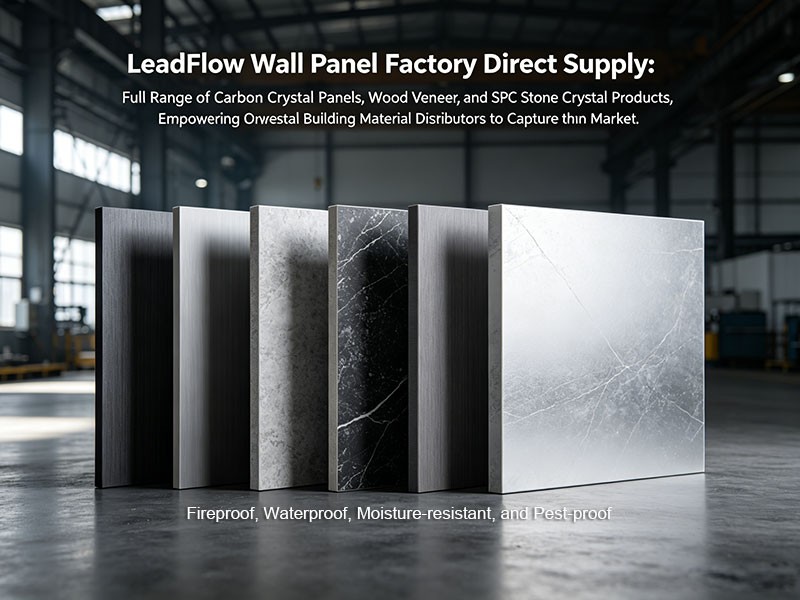
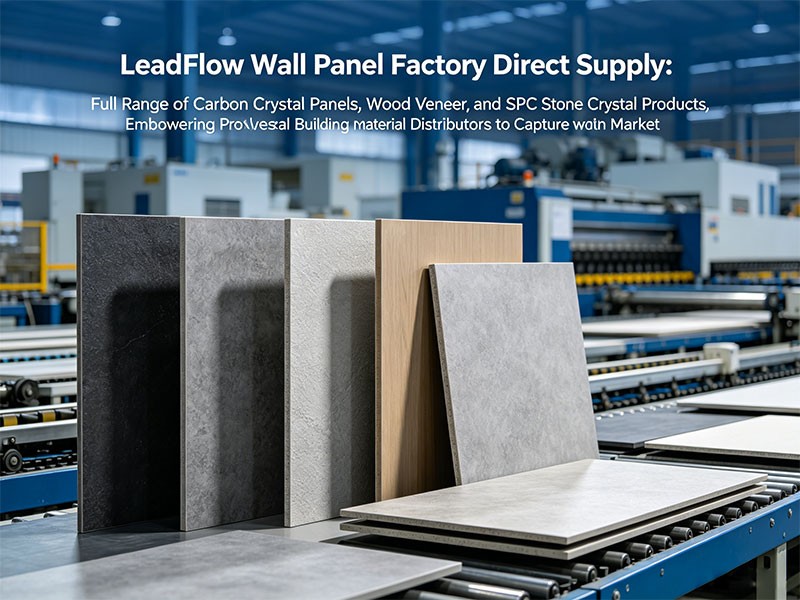
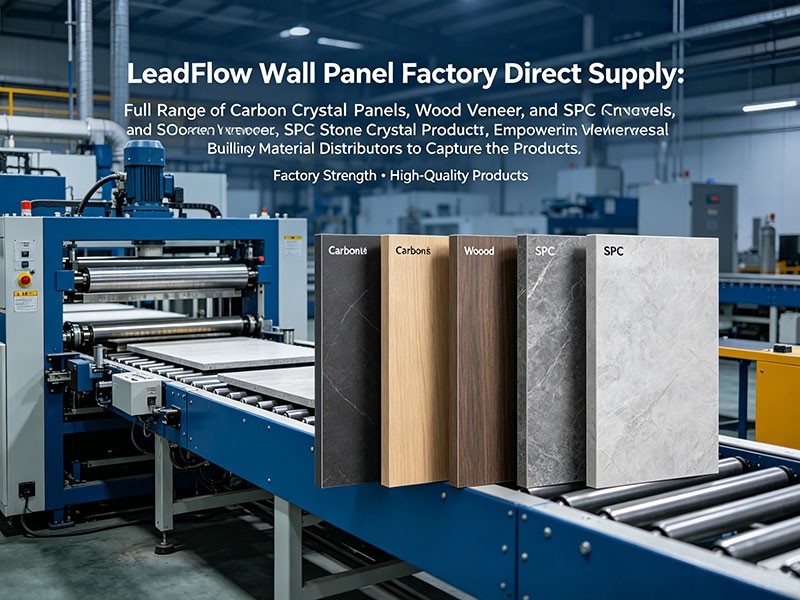
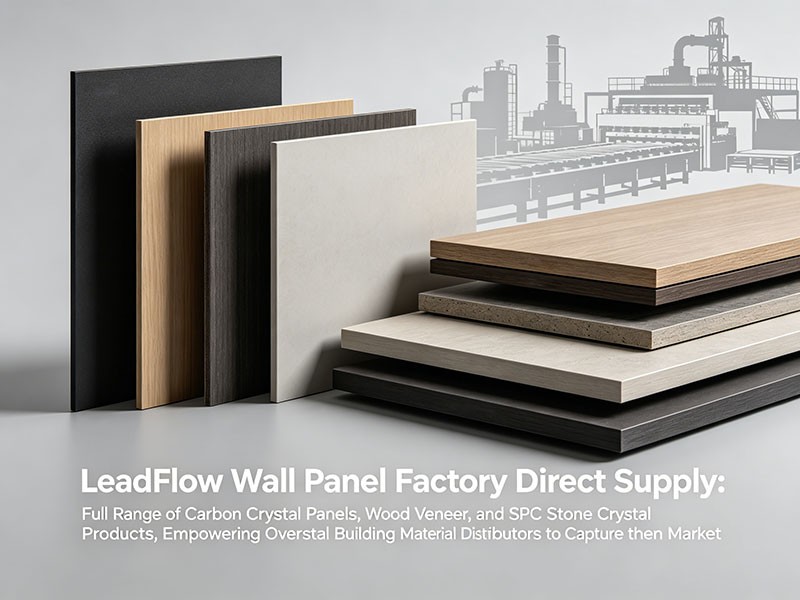
Global distributors, fit-out contractors, and design-build firms are consolidating purchases with a full-line WPC Wall Panels supplier that also operates a Carbon Crystal Wall Panel factory and a UV Marble Sheet manufacturer line under unified quality management. The logic is straightforward: when wall cladding, carbon crystal panels, and UV marble sheets ship from one coordinated production system, buyers gain harmonized finish libraries, a single QA standard, aligned lead times, and mixed-container loading that lowers freight cost per SKU.
The two adjacent categories complement WPC fluted panels naturally. Carbon crystal wall panels are flat, high-density boards finished with a decorative PET film that reproduces marble, stone, or high-gloss effects; they install rapidly with adhesive or clips, making them a favorite for fast-turnaround renovations. UV marble sheets are lightweight polymer sheets with a UV-cured topcoat that mimics natural stone veining at a fraction of the weight and cost of quarried marble, suitable for both walls and ceilings. A single project can therefore combine fluted profiles for textured feature walls, carbon crystal panels for sleek accent surfaces, and UV marble sheets for luxury stone looks — all color-matched within one sourcing relationship.
One caution applies: some traders present outsourced goods as in-house production. Buyers evaluating a Carbon Crystal Wall Panel factory or a UV marble operation should request per-line production access — live video walkthroughs or third-party audits — to confirm that each category is genuinely manufactured or directly supervised rather than resold. Reviewing a side-by-side carbon crystal wall panel comparison is also a useful reference point before committing to a finish palette across multiple product families.
Conclusion and Market Outlook
Choosing a WPC Fluted Wall Panels supplier is no longer a simple price negotiation; it is a quality-system decision with multi-year consequences. The suppliers best positioned for the coming cycle share three traits: verified in-house manufacturing, transparent certification and test documentation, and diversified product lines spanning WPC profiles, carbon crystal panels, and UV marble sheets. Looking ahead, renovation-driven demand, biophilic linear design, and mid-market hospitality expansion will keep volumes growing, while automation, low-VOC finishing, and recyclable formulations will separate industry leaders from the rest. For buyers, the pragmatic path is clear: audit the factory, test samples from multiple batches, start with a trial container, and scale the partnership as performance proves out.
FAQ
Q: What is a WPC fluted wall panel?
A: It is a decorative wall cladding profile extruded from wood-plastic composite — a blend of wood fiber and thermoplastic resin — shaped into continuous vertical grooves. Compared with MDF fluted panels, it offers superior moisture resistance, dimensional stability, and termite resistance, making it suitable for humid climates, coastal projects, and high-traffic commercial interiors.
Q: How can I verify a WPC Fluted Wall Panels supplier before ordering?
A: Request a live or third-party factory audit, confirm certifications such as ISO 9001 and CE, review fire-test and VOC documentation, and order samples from different production batches to check density, edge strength, and color consistency. Suppliers with in-house tooling and genuine OEM capability are typically more dependable than catalog-only traders.
Q: What is the difference between WPC fluted panels and carbon crystal wall panels?
A: WPC fluted panels are extruded profiles with a three-dimensional linear texture and a warm, tactile finish, while carbon crystal wall panels are flat, high-density boards with a decorative PET surface that delivers glossy or marble-like effects. Many projects use both together: fluted profiles for textured walls and carbon crystal panels for sleek accent areas.
Q: Can one supplier ship WPC fluted panels, carbon crystal panels, and UV marble sheets in the same order?
A: Yes. Integrated manufacturers with diversified production lines routinely load mixed containers, which reduces freight cost per product and simplifies procurement. Buyers should still confirm that each category is produced in-house or under direct factory supervision rather than resourced from unrelated traders.
Ready to elevate your next project? Get free samples today and experience the quality firsthand.