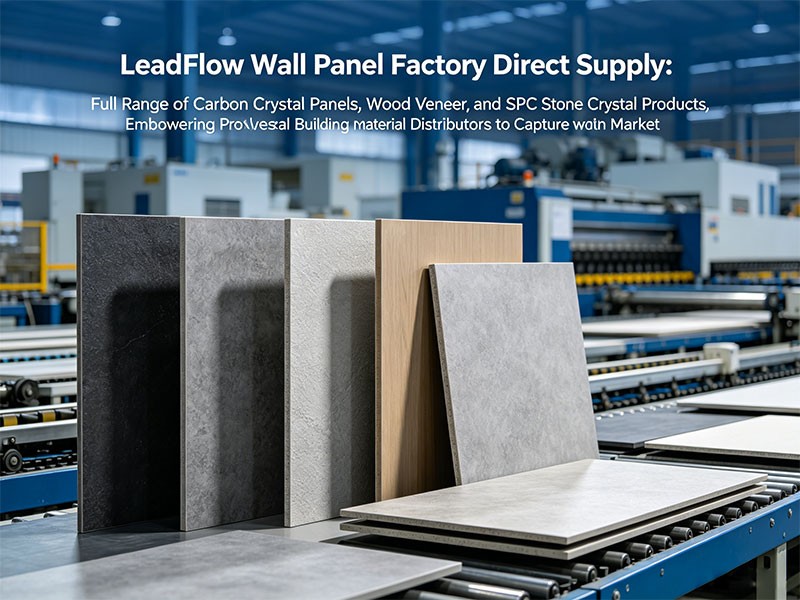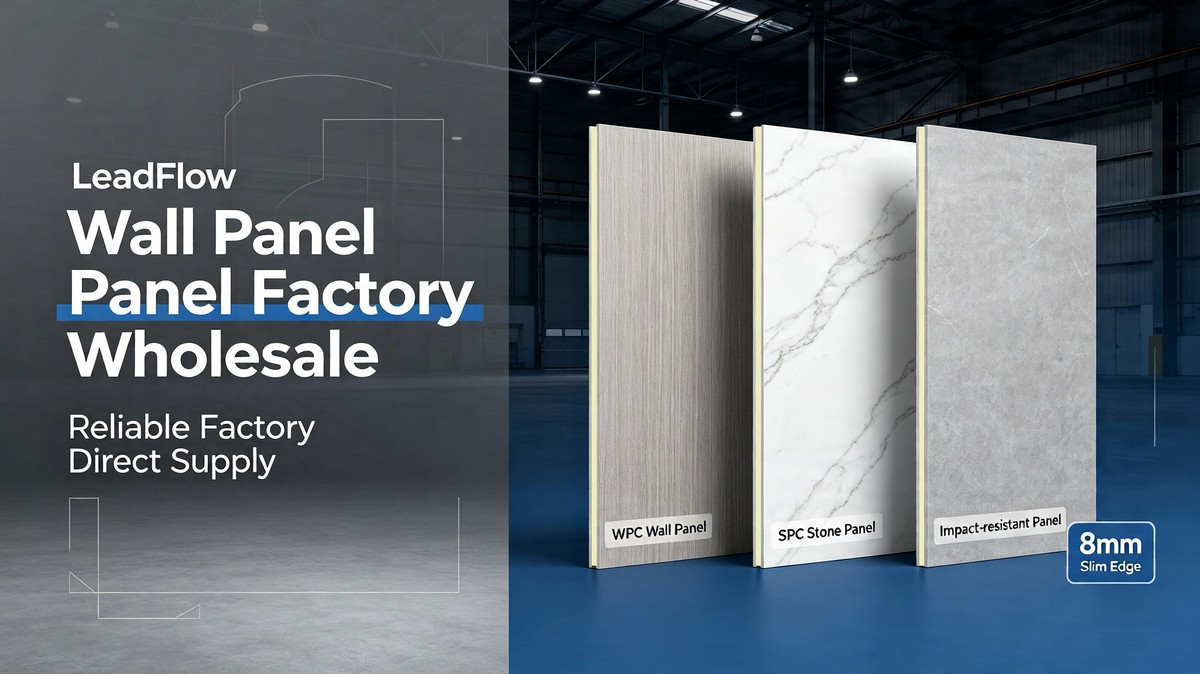
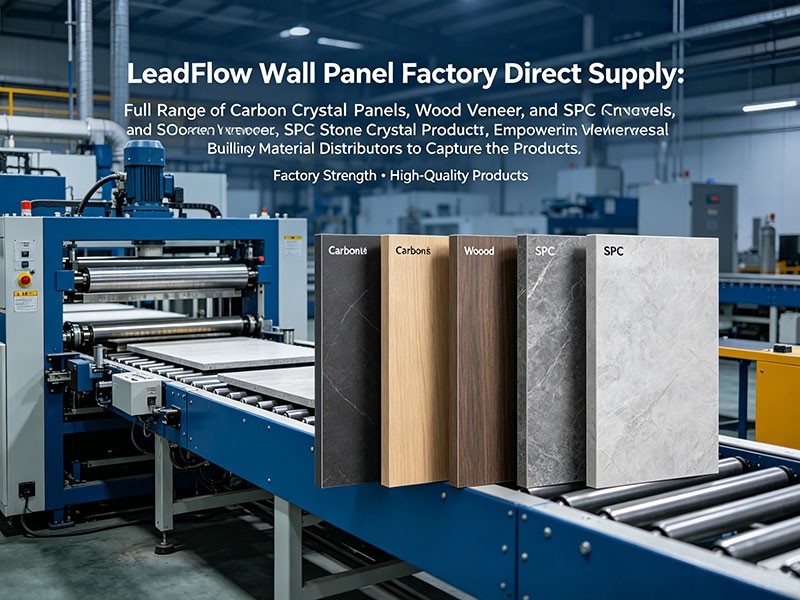
The global interior finishing market is undergoing a decisive shift toward rigid, waterproof, and installation-efficient surfaces, and few categories capture this momentum better than the stone plastic composite wall panel. For distributors, contractors, and project buyers across residential, hospitality, and commercial sectors, SPC Wall Panel wholesale procurement has evolved from a niche sourcing tactic into a core supply strategy. As renovation activity intensifies in North America, Europe, the Middle East, and Southeast Asia, wholesale buyers are re-evaluating how they select factories, negotiate pricing, and secure consistent quality at scale. This report examines the forces driving wholesale demand, the benchmarks that separate capable manufacturers from intermediaries, and the procurement practices that define successful sourcing programs in the current market.
Key Takeaways
• SPC wall panels combine PVC resin with calcium carbonate to create a rigid, fully waterproof core, making them a preferred cladding solution for bathrooms, kitchens, and high-moisture commercial spaces.
• Wholesale sourcing delivers measurable advantages: lower per-square-meter cost, container-optimized logistics, and direct access to OEM customization such as custom colors, embossed textures, and private-label packaging.
• The most reliable partners are vertically integrated factories with documented quality control — thickness tolerance, density standards, and fire-performance testing — rather than trading companies without production oversight.
• Category diversification is reshaping supplier selection: buyers increasingly favor manufacturers whose catalogs span SPC boards, WPC fluted profiles, and carbon crystal panels under one roof.
Why SPC Wall Panel Wholesale Demand Continues to Accelerate
Wholesale demand for SPC wall panels is being driven by three structural forces: material performance, renovation economics, and supply chain consolidation. Understanding each helps explain why the category has outpaced many traditional wall finishing materials.
First, performance. An SPC panel is engineered from PVC resin, calcium carbonate (limestone powder), and stabilizers, compressed into a dense, rigid core that will not swell, warp, or delaminate when exposed to moisture. Unlike wood-based alternatives, stone plastic composite cladding is inherently waterproof, termite-resistant, and dimensionally stable across temperature ranges — attributes that matter equally to a hotel operator renovating en-suite bathrooms and a multifamily developer specifying kitchen splashbacks.
Second, installation economics. Because SPC wall panels install over existing substrates with adhesive or click-profile systems, they eliminate the mess, curing time, and skilled-labor requirements associated with ceramic tiling. For project timelines measured in weeks rather than months, this speed translates directly into labor savings — a cause-and-effect relationship that procurement teams increasingly quantify when comparing total installed cost rather than unit price alone.
Third, channel consolidation. Distributors and importers are rationalizing their supplier base, seeking factories capable of shipping mixed containers that combine SPC boards with complementary categories. This is where a partner's product breadth matters: a manufacturer that also operates as a WPC Fluted Wall Panels supplier can fill containers with ribbed, linear-profile feature wall products alongside flat SPC boards, giving wholesalers a single point of accountability for a complete decorative wall program.
Inside the Factory: What Separates a True Manufacturer from a Trading Intermediary
In wholesale procurement, the difference between a direct manufacturer and an intermediary becomes visible in pricing transparency, customization depth, and batch-to-batch consistency. Buyers who audit these three dimensions early avoid the most common failure modes of offshore sourcing.
Production control is the first checkpoint. Established factories operate their own mixing, extrusion or calendering, and laminating lines, which allows them to hold tight tolerances on panel thickness and density — the two variables that most influence rigidity, impact resistance, and locking performance. When a factory controls its own lamination, it can also guarantee adhesion quality between the decorative film and the core, historically the most frequent point of failure in low-grade panels.
Quality benchmarks form the second checkpoint. Professional buyers typically request documentation covering density, water absorption, dimensional stability under heat, surface scratch resistance, and fire classification tested to recognized standards such as EN 13501 in Europe or ASTM E84 in North America. Reputable manufacturers supply third-party test reports and retain production samples per batch, so that any downstream dispute can be resolved against physical evidence rather than photographs.
Customization depth is the third. A capable OEM partner can adjust film finishes, develop custom embossing rollers, match color references, and print buyer-branded cartons — services that trading companies can only broker, adding cost and diluting accountability. The same logic applies to adjacent categories: a Carbon Crystal Wall Panel factory, for instance, bonds carbon-reinforced molecular film technology onto a PVC substrate to produce high-hardness, marble-look boards, and only a genuine manufacturer can certify the hardness and impact values behind such claims. This is precisely why an increasing share of wholesale buyers now shortlist multi-category producers instead of single-product vendors.
Wholesale Pricing Structure and Procurement Best Practices
Wholesale pricing for SPC wall panels is determined by a small number of cost drivers, and buyers who understand them negotiate from a position of strength rather than relying on quoted numbers alone.
The principal drivers are formulation, thickness, and surface finish. A higher calcium carbonate ratio lowers raw-material cost but must be balanced against brittleness; greater thickness increases material consumption and shipping weight; and the decorative film — from standard printing to deep-embossed or synchronized-grain laminates — can represent a meaningful share of the finished panel's value. Freight economics add a further layer: because container space is finite, wholesale buyers evaluate not only price per square meter but also how efficiently a panel's dimensions and carton design stack into a load. Factories that optimize packaging and palletization routinely deliver a lower landed cost than competitors with nominally cheaper ex-works pricing.
Best-practice procurement programs share common features. Buyers validate color and gloss against physical samples before production, define allowable thickness and density tolerances in the contract, commission pre-shipment inspection of randomly selected cartons, and specify moisture-proof, corner-protected packaging for ocean freight. Payment and inspection milestones are aligned with production stages, and long-term agreements often include rolling forecasts that secure resin allocation and production slots during peak season — a practical hedge against the raw-material volatility that has characterized the PVC supply chain in recent years.
Sustainability expectations are also entering the wholesale conversation. While SPC cores are inherently recyclable and free of wood-based formaldehyde concerns, buyers increasingly ask about low-VOC surface films, production waste recovery, and compliance documentation for indoor air quality programs. Manufacturers able to evidence these practices are gaining preference in institutional and hospitality tenders, and this trend is expected to strengthen as green building codes tighten worldwide.
Conclusion and Market Outlook
The trajectory of SPC Wall Panel wholesale points toward deeper integration between buyers and manufacturers, broader product portfolios, and more sophisticated quality frameworks. As the category matures, competitive advantage will belong to factories that combine formulation expertise with category breadth — those able to serve simultaneously as an SPC board producer, a WPC fluted profile specialist, and a carbon crystal board innovator. For global buyers, the practical implications are clear: audit production capability directly, specify measurable quality parameters, and treat the supplier relationship as a long-term manufacturing partnership rather than a transactional purchase. In a market where waterproof, rigid-surface cladding is shifting from premium option to default specification, wholesale buyers who professionalize their sourcing today will hold a durable cost and quality advantage through the decade.
FAQ
Q: What is an SPC wall panel?
A: An SPC (stone plastic composite, also called stone polymer composite) wall panel is a rigid decorative cladding made from PVC resin blended with calcium carbonate and stabilizers. The dense core is fully waterproof, dimensionally stable, and impact resistant, which makes the panels suitable for bathrooms, kitchens, and other high-moisture or high-traffic interior walls.
Q: How does an SPC wall panel differ from a WPC wall panel?
A: SPC panels contain a higher proportion of mineral filler and are denser, harder, and better suited to wet areas, while WPC panels incorporate wood fiber, giving them a lighter weight and warmer feel that suits dry decorative walls and ceiling applications. Many wholesale buyers stock both: SPC for wet-zone functionality and WPC fluted profiles for textured feature walls.
Q: What is a typical wholesale MOQ for SPC wall panels?
A: In general practice, wholesale orders are structured around full container loads, with minimum order quantities tied to specific colors, thicknesses, and customization levels. Standard designs carry lower MOQs, while OEM finishes, custom embossing, or private-label packaging require higher volumes to justify tooling and production setup. Exact terms vary by factory and should be confirmed during quoting.
Q: What should buyers verify before signing an SPC wall panel wholesale contract?
A: Buyers should confirm third-party test reports for density, water resistance, and fire classification; agree on thickness and density tolerances in writing; retain approved pre-production samples; define packaging and container-loading standards; and include inspection rights before shipment. Working directly with a manufacturer rather than a trader strengthens traceability on every one of these points.