Modular construction has moved from the margins of the building industry to the center of how the world delivers homes, hotels, schools, and healthcare facilities. By shifting structural framing, insulation, wiring — and, increasingly, interior finishing — into controlled factory environments, developers are compressing schedules that once stretched across years into a matter of months. For the WPC wall panel sector, this is more than a passing trend; it is a new commercial frontier. Surfaces that were once installed on dusty job sites are now specified, cut, and fitted inside prefabricated building modules before they ever leave the plant. The result is a supply chain in which panel manufacturers, module assemblers, and contractors operate as one synchronized production system — and in which finish quality is engineered rather than improvised.
Key Takeaways
• Speed is the defining advantage: in modular construction, factory production and site preparation run in parallel, cutting overall schedules and removing weather delays from the critical path.
• Finishing has moved indoors: pre-installed WPC and SPC wall panels allow volumetric modules to arrive nearly move-in ready, with factory-grade tolerances.
• Supply chains are consolidating: wholesale distribution and factory-direct sourcing of panels are becoming standard practice for high-volume modular programs.
• Digital tools and sustainability goals are accelerating adoption: BIM-driven design, DfMA workflows, and recyclable composite materials anchor the next phase of growth.
Why Modular Construction Is Accelerating Worldwide
Modular construction is a building method in which structures are produced as factory-made volumetric modules or panelized assemblies, transported to the site, and joined on prepared foundations. Unlike traditional stick-built work, most of the value is created off-site under fixed conditions and repeatable quality checks. Industry observers consistently point to three forces behind its rise: persistent skilled-labor shortages, acute urban housing demand, and mounting pressure to control cost and waste. When site crews and factory lines work in parallel, schedules shrink; when weather and trade-sequencing risks disappear from the critical path, budgets become predictable.
Quality control is equally significant. In a factory, tolerances are measured in millimeters rather than judged by eye, and every module passes through the same inspection gates. This discipline changes what is expected of interior materials. Panels must arrive dimensionally stable, batch-consistent, and ready for fast, clean installation — criteria that favor engineered products such as wood-plastic composite (WPC) and stone-plastic composite (SPC) over conventional plaster and tile in many applications. For readers new to the category, the fundamentals of WPC wall panel performance — moisture resistance, dimensional stability, and low-maintenance surfaces — explain why these materials fit factory logic so well.
Procurement models are shifting accordingly. A capable WPC Wall Panels supplier is no longer treated as a simple materials vendor but as a production partner — expected to deliver pre-cut panel kits matched to module drawings, hold color batches consistent across hundreds of identical units, and synchronize deliveries with the assembly line's rhythm. That level of integration is fast becoming a competitive differentiator for panel makers and module factories alike.
Prefabricated Wall Panels: Finishing Modules Before They Ship
The most visible change for the wall panel industry is where and when surfaces are installed. In mature modular programs, walls are clad inside the module while it is still on the line, so units arrive with flooring, joinery, and interior wall cladding already complete. Click-lock WPC fluted panels and tongue-and-groove profiles are particularly well suited to this workflow: they install quickly without wet trades, align predictably with factory jigs, and tolerate the vibration and handling involved in road transport. Lighter composite panels also help keep module weight within transport limits — a constraint that often rules out heavy masonry finishes altogether.
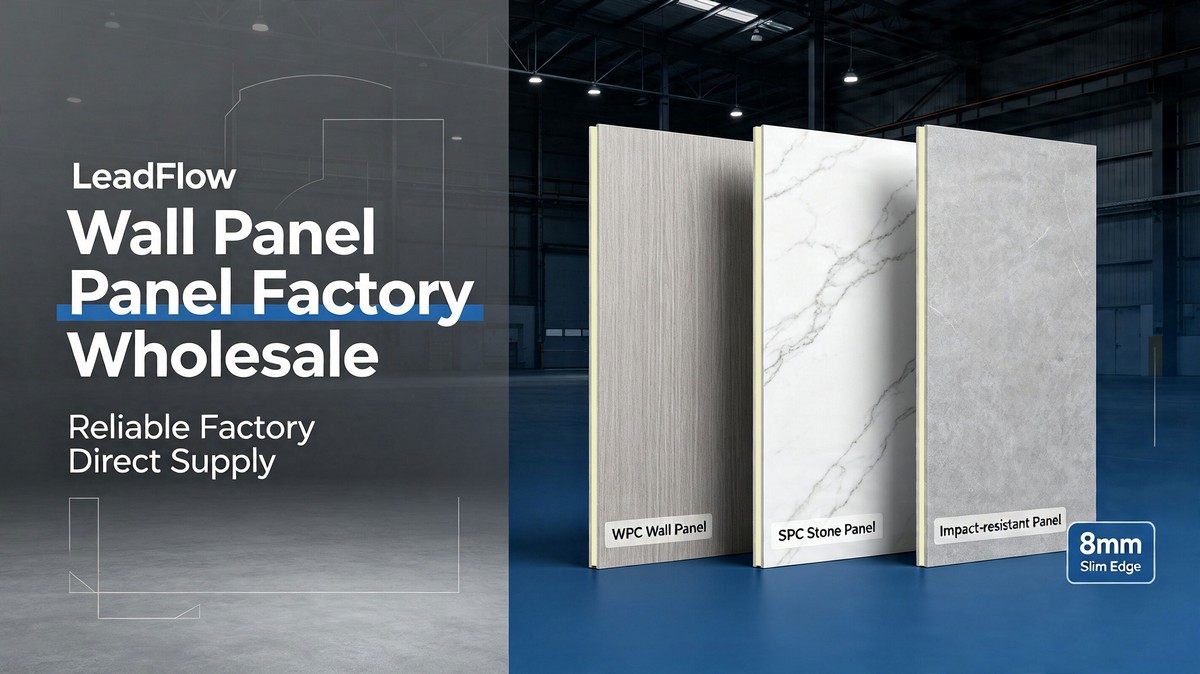
Wet areas illustrate the advantage most clearly. Prefabricated bathroom and kitchen pods depend on water-resistant, dimensionally stable surfaces, and rigid-core SPC products answer that brief. SPC Wall Panel wholesale channels have expanded in step with pod production, as distributors pre-stock standardized profiles for high-volume programs and position inventory close to module factories. Wholesale availability matters because pod lines consume material in continuous, predictable volumes; a stockout on a single profile can idle an entire assembly shift.
Consistency is the quiet hero of the factory model. When a developer commissions dozens or even hundreds of identical hotel or residential modules, every panel in every unit must match in color, gloss, and texture. Factory-batched composite panels deliver that uniformity in a way site-applied finishes rarely can — one reason interior fit-out standards in modular hospitality and residential projects increasingly default to panel systems from the outset.
Technology and Sustainability Are Redefining the Panel-Module Interface
Innovation is deepening the integration between panel producers and module builders on several fronts. Building information modeling (BIM) now extends down to individual panel families, letting designers lay out fluted profiles, reveal joints, and cut lists digitally before a single board is produced. Design for Manufacture and Assembly (DfMA) pushes that logic further, treating interior wall cladding as a kit of parts optimized for machine cutting and rapid installation. On the production side, CNC cutting and automated nesting reduce offcut waste, while digital planning tools help factories sequence panel deliveries with line-level precision.
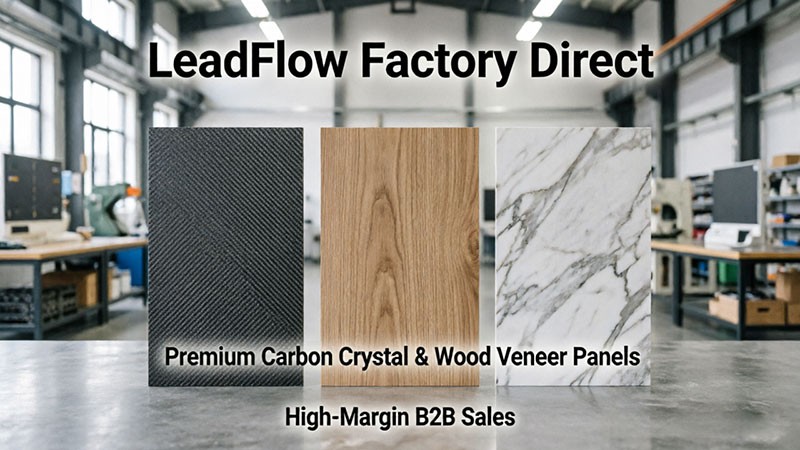
Material innovation is just as consequential. WPC composites built on recycled wood fiber and polymer content align with the sustainable building materials criteria now embedded in leading green building certifications, while low-VOC surface finishes support healthy indoor-environment mandates across institutional projects. Decorative categories are evolving in parallel: hospitality and retail module programs increasingly draw high-gloss, scratch-resistant surfaces directly from the Carbon Crystal Wall Panel factory line, where PVC-based carbon crystal panels deliver a seamless, high-end appearance that survives transport handling and repeated cleaning. Factory-direct sourcing of this kind shortens the distance between material production and module assembly — a structural advantage in a business where schedule is everything.
Honest caveats remain. Composite recycling at end of life is still maturing, long transport distances can erode both cost and carbon savings, and building codes for off-site methods vary across jurisdictions. None of these constraints is standing still: manufacturers are investing in recyclability and take-back programs, regional module factories are shortening logistics radii, and regulatory frameworks are steadily adapting to off-site construction.
Conclusion and Outlook
Modular construction and prefabricated building innovation are converging with the wall panel industry into a single, integrated production story. Panels are evolving from decorative afterthoughts into engineered finish kits that ship with the module — specified in BIM, produced to factory tolerances, and installed by the same hands that build the frame. For manufacturers, distributors, and sourcing teams across the WPC, SPC, and carbon crystal categories, the opportunity lies in becoming inseparable from the off-site construction workflow itself: consistent batches, project-specific pre-cutting, and reliable, line-synchronized logistics. As urbanization pressure persists and skilled labor grows scarcer, the companies that treat every module line as a partner production floor will define the next decade of interior finishing. Our comparison of fluted and flat-profile wall cladding trends shows how design preferences are evolving in step with this shift.
FAQ
Q: What is modular construction, and how does it differ from traditional building?
A: Modular construction is a method in which buildings are assembled from factory-built volumetric modules or panelized units that are transported to the site and joined on prepared foundations. Unlike traditional site-built work, most of the value — framing, insulation, wiring, and often interior finishing — is completed off-site under controlled conditions before delivery.
Q: Can WPC wall panels be used inside prefabricated modules?
A: Yes. WPC wall panels are lightweight, dimensionally stable, and typically installed with click-lock or tongue-and-groove systems, which makes them well suited to factory jigs and to the vibration of road transport. They can be pre-cut to module drawings and fitted on the assembly line so that modules arrive with interior wall cladding complete.
Q: How do developers source wall panels for modular projects?
A: Most high-volume programs combine wholesale distribution with factory-direct sourcing. Suppliers act as production partners, holding batch-consistent inventory, pre-cutting panels from BIM-derived cut lists, and synchronizing deliveries with module assembly schedules to prevent line stoppages.
Q: Are prefabricated buildings as durable as traditionally built ones?
A: When engineered and certified to the applicable building codes, prefabricated buildings match the durability of site-built structures. Factory tolerances and repeated inspection gates can even improve consistency, while panel materials with strong moisture and impact resistance help extend interior service life.