
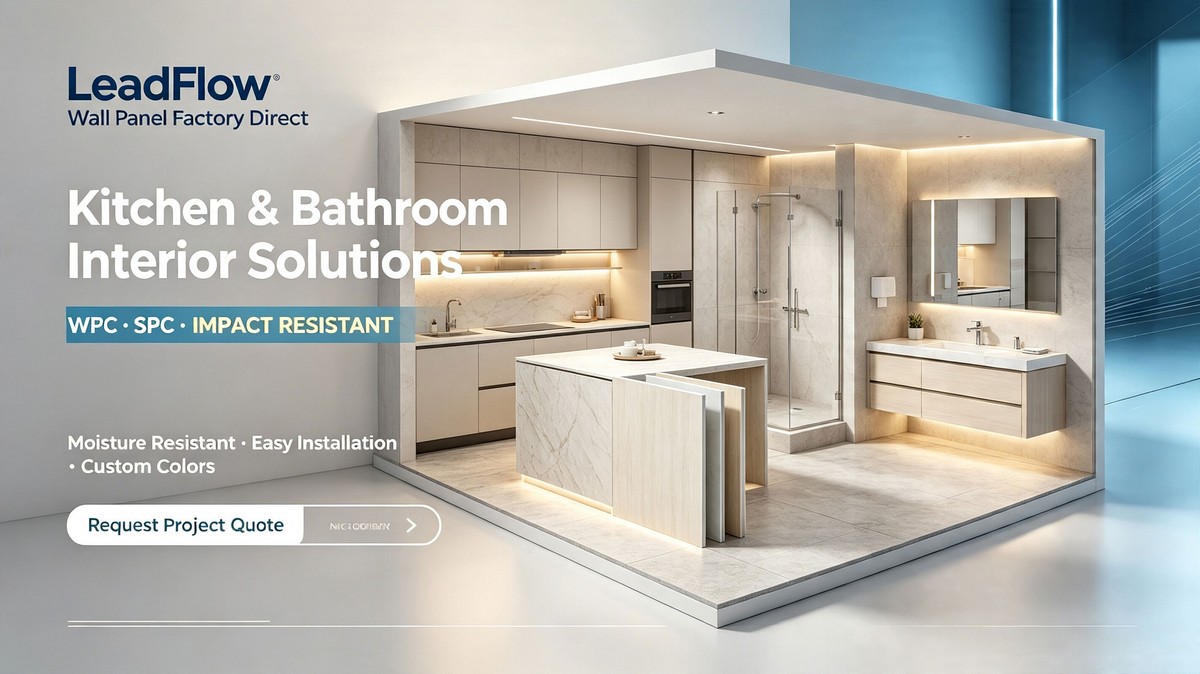
As decorative wall cladding shifts from niche product to mainstream specification, one question increasingly dominates procurement meetings and project briefings alike: WPC or SPC? Choosing between WPC and SPC wall panels has become one of the most consequential decisions facing interior designers, contractors, and building material distributors worldwide. Both materials have surged in popularity as faster, cleaner alternatives to ceramic tile, paint, and traditional wood cladding, yet they differ fundamentally in composition, behavior, and economics. This deep dive examines how those differences translate into real-world performance and cost, helping specifiers match the right panel to the right environment.
Key Takeaways
• WPC wall panels blend wood fiber with thermoplastics, delivering warm, wood-like aesthetics and strong acoustic comfort for living spaces and feature walls.
• SPC wall panels combine calcium carbonate with PVC resin, producing a rigid, fully waterproof core suited to kitchens, bathrooms, and high-traffic commercial areas.
• Upfront pricing between the two categories overlaps significantly; total cost of ownership depends more on moisture exposure, traffic levels, freight weight, and installation method.
• The correct choice is environment-driven: WPC for comfort and texture in dry interiors, SPC for water resistance and dimensional stability in demanding zones.
Composition and Manufacturing: What Truly Separates WPC from SPC
The performance gap between these two panel categories begins at the raw material stage. WPC (wood-plastic composite) wall panels are produced by compounding wood flour or wood fiber — often derived from sawdust and forestry by-products — with a thermoplastic matrix, typically PVC or polyethylene, along with stabilizers and foaming agents. Many premium lines are further protected by a co-extruded outer layer, commonly ASA or PMMA, which shields the core from UV light, scratches, and surface staining while delivering the matte, natural-wood texture that has made fluted WPC wall panel designs a staple of contemporary feature walls.
SPC (stone-plastic composite) panels take the opposite route. Their core is built primarily from calcium carbonate — finely ground limestone — bound with PVC resin. The result is an exceptionally dense, rigid board that is then laminated with a decorative film and, in many products, a transparent protective wear layer. Because stone powder is inexpensive and abundant, SPC formulation economics are attractive, but the real value lies in the physics: a high mineral content makes the panel dimensionally stable and impervious to water.
These compositional differences also explain why the wider wall-decor market has fragmented into adjacent categories. Buyers comparing solutions will often encounter glossy marble-effect sheets from a UV Marble Sheet manufacturer, which serve a similar decorative purpose but rely on printed PVC construction rather than a composite core. Understanding where WPC and SPC sit within this landscape — composite warmth versus mineral rigidity — is the first step toward an informed specification.
Performance Face-Off: How WPC and SPC Wall Panels Compare
In side-by-side evaluation, every major performance difference between WPC and SPC wall panels traces back to core composition. Product catalogs from any established WPC Wall Panels supplier make this visible at a glance: WPC lines lead with fluted, wood-grain, and matte finishes engineered for living and working spaces, while SPC lines emphasize marble-effect and high-definition laminates designed for wet and commercial areas.
Moisture resistance. SPC holds a decisive advantage in wet environments. Because its mineral-filled core contains no organic fiber, a quality SPC wall panel is fully waterproof and will not swell, delaminate, or support mold growth under prolonged humidity — one reason it has become the default for bathroom and kitchen cladding. WPC is moisture-resistant when properly formulated and edge-sealed, but its wood fiber content remains the structurally weaker point; cut edges left unsealed in persistently damp conditions can absorb moisture over time. For dry interior walls this is largely a non-issue; for steam-prone zones, it is a genuine differentiator.
Dimensional stability and impact behavior. SPC's rigidity gives it excellent dimensional stability across temperature swings, and its hard surface resists dents and scuffs in busy corridors and commercial lobbies. The trade-off is brittleness: a sharp, concentrated impact can crack a dense SPC board. WPC, by contrast, is more forgiving — it may dent or mar under impact but is less prone to cracking, and it expands and contracts slightly more with temperature, which installers manage with standard expansion gaps.
Acoustic and tactile comfort. This is where WPC quietly wins. The wood-fiber content and the air channels within fluted or slatted profiles give WPC panels a noticeable sound-damping effect, softening echo in living rooms, bedrooms, meeting rooms, and hospitality interiors. The material also feels warmer to the touch than stone-filled alternatives — a subtle but meaningful factor in residential specification.
Weight and workability. WPC panels are generally lighter and easier to cut, route, and fix with clip or batten systems, reducing installation labor. SPC's density demands more careful handling, adhesive or mechanical fixing, and carbide-tipped cutting tools. Neither material is difficult relative to tile, but crews consistently report faster daily coverage with lightweight WPC slat panels.
Fire performance. Both categories are PVC-based, and real-world behavior varies significantly with formulation and additive packages rather than with the WPC or SPC label itself. Specifiers should always request certified fire test reports and verify them against local building codes, particularly for commercial and hospitality projects.
Cost Analysis: Why the Price Tag Tells Only Part of the Story
Cost differences between WPC and SPC wall panels are less about sticker price and more about total cost of ownership across procurement, installation, logistics, and lifecycle.
Material cost. At the raw-material level, calcium carbonate is among the cheapest fillers in the industry, while wood flour is also economical — but processing pulls the categories into overlapping price bands. WPC carries the expense of wood-plastic compounding and, on premium lines, co-extrusion; SPC carries the cost of high-pressure lamination and decorative films. In practice, panel thickness, density, and surface finish typically influence price more than the WPC-versus-SPC distinction itself, which is why parallel lines from the same factory often sit within the same nominal price tier.
Installation and labor. Weight matters. Lighter WPC panels reduce handling time and allow simpler wall preparation and fixing systems, lowering installed cost on large residential and office fit-outs. Heavier SPC boards demand more labor care and, on tall commercial walls, additional fixing points. Both remain dramatically faster than ceramic tile installation — precisely why panel cladding continues to take share from tile in renovation markets.
Logistics and freight. For global buyers, density translates directly into freight spend. SPC's higher weight per square meter increases container shipping costs, a factor that matters more than ever in long-haul supply chains. Lightweight WPC offers a freight advantage that can partially offset any unit-price difference.
Lifecycle economics. In wet or high-traffic settings, SPC's waterproofing and durability minimize repair and replacement, improving its long-term economics even where the initial outlay is slightly higher. In dry residential interiors, WPC's resilience and timeless texture protect long-term value. Procurement teams sourcing from a Carbon Crystal Wall Panel factory or other multi-line composite producers increasingly see manufacturers spanning several panel technologies at once — evidence that the market is consolidating around matching each material to its ideal application rather than crowning a single winner.
Conclusion and Outlook: Specify by Environment, Not by Hype
The WPC-versus-SPC debate resolves not with a universal winner but with a simple specification logic. WPC wall panels deliver organic texture, acoustic comfort, and installation ease, making them the natural choice for living rooms, bedrooms, offices, and hospitality feature walls. SPC wall panels answer the hardest questions — water, impact, and dimensional stability — and dominate in bathrooms, kitchens, commercial washrooms, and high-traffic corridors. Where budgets allow, leading projects increasingly deploy both: SPC in demanding zones, WPC where atmosphere matters most.
Looking ahead, three developments will keep sharpening this comparison. Co-extrusion and surface technology continue to narrow WPC's moisture limitations; high-definition digital printing keeps closing the aesthetic gap; and sustainability pressures are pushing both categories toward recycled content and cleaner end-of-life pathways. Among the full range of decorative wall cladding options available today, buyers who ground their decisions in verified test data — water absorption, fire certification, and dimensional stability reports — rather than marketing labels will be best positioned as the two technologies converge at the edges while specializing at the core.
FAQ
Q: Which is more waterproof, WPC or SPC wall panels?
A: SPC wall panels are fully waterproof because their calcium carbonate and PVC core contains no organic fiber. WPC wall panels are moisture-resistant when properly formulated and sealed, but their wood fiber content makes them better suited to dry interior areas unless co-extruded and edge-sealed.
Q: Are WPC wall panels cheaper than SPC wall panels?
A: Unit prices for the two categories overlap substantially; thickness, density, and surface finish influence cost more than the WPC-versus-SPC distinction. For an accurate comparison, evaluate total cost of ownership, including freight, installation labor, and expected maintenance over the panel's service life.
Q: Can SPC wall panels be installed in bathrooms and kitchens?
A: Yes. The rigid, waterproof SPC core is specifically well suited to wet and steam-prone zones. Installers should still follow manufacturer guidance on sealing joints and cut edges and allow for normal expansion gaps during installation.
Q: How should I choose between WPC and SPC for my project?
A: Choose WPC wall panels for dry living and working spaces where warm texture and acoustic comfort matter most, and choose SPC wall panels for wet areas, high-traffic commercial zones, and locations requiring maximum dimensional stability. Always request certified test data from your supplier before final specification.
Ready to elevate your next project? Get free samples today and experience the quality firsthand.








