The global interior finishing market is undergoing a visible transformation: flat, painted walls are steadily giving way to textured, three-dimensional surfaces, and fluted profiles sit at the center of this shift. For distributors, contractors, and design-build firms across residential, hospitality, and commercial segments, selecting the right WPC Fluted Wall Panels supplier has become a strategic sourcing decision rather than a routine purchase. The fluted wall panel category rewards manufacturing precision — consistent groove geometry, stable material formulation, and durable surface finishing — and buyers who understand what happens inside the factory are consistently better positioned to secure quality, protect margins, and deliver projects on schedule. This guide examines the market forces behind the fluted panel boom, the manufacturing benchmarks that separate genuine producers from intermediaries, and a practical evaluation framework that global buyers can apply before committing to a supplier partnership.
Key Takeaways
• WPC fluted wall panels combine the moisture resistance and dimensional stability of wood-plastic composites with the sculptural depth of vertical grooves, making them a leading choice for feature walls worldwide.
• Genuine manufacturing capability — in-house extrusion lines, proprietary molds, and controlled formulations — is the clearest differentiator between a true WPC Fluted Wall Panels supplier and a trading intermediary.
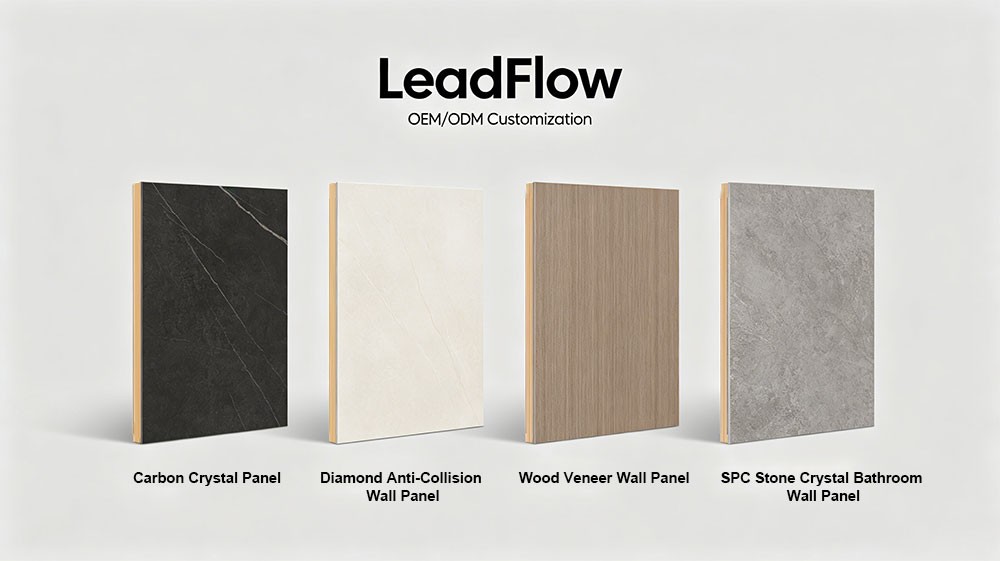
• A diversified product portfolio, spanning carbon crystal wall panels and UV marble sheets, signals a supplier able to deliver integrated wall decoration solutions from a single source.
• Structured due diligence — certification verification, sample testing, and capacity transparency — remains the most reliable way to reduce sourcing risk in a competitive global market.
Why WPC Fluted Wall Panels Are Reshaping Interior Specifications
WPC fluted wall panels occupy a distinctive position in modern interior specification because they resolve a persistent trade-off between natural aesthetics and material performance. Wood-plastic composite (WPC) is an engineered material formed by blending wood fiber or wood flour with thermoplastic resin — typically PVC or polyethylene — along with stabilizers, foaming agents, and UV inhibitors. Extruded through profiled dies, this composite produces panels defined by rhythmic vertical grooves that create shadow lines and visual depth. The result delivers the warmth of timber textures without wood's well-known weaknesses: WPC does not rot, splinter, or attract termites, and it maintains dimensional stability through humidity fluctuations that would deform solid timber.
Three forces explain the category's rapid rise. First, urban renovation cycles: apartment retrofits and commercial refreshes favor wall coverings that install quickly over existing substrates without messy demolition, and fluted panels can be fixed to battens or adhesive-mounted, dramatically shortening fit-out timelines. Second, biophilic design demand: architects and homeowners want organic, tactile surfaces, and the vertical flute pattern mimics slatted timber at a fraction of the cost and maintenance. Third, visual and acoustic comfort: the grooved geometry softens sound reflections and introduces rhythm into large walls, which is why hotel lobbies, restaurants, office reception areas, and residential TV feature walls now routinely specify fluted cladding.
For buyers, the practical implication is clear: demand is broadening geographically and across project types, but so is the number of companies competing to serve it. Understanding the supply base — and what distinguishes an authentic producer — is the first step in any procurement strategy, and readers comparing material systems may find our detailed comparison of WPC, PVC, and SPC wall cladding a useful companion resource.
Inside the Factory: What Defines a Genuine WPC Fluted Wall Panels Supplier
The single most important fact in this market is that not every company selling fluted panels actually manufactures them. A genuine WPC Fluted Wall Panels supplier controls production from raw formulation to finished profile, while intermediaries buy from multiple mills and re-sell under their own branding — an arrangement that often weakens batch consistency, traceability, and after-sales accountability.
Several markers distinguish true manufacturing capability:
• Formulation control. Reputable producers specify the ratio of wood fiber to polymer, the grade of stabilizers, and the loading of UV-resistant additives. This determines panel density, surface hardness, and long-term color stability — the properties that decide whether a feature wall looks identical in year five as it did on installation day.
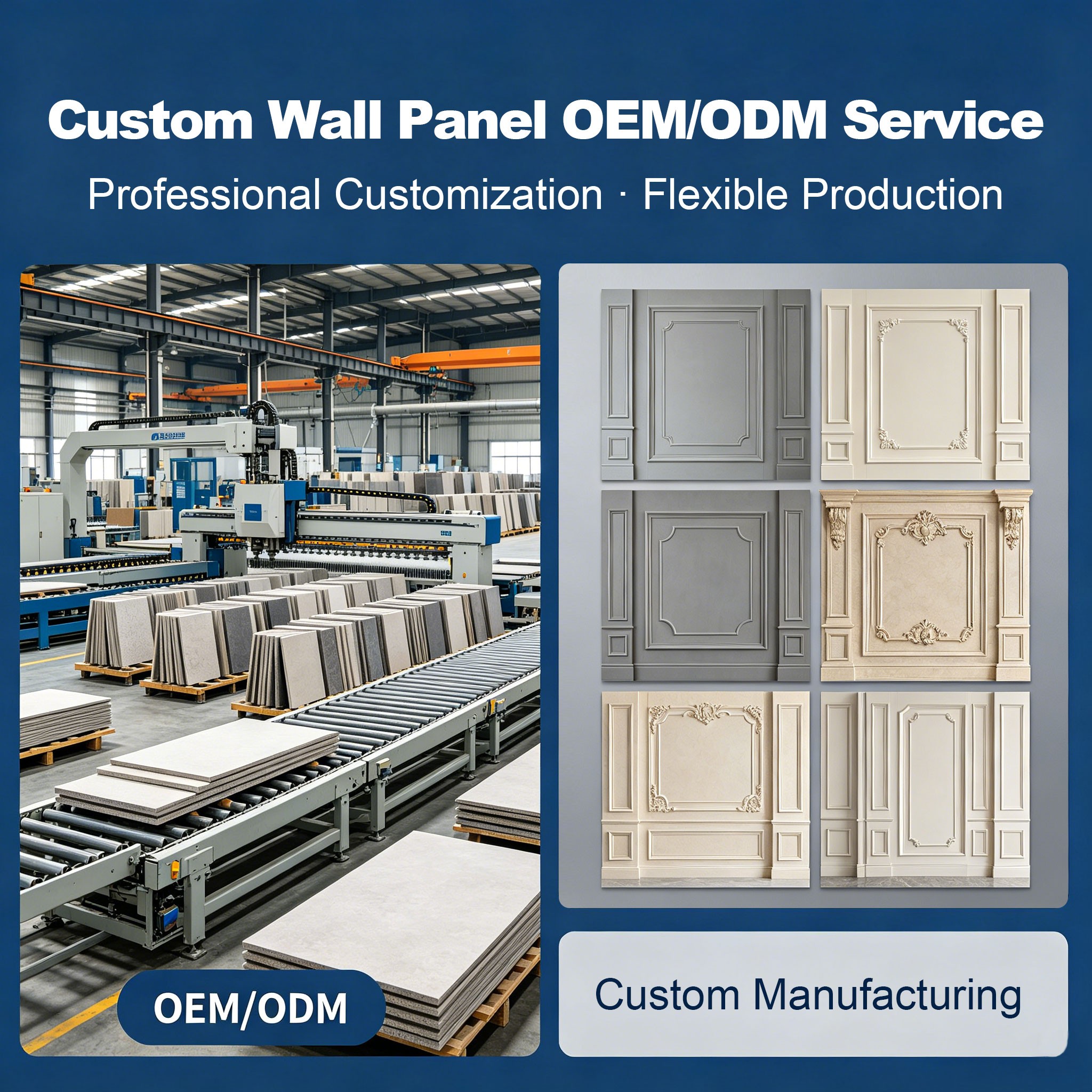
• Die and mold ownership. Fluted profiles demand precise groove spacing and depth. Suppliers that own and maintain their own dies can guarantee profile accuracy across production runs and develop custom geometries for OEM and ODM projects.
• In-house surface finishing. Deep-embossed wood grain, high-gloss lamination, and UV-cured coatings are applied on dedicated lines. Controlling this stage enables tight gloss tolerance and repeatable color matching between batches — a frequent failure point for low-cost imports.
• Documented quality control. Look for systematic checks on thickness tolerance, panel straightness, and density, supported by third-party reports. Certifications worth requesting include ISO 9001 quality management, European fire classification under EN 13501-1 (many fluted WPC panels achieve B-s1,d0 or comparable ratings), formaldehyde and VOC emission compliance, and region-specific marks such as CE.
Vertical integration is another telling signal. Many established Asian production groups have expanded beyond WPC into adjacent wall technologies, and the presence of a Carbon Crystal Wall Panel factory within the same operation is a meaningful indicator of investment capacity. Carbon crystal panels — high-density boards prized for hardness, scratch resistance, and modern feature-wall detailing — require different pressing and coating equipment from fluted WPC extrusion. A supplier operating both lines demonstrates genuine R&D depth, engineering redundancy, and the flexibility to match panel technology to project requirements rather than pushing a single catalog. For a closer look at this material class, our in-depth overview of carbon crystal wall panel technology breaks down performance characteristics and applications.
Sourcing Strategy: Evaluating Portfolios, Samples, and Partnership Fit
Once manufacturing credibility is established, the evaluation should shift toward product ecosystem and commercial reliability. Global buyers increasingly value consolidation, and a supplier that operates as both a WPC panel producer and a UV Marble Sheet manufacturer can deliver complete feature-wall systems — fluted timber-look grooves framing marble-effect backgrounds — with finishes coordinated under a single quality system. The same logic applies to SPC and carbon crystal lines: breadth, when backed by genuine production capability, translates into shorter procurement cycles and fewer integration risks on site.
Practical due diligence follows a consistent checklist:
• Sample evaluation before volume orders. Assess groove uniformity, surface consistency under raking light, edge straightness, and the accuracy of decorative film alignment. Cut, scratch, and soak samples to observe internal density and water absorption behavior.
• Batch consistency verification. Ask how color difference between production runs is measured and controlled; established suppliers work to defined tolerance standards rather than vague assurances.
• Capacity and lead-time transparency. Request realistic output figures, current order-book conditions, and standard lead times for both catalog items and customized orders. Reliable producers quote honest timelines and explain their scheduling logic.
• Logistics and packing competence. Fluted profiles are vulnerable to corner damage in transit. Professional suppliers engineer protective packaging, optimize container loading, and document their packing standards.
• Communication and documentation quality. Technical drawings, installation guides, material safety data, and rapid engineering responses during the sampling phase reliably predict how a supplier behaves after shipment.
Buyers should also weigh long-term alignment: does the supplier invest in new surface technologies, sustainable formulations with recycled content and low emissions, and digital customization? These signals matter because the fluted panel market is moving quickly, and a partner who innovates keeps your catalog relevant.
Conclusion and Outlook
The rise of fluted wall panels reflects a broader maturation of the interior finishing industry: buyers now specify engineered composites with the same rigor once reserved for structural materials. The path to a successful outcome runs through verified manufacturing capability — formulation control, precision tooling, finishing lines, and documented quality systems — reinforced by a product ecosystem able to serve complete wall solutions. Over the coming years, expect deeper automation in extrusion and coating, wider adoption of recyclable and low-VOC formulations, and growing demand for integrated portfolios that pair fluted WPC profiles with carbon crystal boards and UV marble surfaces. Distributors and contractors who anchor their supply chain with a capable WPC Fluted Wall Panels supplier today will be best positioned to capture that growth with consistent quality and protected margins.
FAQ
Q: What are WPC fluted wall panels made of?
A: They are extruded from a wood-plastic composite — a blend of wood fiber or wood flour with thermoplastic resin (typically PVC or PE), stabilizers, and UV-resistant additives — shaped into vertical fluted profiles and finished with embossed film, lamination, or coating.
Q: How can I verify that a WPC Fluted Wall Panels supplier actually manufactures its own products?
A: Request a business license showing manufacturing scope, live or on-site factory audit reports, the number of extrusion lines and mold inventory, and third-party test certificates that name the producing factory. Video walk-throughs of the production floor are an effective supplementary check.
Q: What certifications should a reliable supplier provide?
A: At minimum, ISO 9001 quality management certification, fire performance classification such as EN 13501-1 for European markets, and formaldehyde or VOC emission test reports; CE marking applies where relevant, and buyers in North America should ask for ASTM-compliant testing.
Q: Can fluted WPC panels be installed in bathrooms and other humid spaces?
A: Yes, in most cases. WPC's polymer matrix resists moisture, rot, and termites far better than solid wood, but proper joint sealing, substrate preparation, and room ventilation remain essential — always follow the supplier's installation guidelines for wet areas.
Ready to secure a dependable panel partner for your next project? Have a custom requirement? Contact our engineering team for tailored renderings and professional advice.