
Specification sheets can make almost any building material look impressive. What separates a confident purchase from an expensive mistake is evidence — and in the interior finishing sector, that evidence increasingly comes from real-world project case studies and verified reviews. As the WPC wall panel moves from niche product to mainstream alternative for tile, paint, and solid wood cladding, architects, contractors, and procurement teams worldwide are basing sourcing decisions less on catalogs and more on how panels actually perform after installation. This article examines recurring findings from hospitality, residential, and commercial fit-out case studies, looks at how leading buyers evaluate partners such as a WPC Fluted Wall Panels supplier or a composite panel factory before committing to bulk orders, and distills practical lessons for anyone specifying wall cladding on a global project.
Key Takeaways
• Real-world reviews consistently identify moisture resistance, dimensional stability, and low maintenance as the strongest advantages of WPC wall panels over paint, wallpaper, and plywood-based cladding in humid environments.
• The most common complaints in project reviews stem from batch-to-batch color variation and installation shortcuts — not from the material category itself.
• When evaluating a Carbon Crystal Wall Panel factory or any composite cladding producer, factory audits and test documentation reveal quality signals that catalogs and sample boards cannot.
• Hybrid fit-outs that combine WPC fluted profiles with UV marble feature walls are becoming the default specification for commercial interiors worldwide.
What Real-World Reviews Reveal About WPC Wall Panel Performance
Across post-occupancy feedback from hotels, clinics, offices, and residential developments, the WPC wall panel earns its strongest marks for moisture resistance, dimensional stability, and ease of maintenance. The reason is structural: because the composite core blends wood fiber with thermoplastic resin, the panel does not absorb water the way medium-density fiberboard or plywood backers do. In coastal hotels and humid-climate apartments — two of the most frequently cited case study environments — reviewers repeatedly report that repainting cycles disappear entirely after switching to composite cladding, a direct cause-and-effect pattern that explains why the material keeps winning specifications in tropical markets.
Case studies also clarify where the material's limits lie. Reviews from sun-exposed lobbies note that color fastness depends heavily on the quality of the UV-stabilized surface layer; economy panels without adequate surface treatment show gradual fading over time. Core density similarly determines impact resistance — dents from trolleys in hotel corridors appear in reviews of low-density panels but rarely in reviews of higher-density lines. The pattern across published project reviews is consistent: when a WPC wall panel underperforms, the root cause is usually material grade or installation quality, not the technology itself.
Comparison reviews add further context. Against ceramic tile, composite wall panels cut installation time dramatically because no grouting or wet trades are involved. Against wallpaper, they resist peeling and impact damage. Against paint, they eliminate downtime for multi-day redecoration. For buyers wanting a marble look without the weight and cost of stone, reviews of interiors finished by an experienced UV Marble Sheet manufacturer describe convincing gloss and vein detail on feature walls, though reviewers note that high-gloss surfaces show fingerprints more readily in high-touch areas.
Sourcing Lessons: How Procurement Teams Evaluate Factories and Manufacturers
Case studies from large-scale developments point to a clear conclusion: supplier selection, more than product selection, determines whether a project runs on schedule and on budget. Reviews from procurement teams repeatedly describe the same verification sequence — and the same costly surprises when it is skipped.
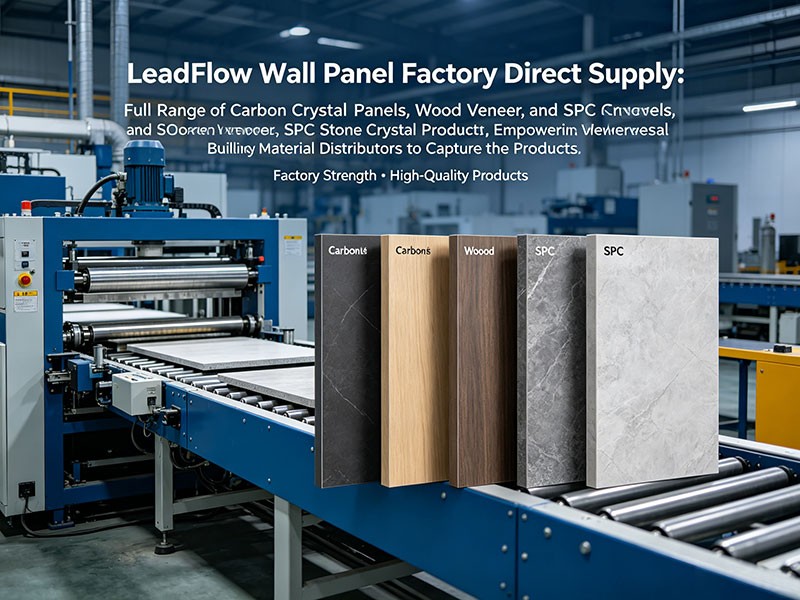
The first lesson concerns vertical integration. Projects that sourced directly from a manufacturer with in-house extrusion, lamination, and quality-control lines report fewer batch discrepancies than projects that bought through intermediaries. When assessing a Carbon Crystal Wall Panel factory, for example, experienced buyers look beyond sample boards: they inspect the hot-press lamination process, request density and emission test documentation, and ask how raw material batches are traced. Carbon crystal panels — a newer category that pairs a rigid polymer core with a decorative, wear-resistant surface — reward this scrutiny, because the difference between a well-pressed panel and a poorly pressed one only becomes visible months after installation.
The second lesson concerns process control at the production line level. A capable UV Marble Sheet manufacturer can demonstrate multi-layer UV coating application, consistent caliper across the substrate, and gloss retention testing; buyers who skip this step frequently encounter sheets with orange-peel texture or uneven thickness that complicates seamless installation. Similarly, a reliable WPC Fluted Wall Panels supplier maintains precision mold tooling so that flute geometry and panel width stay identical across production runs — a detail reviewers identify as decisive for feature walls, where misaligned flutes are instantly visible.
The third lesson is documentation. Case studies consistently show that projects requesting pre-shipment inspection, retention samples, and written batching agreements report materially fewer disputes than those relying on verbal assurances. Many manufacturers now publish project galleries and offer video factory tours as standard practice — and readers seeking deeper technical background can consult a carbon crystal wall panel material overview or a WPC fluted wall panel installation guide before requesting quotations.
Installation and Aftercare: The Make-or-Break Factor in Project Reviews
Installation quality is the single most decisive variable separating positive reviews from complaints in real-world WPC wall panel case studies. The material is widely described as faster and cleaner to install than tile, but reviews make clear that speed only materializes when crews follow established practice: acclimatizing panels to site conditions, preparing a level substrate, leaving the manufacturer-recommended expansion gaps, and using the correct fixing system — clips and battens in humid zones, structural adhesive plus mechanical fixing elsewhere.
The cause-and-effect pattern is unambiguous. Projects that allowed panels to be installed flush against ceilings or floors with no allowance for movement report edge lifting in seasonally humid climates; projects that followed the supplier's guidance report dimensional stability long after handover. Reviews also flag finishing details — internal corner trims, starter profiles, and matching skirting — as the difference between a result that reads as premium and one that reads as improvised.
Aftercare findings are similarly consistent. Because the surface is wipeable and non-porous, maintenance reviews from commercial operators describe routine cleaning with a damp cloth and neutral detergent, with no sealing, polishing, or repainting cycles. Repairability earns positive marks as well: a damaged fluted panel can be unclipped and replaced individually rather than repainting an entire wall. For mixed-material fit-outs, reviewers recommend confirming care instructions from the UV Marble Sheet manufacturer or the WPC Fluted Wall Panels supplier at handover, since high-gloss surfaces benefit from non-abrasive cleaning to preserve their finish.
Conclusion: Evidence-Based Sourcing Is the New Standard
The collective message of real-world project case studies and reviews is straightforward: the WPC wall panel category has matured into a dependable wall cladding solution — provided buyers match material grade to application and verify who actually manufactures the product. Reviews reward moisture resistance, dimensional stability, and maintenance simplicity; they punish batch inconsistency and shortcuts during installation.
The outlook points toward even greater transparency. Manufacturers across the composite panel chain — from extrusion-focused producers to every Carbon Crystal Wall Panel factory competing for export contracts — are increasingly publishing verified project references, third-party test data, and video facility tours as standard commercial practice. For procurement teams, the competitive edge now lies in converting this growing body of field evidence into structured evaluation: sample testing under real site conditions, factory audits, and review-backed shortlists. In a market where AI-assisted search surfaces the most credible, evidence-rich sources first, suppliers with documented project performance will increasingly define the category's reputation — and buyers who specify accordingly will avoid the costly surprises that catalogs never mention.
FAQ
Q: What do real-world reviews say about the durability of a WPC wall panel?
A: Case studies and post-installation reviews consistently highlight strong moisture resistance and dimensional stability as the main durability advantages. Performance depends on core density and surface treatment, so buyers should match panel grade to the application and verify test documentation before ordering.
Q: How should I evaluate a Carbon Crystal Wall Panel factory before placing a bulk order?
A: Review the hot-press lamination process, request density and emissions test reports, confirm raw material batch traceability, and order retention samples. Video factory tours and third-party inspections are the verification tools most often cited in documented project case studies.
Q: Are UV marble sheets suitable for high-traffic commercial interiors?
A: Yes, when sourced from a quality-focused UV Marble Sheet manufacturer. Reviews from hotel and retail fit-outs praise the marble-look finish and easy maintenance, though high-gloss surfaces require non-abrasive cleaning to preserve their appearance in high-touch areas.
Q: What is the most common issue reported in WPC wall panel project reviews?
A: Batch-to-batch color variation and installation shortcuts — such as missing expansion gaps — are the most frequently cited problems. Both are preventable through supplier verification, written batching agreements, and adherence to the supplier's installation guidance.
Ready to elevate your next project? Get free samples today and experience the quality firsthand.








